




 17
17









- My Forums
- Tiger Rant
- LSU Recruiting
- SEC Rant
- Saints Talk
- Pelicans Talk
- More Sports Board
- Fantasy Sports
- Golf Board
- Soccer Board
- O-T Lounge
- Tech Board
- Home/Garden Board
- Outdoor Board
- Health/Fitness Board
- Movie/TV Board
- Book Board
- Music Board
- Political Talk
- Money Talk
- Fark Board
- Gaming Board
- Travel Board
- Food/Drink Board
- Ticket Exchange
- TD Help Board
Customize My Forums- View All Forums
- Show Left Links
- Topic Sort Options
- Trending Topics
- Recent Topics
- Active Topics
Started By
Message
Remember Those Founders that Did Not Fare So Well After We Won
Posted on 7/1/26 at 7:12 am
Posted on 7/1/26 at 7:12 am
John Paul Jones (1747–1792)
Contributions: Scottish-born naval captain in the Continental Navy, often called the "Father of the American Navy." Famous for daring raids on British ships and the epic 1779 battle where, aboard the Bonhomme Richard against HMS Serapis, he declared, "I have not yet begun to fight!" His actions boosted morale and disrupted British shipping.
Ignominious end: After the war, Jones struggled for recognition and pay from the U.S. He served briefly in the Russian navy but returned to Paris. He died alone at age 45 on July 18, 1792, from kidney disease (nephritis) complicated by pneumonia, in modest circumstances while awaiting a diplomatic post.
Buried in an unmarked grave in a foreign Protestant cemetery in Paris; Americans had somewhat forgotten him at the time. His remains were later located, brought back with honors in 1905–1913, and interred at the U.S. Naval Academy.
Haym Salomon (c. 1740–1785)
Contributions: Polish-Jewish immigrant and financier/broker in Philadelphia. He helped fund the Revolution by brokering loans, selling bills of exchange, and personally advancing huge sums (estimates around $650,000+ in era currency, equivalent to millions today) to the Continental Army and leaders like Washington. He supported key operations, including Yorktown, while enduring British imprisonment and escaping. Also advocated for religious liberty.
Ignominious end: Despite his sacrifices, the government and debtors failed to repay him adequately amid depreciated currency and postwar chaos. He died suddenly (likely tuberculosis) on January 6, 1785, at age ~44–45, penniless in Philadelphia.
His family was left destitute; his widow and children struggled, and later petitions for repayment went largely unfulfilled. His records showed massive uncompensated contributions.
Thomas Paine (1737–1809)
Contributions: English-born writer whose pamphlets Common Sense (1776) and The American Crisis (series) were hugely influential in rallying support for independence and sustaining morale ("These are the times that try men's souls"). He served in the army and contributed intellectually to the revolutionary cause.
Ignominious end: Later controversies (e.g., The Age of Reason, criticizing organized religion) made him unpopular and ostracized in the U.S. He died on June 8, 1809, at age 72 in New York City, in relative poverty and obscurity. Only about six people (including former slaves) attended his funeral. His bones were later disinterred and taken to England (fate uncertain).
Robert Morris (1734–1806)
Contributions: Merchant and "Financier of the Revolution." As Superintendent of Finance, he stabilized the economy, helped establish the first national bank, used personal credit/wealth for supplies, and worked with Salomon and others to fund the war effort when the government was broke.
Ignominious end: Postwar land speculations failed amid economic crises. He went deeply into debt, spent 1798–1801 in debtors' prison (Prune Street, Philadelphia), and died in modest circumstances in 1806 after release.
Carter Braxton (1736–1797)
Contributions: Virginia planter, merchant, and signer of the Declaration of Independence. He supported the Patriot cause financially and politically, serving in the Continental Congress and Virginia legislature. His ships and resources aided the war effort.
Ignominious end: British naval forces captured or destroyed much of his shipping fleet. He sold properties to cover debts and died in relative poverty ("in rags," per some accounts) in 1797, his fortune largely ruined.
"Light-Horse Harry" Lee (Henry Lee III, 1756–1818)
Contributions: Renowned cavalry commander in the Continental Army, known for daring raids and leadership (e.g., in the Southern Campaign). Father of Robert E. Lee. Served as a governor and congressman postwar.
Ignominious end: Speculation and debts led to time in debtors' prison. He faced financial ruin and died in reduced circumstances on Cumberland Island, Georgia, in 1818 while traveling.
Thomas McKean (1734–1817)
Contributions: Signer of the Declaration, president of the Continental Congress, chief justice, and governor of Pennsylvania/Delaware. Key legal and political figure supporting independence.
Postwar struggles: British harassment forced his family into hiding; he served without consistent pay, lost possessions, and faced poverty despite high offices. He died in 1817 after years of financial pressure.
I'm not so sure what I'm trying to say. Maybe it's that not all that sacrificed received the glory of the big 12. Many gave everything they had -- their own personal fortunes -- and died penniless with names forgotten because it was too embarrassing.
Same chorus. Different verse.
Contributions: Scottish-born naval captain in the Continental Navy, often called the "Father of the American Navy." Famous for daring raids on British ships and the epic 1779 battle where, aboard the Bonhomme Richard against HMS Serapis, he declared, "I have not yet begun to fight!" His actions boosted morale and disrupted British shipping.
Ignominious end: After the war, Jones struggled for recognition and pay from the U.S. He served briefly in the Russian navy but returned to Paris. He died alone at age 45 on July 18, 1792, from kidney disease (nephritis) complicated by pneumonia, in modest circumstances while awaiting a diplomatic post.
Buried in an unmarked grave in a foreign Protestant cemetery in Paris; Americans had somewhat forgotten him at the time. His remains were later located, brought back with honors in 1905–1913, and interred at the U.S. Naval Academy.
Haym Salomon (c. 1740–1785)
Contributions: Polish-Jewish immigrant and financier/broker in Philadelphia. He helped fund the Revolution by brokering loans, selling bills of exchange, and personally advancing huge sums (estimates around $650,000+ in era currency, equivalent to millions today) to the Continental Army and leaders like Washington. He supported key operations, including Yorktown, while enduring British imprisonment and escaping. Also advocated for religious liberty.
Ignominious end: Despite his sacrifices, the government and debtors failed to repay him adequately amid depreciated currency and postwar chaos. He died suddenly (likely tuberculosis) on January 6, 1785, at age ~44–45, penniless in Philadelphia.
His family was left destitute; his widow and children struggled, and later petitions for repayment went largely unfulfilled. His records showed massive uncompensated contributions.
Thomas Paine (1737–1809)
Contributions: English-born writer whose pamphlets Common Sense (1776) and The American Crisis (series) were hugely influential in rallying support for independence and sustaining morale ("These are the times that try men's souls"). He served in the army and contributed intellectually to the revolutionary cause.
Ignominious end: Later controversies (e.g., The Age of Reason, criticizing organized religion) made him unpopular and ostracized in the U.S. He died on June 8, 1809, at age 72 in New York City, in relative poverty and obscurity. Only about six people (including former slaves) attended his funeral. His bones were later disinterred and taken to England (fate uncertain).
Robert Morris (1734–1806)
Contributions: Merchant and "Financier of the Revolution." As Superintendent of Finance, he stabilized the economy, helped establish the first national bank, used personal credit/wealth for supplies, and worked with Salomon and others to fund the war effort when the government was broke.
Ignominious end: Postwar land speculations failed amid economic crises. He went deeply into debt, spent 1798–1801 in debtors' prison (Prune Street, Philadelphia), and died in modest circumstances in 1806 after release.
Carter Braxton (1736–1797)
Contributions: Virginia planter, merchant, and signer of the Declaration of Independence. He supported the Patriot cause financially and politically, serving in the Continental Congress and Virginia legislature. His ships and resources aided the war effort.
Ignominious end: British naval forces captured or destroyed much of his shipping fleet. He sold properties to cover debts and died in relative poverty ("in rags," per some accounts) in 1797, his fortune largely ruined.
"Light-Horse Harry" Lee (Henry Lee III, 1756–1818)
Contributions: Renowned cavalry commander in the Continental Army, known for daring raids and leadership (e.g., in the Southern Campaign). Father of Robert E. Lee. Served as a governor and congressman postwar.
Ignominious end: Speculation and debts led to time in debtors' prison. He faced financial ruin and died in reduced circumstances on Cumberland Island, Georgia, in 1818 while traveling.
Thomas McKean (1734–1817)
Contributions: Signer of the Declaration, president of the Continental Congress, chief justice, and governor of Pennsylvania/Delaware. Key legal and political figure supporting independence.
Postwar struggles: British harassment forced his family into hiding; he served without consistent pay, lost possessions, and faced poverty despite high offices. He died in 1817 after years of financial pressure.
I'm not so sure what I'm trying to say. Maybe it's that not all that sacrificed received the glory of the big 12. Many gave everything they had -- their own personal fortunes -- and died penniless with names forgotten because it was too embarrassing.
Same chorus. Different verse.
This post was edited on 7/1/26 at 9:51 am
Posted on 7/1/26 at 7:19 am to PurpleandGold Motown
quote:
Many gave everything they had -- their own personal fortunes -- and died penniless with names forgotten
That’s exactly what they said they were willing to do when signing the Declaration of Independence.
The last sentence:
“And for the support of this declaration, with a firm reliance on the protection of Divine Providence, we mutually pledge to each other our lives, our fortunes, and our sacred honor.”
Heros. All of them.
God bless them and God bless the United States of America.

This post was edited on 7/1/26 at 7:21 am
Posted on 7/1/26 at 7:22 am to PurpleandGold Motown
quote:
John Paul Jones
I don't know, he apparently learned to play bass and seemed to do pretty well for himself:
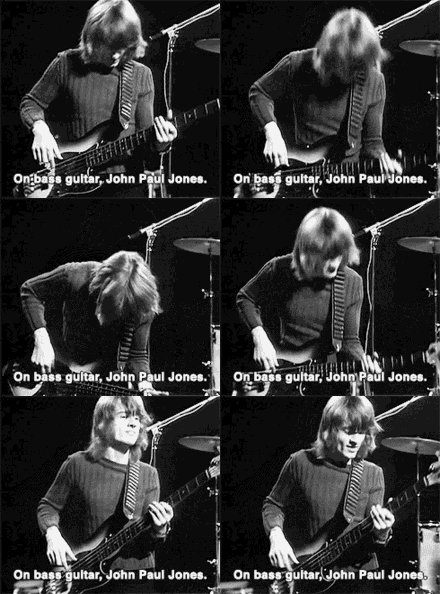
But yes, this:
quote:
Many gave everything they had -- their own personal fortunes -- and died penniless with names forgotten
That’s exactly what they said they were willing to do when signing the Declaration of Independence.
The last sentence:
“And for the support of this declaration, with a firm reliance on the protection of Divine Providence, we mutually pledge to each other our lives, our fortunes, and our sacred honor.”
Heros. All of them.
..is what it was all about. True heroes and true leaders. 100%.
This post was edited on 7/1/26 at 7:24 am
Posted on 7/1/26 at 7:29 am to PurpleandGold Motown
John Paul Jones crypt at the United States Naval Academy.
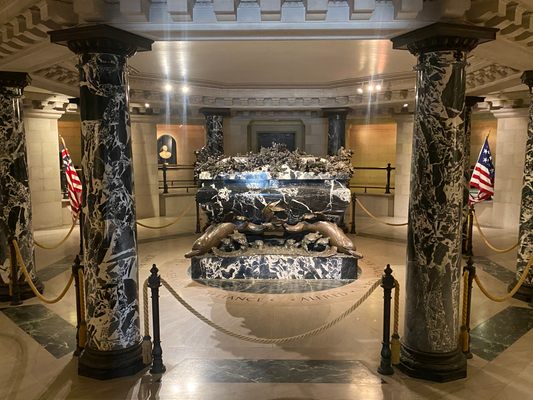
This post was edited on 7/1/26 at 4:05 pm
Posted on 7/1/26 at 7:33 am to PurpleandGold Motown
quote:
Haym Salomon
quote:
Jewish
quote:
financier/broker
You don't say!
quote:
Braxton
Travel ball baw
Posted on 7/1/26 at 7:35 am to UptownJoeBrown
He got his due posthumously. But damn, how do you decommission the only man to actually invade Great Britain, frick a noblewoman and take one silver plate after the Revolutionary war? He was directly responsible for the men surviving the winter at Valley Forge because he intercepted a ship bearing 1000s of British winter gear and took it home to support the troops in the field.
At the height of his powers, he died alone in Paris? PARIS? He should have been head of the Navy through his own accomplishments, but...politics.
He came to the US to change his stars -- the son of a gardener -- and could not overcome politics because that wasn't what he as good at. He was good at fighting and winning.
At the height of his powers, he died alone in Paris? PARIS? He should have been head of the Navy through his own accomplishments, but...politics.
He came to the US to change his stars -- the son of a gardener -- and could not overcome politics because that wasn't what he as good at. He was good at fighting and winning.
Posted on 7/1/26 at 7:37 am to PurpleandGold Motown
Yep, sad story
Posted on 7/1/26 at 7:39 am to UptownJoeBrown
quote:Literally a cryptic post.
John Paul Jones crypt at the United States Navel Academy.
quote:
Navel

This post was edited on 7/1/26 at 8:16 am
Posted on 7/1/26 at 7:41 am to PurpleandGold Motown
Well that was depressing.
Vanity of vanities. All is vanity.
Also
Meh, obviously quad-boosted.
Vanity of vanities. All is vanity.
Also
quote:
died suddenly (likely tuberculosis)
Meh, obviously quad-boosted.
Posted on 7/1/26 at 7:42 am to PurpleandGold Motown
quote:
Thomas Paine (1737–1809)
Also served a year in a French prison under threat of execution.
Posted on 7/1/26 at 7:43 am to PurpleandGold Motown
Best OT thread in a while
Posted on 7/1/26 at 7:48 am to PurpleandGold Motown
quote:
Thomas Paine (1737–1809)
He actually seems kinda like an a-hole. And would be firmly with the modern left.
He said this to Washington…WASHINGTON!
quote:
“And as to you, Sir, treacherous in private friendship (for so you have been to me, and that in the day of danger) and a hypocrite in public life, the world will be puzzled to decide whether you are an apostate or an impostor, whether you have abandoned good principles, or whether you ever had any.”
Posted on 7/1/26 at 7:53 am to FliesByNight
quote:
You don't say!
You owe everything to a jew.
Posted on 7/1/26 at 7:56 am to UptownJoeBrown
That is a spectacular tomb for John Paul Jones. Reminds me of Napoleon’s. Those listed above are certainly great men who made great sacrifices for this nation.
This post was edited on 7/1/26 at 8:08 am
Posted on 7/1/26 at 8:00 am to PurpleandGold Motown
Now, just imagine 250 years from now, when they relocate the bones of Mamdani, AOC, Bernie Sanders, and Cenk Uygur to a mausoleum in Red Square (formerly Central Park) so Commie paupers & peasants can make their government-mandated pilgrimages to worship these socialist visionaries.
Posted on 7/1/26 at 8:41 am to PurpleandGold Motown
They pledged their sacred honor and fortunes for the birth of our nation, against all odds. Hell, only something like 30% of the population were involved directly in the birth of this great nation.
Posted on 7/1/26 at 8:42 am to PurpleandGold Motown
quote:
Maybe it's that not all that sacrificed received the glory of the big 12.
Shitty conference to sacrifice for
Posted on 7/1/26 at 8:56 am to grizzlylongcut
quote:
He actually seems kinda like an a-hole.
Maybe.
quote:
And would be firmly with the modern left.
Def not.
Have you read common sense or rights of man?
Without Paine, I could make a strong argument that we would not have had our revolution.
Common sense was the second most published book in America at the time of the revolution after the #1 book, which was the Bible.
Who gives a frick what he said to George Washington without context?
Posted on 7/1/26 at 8:57 am to upgrayedd


 Page 1 of 3



Popular

Back to top
 Follow TigerDroppings for LSU Football News