





 0
0







- My Forums
- Tiger Rant
- LSU Recruiting
- SEC Rant
- Saints Talk
- Pelicans Talk
- More Sports Board
- Fantasy Sports
- Golf Board
- Soccer Board
- O-T Lounge
- Tech Board
- Home/Garden Board
- Outdoor Board
- Health/Fitness Board
- Movie/TV Board
- Book Board
- Music Board
- Political Talk
- Money Talk
- Fark Board
- Gaming Board
- Travel Board
- Food/Drink Board
- Ticket Exchange
- TD Help Board
Customize My Forums- View All Forums
- Show Left Links
- Topic Sort Options
- Trending Topics
- Recent Topics
- Active Topics
Started By
Message
re: The First World War began 112 years ago yesterday...
Posted on 7/29/26 at 2:32 pm to RollTide1987
Posted on 7/29/26 at 2:32 pm to RollTide1987
Princip was imprisoned at Terezin (The Small Fortress), which was a small prison a bit North of Prague. He died of TB after serving 4 years there.
During WWII, it would become a concentration camp for political opponents of the Nazis. While it held over 32,000 prisoners, they only executed 250 of them by firing squad. Another 2,6000 would die as a result of hunger, torture or poor hygiene. Thousands more died after being transported from Terezin to other concentration camps.
It served as a German POW camp after the war from 1945-1948.
During WWII, it would become a concentration camp for political opponents of the Nazis. While it held over 32,000 prisoners, they only executed 250 of them by firing squad. Another 2,6000 would die as a result of hunger, torture or poor hygiene. Thousands more died after being transported from Terezin to other concentration camps.
It served as a German POW camp after the war from 1945-1948.
Posted on 7/29/26 at 2:37 pm to TheHarahanian
WWI started because a bungling assassin got all the luck in the world.
—no, the killing of the future king of Austria-Hungary did not start WWI.
The reactions to it by selfish and short-sighted leaders caused WWI. None of them had to take the steps they chose.
—no, the killing of the future king of Austria-Hungary did not start WWI.
The reactions to it by selfish and short-sighted leaders caused WWI. None of them had to take the steps they chose.
Posted on 7/29/26 at 2:42 pm to Lawyered
quote:
And also, arguably more importantly, all related too. A bunch of squabbling cousins dragged Europe into hell
Roll Tide!
Posted on 7/29/26 at 2:55 pm to RollTide1987
quote:
They felt like they deserved a bigger piece of the pie than what they got.
No. Had nothing to do with it. They attacked China for several reasons with the biggest being resources and empire expansion. Now, the May 4th movement was chinese anger, not Japan's.
Japan hit Pearl for the same basic reasons: the sanctions due to attacking china and they were backed into a corner over resources.
Posted on 7/29/26 at 3:07 pm to cypresstiger
quote:
The reactions to it by selfish and short-sighted leaders caused WWI. None of them had to take the steps they chose.
The only leader who could have chosen differently was Franz Joseph, and he had likely just seen his line come to an end with his nephew’s assassination.
Everybody else was bound by the agreements they signed.
Posted on 7/29/26 at 3:33 pm to Spaceman Spiff
quote:
No. Had nothing to do with it. They attacked China for several reasons with the biggest being resources and empire expansion. Now, the May 4th movement was chinese anger, not Japan's.
The May Fourth Movement itself was ignited in May 1919 by the decision at the Paris Peace Conference to transfer those German possessions in Shandong to Japan rather than return them to China. Students and intellectuals saw it as a betrayal of Wilson’s self-determination rhetoric and of China’s own contribution to the Allied war effort. Without the Japanese occupation of Tsingtao and the subsequent diplomatic confirmation of Japanese claims, that particular flashpoint would not have existed. So the capture both physically placed Japanese forces deeper into China and generated the concrete grievance that made the mass nationalist outburst possible.
That sequence of events did not make the 1931 Mukden Incident inevitable, but it raised the stakes, hardened Chinese resistance, and left Japanese militarists convinced that only firmer, more direct control (especially in resource-rich Manchuria) could secure Japan’s position against rising Chinese nationalism that the postwar order had inadvertently strengthened.
So yes, Japanese actions in the 1930s were directly fueled by the events of the First World War.
This post was edited on 7/29/26 at 3:35 pm
Posted on 7/29/26 at 4:01 pm to TheHarahanian
Everybody else was bound by the agreements they signed.
—Paper agreements are on paper.
—Paper agreements are on paper.
Posted on 7/29/26 at 4:41 pm to cypresstiger
quote:
Paper agreements are on paper.
Yes, countries still use them today and still abide by their terms today if they want to maintain the trust and backing of their allies.
Posted on 7/29/26 at 4:46 pm to RollTide1987
quote:
Five days earlier, in reaction to the assassination of the Archduke Franz Ferdinand
All because, inevitably the end, his dumbass driver took a wrong turn and got lost.
WWI literally started due to a wrong turn.
Posted on 7/30/26 at 6:12 am to RollTide1987
Your exact words:
quote:
They (Japan) felt like they deserved a bigger piece of the pie than what they got.
Posted on 7/30/26 at 6:59 am to RollTide1987
quote:
Germany had the largest contingent of elected socialists of any parliament on the continent of Europe. The British government was run by liberals. The Kaiser and Tsar corresponded with each other in English while the ambassadors of the various powers spoke to each other in French.
Not sure why that would stop a country from going to war. Never has.
Posted on 7/30/26 at 7:22 am to weaveballs1
quote:
I've been to the museum in Vienna where the gun Princip used, the car that Franz Ferdinand and Sophie were riding in, and the tunic he was wearing are housed.
I will be there in 3 weeks and hopefully get to view this exhibit with my Austrian friend.
Posted on 7/30/26 at 7:56 am to F1y0n7h3W4LL
quote:
The assault weapon that started it was triggered by the assassination of Archduke Franz Ferdinand using a .380 ACP caliber FN Model 1910 semi-automatic pistol.
... and ppl say the .380 isn't a good defense round....
Posted on 7/30/26 at 8:01 am to Stonehenge
quote:
The Guns of August
Cannot be restated enough. If you only read 1 book about The Great War, even though it only (really) covers that first month (and all the background, of course), this is the definitive one.
The second book to read is All Quiet on the Western Front.
Of course, you can also just listen to the many hours of Blueprint for Armageddon by Dan Carlin.
I did my deep dive on WWI a couple of years back. Considering I once taught military history and WWI in particular, I was surprised about how much I didn't know (compared to things like the American Civil War or WWII). The modern world is essentially the outcome of WWI, not WWII, just FYI.
Posted on 7/30/26 at 8:56 am to RollTide1987
I have no idea why the military leaders of the major nations in 1914 were all convinced that it would be a short war of less than one-year in duration. A really thorough understanding of all of the dynamics and factors at play in the military science of 1914 should have indicated to them that it would probably not be a war of less than one-year in duration. They should have known that it would probably be a long war.
You'd think that sometime in 1915 the civilian leadership of the warring nations would have strived to make peace before things got really vicious, but, no.
The world should have found a way to make peace in 1915 with an agreement to return to the pre-war borders.
Very sad.
You'd think that sometime in 1915 the civilian leadership of the warring nations would have strived to make peace before things got really vicious, but, no.
The world should have found a way to make peace in 1915 with an agreement to return to the pre-war borders.
Very sad.
Posted on 7/30/26 at 9:05 am to RollTide1987
quote:
Franz Ferdinand
23 years ago
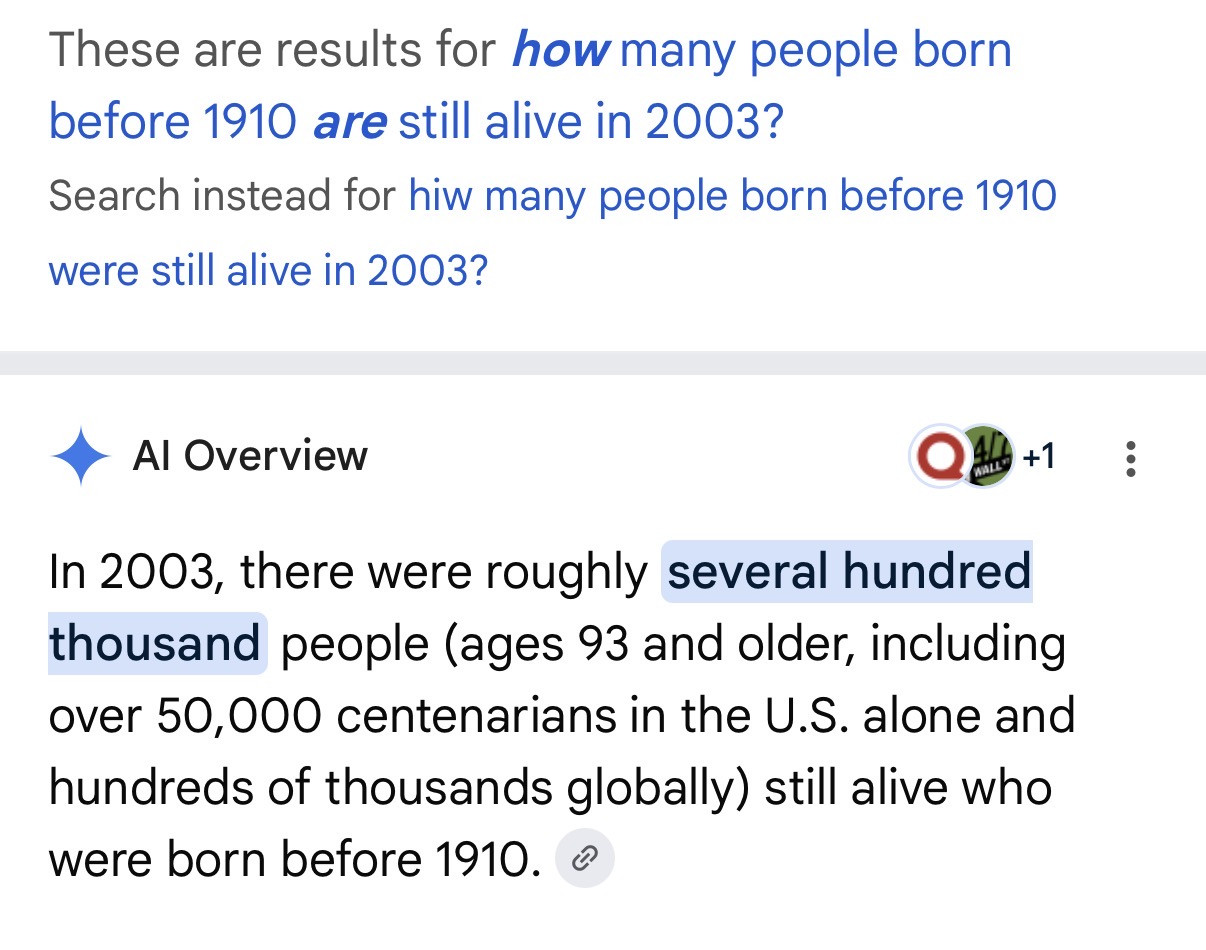
And Google estimates that several hundred thousands of folks worldwide could have remembered Franz Ferdinand’s assassination and been alive when he charted with “Take Me Out”.
This post was edited on 7/30/26 at 9:15 am
Posted on 7/30/26 at 10:53 am to RollTide1987
Post reminded me of the WW1 documentary “They Shall Not Grow Old” by Oscar winning producer/director Peter Jackson (Lord of the Rings & Hobbit movies) to commemorate the 100 year anniversary of the end of WW1. He is a WW1 buff and major collector of WW1 memorabilia (planes, artillery, etc) as his grandfather was a British soldier wounded on the first day of Battle of the Somme. He was asked to do this by the British Imperial War Museum, and given carte blanche as to the film, only being asked to use archival footage and interviews of WW1 veterans recorded in the 1960s. The materials were so vast he decided just to focus on the British experience on the Western Front. He produced this gratis, taking no $.
The making of the documentary and the technology used is very bit as interesting as the documentary itself.
Good watch for those who haven’t seen it.
The making of the documentary and the technology used is very bit as interesting as the documentary itself.
Good watch for those who haven’t seen it.
Posted on 7/30/26 at 4:51 pm to RollTide1987
The real problem was the blank check that he promised to Austria - Hungary and his naivete in thinking Russia would back off and this would be a Balkans war with Serbia.
When it comes down to it, Russia really becomes the accelerant by mobilizing. This forces a move against France which in turn gets Britain in. No mobilization by Russia and the world looks a lot different.
When it comes down to it, Russia really becomes the accelerant by mobilizing. This forces a move against France which in turn gets Britain in. No mobilization by Russia and the world looks a lot different.
Posted on 7/30/26 at 5:04 pm to RollTide1987
Russia mobilizing is what really fricked everything up and got the fuse lit.
Posted on 7/30/26 at 5:19 pm to RollTide1987
My Grandfather was a US WWI Veteran, sort of anyway. He enlisted for the duration of the war and it ended before he was deployed to Europe. He was discharged without ever having to fight. Instead, he married my Grandmother, made 10 kids and worked in a tire factory. He built his own home which is still standing today.
People were different back then.
People were different back then.

 Page 2 of 3



Popular
Back to top
 Follow TigerDroppings for LSU Football News