




- My Forums
- Tiger Rant
- LSU Recruiting
- SEC Rant
- Saints Talk
- Pelicans Talk
- More Sports Board
- Fantasy Sports
- Golf Board
- Soccer Board
- O-T Lounge
- Tech Board
- Home/Garden Board
- Outdoor Board
- Health/Fitness Board
- Movie/TV Board
- Book Board
- Music Board
- Political Talk
- Money Talk
- Fark Board
- Gaming Board
- Travel Board
- Food/Drink Board
- Ticket Exchange
- TD Help Board
Customize My Forums- View All Forums
- Show Left Links
- Topic Sort Options
- Trending Topics
- Recent Topics
- Active Topics
Started By
Message
re: We peaked as a country in 1992…
Posted on 12/17/25 at 8:58 am to RollTide1987

Posted on 12/17/25 at 8:58 am to RollTide1987
Just thinking back to ‘92 makes me smile. And the rest of the ‘90’s were still ahead of us!!
 0
0


Posted on 12/17/25 at 9:01 am to Stealth Matrix
quote:
Except the Toronto Blue Jays won the World Series in 1992.
The World Series was in October, end of peak was about when school started in August. Sorry to break the bad news.

Posted on 12/17/25 at 9:02 am to soccerfüt
I agree. Times were much simpler then. Hand held cell phones were just becoming a thing but everyone wasn’t addicted to their phones like they are now. Internet wasn’t really a thing either which is just another addiction. Our military just got done pushing Iraq’s shite in back to the Stone Age. We didn’t really have any military threats which kinda sucked to a degree because we started gutting that same military. Ducks still migrated to Louisiana.
Posted on 12/17/25 at 9:02 am to Shwapp
quote:
That's when I was born, baw. It's been all downhill from there.
So it's your fault.
Thanks for letting us know where to place the blame.
Posted on 12/17/25 at 9:08 am to RollTide1987
Golden-era Simpsons was just kicking off 
Posted on 12/17/25 at 9:13 am to Rex Feral
quote:
The dims impeaching Trump over made up shite is just next level Lewinsky stuff
This is not even remotely close, let's not make this a political thread, but man open your eyes.
Posted on 12/17/25 at 9:15 am to RollTide1987
Starting another fake war isn’t peak….maybe maximum unawareness of being in the matrix…
The best is yet to come!
The best is yet to come!


Posted on 12/17/25 at 9:25 am to RollTide1987
quote:
We peaked as a country in 1992…
You mean violent crime peaked, along with several other social pathologies?
Posted on 12/17/25 at 9:28 am to RollTide1987
quote:I feel personally attacked
We peaked as a country in 1992…
Posted on 12/17/25 at 9:30 am to StrongOffer
Not to mention The Dream Team. That was ‘92


Posted on 12/17/25 at 9:34 am to Chinese Bandit Boy
Eisenhower was a tad hypocritical since he was a huge proponent of NATO. Membership in that organization all but guaranteed American defense spending would have to be maintained at high levels.

Posted on 12/17/25 at 9:37 am to soccerfüt
quote:
I believe that historians will eventually recognize the period 1989 to 2001 as a pinnacle of American influence, power and superiority
I would suggest that the five years ending on November 21, 1963, was that period.

Posted on 12/17/25 at 10:03 am to blueridgeTiger
quote:Respectfully, in my opinion, this single newspaper headline refutes your contention.
I would suggest that the five years ending on November 21, 1963, was that period.
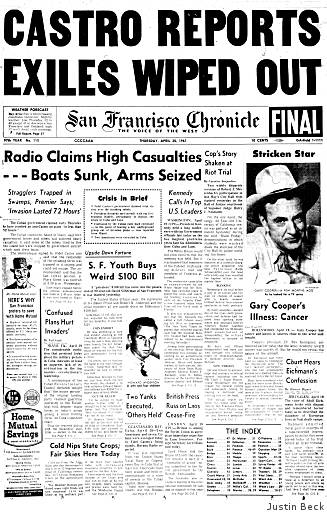
Victory in the Cold War and the triumph of Capitalism over Communism clothed in Socialism happened in 1989-2001
1958-1963 was better than ‘53-‘58 or ‘63-‘68 but nothing like the absolute victory and supremacy of the 1990s.


Posted on 12/17/25 at 10:06 am to RollTide1987
I was born in that year, so I would tend to agree with this.
Posted on 12/17/25 at 10:27 am to RollTide1987
Things were pretty awesome up until about 9/11.
Posted on 12/17/25 at 10:28 am to RollTide1987
quote:That was certainly when violent crime peaked - at vastly higher levels than today.
We peaked as a country in 1992…
Posted on 12/17/25 at 10:34 am to Wayne Campbell
quote:
So it's your fault.
Thanks for letting us know where to place the blame.


Posted on 12/17/25 at 10:37 am to Gravitiger
quote:
The national debt was still 4 trillion.
Ah, the good ol' days of ONLY $4T in debt.

Posted on 12/17/25 at 10:41 am to soccerfüt
I posed this question to Grok, and here is what she had to offer:
1945–1950 (post-VJ Day): This aligns with the US emerging from WWII as the preeminent global power, with Europe and Japan in ruins, the Soviet Union weakened, and America wielding exclusive nuclear capabilities until 1949. The Marshall Plan solidified economic influence, and institutions like the UN, NATO, and Bretton Woods amplified diplomatic clout. Many view this as the start of "Pax Americana," with US GDP at ~50% of the world's total. However, the Korean War (starting 1950) and rising Cold War tensions marked early challenges. Sources often describe this as a foundational high point rather than the absolute peak, as US hegemony was still consolidating.
1953–1958 (early Eisenhower administration): This captures a period of domestic prosperity (postwar boom, interstate highways, suburban expansion) and Cold War leadership, with the US leading NATO against Soviet expansionism and enjoying technological edges (e.g., space race beginnings with Sputnik in 1957). Cultural exports like Hollywood and rock 'n' roll boosted soft power. Yet, events like the 1956 Suez Crisis exposed limits to US influence, and decolonization waves in Asia/Africa diluted Western dominance. Analysts see this as a stable high, but not the zenith, as the US faced growing Soviet parity in nukes and influence.
1958–1963 (five years ending with JFK assassination): Under Eisenhower's later years and Kennedy's New Frontier, this era featured economic growth, the Apollo program launch, and assertive foreign policy (e.g., Bay of Pigs, Berlin Crisis resolution). The US GDP share remained high (~40%), and alliances held firm. However, the Cuban Missile Crisis (1962) highlighted nuclear brinkmanship risks, and early Vietnam involvement foreshadowed overextension. Some historians argue this was a cultural/inspirational peak, but militarily and economically, it was transitional amid rising civil rights tensions at home.
1989–1994 (around the fall of the Berlin Wall): The Wall's fall in 1989 symbolized the crumbling Soviet bloc, culminating in the USSR's 1991 dissolution and leaving the US as the unchallenged superpower. The Gulf War (1990–1991) demonstrated overwhelming military tech superiority, while economic liberalization spread American-style capitalism globally. This period marks the "end of history" vibe per Francis Fukuyama, with US influence at a diplomatic high. Drawbacks include early signs of overreach (e.g., Somalia intervention) and domestic recession. Many sources pinpoint this as the true peak of unipolarity.
1991–1996 (post-Soviet collapse, early Clinton era): Often cited as the height of US hegemony, with no peer rivals, a booming economy (dot-com beginnings, budget surpluses), and successful interventions like Bosnia (1995). The US orchestrated global trade pacts (e.g., NAFTA, WTO), and cultural dominance peaked via media/tech exports. GDP share was ~25–30%, military spending dwarfed others, and soft power was immense. This avoids the pre-1989 Cold War bipolarity and post-1996 challenges like al-Qaeda's rise. Conservative and liberal analysts alike highlight this as the unipolar apex before China's ascent accelerated.
1997–2002 (late Clinton to early Bush, pre-Iraq War): This spans the tech boom peak (US as innovation hub), 9/11 unity (rallying global sympathy), and initial Afghan success. Economic influence was at a high with ~30% global GDP, and military prowess was unquestioned post-Kosovo (1999). However, 9/11 (2001) is seen by some as the pivot to decline via endless wars. Sources describe this as a brief "hyperpower" moment, though it's contested due to emerging multipolarity.
If I had to pick one five-year period as the overall peak, it would be 1991–1996: The US enjoyed unmatched relative power without the WWII-era reconstruction burdens or 21st-century competitors like a rising China. This view is substantiated across think tanks, academic journals, and historical retrospectives, though earlier postwar periods hold strong for absolute (vs. relative) dominance.
1945–1950 (post-VJ Day): This aligns with the US emerging from WWII as the preeminent global power, with Europe and Japan in ruins, the Soviet Union weakened, and America wielding exclusive nuclear capabilities until 1949. The Marshall Plan solidified economic influence, and institutions like the UN, NATO, and Bretton Woods amplified diplomatic clout. Many view this as the start of "Pax Americana," with US GDP at ~50% of the world's total. However, the Korean War (starting 1950) and rising Cold War tensions marked early challenges. Sources often describe this as a foundational high point rather than the absolute peak, as US hegemony was still consolidating.
1953–1958 (early Eisenhower administration): This captures a period of domestic prosperity (postwar boom, interstate highways, suburban expansion) and Cold War leadership, with the US leading NATO against Soviet expansionism and enjoying technological edges (e.g., space race beginnings with Sputnik in 1957). Cultural exports like Hollywood and rock 'n' roll boosted soft power. Yet, events like the 1956 Suez Crisis exposed limits to US influence, and decolonization waves in Asia/Africa diluted Western dominance. Analysts see this as a stable high, but not the zenith, as the US faced growing Soviet parity in nukes and influence.
1958–1963 (five years ending with JFK assassination): Under Eisenhower's later years and Kennedy's New Frontier, this era featured economic growth, the Apollo program launch, and assertive foreign policy (e.g., Bay of Pigs, Berlin Crisis resolution). The US GDP share remained high (~40%), and alliances held firm. However, the Cuban Missile Crisis (1962) highlighted nuclear brinkmanship risks, and early Vietnam involvement foreshadowed overextension. Some historians argue this was a cultural/inspirational peak, but militarily and economically, it was transitional amid rising civil rights tensions at home.
1989–1994 (around the fall of the Berlin Wall): The Wall's fall in 1989 symbolized the crumbling Soviet bloc, culminating in the USSR's 1991 dissolution and leaving the US as the unchallenged superpower. The Gulf War (1990–1991) demonstrated overwhelming military tech superiority, while economic liberalization spread American-style capitalism globally. This period marks the "end of history" vibe per Francis Fukuyama, with US influence at a diplomatic high. Drawbacks include early signs of overreach (e.g., Somalia intervention) and domestic recession. Many sources pinpoint this as the true peak of unipolarity.
1991–1996 (post-Soviet collapse, early Clinton era): Often cited as the height of US hegemony, with no peer rivals, a booming economy (dot-com beginnings, budget surpluses), and successful interventions like Bosnia (1995). The US orchestrated global trade pacts (e.g., NAFTA, WTO), and cultural dominance peaked via media/tech exports. GDP share was ~25–30%, military spending dwarfed others, and soft power was immense. This avoids the pre-1989 Cold War bipolarity and post-1996 challenges like al-Qaeda's rise. Conservative and liberal analysts alike highlight this as the unipolar apex before China's ascent accelerated.
1997–2002 (late Clinton to early Bush, pre-Iraq War): This spans the tech boom peak (US as innovation hub), 9/11 unity (rallying global sympathy), and initial Afghan success. Economic influence was at a high with ~30% global GDP, and military prowess was unquestioned post-Kosovo (1999). However, 9/11 (2001) is seen by some as the pivot to decline via endless wars. Sources describe this as a brief "hyperpower" moment, though it's contested due to emerging multipolarity.
If I had to pick one five-year period as the overall peak, it would be 1991–1996: The US enjoyed unmatched relative power without the WWII-era reconstruction burdens or 21st-century competitors like a rising China. This view is substantiated across think tanks, academic journals, and historical retrospectives, though earlier postwar periods hold strong for absolute (vs. relative) dominance.
Posted on 12/17/25 at 6:04 pm to RollTide1987
a bit early, I'd say 2001 was peak....

 Page 3 of 5

Popular
Back to top
 Follow TigerDroppings for LSU Football News