




- My Forums
- Tiger Rant
- LSU Recruiting
- SEC Rant
- Saints Talk
- Pelicans Talk
- More Sports Board
- Fantasy Sports
- Golf Board
- Soccer Board
- O-T Lounge
- Tech Board
- Home/Garden Board
- Outdoor Board
- Health/Fitness Board
- Movie/TV Board
- Book Board
- Music Board
- Political Talk
- Money Talk
- Fark Board
- Gaming Board
- Travel Board
- Food/Drink Board
- Ticket Exchange
- TD Help Board
Customize My Forums- View All Forums
- Show Left Links
- Topic Sort Options
- Trending Topics
- Recent Topics
- Active Topics
Started By
Message

Electricians - why are high-voltage power lines always exposed?
Posted on 1/14/19 at 1:54 pm


Posted on 1/14/19 at 1:54 pm
I'm ignorant here so forgive me if this is a stupid question. But why are they just exposed like they are? I know they're the highest lines to avoid accidents as much as possible but why not just cover them with rubber like all other electrical lines? Would that "slow down" the transfer of electricity or something?
What got me thinking about this is I recently went down the rabbit hole of the internet recently and saw some videos of people accidentally hitting them and dying on the spot. Why isn't there more precaution taken in trying to protect the lines?
Also, if the poles fall or just a line falls down and is still connected at the other end then anyone who comes in contact with it is dead. This would be a great reason to cover the lines with rubber just like all other lines.
Sorry if these are stupid questions, I'm just admittedly ignorant on this issue.
What got me thinking about this is I recently went down the rabbit hole of the internet recently and saw some videos of people accidentally hitting them and dying on the spot. Why isn't there more precaution taken in trying to protect the lines?
Also, if the poles fall or just a line falls down and is still connected at the other end then anyone who comes in contact with it is dead. This would be a great reason to cover the lines with rubber just like all other lines.
Sorry if these are stupid questions, I'm just admittedly ignorant on this issue.
 17
17


Posted on 1/14/19 at 1:56 pm to TDsngumbo
Too heavy?
Cost prohibitive?
Cost prohibitive?


Posted on 1/14/19 at 1:57 pm to TDsngumbo
They were all ran in the 80's and 90's before everyone was a pussy.
Utilities are all underground these days, just a few feet underneath all the Braydens playing soccer.
Utilities are all underground these days, just a few feet underneath all the Braydens playing soccer.

Posted on 1/14/19 at 1:57 pm to TDsngumbo
They’re exposed to make it easier to tap into for free power.
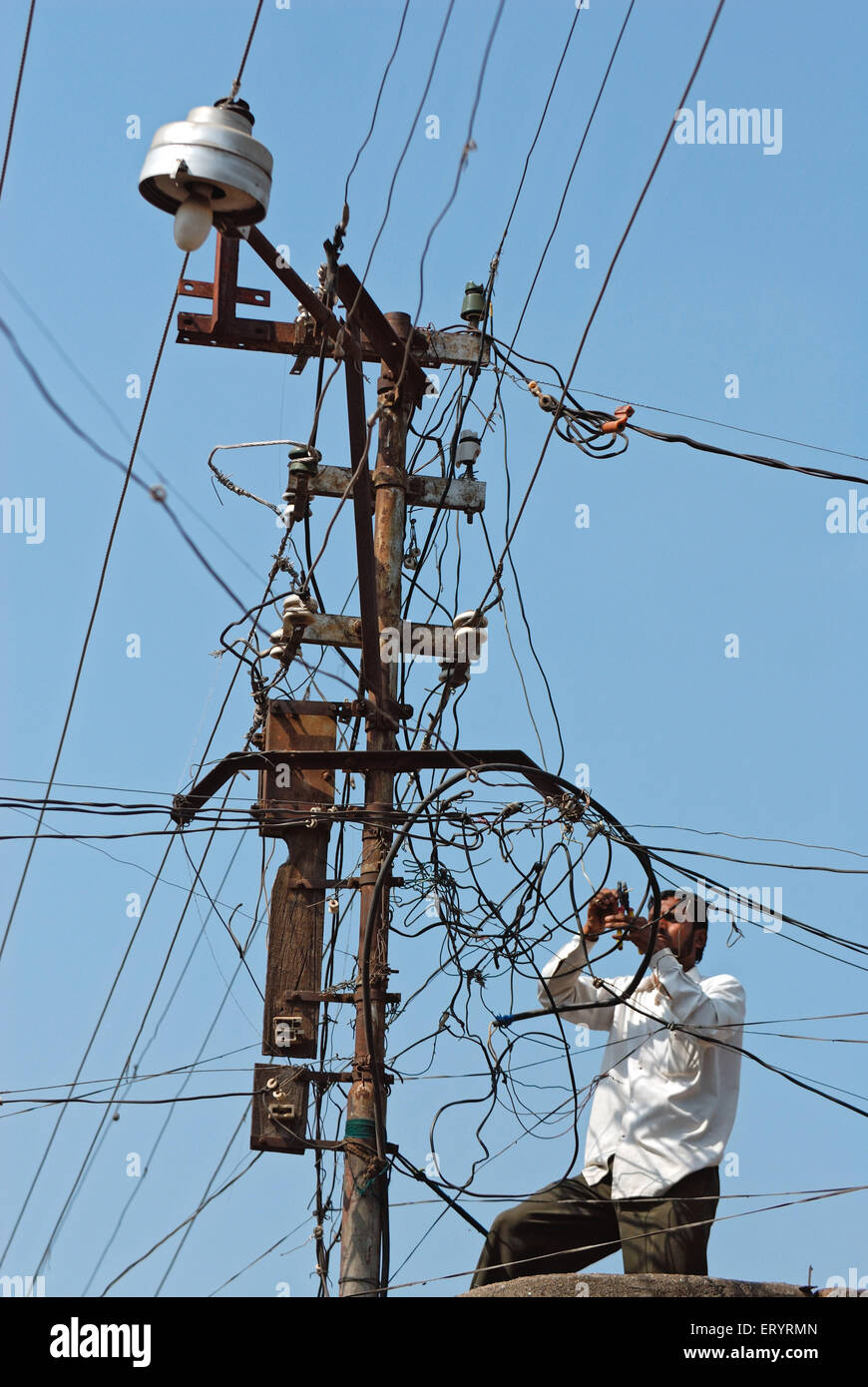
It’s the way the grid gives back to the populace.
It’s the way the grid gives back to the populace.
Posted on 1/14/19 at 1:59 pm to soccerfüt

Holy shite!

Posted on 1/14/19 at 2:00 pm to TDsngumbo
I'd imagine weight is a huge factor


Posted on 1/14/19 at 2:00 pm to TDsngumbo
Not an electrician but my understanding is that they’re exposed because they heat up a lot as there’s a large draw on the lines and that having them above ground and uncovered lets them dissipate heat faster than underground or covered.
Posted on 1/14/19 at 2:01 pm to TDsngumbo
Not by regular insulators but by air. Since air is a poor conductor of electricity and is free, it works out best for everyone involved to have the wires insulated by ambient air. At higher voltages it takes a lot more insulation to keep the lines from arcing through it.

Posted on 1/14/19 at 2:01 pm to TDsngumbo
1) the insulator would have to be very thick to not be ignited by the high energy being pushed through the lines. An insulator of sufficient thickness would get in the way of dissipating heat from the conductor, which would greatly reduce the conductor's current carrying capacity. The whole point of these lines is high capacity.
2) it would greatly increase the weight and the cross section of the lines, making them more susceptible to damage or failure from wind, ice, etc.
3) it would hugely increase the infrastructure cost of installing the lines. More manufacturing cost for the lines, beefier towers to support heavier lines, bigger equipment required to install both heavier lines and beefier towers, more towers closer together, and so on.
2) it would greatly increase the weight and the cross section of the lines, making them more susceptible to damage or failure from wind, ice, etc.
3) it would hugely increase the infrastructure cost of installing the lines. More manufacturing cost for the lines, beefier towers to support heavier lines, bigger equipment required to install both heavier lines and beefier towers, more towers closer together, and so on.
This post was edited on 1/14/19 at 2:02 pm
Posted on 1/14/19 at 2:01 pm to TDsngumbo
You can grab one and nothing will happen to you unless you are grounded. Well, then you turn into a light bulb at that point.
Think of a bird sitting on the wire. Nothing happens. He's not grounded. Current passes through him.
I guess they didn't count on people being able to touch them when they put them up?
Think of a bird sitting on the wire. Nothing happens. He's not grounded. Current passes through him.
I guess they didn't count on people being able to touch them when they put them up?

Posted on 1/14/19 at 2:01 pm to LSUsmartass
See the weight factor makes sense I guess but why run so much risk when they could just space the poles a tad bit closer together? I guess since electric companies aren't responsible for stupid behavior then there's no lawsuit risk for them.
Posted on 1/14/19 at 2:03 pm to KosmoCramer
quote:
1) the insulator would have to be very thick to not be ignited by the high energy being pushed through the lines. An insulator of sufficient thickness would get in the way of dissipating heat from the conductor, which would greatly reduce the conductor's current carrying capacity. The whole point of these lines is high capacity.
2) it would greatly increase the weight and the cross section of the lines, making them more susceptible to damage or failure from wind, ice, etc.
3) it would hugely increase the infrastructure cost of installing the lines. More manufacturing cost for the lines, beefier towers to support heavier lines, bigger equipment required to install both heavier lines and beefier towers, more towers closer together, and so on.
Okay now all of this makes sense. Thanks!
Posted on 1/14/19 at 2:04 pm to TDsngumbo
You can run them underground, but they are usually cooled with an oil circulating system and a pump on each end.....its expensive

Posted on 1/14/19 at 2:05 pm to TDsngumbo
quote:
Okay now all of this makes sense. Thanks!
Good question. Informative thread.


Posted on 1/14/19 at 2:08 pm to GoAwayImBaitn
quote:you need to watch the doc on the guys that repair the cross country lines.
You can grab one and nothing will happen to you unless you are grounded. Well, then you turn into a light bulb at that point.
Think of a bird sitting on the wire. Nothing happens. He's not grounded. Current passes through him.
I guess they didn't count on people being able to touch them when they put them up?
LINK

Posted on 1/14/19 at 2:11 pm to KosmoCramer
quote:
1) the insulator would have to be very thick to not be ignited by the high energy being pushed through the lines. An insulator of sufficient thickness would get in the way of dissipating heat from the conductor, which would greatly reduce the conductor's current carrying capacity. The whole point of these lines is high capacity.
quote:
2) it would greatly increase the weight and the cross section of the lines, making them more susceptible to damage or failure from wind, ice, etc.
quote:
3) it would hugely increase the infrastructure cost of installing the lines. More manufacturing cost for the lines, beefier towers to support heavier lines, bigger equipment required to install both heavier lines and beefier towers, more towers closer together, and so on.
Every thing you have posted is correct, but they actually are using insulated primary lines above ground to alleviate problems in specific situations like areas with lots of trees. The stuff is all over Baton Rouge, the insulation is a thin silicon material, cant find a image of the stuff, but it typically has the 3 phase wires grouped fairly close together with triangular brackets, that is supported by a steel tram cable strung between the wood poles. In the industry they refer to it as "limb wire", how successful it has been is questionable because of what you stated in 2 and 3. When it comes down in a storm the cost to repair it is much higher. I have seen some instances after the "limb wire" has been damaged they will replace it with traditional un-insulated primary conductor.
This post was edited on 1/14/19 at 2:21 pm

Posted on 1/14/19 at 2:44 pm to GoAwayImBaitn
quote:
Current passes through him.
No it doesn't. Why? Because
quote:
He's not grounded.
Posted on 1/14/19 at 2:48 pm to soccerfüt
quote:eta
They’re exposed to make it easier to tap into for free power. And to fry yourself.
Posted on 1/14/19 at 2:49 pm to MountainTiger
Are hot air balloons grounded? Cause I’ve seen some bad shite happen when those hit power lines.
Posted on 1/14/19 at 2:51 pm to MississippiLSUfan
quote:
Are hot air balloons grounded? Cause I’ve seen some bad shite happen when those hit power lines.
When they hit two of them and complete a circuit.
This post was edited on 1/14/19 at 2:55 pm

 Page 1 of 3

Popular
Back to top
 Follow TigerDroppings for LSU Football News