




- My Forums
- Tiger Rant
- LSU Recruiting
- SEC Rant
- Saints Talk
- Pelicans Talk
- More Sports Board
- Fantasy Sports
- Golf Board
- Soccer Board
- O-T Lounge
- Tech Board
- Home/Garden Board
- Outdoor Board
- Health/Fitness Board
- Movie/TV Board
- Book Board
- Music Board
- Political Talk
- Money Talk
- Fark Board
- Gaming Board
- Travel Board
- Food/Drink Board
- Ticket Exchange
- TD Help Board
Customize My Forums- View All Forums
- Show Left Links
- Topic Sort Options
- Trending Topics
- Recent Topics
- Active Topics
Started By
Message
re: FDR, Pearl Harbor, The “Great Man” Myth And The True Historical Record…
Posted on 12/9/25 at 5:25 pm to Toomer Deplorable

Posted on 12/9/25 at 5:25 pm to Toomer Deplorable
The fact remains that moving the US Naval Fleet halfway across the Pacific from California to Hawaii was, in and of itself, an act of war against the Japanese Empire. Roosevelt's hubris cost the the lives of many service men and women and those who understand WW2 military history know the blame for the decimation of our Pacific fleet lies on his shoulders.

This post was edited on 12/9/25 at 5:25 pm
 0
0


Posted on 12/9/25 at 6:01 pm to RollTide1987
quote:
I mean...the writing was on the wall by early-December 1941. We had broken their diplomatic codes long before the attack on Pearl Harbor and we could tell from message traffic that hostilities between the United States and Japan were almost certainly imminent. The only question was where that attack would come. Our best guess at the time was the Philippines and perhaps our island possessions in the central Pacific would be ground zero for the predicted Japanese offensive.
Pearl Harbor was ruled out by the military, not politicians, due to the impracticalities many within the high command thought such an attack would present.
Yes. This is discussed above.
Specifically, the Roosevelt Administration knew of the November 30, 1941 message that the Japanese high command had sent to Germany indicating that an attack against Anglo-American forces was imminent.
And again, this fact begs the question of why the Roosevelt Administration did not alert both British and American commanders throughout the Pacific that they should be on heightened alert because of this intercepted Japanese communication indicating that hostilities were imminent.
This post was edited on 12/9/25 at 6:03 pm

Posted on 12/9/25 at 7:05 pm to Toomer Deplorable
So, the Deep State continually poked Japan with crippling sanctions, fired the admiral who refused to line up the fleet in Pearl Harbor like sitting ducks, and hired a replacement who did, and then acted surprised when they were attacked?
Sounds exactly like the script they used for 9/11. Only the names were changed to protect the Deep State.
Sounds exactly like the script they used for 9/11. Only the names were changed to protect the Deep State.
Posted on 12/9/25 at 7:05 pm to Toomer Deplorable
quote:
Why wasn’t the intercepted Japanese communique that an attack was imminent not shared with the military command? And why weren’t the commanders at Wake Island, Guam, the Philippines, and other Pacific outposts not warned of Japan’s promise of an imminent attack?
Very simply
Remember 8am Hawaii Time was 1 PM Washington Time
quote:
On December 6, Japanese officials radioed a coded message to their diplomats in Washington. It contained the first 13 parts of Japan’s 14-part response to America’s November 26 peace proposal (the “Hull Memorandum”). Japan’s entire message would be delivered to American officials on December 7.
U.S. intelligence intercepted and decoded the message and a courier delivered it to FDR at 9:30 p.m Dec 6th. The decoded message also went to the Secretary of the Navy.
Though the message’s critical final part was missing, the existing text made it clear there was no possibility of a diplomatic settlement. After reading it, FDR told Harry Hopkins: “This means war.” He most likely thought the message signaled that hostilities would come more quickly than expected—likely precipitated by a Japanese strike on British or Dutch possessions in Southeast Asia. Hopkins commented that the U.S. might want to launch a preemptive strike. “No, we can’t do that,“ FDR responded, ”We are a democracy and a peaceful people. But we have a good record.”
The 14th and final part of Japan’s reply to America’s November 26 peace proposal arrived during the early morning hours of December 7. It was decrypted and delivered to FDR at 10 a.m. ET December 7th (5 AM Pearl) After reading its ominous last sentence FDR commented that he assumed this meant Japan was breaking off diplomatic relations.
This short message instructed Japan’s diplomats to deliver their country’s reply to America’s November 26 peace proposal at precisely 1 p.m. (EST) on December 7. The timing would enable Japan to present its message (breaking off diplomatic negotiations) before the start of the Pearl Harbor attack.
This message was intercepted by U.S. intelligence and decrypted, translated, and available for distribution at 10:20 a.m. Dec 7th (5:20 A.M. Pearl) A courier delivered it to Admiral Harold Stark (Chief of Naval Operations), the White House, and the State Department. Army Chief of Staff George C. Marshall was out riding and did not read it until 11:25 a.m. (6:25 A.M. Pearl) Marshall recognized the potential danger in the specific delivery time and he and Admiral Stark decided to warn all American outposts in the Pacific. But their warning did not reach Pearl Harbor in time.
At about 11:00 a.m., Japan’s embassy requested a 1:00 p.m. meeting with Secretary of State Cordell Hull to present their government’s reply (though the Japanese diplomats knew nothing of their country’s military plans). But, due to delays with translation and typing of the response, they were unable to deliver it until after 2:00 p.m. (after the start of the Pearl Harbor attack).
At 12:40 P.M. DC (7:40 A.M. Pearl) Japanese planes reached Hawaii
At 1:47 p.m. Dec 7th, (7:47 A.M. Pearl) Navy Secretary Frank Knox called President Roosevelt with the news that an attack on Pearl Harbor was underway.
To note, people did not believe that Japan would sneak all the way across the Pacific and start bombing right away. We know it now, but the concern was more for further out bases.
All the original documents
https://artsandculture.google.com/story/pearl-harbor-why-was-the-attack-a-surprise-u-s-national-archives/5QVRxdyVqxIA8A?hl=en
Also NSA reports on the findings of all investigations
https://www.nsa.gov/History/Cryptologic-History/Historical-Events/Article-View/Article/2740707/the-investigations/
Posted on 12/9/25 at 7:12 pm to grizzlylongcut
quote:
The U.S. government that they teach you about in school, the one where we’re the good guys, etc. has been dead since at least 1860.
Sad but true. The US economy and military has been used by the Elites to intimidate, co-opt and expand their neo-Imperial Roman Empire and wealth throughout the world.
The biggest problem for America was in battling and fending off the very aggressive City of London money-changer banksters from its very inception. As you noted, the approx timeline of our "reset" began @1860. The Bankers won the battle by bullying / tricking Lincoln into facilitating the CW. And ever since THEY have been revising history and calling the shots behind the scene.
Like WW1, WW2 was pre-planned. And the same money-changers orchestrated both.

Posted on 12/9/25 at 7:15 pm to Toomer Deplorable
quote:
And again, this fact begs the question of why the Roosevelt Administration did not alert both British and American commanders throughout the Pacific that they should be on heightened alert because of this intercepted Japanese communication indicating that hostilities were imminent.
They were on heightened alert. Admiral William "Bull" Halsey and his USS Enterprise strike group sortied out of Pearl Harbor on November 28, 1941. Shortly after putting to sea, he issued Battle Order No. 1 which put the strike group on a war footing. They were delivering planes to Wake Island and Halsey stressed in no uncertain terms in this directive that if they encountered Japanese ships or planes they would shoot first and ask questions later.
As for the Pacific Fleet as a whole, they were put on heightened alert on November 27, 1941, when Washington, D.C. sent Admiral Kimmel - CINC of the U.S. Pacific Fleet - the following message:
quote:
November 27, 1941.
From: CHIEF OF NAVAL OPERATIONS.
Action: CINCAF, CINCPAC.
Info: CINCLANT, SPENAVO.
272337.
This despatch is to be considered a war warning [STOP]
Negotiations with Japan looking toward stabilization of conditions in the Pacific have ceased and an aggressive move by Japan is expected within the next few days [STOP] The number and equipment of Japanese troops and the organization of naval task forces indicates an amphibious expedition against either the Philippines Thai or Kra Peninsula or possibly Borneo [STOP] Execute an appropriate defensive deployment preparatory to carrying out the tasks assigned in WPL46 [STOP] Inform District and Army authorities [STOP] A similar warning is being sent by War Department [STOP] Spenavo inform British [STOP] Continental districts Guam Samoa directed take appropriate measures against sabotage.
This message led directly to Halsey's directive to his strike group to shoot any foreign ships or aircraft that they encountered. By the end of November 1941, war was considered imminent.
This post was edited on 12/9/25 at 7:19 pm
Posted on 12/9/25 at 7:41 pm to Toomer Deplorable
quote:
if the argument is the Roosevelt Administration believed Japan a.) either lacked the capacity to strike Pearl Harbor or b.) wasn’t audacious enough to do so, it still begs a question...
c.) Wasn't stupid enough to do so.
It was reasonable to assume Japan wasn't stupid enough to attack the fleet at Pearl Harbor, anyone with realistic understanding of military strategy would think it was stupid - including IJN Adm. Yamamoto. The blame for the blunder at Pearl Harbor lays clearly at the feet of Gen. Tojo. His blunder was compounded by not only his inability to sink the USN carriers, but also his failure to destroy the docks and repair facilities of the port. Twenty-one American ships were damaged or lost in the attack, of which all but three were repaired and returned to service. The West Virginia, Maryland, Tennessee, California, and Pennsylvania all saw action in the last ever battle between battleships at Leyte Gulf/Surigao Strait.
Ultimately, December 7, 1941 was Japan's disaster, not ours.
quote:
Why wasn’t the intercepted Japanese communique that an attack was imminent not shared with the military command? And why weren’t the commanders at Wake Island, Guam, the Philippines, and other Pacific outposts not warned of Japan’s promise of an imminent attack?
Of course they were aware of an imminent attack, it's why MacArthur was brought out of retirement and assigned to the USAFFE to accelerate the readiness of the Philippine defense forces. It's also why the B-17s that arrived at Pearl Harbor were on their way to bolster MacArthur's air force. If I remember correctly, that force was even reduced from what MacArthur had requested due to the questionable defensibilty of the Philippines as tensions were increasing. MacArthur knew exactly what the risk was where he was positioned.
All this blame on the military to fail to prepare the Pacific Fleet for an attack starts to look like a smokescreen to cover for the criminal negligence of MacArthur to get caught with almost all of his airplanes on the ground TEN HOURS AFTER being informed of, not an "imminent attack", but the actual bombing of Pearl Harbor.
The oil and rubber of the Dutch East Indies via the Philippines was always the focus of the attack, the IJN wanted to take out the US Pacific Fleet for the sole purpose of preventing the navy from responding to the invasion of the Philippines.

Posted on 12/10/25 at 7:11 pm to Narax
quote:
U.S. intelligence intercepted and decoded the message and a courier delivered it to FDR at 9:30 p.m Dec 6th. The decoded message also went to the Secretary of the Navy.
This ignores the fact that the Roosevelt Administration had repeatedly received intelligence throughout the preceding month that indicated Japan was preparing for an imminent strike against the Anglo-American forces. Indeed, throughout November of 1941, Naval Intelligence had decrypted Japanese communications which clearly indicated the Japanese high command was planning an imminent attack.
Captain Laurance Safford — often hailed as the father of Naval cryptology — testified before Congress that on November 12, 1941, Naval intelligence had intercepted information indicating that the Japanese high command had predetermined that November 25 was to be the final deadline for any successful peace negotiation with the United States. By November 17, Naval intelligence determined that Japan had no plans to invade Siberia and instead were planning major offensive operations elsewhere in Asia and the Pacific.
By November 29, Captain Safford testified that it had became evident that Japan had communicated clear intentions to attack both British and U.S. forces. On December 6, Naval intelligence again confirmed that it was “positive and unmistakable” that Japan was soon to initiate an attack against the United States.
Though Captain Safford’s testimony certainly indicates that Hawaii was not foremost in his mind, his testimony makes clear that Naval intelligence was certain by late November that the Japanese were on the cusp of initiating a major assault against Anglo-American forces. So by the evening of December 6th, the Roosevelt Administration had for weeks received ample and credible evidence that U.S. forces were going to be the target of an impending Japanese attack.
CONGRESSIONAL INVESTIGATION PEARL HARBOR ATTACK…
Captain Safford summarized the information which he said indicated the objectives which the Japanese were preparing to attack, as follows:
“On November 12, we received important information that the Japanese Government regarded November 25 as the dead-line for negotiations then being conducted between the Japanese and American Governments to end. November 17, we received information from a very reliable source that Japan had no intention of attacking Russia in Siberia or she had changed her plans, if such intention ever existed. At one time, when it looked as if Moscow would fall, there were indications from several sources that Japan would invade Siberia. On November 24, 1941, we learned that November 29, 1941, Tokyo time, was definitely the governing date for offensive military operations of some nature. We interpreted this to mean that large scale movements for the conquest of Southeast Asia and the Southwest Pacific would begin on that date, because, at that time, Hawaii was out of our minds. On November 26, we received specific evidence of Japan's intention to wage an offensive war against both Britain and the United States. On December 1, we had definite information from three independent sources that Japan was going to attack Britain and the United States, and, from two of them, that Japan would maintain peace with Russia. On December 4, 1941, we received definite information from two more independent sources that Japan would attack the United States and Britain, but would maintain peace with Russia. At 9:00 p.m. (Washington time), December 6, 1941, we received positive information that Japan would declare war against the United States, at a time to be specified thereafter. This information was positive and unmistakable, and was made available to Military Intelligence at this same time. Finally, at 10:15 a.m. (Washington time), December 7, 1941, we received positive information from the Signal Intelligence Service (War Department) that the Japanese declaration of war would be presented to the Secretary of State at 1:00 p.m.”
quote:
We know it now, but the concern was more for further out bases.
And again, this begs the question: why didn’t the Roosevelt Administration inform the commanders in these more remote Pacific outposts that a major Japanese attack was imminent? Captain Safford's testimony suggests — at the very minimum — an inconceivable and systematic failure of relaying critical military intel to commanders in the field.
quote:
Also NSA reports on the findings of all investigations
Yes. The victors write the official histories and the alphabet IC community as we now know it — including the NSA — was ultimately an outgrowth of the security failures that led to the catastrophe at Pearl Harbor.
The Office of Strategic Services (OSS) — the precursor to the CIA — was formed to centralize coordination of intelligence efforts after Pearl Harbor. The NSA itself was established in the early Cold War era to enhance signals intelligence across the various military branches.
This post was edited on 12/10/25 at 9:48 pm
Posted on 12/10/25 at 7:12 pm to RollTide1987
quote:
They were on heightened alert.
The commanders weren’t put on a heightened alert that a Japanese attack was certain.
Posted on 12/10/25 at 8:47 pm to EphesianArmor
quote:
The docs and archives are real. It's no "theory" -- Pearl Harbor's slaughter was 100% preventable. The "surprise attack" was the "traumatic event" needed to convince America to support the war against Japan.
The "official narrative" of Pearl is the real "conspiracy".
“The question was how we should maneuver them into firing the first shot without allowing too much danger to ourselves.” Notes of Secretary of War Henry Stimson from November 25, 1941.
It certainly is not a “conspiracy theory” to state that key members of the Roosevelt Administration actively were seeking ways to provoke Japan to attack. Nor is it a “conspiracy theory” to state that the Roosevelt Administration was involved in a cover-up to shift blame for their own failures to military commanders.
Those two declarations are simply based on an objective analysis of the historical record. Yet we haven’t even broached the most conspiratorial aspect of the Roosevelt Administration’s coverup of their culpability.
As mentioned above, one of the most significant dimensions of the Pearl Harbor narrative concerns the remarkable success achieved by American cryptographers in deciphering the military and diplomatic codes of the Japanese high command. Throughout 1941, U.S. civilian and military officials in Washington had access to Japanese communications nearly as rapidly as their Japanese counterparts received them.
Portions of this intelligence were then transmitted to the naval or field command, including Admiral Husband Kimmel and General Walter Short. This in turn fostered their belief that all such critical information obtained about Japanese intentions was being relayed to them.
In reality, however, this was not the case. As discussed above, the Roosevelt Administration inexplicably withheld critical intelligence from the commanders in Hawaii and indeed throughout the Pacific.
The so-called “Winds” controversy only heightens the concerns about the handling of military intelligence in the period immediately preceding the attack on Pearl Harbor. At issue is the existence of the so-called Japanese “Winds” message — an encoded message signaling to Japanese officials that Japan was proceeding with war.
The Japanese employed weather terminology as part of their coded communications during World War II. This served as a way to employ seemingly innocuous terms related to weather patterns to convey military secrets to Japanese commanders.
As an officer in the Navy’s communications division, Captain Laurance Safford possessed extensive knowledge of Japanese intercepts prior to December 7, 1941. Captain Safford’s testimony has long served as a focal point in this debate, suggesting profound failures in the management and preservation of critical intelligence materials.
When Captain Safford was called to testify before Congress in the official inquiry, Safford was advised by superiors to corroborate the relevant facts before offering formal testimony. Safford thus attempted to locate the documentary evidence underpinning his recollections in Navy intelligence files yet instead discovered that the relevant intercepts had simply vanished.
The disappearance of these critical intelligence files forced Safford to rely solely on his memory and his own notes during his April 1944 testimony, raising consequential questions about the integrity of the intelligence record. Safford testified that on December 4th, 1941, Naval Intelligence intercepted a Japanese coded message that included a protocol that notified Japanese officials that war was imminent:
quote:
Safford reported: This was the broadcast we had strained every nerve to intercept. This was the feather in our cap. This was the tip-off which would prevent the U.S. Pacific fleet being surprised at Pearl Harbor the way the Russians had been surprised at Port Arthur. This was what the Navy communication intelligence had been preparing for since its establishment in 1924 — war with Japan!
I immediately sent the original of the "winds" message up
to the director of naval communications (Rear Adm. Noyes) by one of the officers serving under me and told him to deliver this paper to Adm. Noyes in person, to track him down and not take "no" for an answer, and if he could not find him in a reasonable time to let me know. I did not explain the nature or significance of the "winds" message to this officer. In a few minutes I received a report to the effect that the message had been delivered... Pearl Harbor: The Story Of The Secret War, page 206.
Several other intelligence officers likewise confirmed that they too had seen the intercepted messages declaring that Japan was moving forward with war plans. In his later 1946 appearance before Congress — and despite a blistering interrogation by some members of Congress — Safford again reaffirmed the existence of a “Winds” message intercepted from Tokyo on December 4, 1941.
Yet Safford’s exhaustive search yielded no trace of the December 1941 intercepts. In fact, the entire set of pertinent materials had gone missing.
Despite Safford’s assertions, Rear Admiral Leigh Noyes denied ever having received the authentic “Winds” message. Nayes acknowledged only the receipt of spurious or improperly formatted signals and professed no memory of documentation substantiating Safford’s claims.
This incongruity between the two diverging recollections heightened concerns about accountability and the stewardship of intelligence records during a critical juncture in this nation’s history. Subsequent inquiries, revealed that key documents associated with the “Winds” controversy had inexplicably disappeared from naval archives.
Army records from the same period likewise proved absent. The systematic nature of these lost records not only indicates grave and inexcusable deficiencies in the government’s record-keeping practices in a time of war, it also suggests a much larger and orchestrated conspiracy.
This post was edited on 12/10/25 at 9:41 pm


Posted on 12/10/25 at 10:40 pm to SouthEasternKaiju
“If I were your wife, I’d poison you”
“ Madam, if you were my wife, I’d take it.”
“ Madam, if you were my wife, I’d take it.”

Posted on 12/10/25 at 11:00 pm to Toomer Deplorable
quote:
This was the tip-off which would prevent the U.S. Pacific fleet being surprised at Pearl Harbor the way the Russians had been surprised at Port Arthur.
Good post. None of us can prove anything, but, I do understand the strength of the argument that the "negligence" was deliberate.
I'd like to draw attention to this part of the document you quoted:
" This was the tip-off which would prevent the U.S. Pacific fleet being surprised at Pearl Harbor the way the Russians had been surprised at Port Arthur. "
We have not yet mentioned in this thread that in her 1904-1905 war against Russia, the Empire of Japan launched a dastardly surprise attack on the Russian Fleet bases of Port Arthur and Chemulpo. This Day of Infamy featured surprised attacks on Russia's naval and air forces during a time of peace and with no prior Declaration of War.
Point is, Japan had done this before. There was no excuse for the failure to be ready enough to detect and contend with an air attack on Pearl Harbor.
Posted on 12/11/25 at 8:08 pm to Toomer Deplorable
quote:
This ignores the fact that the Roosevelt Administration had repeatedly received intelligence throughout the preceding month that indicated Japan was preparing for an imminent strike against the Anglo-American forces. Indeed, throughout November of 1941, Naval Intelligence had decrypted Japanese communications which clearly indicated the Japanese high command was planning an imminent attack.
To note that imminent is vague, nothing happened in November.
The Pennsylvania class ships could cruise at 10 knots for about 24 days before running out of fuel.
They couldn't keep the fleet constantly moving.
quote:
By November 29, Captain Safford testified that it had became evident that Japan had communicated clear intentions to attack both British and U.S. forces. On December 6, Naval intelligence again confirmed that it was “positive and unmistakable” that Japan was soon to initiate an attack against the United States.
Yes, and no one thought of Pearl.
It's obvious to us now, but that's hindsight.
quote:
Though Captain Safford’s testimony certainly indicates that Hawaii was not foremost in his mind,
Yes, our other positions were first thought about, they actually had warning and fared not well.
quote:
United States Army Air Forces aircraft losses on the ground in the Philippines were similar to those sustained on Oahu despite nine hours available for preparations following the Pearl Harbor attack;
quote:
And again, this begs the question: why didn’t the Roosevelt Administration inform the commanders in these more remote Pacific outposts that a major Japanese attack was imminent? Captain Safford's testimony suggests — at the very minimum — an inconceivable and systematic failure of relaying critical military intel to commanders in the field.
Which I fully agree with, there were a lot of screwups.
No one guessed that Japan would have bolted across the Pacific.
Sometimes the other side just makes a cunning move.
quote:
The intelligence available to Admiral
Kimmel and General Short was sufficient
to justify a higher level of vigilance
than they chose to maintain,” the report
said. “Different choices might not have
discovered the carrier armada and might
not have prevented the attack, but dif-
ferent choices—a different allocation
of resources—could have reduced the
magnitude of the disaster.”
https://www.airandspaceforces.com/PDF/MagazineArchive/Documents/2016/November%202016/1116pearl.pdf
https://www.usni.org/magazines/naval-history-magazine/2009/april/pearl-harbor-warning-never-was
Posted on 12/11/25 at 8:11 pm to Champagne
quote:
Point is, Japan had done this before. There was no excuse for the failure to be ready enough to detect and contend with an air attack on Pearl Harbor.
To note, it wasn't a doubt of intent, it was a doubt of geographical distance.
Port Arthur is 500 or so miles from Japan.
Pearl is 3800 miles.
We were expected an attack, just much closer to Japan.
Posted on 12/11/25 at 8:17 pm to Harry Boutte
quote:
Of course they were aware of an imminent attack, it's why MacArthur was brought out of retirement and assigned to the USAFFE to accelerate the readiness of the Philippine defense forces. It's also why the B-17s that arrived at Pearl Harbor were on their way to bolster MacArthur's air force. If I remember correctly, that force was even reduced from what MacArthur had requested due to the questionable defensibilty of the Philippines as tensions were increasing. MacArthur knew exactly what the risk was where he was positioned.
All this blame on the military to fail to prepare the Pacific Fleet for an attack starts to look like a smokescreen to cover for the criminal negligence of MacArthur to get caught with almost all of his airplanes on the ground TEN HOURS AFTER being informed of, not an "imminent attack", but the actual bombing of Pearl Harbor.
The oil and rubber of the Dutch East Indies via the Philippines was always the focus of the attack, the IJN wanted to take out the US Pacific Fleet for the sole purpose of preventing the navy from responding to the invasion of the Philippines.
MacArthur’s laggard response after Pearl Harbor and the destruction of the island nation’s air defenses essentially sealed the fate of the Philippines. If the Far East Air Force had survived the first day and allowed the Philippines to hold out longer, Japan’s subsequent campaigns in the Dutch East Indies and Burma would been delayed and Japan’s time table for their strategic war objectives would likewise have been disrupted.
The component of time greatly undermined Japan’s ability to sustain prolonged engagements against increasingly resource-rich adversaries. Time was Japan’s biggest enemy in WWII and the pressures of time greatly affected Japan’s strategic decision-making.
Yet contrast the Roosevelt Administration’s reaction to General MacArthur’s failures — after Japan’s element of surprise was spent mind you — and the political motivations behind the decision to relieve Admiral Kimmel and General Short of their respective command. The divergent reactions only further highlights the duplicity and scapegoating of the Roosevelt Administration over the Pearl Harbor attack.
As an aside, MacArthur was easily caricatured because of his imperial manner and monstrous ego. Yet General George Marshall — a consummate political actor who personally despised MacArthur — begrudgingly declared that MacArthur was “our most brilliant” tactician.
Despite his failure to decisively defend the Philippines, MacArthur consistently had one of the lower casualties rates of any commander in the blood-bowl that was the Pacific Theater of Operations. MacArthur’s tactic of island-hopping — which simply bypassed and cut off Japanese strongpoints — greatly reduced the overall casualties of his troops.
quote:
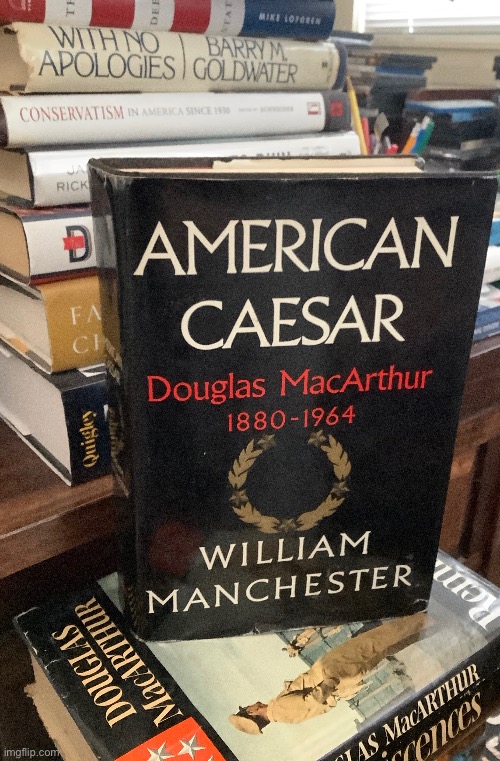
…His paranoia was almost certifiable. He appeared to need enemies the way other men need friends, and his conduct assured he would have plenty of them. The Army was his whole life, yet at the end he said “I am a one hundred percent disbeliever in war.” In his campaigns, he was remarkably economical of human life — his total casualties from Australia to V-J Day were fewer than those of the Battle of the Bulge — but his GIs, unimpressed, continued to mock him. William Manchester: American Caesar .
This post was edited on 12/11/25 at 9:41 pm
Posted on 12/11/25 at 8:18 pm to Champagne
quote:
We have not yet mentioned in this thread that in her 1904-1905 war against Russia, the Empire of Japan launched a dastardly surprise attack on the Russian Fleet bases of Port Arthur and Chemulpo.
It is an excellent point.
The Japanese naval assault on a sleeping Russia fleet in the Russo-Japanese War demonstrated Japan’s military capabilities and likewise that it was willing to take risks to assert its strategic interests.
.
The Russo-Japanese War indeed marked an announcement to the modern world that Japan was a formidable naval power.
This post was edited on 12/11/25 at 8:57 pm
Posted on 12/11/25 at 11:24 pm to Toomer Deplorable
quote:
MacArthur’s laggard response after Pearl Harbor and the destruction of the island nation’s air defenses essentially sealed the fate of the Philippines.
That's sort of my point. He had 10 hours notice from the report of the attack on Pearl, yet he still let his airplanes be destroyed on the ground. Where's the conspiracy theory there? How can such gross incompetence be explained without implicating him in a conspiracy with the Japanese?
Mind you, I generally don't go in for the conspiracies. I tend to attribute the failures to incompetence and negligence rather than the more dramatic conspiracies.
The fact is that is is easy to think that communications were as fast and as clear in 1941 as they are today, and ascribe fanciful explanations for failures. It's already been mentioned in the thread about how breaking 'the' Japanese code didn't necessarily lead to 100% actionable intelligence. In fact, the Japanese were constantly changing their codes. It wasn't just that the US broke 'the' code, they were constantly having to break new codes, but they had detected patterns that allowed them more easily to decrypt new Jap codes. From when you first break a code to the point when that code is retired, the amount of information extracted increases. It's a sort of sliding scale of information gathering, and not just 100% at the time of the code-breaking.
quote:
Yet contrast the Roosevelt Administration’s reaction to General MacArthur’s failures — after Japan’s element of surprise was spent mind you — and the political motivations behind the decision to relieve Admiral Kimmel and General Short of their respective command. The divergent reactions only further highlights the duplicity and scapegoating of the Roosevelt Administration over the Pearl Harbor attack.
Of course someone had to take the fall for the Pacific Fleet, you think FDR was going to resign himself? They knew the attack was coming at the Philippines, no one would've suspected an attack at Hawaii, even if intelligence was suggesting as much. It could easily be dismissed as a diversionary ploy. MacArthur could be forgiven for his losses by using the loss of the fleet as cover. No one was going to dismiss MacArthur.
But political scapegoating is not a conspiracy. It's just politics. After all, "generals are always fighting the last war instead of the next one." It was time to retire the peacetime officers and promote the wartime officers. Why do you think FDR canned Kimmel and Short but didn't can MacArthur?
'The two most dangerous men in America are Huey Long and Douglas MacArthur' - FDR
quote:
As an aside, MacArthur was easily caricatured because of his imperial manner and monstrous ego.
And yet the man, who had years earlier given the command for the cavalry charge on the WWI veterans demanding their back pay, was lionized - even after sneaking off of Corregidor in a submarine.
quote:
Despite his failure to decisively defend the Philippines, MacArthur consistently had one of the lower casualties rates of any commander in the blood-bowl that was the Pacific Theater of Operations.
This is a remarkable statement considering MacArthur was responsible for the single largest surrender of US forces in history.
quote:
his total casualties from Australia to V-J Day
Yeah, about that...
quote:
MacArthur’s tactic of island-hopping — which simply bypassed and cut off Japanese strongpoints — greatly reduced the overall casualties of his troops.
...and which Nimitz thought unnecessary. MacArthur was given a sideshow to ease his ego, while the Marines were the ones getting the job done. Did we really have to destroy Manila, with over 100,000 deaths, to get Tokyo to surrender? No, that was all for MacArthur's ego. Marshall may have admired his tactics, but strategically and operationally, MacArthur was a disaster.
But I'm still curious about how FDR goaded the Japanese into attacking Pearl Harbor. Apart from the embargo of oil and steel, what actions did he take, exactly? Once Japan was cut off from US oil, the strategic objective of the East Indies, and thus the elimination of the Philippine threat, was obvious. Is that justification for continuing to supply Japan with war materiel?
Forgive me for not providing better source material, but I'm going from memory of stuff I haven't studied in 30 years. It's just that it seems this same subject gets rehashed over and over with no new insights. And ultimately, making FDR out to be a criminal while MacArthur was a hero just collapses the whole conspiracy for me. Do I think FDR wanted to enter the war? Yes. After all, can you name a US president that was ever reluctant to go to war - protestations notwithstanding? It's no secret FDR wanted war with Germany, but goading Japan into war was no guarantee of war with Germany.
Posted on 12/12/25 at 1:31 am to Harry Boutte
Based on the information available now, I’ve felt that the carriers being out of Pearl, was a strategic move rather than pure luck.
Posted on 12/12/25 at 1:34 am to Toomer Deplorable
FDR was the worst president that the US ever had.
Posted on 12/12/25 at 2:15 am to Toomer Deplorable
Who here believes that we had intelligence Pearl Harbor was going to happen but allowed it to happen also believes that JFK was set up and killed by the CIA?
I bet it’s close to 100% alignment that you either believe both happened without a doubt or that neither happened and the narratives we’ve been fed are true.
I personally believe that both are true, JFK was killed by the CIA and Pearl Harbor was 100% preventable yet was enabled.
I also believe that Thomas Crooks was groomed by the CIA & FBI.
I bet there is a huge alignment on this forum of those that trust our government’s bullshite and those that are defaulted towards skepticism at best.
I bet it’s close to 100% alignment that you either believe both happened without a doubt or that neither happened and the narratives we’ve been fed are true.
I personally believe that both are true, JFK was killed by the CIA and Pearl Harbor was 100% preventable yet was enabled.
I also believe that Thomas Crooks was groomed by the CIA & FBI.
I bet there is a huge alignment on this forum of those that trust our government’s bullshite and those that are defaulted towards skepticism at best.

 Page 3 of 10

Popular
Back to top
 Follow TigerDroppings for LSU Football News