




- My Forums
- Tiger Rant
- LSU Recruiting
- SEC Rant
- Saints Talk
- Pelicans Talk
- More Sports Board
- Fantasy Sports
- Golf Board
- Soccer Board
- O-T Lounge
- Tech Board
- Home/Garden Board
- Outdoor Board
- Health/Fitness Board
- Movie/TV Board
- Book Board
- Music Board
- Political Talk
- Money Talk
- Fark Board
- Gaming Board
- Travel Board
- Food/Drink Board
- Ticket Exchange
- TD Help Board
Customize My Forums- View All Forums
- Show Left Links
- Topic Sort Options
- Trending Topics
- Recent Topics
- Active Topics
Started By
Message
re: Question for the farmers on the OT
Posted on 6/27/20 at 8:21 pm to OleWarSkuleAlum

Posted on 6/27/20 at 8:21 pm to OleWarSkuleAlum
The tariffs hurt the soybean demand so we don't see as much of them.
I've seen more rice fields this year and some cotton as well.
Corn is not as abundant here as it was.
Farming is a gamble for the farmer,they plant what they feel will keep them in business.
I've seen more rice fields this year and some cotton as well.
Corn is not as abundant here as it was.
Farming is a gamble for the farmer,they plant what they feel will keep them in business.
This post was edited on 6/27/20 at 8:22 pm
 0
0


Posted on 6/27/20 at 8:21 pm to tigergirl10
quote:Taco Bell would like to keep using tortillas, as well as most of Central America and parts of S. America, Mexico (including the North Mexican state of California)
Corn dogs. Corn fritters. Creamed corn. Cornbread. Grilled corn. Corn salsa. Cornbread dressing. Corn nuts.
Fried corn.

Posted on 6/27/20 at 8:41 pm to OleWarSkuleAlum
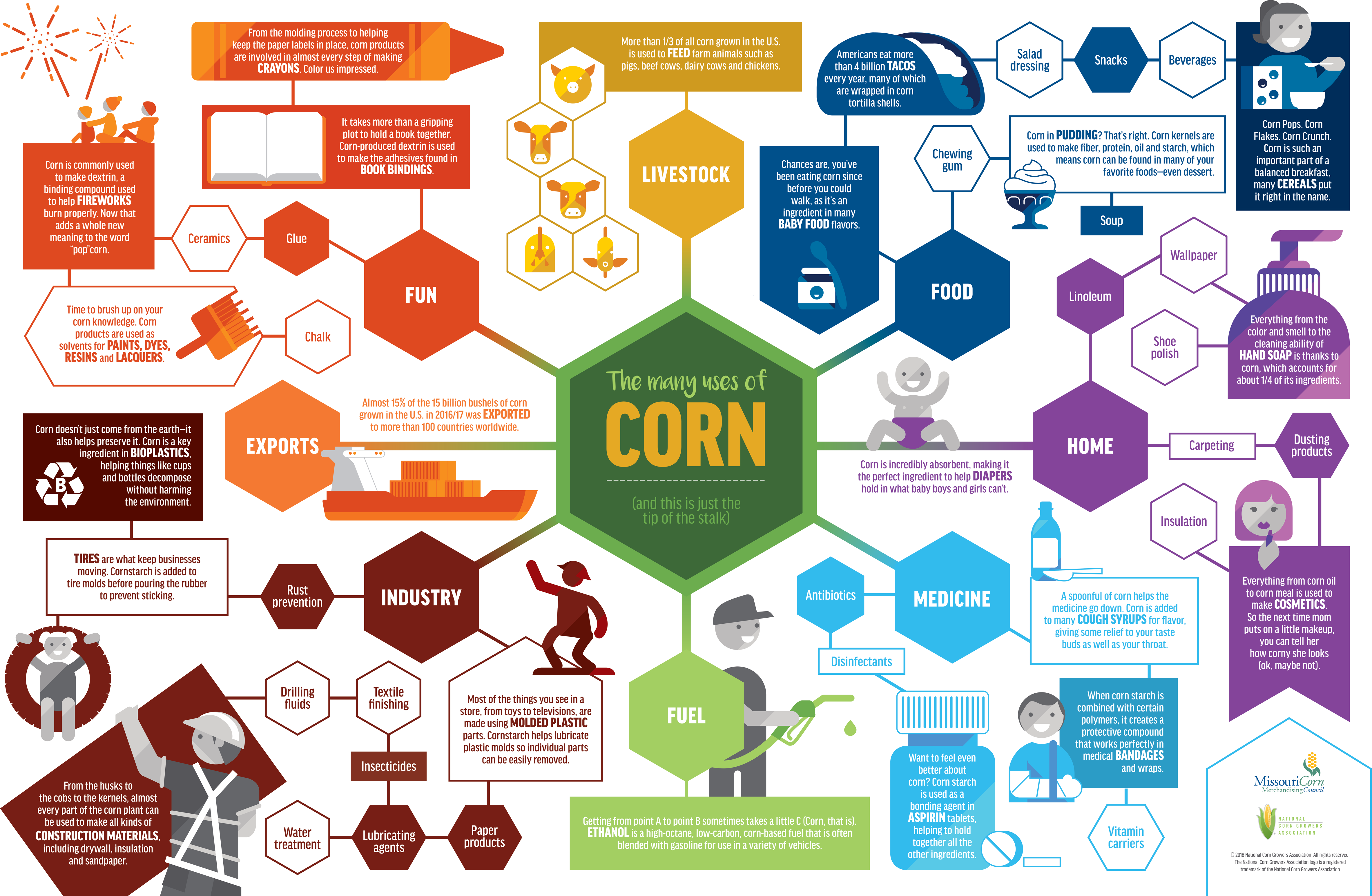
We use corn for damn near everything
Posted on 6/27/20 at 8:50 pm to Sidicous
quote:
Taco Bell would like to keep using tortillas
pretty sure those are flour tortillas at taco bell and not corn tortillas...fyi

Posted on 6/27/20 at 8:53 pm to OleWarSkuleAlum
Corn meal
Corn oil
Corn byproducts In other processed foods
I’m sure google would have an e tensive lost of things that you wouldn’t think that corn would be in.
Corn oil
Corn byproducts In other processed foods
I’m sure google would have an e tensive lost of things that you wouldn’t think that corn would be in.

Posted on 6/27/20 at 8:56 pm to Clark14
quote:
Farmers rotate crops and grow what’s in demand.
Maybe in most of the country. In South Louisiana, they grow rice and crawfish or sugarcane. They aren't jumping to another crop. That's the market down here, and that's what the land can grow.
Posted on 6/27/20 at 9:02 pm to Cowboyfan89
Last few years I thought I saw more soybeans. Now nothing but sugarcane. My anecdote is from Crowley Lafayette area.

Posted on 6/27/20 at 9:05 pm to OleWarSkuleAlum
You didn’t leave your trailer this weekend, idiot
Posted on 6/27/20 at 9:05 pm to OleWarSkuleAlum
Still a good bit of cotton in the Louisiana delta. Not as much as there used to be.

Posted on 6/27/20 at 9:12 pm to secondandshort
They are rotated


Posted on 6/27/20 at 9:14 pm to Cowboyfan89
AG subsidies are like Defense Spending and Public Education. You don’t necessarily have to fund any of the three.
Trouble is, the cost of NOT doing any of them may be EXPONENTIALLY greater than what they cost to do. There is no amount of political pressure that can force another country to sell you food or fiber. If they decide to cut you off, they have you by the short hairs, literally.
People credit President Reagan (correctly) for the fall of the Berlin Wall.
I would also say one of the first and most important salvos was fired by Jimmy Carter. His grain embargo on Russia was devastating to American grain farmers, but I think it was just as deadly to the Russian political leadership. Their people saw that the USSR, despite having tremendous amounts of arable, productive farmland, couldn’t feed their own population. They saw it was due to ineptness, not natural disasters. This wasn’t the first, nor the most important blow struck against communism, but I say it was a big one.
Let me close with this. The average row crop farmer will have $4-800 per acre invested in his crop. His govt subsidies will usually amount to under $150 of that. With that govt largesse, he does a LOT for his local economy.
He rents land, usually form a local.
He buys seed, chemical, and fertilizer from a local vendor.
He buys parts, fuel, equipment etc locally usually.
He takes his crop to a local gin, elevator, or buying point.
All those places he spends money employ locals. That $ he gets from the USDA wash through the local economy MULTIPLE times and have a great positive effect.
Trouble is, the cost of NOT doing any of them may be EXPONENTIALLY greater than what they cost to do. There is no amount of political pressure that can force another country to sell you food or fiber. If they decide to cut you off, they have you by the short hairs, literally.
People credit President Reagan (correctly) for the fall of the Berlin Wall.
I would also say one of the first and most important salvos was fired by Jimmy Carter. His grain embargo on Russia was devastating to American grain farmers, but I think it was just as deadly to the Russian political leadership. Their people saw that the USSR, despite having tremendous amounts of arable, productive farmland, couldn’t feed their own population. They saw it was due to ineptness, not natural disasters. This wasn’t the first, nor the most important blow struck against communism, but I say it was a big one.
Let me close with this. The average row crop farmer will have $4-800 per acre invested in his crop. His govt subsidies will usually amount to under $150 of that. With that govt largesse, he does a LOT for his local economy.
He rents land, usually form a local.
He buys seed, chemical, and fertilizer from a local vendor.
He buys parts, fuel, equipment etc locally usually.
He takes his crop to a local gin, elevator, or buying point.
All those places he spends money employ locals. That $ he gets from the USDA wash through the local economy MULTIPLE times and have a great positive effect.
Posted on 6/27/20 at 9:20 pm to secondandshort
quote:
Last few years I thought I saw more soybeans. Now nothing but sugarcane. My anecdote is from Crowley Lafayette area.
Was probably the fallow/soybean year for those guys. Some guys will plant soybeans after plowing out their cane; others leave it fallow and go right back into cane.
Most of the cane farmers I know seem to go fallow, so the cane gets plowed out October/Nov/Dec, and they turn around and plant it back into cane in August after working the fields.
Posted on 6/27/20 at 9:24 pm to Cowboyfan89
We absolutely need to end corn for ethanol. Total scam on every end.
Posted on 6/27/20 at 9:24 pm to Cowboyfan89
I talked to a farmer out there. He said the money was so much better on sugarcane than trying to grow soybeans and winter wheat.
Posted on 6/27/20 at 9:40 pm to OleWarSkuleAlum
Cotton lost a lot of ground to corn and soybeans during the ethanol boom, is a more intensive/difficult crop to grow, and faced serious competition from cheap synthetics and foreign producers. We seem to be somewhat stabilized on acreage right now, but who knows what will be the hot crop in the coming years.
Georgia and Texas are the two largest cotton producing states in the U.S. due to climate (it’s too dry to grow much else in most of Texas), soil limitations (you can grow a decent cotton crop on way worse dirt than other crops could stand), and crop rotation (cotton rotates very well with peanuts for Georgia).
I can’t speak for everywhere else, but the gins in my area have been steadily consolidating and stepping up their game. Only the best/most efficient are left. Yes, the managers are generally old guard holdouts, but there’s also serious interest from the young blood.
Georgia and Texas are the two largest cotton producing states in the U.S. due to climate (it’s too dry to grow much else in most of Texas), soil limitations (you can grow a decent cotton crop on way worse dirt than other crops could stand), and crop rotation (cotton rotates very well with peanuts for Georgia).
I can’t speak for everywhere else, but the gins in my area have been steadily consolidating and stepping up their game. Only the best/most efficient are left. Yes, the managers are generally old guard holdouts, but there’s also serious interest from the young blood.
Posted on 6/27/20 at 9:44 pm to secondandshort
quote:
I talked to a farmer out there. He said the money was so much better on sugarcane than trying to grow soybeans and winter wheat.
That's the case for most guys the last few years. They don't get shite for soybeans. And the sanctions a few years ago really hammered some guys. Drove a few out of business for sure. Others were skiddish to go back to soybeans, but one of the guys I know has been planting them this year.
Sugarcane gets pretty good subsidies, too. That's why there is so much more cane in south Louisiana now, and alot on ground that cane has no business being on. I've seen guys leave an entire field (sometimes 50 or more acres) because they couldn't harvest the cane due to field moisture. The damn fields have wells all over them because they were old rice fields. But sugarcane pays better than rice, so that's what happened.
Funny shite (kind of) is the fact that those sugarcane guys can pay more money to lease land because of the price of sugar, but they can't compete with developers. So a bunch of cane ground has been or is being bought in southern Lafayette Parish and put into subdivisions. Some of them are even named after the farms that once existed on that land.

Posted on 6/27/20 at 9:57 pm to Cowboyfan89
quote:Do farmers collect much data to analyze, or is it just kind of a "feel" for it? Do they know how much the soybean boosts yields? Does it vary much by field? Do they track yields per field to know when something must be done? Do they monitor crop health with imaging or other methods?
Was probably the fallow/soybean year for those guys. Some guys will plant soybeans after plowing out their cane; others leave it fallow and go right back into cane.
Most of the cane farmers I know seem to go fallow, so the cane gets plowed out October/Nov/Dec, and they turn around and plant it back into cane in August after working the fields.
I'm really ignorant about farming but I like to think about how tech can be used to boost profits.
Posted on 6/27/20 at 10:05 pm to OleWarSkuleAlum
 [/url][/img]
  [/url][/img]
 Posted on 6/27/20 at 10:15 pm to Korkstand
quote:
Do farmers collect much data to analyze, or is it just kind of a "feel" for it? Do they know how much the soybean boosts yields? Does it vary much by field? Do they track yields per field to know when something must be done? Do they monitor crop health with imaging or other methods?
Yeah, I’m a cotton, corn, and soybean farmer, and we use a couple different platforms to analyze data. We use a platform called Climate to log and analyze planting, application, and harvest data. You can analyze how all kinds of stuff affects yield. Seeding rates, amount of fertilizer applied, was a fungicide worth it, how planting slower or faster affected emergence and plant spacing... And about 1000 other things. A guy from LSU is the regional manager for Climate in the MidSouth.
We use another platform to analyze profit/loss of fields, enterprises, etc.
Posted on 6/27/20 at 10:16 pm to secondandshort
And don’t forget about the most hazardous corn product and one of the biggest — high fructose corn syrup.

 Page 3 of 4

Popular
Back to top
 Follow TigerDroppings for LSU Football News