




- My Forums
- Tiger Rant
- LSU Recruiting
- SEC Rant
- Saints Talk
- Pelicans Talk
- More Sports Board
- Fantasy Sports
- Golf Board
- Soccer Board
- O-T Lounge
- Tech Board
- Home/Garden Board
- Outdoor Board
- Health/Fitness Board
- Movie/TV Board
- Book Board
- Music Board
- Political Talk
- Money Talk
- Fark Board
- Gaming Board
- Travel Board
- Food/Drink Board
- Ticket Exchange
- TD Help Board
Customize My Forums- View All Forums
- Show Left Links
- Topic Sort Options
- Trending Topics
- Recent Topics
- Active Topics
Started By
Message
re: OT electricians, why does a 15A breaker keep tripping?
Posted on 8/2/18 at 10:14 am to LSUGRAD2008
Posted on 8/2/18 at 10:14 am to LSUGRAD2008
quote:
so if your breaker tripped but not the GFI ( both should be 15A) then you probably have a bad breaker.
Is that right? Wouldn't it be dependent on a few other things like if there is another appliance running on the circuit before the GFI? I thought the GFI would only blow if more than 15A were pulled on the outlets supported by the GFI.
I doubt it's another appliance running on the circuit. You would notice if something pulling 15a quit running when the breaker tripped. It's not like it's a light circuit or an alarm clock.
My guess is a bad wire or circuit breaker. For the OP, I hope it's a breaker.
I know enough to get myself in trouble but I'm not an electrician by far.
 0
0

Posted on 8/2/18 at 10:20 am to Jake88
are the outdoor outlets GFCI outlets? I've read if they go bad they can cause the breaker to trip.

Posted on 8/2/18 at 10:22 am to Jake88
What type of breaker? The AFCI can trip over very different things than and GFCI or regular breaker.
I have tripped AFCIs with static discharge.
There are multiple possible causes.
I have tripped AFCIs with static discharge.
There are multiple possible causes.


Posted on 8/2/18 at 11:14 am to Napoleon
quote:
Just thought about it.
If a gfci then it was the smoker. Calrod heating elements work the same principle as an incandescent light bulb. The element is between neutral and hot and it's resistance keeps it from simply shorting out but the current flow makes it get really hot.
Gfci's read this as a fault. Generally a toaster won't trip, but larger calrods like found in toaster ovens, fridges and smokers will.
Its a resistance element, it should not trip a gfci. GFCI trip based on an imbalance of current flow on the hot and neutral lines, no amount of resistance will cause that to be different in a circuit.
OP should post a picture of the breaker, if the breaker is not a GFCI, it is likely a bad breaker. If it is a GFCI, I would also be suspicious of moisture in one of the outdoor outlets.
For the OP here are a couple of images of gfci breakers I think the third is a combo arc fault/Ground fault


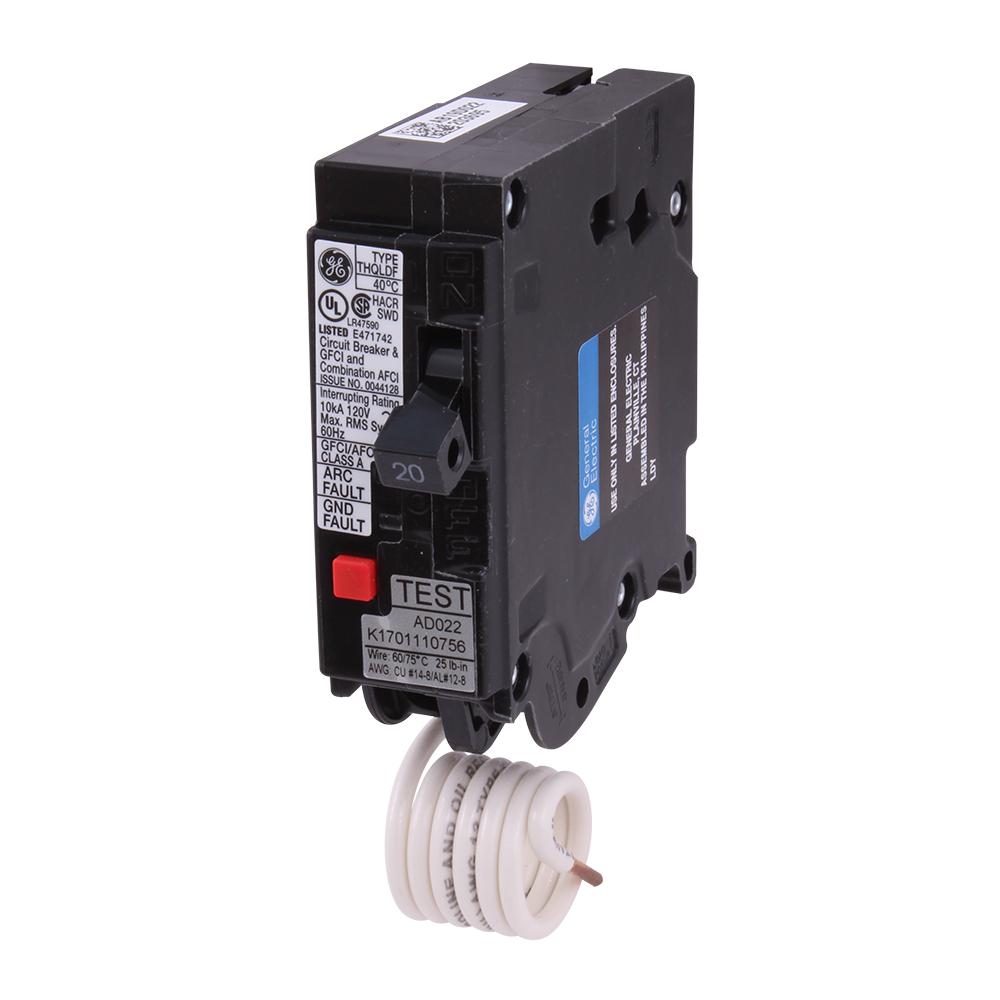
ETA:After reading Napoleons explanation of why Calrod elements can be problematic, I get what he is taking about. The elements themselves tend to cause fractures or crack that will cause minor ground faults potentially, particularly with moisture in the mix, that cause trips. I think the moral is never question Napoleon in these matters


This post was edited on 8/2/18 at 12:45 pm
Posted on 8/2/18 at 11:21 am to Jake88
If you have a new ground fault safety POS outside and your smoker is not PERFECTLY grounded it will trip. Use and good 3 prong extension cord.

Posted on 8/2/18 at 12:03 pm to Napoleon
"Calrod heating elements work the same principle as an incandescent light bulb. The element is between neutral and hot and it's resistance keeps it from simply shorting out but the current flow makes it get really hot."
Magnesium oxide surrounding the nichrome wire inside the Calrod is prevents short circuiting. The nichrome wire is spiraled based on the desired wattage. Closer spirals means more heat per inch.
Powdered MGO is poured into straight long lengths of Calrod with the nichrome wire suspended in the center of the tubing. The tubing has a greater diameter than the finished heater. Thru a swaging process the heater loses diameter and gains length while compacting the MGO to its porcelain like state. Without this the nichrome wire can create a dead short to the Calrod.
Magnesium oxide surrounding the nichrome wire inside the Calrod is prevents short circuiting. The nichrome wire is spiraled based on the desired wattage. Closer spirals means more heat per inch.
Powdered MGO is poured into straight long lengths of Calrod with the nichrome wire suspended in the center of the tubing. The tubing has a greater diameter than the finished heater. Thru a swaging process the heater loses diameter and gains length while compacting the MGO to its porcelain like state. Without this the nichrome wire can create a dead short to the Calrod.


Posted on 8/2/18 at 12:21 pm to mingoswamp
I love the technical talk these threads bring.
I've also noticed that the fridges that give the most problem to gfci's are GE which uses a halogen heater.
In training we've always been told no gfci outlet on a fridge.
The coolest thing about calrod is, it's flexible until it's heated. Once heated it breaks.
Also of note, and I left this out with fridges. It's a wet environment and you may have actual slight ground faults.
As the metal panels are grounded and very possible the moisture plays a part.
I've also noticed that the fridges that give the most problem to gfci's are GE which uses a halogen heater.
In training we've always been told no gfci outlet on a fridge.
The coolest thing about calrod is, it's flexible until it's heated. Once heated it breaks.
Also of note, and I left this out with fridges. It's a wet environment and you may have actual slight ground faults.
As the metal panels are grounded and very possible the moisture plays a part.
Posted on 8/2/18 at 12:26 pm to Napoleon
I agree Never knew when my years of selling electric heaters could be used
Never knew when my years of selling electric heaters could be used Posted on 8/2/18 at 12:36 pm to cajuncarguy
quote:
If you have a new ground fault safety POS outside and your smoker is not PERFECTLY grounded it will trip. Use and good 3 prong extension cord.
Believe it or not, the quality of your grounding circuit has not affect on an typical GFCI. It compares the current flow on the hot and neutral side of the circuit If they do not balance within given parameters, it will trip.
Now if you mean the circuit needs to be perfectly isolated from ground, then that would make sense.

Posted on 8/2/18 at 12:39 pm to mdomingue
quote:Now that you mentioned it and reminded me, I did some pressure washing near one of the outdoor outlets last Saturday. The outlet is covered though, but surely it's possible moisture made it in. But why then did a nail gun work all yesterday in that very same outlet while the smoker tripped the breaker? Why would the breaker trip on its own in the middle of the night?
If it is a GFCI, I would also be suspicious of moisture in one of the outdoor outlets.
Sl going to swap one of the other Arc fault breakers and test if that's the problem.

Posted on 8/2/18 at 1:30 pm to Jake88
quote:
Now that you mentioned it and reminded me, I did some pressure washing near one of the outdoor outlets last Saturday.
This is a common cause of trips on GCFI devices. Usually corrects itself over time but sometimes you can speed that up by opening the outlet and drying it out using dry air. Obviously do this with the circuit off.
quote:
But why then did a nail gun work all yesterday in that very same outlet while the smoker tripped the breaker?
Before or after the smoker tripped it? If after, then the outlet likely has sufficiently dried out. If before, it may go back to an actual breaker issue. I still don't know if you have a GFCI breaker. If it isn't all this is moot and just replace the breaker with one just like it.
quote:
Why would the breaker trip on its own in the middle of the night?
If it is a GFCI breaker moisture could do this. condensing moisture may drip onto lines, evening is the most likely time as temperatures drop.
quote:
Sl going to swap one of the other Arc fault breakers and test if that's the problem.
Arc Fault breakers do not provide the same level of ground fault protection as a gfci breaker, so if malfunctioning the breaker is a GFCI breaker or a AFCI/GFCI combo breaker, it may trip when a simple AFCI breaker would
Posted on 8/2/18 at 1:35 pm to Jake88
Check the inductor's capacitive reactance

Posted on 8/2/18 at 1:53 pm to Jake88
Sounds like you really need 30A.


Posted on 8/2/18 at 2:50 pm to Napoleon
quote:I think its code now
In training we've always been told no gfci outlet on a fridge.
Posted on 8/2/18 at 2:53 pm to Jake88
sometimes they go bad. only way to tell is swap it with a different breaker or just replace it, they only cost like $5

Posted on 8/2/18 at 2:56 pm to Jake88
Lol what is 15a? 30a for poor people?
Posted on 8/2/18 at 3:10 pm to mdomingue
I don't know if it's a gfci breaker, I'm not home at the moment. It has a yellow test button next to it if that tells you anything.
Posted on 8/2/18 at 4:03 pm to Jake88
Could be either AFCI, GFCI, or an AFCI/GFCI combo breaker. It should say it on the front of the breaker.
Posted on 8/2/18 at 4:34 pm to mdomingue
quote:
This is a common cause of trips on GCFI devices.
Also leading to the GFI burning up in the box therefore tripping the breaker.
14 years ago they didn't spec WRGFCI receptacles or even make them.
If you pull the GFI, turn the breaker that's been tripping off first. Sometimes the whole back of the GFI will be gone.
Good luck.


Posted on 8/2/18 at 4:49 pm to Jake88
quote:
but, overnight while the line was seemingly not in use, the breaker tripped again
Maybe wife is screwing with you.

 Page 3 of 4

Popular
Back to top
 Follow TigerDroppings for LSU Football News