




- My Forums
- Tiger Rant
- LSU Recruiting
- SEC Rant
- Saints Talk
- Pelicans Talk
- More Sports Board
- Fantasy Sports
- Golf Board
- Soccer Board
- O-T Lounge
- Tech Board
- Home/Garden Board
- Outdoor Board
- Health/Fitness Board
- Movie/TV Board
- Book Board
- Music Board
- Political Talk
- Money Talk
- Fark Board
- Gaming Board
- Travel Board
- Food/Drink Board
- Ticket Exchange
- TD Help Board
Customize My Forums- View All Forums
- Show Left Links
- Topic Sort Options
- Trending Topics
- Recent Topics
- Active Topics
Started By
Message
re: Battlefields of WWI fading into greenery
Posted on 5/30/18 at 8:28 am to Jim Rockford

Posted on 5/30/18 at 8:28 am to Jim Rockford
it's a monument to the damage that power in the wrong hands can do to the common man.
 0
0



Posted on 5/30/18 at 8:40 am to tharre4
quote:
Fun fact: the popular gin and champagne drink "French-75"s name comes from the French Canon de 75 modèle 1897 because of the great "Pop" it provides. In truth, the 75mm as a field piece was dated and vastly under powered compared to the newer German artillery of WW1.
The last part of your statement isn’t exactly accurate. The French “75” is considered one of the best field prieces of the war. It’s extremly high rate of fire (up to 30 rounds per minute with a good crew) made it a devestating weapon against advancing infantry. And in WWI it was not “dated”. In fact, thanks to its recoil mechanism that allowed for rapid fire without having to re-lay the gun after each round was fired, it was, comparative to other artillery pieces of the time, considered quite modern, only having been in service for about 15 years at the start of the war.
Where it came short was in delivering heavy fire capable of reducing enemy earth works. However, this was not due to being “dated”, rather it was due to the fact it was designed to engage infantry in the open. Thus, the French, at the onset of trench warfare in 1915 utilized their heavier guns like the 155mm when delivering predatory fires against German trenches in support of offensives while the 75mm was used, to very good effect, in a defensive role to break up German attacks on French trenches. It was also quite effective in delivering high concentrations of gas shells in a short matter of time thanks to its high rate of fire and good accuracy.
And not only did the French use it, American forces in WWI also adopted the 75mm. It was also mounted on trucks and used as a mobile AA gun. The French also mounted it on some of their tanks toward the end of the war. It was still in use by France at the start of WWII.

Posted on 5/30/18 at 8:46 am to Jim Rockford
Great pictures. Kind of brings the old Sandburg poem to life.
quote:
Grass
BY CARL SANDBURG
Pile the bodies high at Austerlitz and Waterloo.
Shovel them under and let me work—
I am the grass; I cover all.
And pile them high at Gettysburg
And pile them high at Ypres and Verdun.
Shovel them under and let me work.
Two years, ten years, and passengers ask the conductor:
What place is this?
Where are we now?
I am the grass.
Let me work.

Posted on 5/30/18 at 8:48 am to Darth_Vader
quote:
The last part of your statement isn’t exactly accurate.
My point was that the French believed the 75 to be the best offensive field piece before war were declared. they sacrificed producing larger and more offensively capable artillery and instead stuck with what they already had been producing.


Posted on 5/30/18 at 9:09 am to TorchtheFlyingTiger
quote:
It was interesting touring these sights with a mix of mostly German, Dutch, Belgian, and US officers.
When I was stationed in Germany we did a staff ride to all the towns in Operation Market Garden with our German counterparts from one of their Signal Battalions.
It was interesting to say the least.
Posted on 5/30/18 at 9:23 am to tharre4
quote:
My point was that the French believed the 75 to be the best offensive field piece before war were declared. they sacrificed producing larger and more offensively capable artillery and instead stuck with what they already had been producing.
I see what you’re saying. And you’re correct that the 75 proved to be a poor offensive weapon once trench warfare materlized. But keep in mind that nobody foresaw that the European war would morph into such a creature and the 75 is a reflection of that.
What made the 75 a poor offeive weapon against trenches was it’s high muzzle velocity and flat trajectory. These characteristics made it devestating against infantry in the open, but hampered it against trenches. It took the French a good year or so, and a few hundred thousand casualties, to learn this lesson. Once they realized the 75’s short coming against trenches they modified their artillery doctrine to use their heavier guns like the 155mm which had a slower, heavier round with a high arc to deliver plunging fire to reduce German field works. However, they also learned the heavier guns were less effective against German attacks than the 75. In short what made the 75 a poor offensive weapon made it a good defensive weapon and vice versa for heavier guns like the 155.

Posted on 5/30/18 at 9:41 am to tharre4
quote:
My point was that the French believed the 75 to be the best offensive field piece before war were declared. they sacrificed producing larger and more offensively capable artillery and instead stuck with what they already had been producing.
What do you mean "sacrificed producing larger and more offensively capable artillery" ? Large and heavy field artillery is quite immobile and can't keep up with armies on the march during a WWI offensive. The French 75 was mobile enough to do that.
Great Britain's armies did not field heavy artillery in France in 1914. In that regard, they were just like the French. The truth is that the French 75 of 1914 remained serviceable throughout WWI and was useful even into WW2 because the 75mm caliber of field artillery was still deadly throughout both wars.
Only the Imperial Germany Army sent their armies to fight in 1914 equipped with heavy field artillery -- 150mm and 210mm -- and this was unusual for the day.
Both Britain and France had catching up to do WRT fielding heavy artillery in the field. Britain had so little artillery ammunition stockpiled in 1914 that it took them two years to put sufficient stocks of artillery ammo in the field. Even with the assistance of the USA in importing explosives to Britain beginning in 1915, Britain finally established sufficient artillery ammo stocks in 1916.
As such, I don't understand the meaning of your statement. Of course, both France and Britain both fielded heavy artillery later in WWI. France even stripped the Verdun fortress, and other fortresses, of its heavy guns before 1916 in order to put that heavy field artillery with their field armies.
PS
quote:
The French “75” is considered one of the best field pieces of the war.
True statement, Darth.
This post was edited on 5/30/18 at 9:53 am
Posted on 5/30/18 at 9:47 am to Darth_Vader
The French 75 was capable of both direct fire and indirect fire as well as any other field artillery piece of its class. Once placed on a proper gun carriage and equipped with 1918 fire direction support, the French 75 was effective as an indirect fire piece.
If we want to bash the French Army's ordnance in 1914, we should focus on their Lebel infantry rifle and their machine gun, both of which were below average.
Good stuff. I enjoy exploring these topics. There is a LOT of incorrect info out there WRT these topics however.
If we want to bash the French Army's ordnance in 1914, we should focus on their Lebel infantry rifle and their machine gun, both of which were below average.
Good stuff. I enjoy exploring these topics. There is a LOT of incorrect info out there WRT these topics however.
This post was edited on 5/30/18 at 9:51 am


Posted on 5/30/18 at 9:47 am to magildachunks
quote:
Why did this get downvoted.
This is a perfect example of that statement.
people are stupid.
Your initial comment is fitting as frick.


Posted on 5/30/18 at 9:57 am to Centinel
quote:
It was interesting to say the least.
What do you mean?

Posted on 5/30/18 at 10:05 am to Champagne
quote:
If we want to bash the French Army's ordnance in 1914, we should focus on their Lebel infantry rifle and their machine gun, both of which were below average.
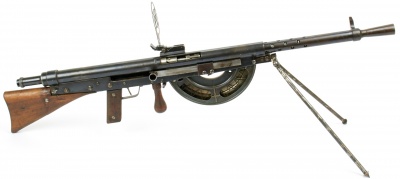
And let’s not forget the light MG the French introduced in 1916 that is generally regarded as the most useless firearm ever to see battle, the notoriously unreliable “Chauchat”.
Posted on 5/30/18 at 10:07 am to Champagne
quote:
What do you mean "sacrificed producing larger and more offensively capable artillery" ?
The German high command foresaw the need for siege howitzers over field guns much sooner than any other nation. The 75 is great for what is was designed for; open field engagements. I'm not sawing it's a bad gun or has a poor track record, however, in terms of what type of gun was necessary for trench warfare the 75' was not well suited. the French did not recognize this like the Germans had before the war began. The Germans were prepared for trench warfare because they were first prepared to lay siege to the many French forts on the border.
I enjoy the discussion and I'm not trying to rustle yo' jimmys.

Posted on 5/30/18 at 10:08 am to Methuselah
quote:
if any question why we died
tell them, "because our fathers lied."
Kipling, who lost his only son. His body was never recovered. Kipling had been an ardent propagandist for the war, and blamed himself.
Posted on 5/30/18 at 10:12 am to Darth_Vader
quote:
Chauchat
I believe this guns poor track record is mostly due to the openings in the magazine that allow it to be caked with mud and debris. Also, if remember correctly, the Americans had their Chauchats rechambered to 30-06 (might not be an accurate statement) that caused many of the malfunctions that the original caliber did not.
Forgotten Weapons
This post was edited on 5/30/18 at 10:14 am
Posted on 5/30/18 at 10:18 am to tharre4
quote:
The German high command foresaw the need for siege howitzers over field guns much sooner than any other nation. The 75 is great for what is was designed for; open field engagements. I'm not sawing it's a bad gun or has a poor track record, however, in terms of what type of gun was necessary for trench warfare the 75' was not well suited. the French did not recognize this like the Germans had before the war began. The Germans were prepared for trench warfare because they were first prepared to lay siege to the many French forts on the border.
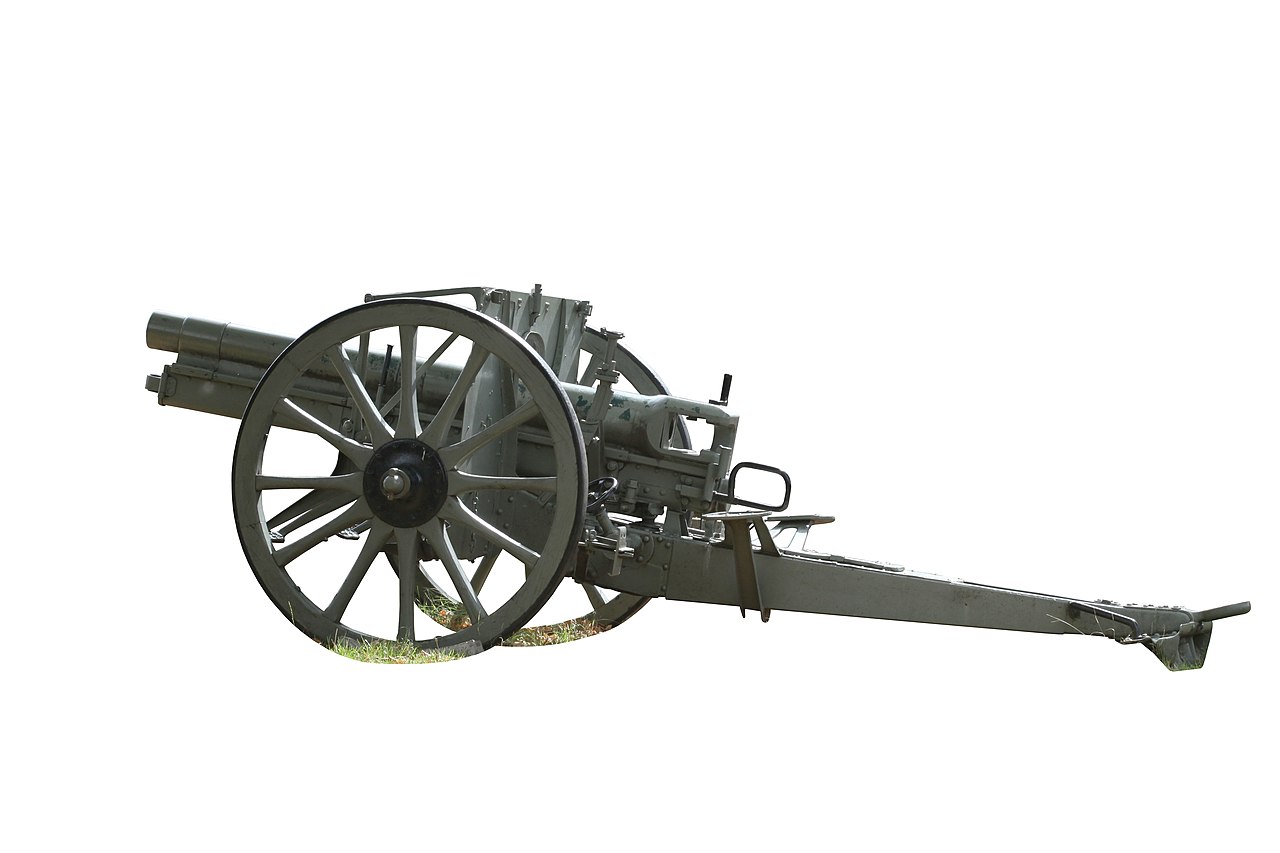
You’re right that the German’s were better equipped than either the French or British early on when it came to heavy artillery. And you’re also correct that this was due to them recognizing the need for such artillery to deal with fortifications. However, they were thinking more of dealing with Belgian forts like those around Liege instead of French forts because the Schlieffen Plan called for reducing the Belgian forts but flanking the French forts and taking them from the rear, thus pinning the bulk of the French Army Against the German frontier after first taking Paris.
But keep in mind that the Germans saw the French 75 when it was introduced and decided to build a similar field piece to use in the same manner. Thus was born the German “77”.

Posted on 5/30/18 at 10:48 am to Darth_Vader
quote:
generally regarded as the most useless firearm ever to see battle, the notoriously unreliable “Chauchat”.
It's not horrible in Battlefield 1.
Not my favorite mind you, but not horrible.
Posted on 5/30/18 at 11:46 am to Darth_Vader
quote:
And let’s not forget the light MG the French
Yes, that's why I posted about the below average French Army machine gun. The Hotchkiss MG was also below average, as was the St. Étienne Mle 1907.
This post was edited on 5/30/18 at 11:47 am
Posted on 5/30/18 at 11:56 am to tharre4
What I'm trying to suggest to you is that your conclusions are not completely accurate. You say that the Germans were more prepared for trench warfare in 1914 than the French. I say, if so, it was by accident. The Imperial German Army General Staff in 1914 did not expect to see the battlefield reality of 1916. Nor did Britain or France.
Also, you conclude that the French 75 was ineffective or marginally effective in trench warfare, and you question why France would continue to manufacture and deploy that weapon. That's not really accurate to say because, with appropriate carriage modifications, the French 75mm gun was useful throughout WWI and WW2.
The British equivalent of the French 75mm wasn't used in WW2. The German equivalent of the French 75mm was not used in WW2. The French 75mm field artillery piece WAS used in WW2 because it remained useful and was, I conclude, a superior design in 1914.
All I'm saying is that your posts sort of bash the French 75mm piece unjustly. It was better than the equivalent artillery pieces of the other combatants of WWI. That's all I'm saying -- I'm saying it was excellent. My evidence to support me is the fact that it was fielded effectively in both World Wars, but the other pieces in its class were not.
We should also be reminded that Heavy Artillery was not the solution to break the Trench Warfare Deadlock. What was the solution was the innovative Infiltration Tactics developed by the Imperial German Army. Of course, once technology allowed radio-communicating tanks to implement the Infiltration Tactical approach, it was a revolution of sorts in the art of war. But that story is one for the years of WW2.
Also, you conclude that the French 75 was ineffective or marginally effective in trench warfare, and you question why France would continue to manufacture and deploy that weapon. That's not really accurate to say because, with appropriate carriage modifications, the French 75mm gun was useful throughout WWI and WW2.
The British equivalent of the French 75mm wasn't used in WW2. The German equivalent of the French 75mm was not used in WW2. The French 75mm field artillery piece WAS used in WW2 because it remained useful and was, I conclude, a superior design in 1914.
All I'm saying is that your posts sort of bash the French 75mm piece unjustly. It was better than the equivalent artillery pieces of the other combatants of WWI. That's all I'm saying -- I'm saying it was excellent. My evidence to support me is the fact that it was fielded effectively in both World Wars, but the other pieces in its class were not.
We should also be reminded that Heavy Artillery was not the solution to break the Trench Warfare Deadlock. What was the solution was the innovative Infiltration Tactics developed by the Imperial German Army. Of course, once technology allowed radio-communicating tanks to implement the Infiltration Tactical approach, it was a revolution of sorts in the art of war. But that story is one for the years of WW2.
This post was edited on 5/30/18 at 12:07 pm
Posted on 5/30/18 at 12:03 pm to tigerpimpbot
Always think of Gettysburg when I hear this song.
Sticks That Made Thunder
The SteelDrivers
My roots are deeper than the bones, the others
My colors that change with the sun
My branches, we're higher
Than anything on the hillside
On the day that I watched them all come
Some wear the color of the sky in the winter
Some, we're as blue as the night
They came like a storm with the light of the morn
And they fell through the whole day and night
Colors flew high and they danced in the sky
As I watched them come over the hill
Then to my wonder, sticks that made thunder
Such a great number lay still
When the light came again
There was death on the wind
As the buzzards made way for the worms
And the little white trees that don't bend in the breeze
For the ones that will never return
Colors flew high and they danced in the sky
As I watched them come over the hill
Then to my wonder, sticks that made thunder
Such a great number lay still
Those that have fallen, come when I call them
And answer the best that they can
But all they can see is what they used to be
And that's all that they understand
Colors flew high and they danced in the sky
As I watched them come over the hill
Then to my wonder, sticks that made thunder
Such a great number lay still
Colors flew high and they danced in the sky
As I watched them come over the hill
Then to my wonder, sticks that made thunder
Such a great number lay still
Sticks That Made Thunder
The SteelDrivers
My roots are deeper than the bones, the others
My colors that change with the sun
My branches, we're higher
Than anything on the hillside
On the day that I watched them all come
Some wear the color of the sky in the winter
Some, we're as blue as the night
They came like a storm with the light of the morn
And they fell through the whole day and night
Colors flew high and they danced in the sky
As I watched them come over the hill
Then to my wonder, sticks that made thunder
Such a great number lay still
When the light came again
There was death on the wind
As the buzzards made way for the worms
And the little white trees that don't bend in the breeze
For the ones that will never return
Colors flew high and they danced in the sky
As I watched them come over the hill
Then to my wonder, sticks that made thunder
Such a great number lay still
Those that have fallen, come when I call them
And answer the best that they can
But all they can see is what they used to be
And that's all that they understand
Colors flew high and they danced in the sky
As I watched them come over the hill
Then to my wonder, sticks that made thunder
Such a great number lay still
Colors flew high and they danced in the sky
As I watched them come over the hill
Then to my wonder, sticks that made thunder
Such a great number lay still
Posted on 5/30/18 at 12:03 pm to tharre4
quote:
in terms of what type of gun was necessary for trench warfare the 75' was not well suited. the French did not recognize this like the Germans had before the war began.
The French 75 was indeed useful for trench warfare, as part of an ensemble of weaponry. In pre-war planning, the Germans most certainly did not recognize that trench warfare would happen any more than the French or German pre-war planners.
Trench Warfare on the Western Front in WWI was like the Spanish Inquisition -- nobody expected it.


 Page 4 of 5

Popular
Back to top
 Follow TigerDroppings for LSU Football News