




- My Forums
- Tiger Rant
- LSU Recruiting
- SEC Rant
- Saints Talk
- Pelicans Talk
- More Sports Board
- Fantasy Sports
- Golf Board
- Soccer Board
- O-T Lounge
- Tech Board
- Home/Garden Board
- Outdoor Board
- Health/Fitness Board
- Movie/TV Board
- Book Board
- Music Board
- Political Talk
- Money Talk
- Fark Board
- Gaming Board
- Travel Board
- Food/Drink Board
- Ticket Exchange
- TD Help Board
Customize My Forums- View All Forums
- Show Left Links
- Topic Sort Options
- Trending Topics
- Recent Topics
- Active Topics
Started By
Message

Lets learn something about space
Posted on 12/28/17 at 2:58 pm


Posted on 12/28/17 at 2:58 pm
Today's topic: Spica AND Type II Supernovae

Seen above as the blue star to the right of the moon, Spica is the brightest star in Virgo and the 15th or 16th brightest star in the sky, as it and Antares are of similar brightness and sometimes listed differently. Spica is 250 light years (6 trillion x 250 miles) away and 23,000 times brighter than our sun. It is actually a binary star, which means that it is two stars that are orbiting one another around a common center, as shown below
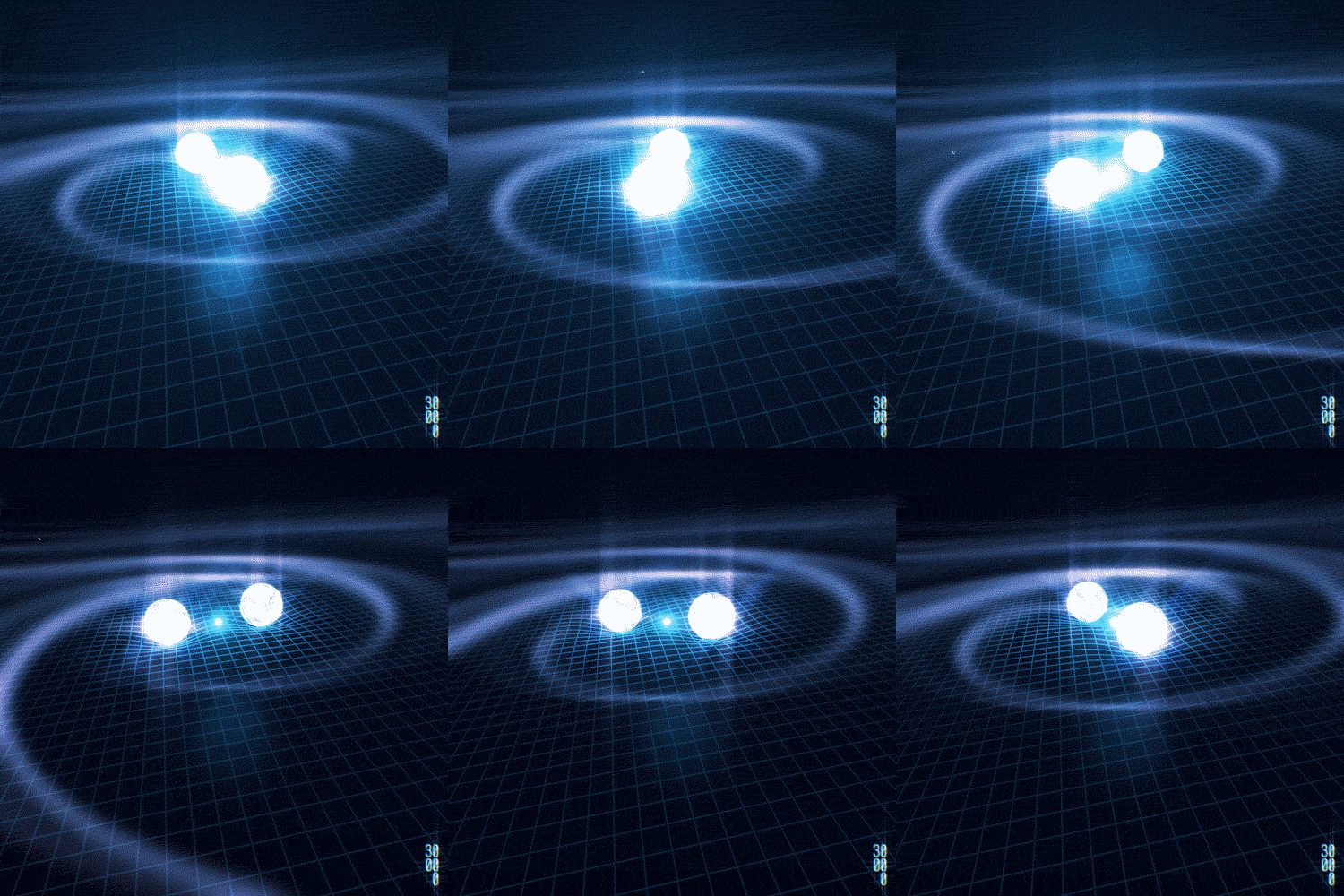
Pretty gnarly huh? These two stars are just 0.12 astronomical units apart. An astronomical unit is the distance between our sun and Earth. One astronomical unit is roughly 93 million miles, so these two stars are only 11,160,000 miles apart from each other and orbit one another once every 4 days. This makes their mutual gravity so strong that it actually distorts each star into an egg shape, rather than spherical.
These two stars are very hot, burning at 40,000 and 33,000 degrees Fahrenheit. For comparison, our sun burns at just 10,000 degrees. The primary star has 10 times the mass and 7 times the radius of our sun and is actually the closest star to our sun that is capable of ending its life with a Type II Supernova. Which will, in turn, end the life of the smaller star.
Type II supernovae are distinguished from plain, old, boring supernovae by the presence of hydrogen. Unlike the Sun, massive stars possess the mass needed to fuse elements that have an atomic mass greater than hydrogen and helium, albeit at increasingly higher temperatures and pressures, causing increasingly shorter stellar life spans. The star fuses increasingly higher mass elements, starting with hydrogen and then helium, progressing up through the periodic table until a core of iron and nickel is produced. See below

Fusion of iron or nickel produces no net energy output, so no further fusion can take place, leaving the nickel-iron core inert. Due to the lack of energy output creating outward pressure, equilibrium is broken and the core collapses on itself due to how great its mass is, creating an explosion that looks like this:
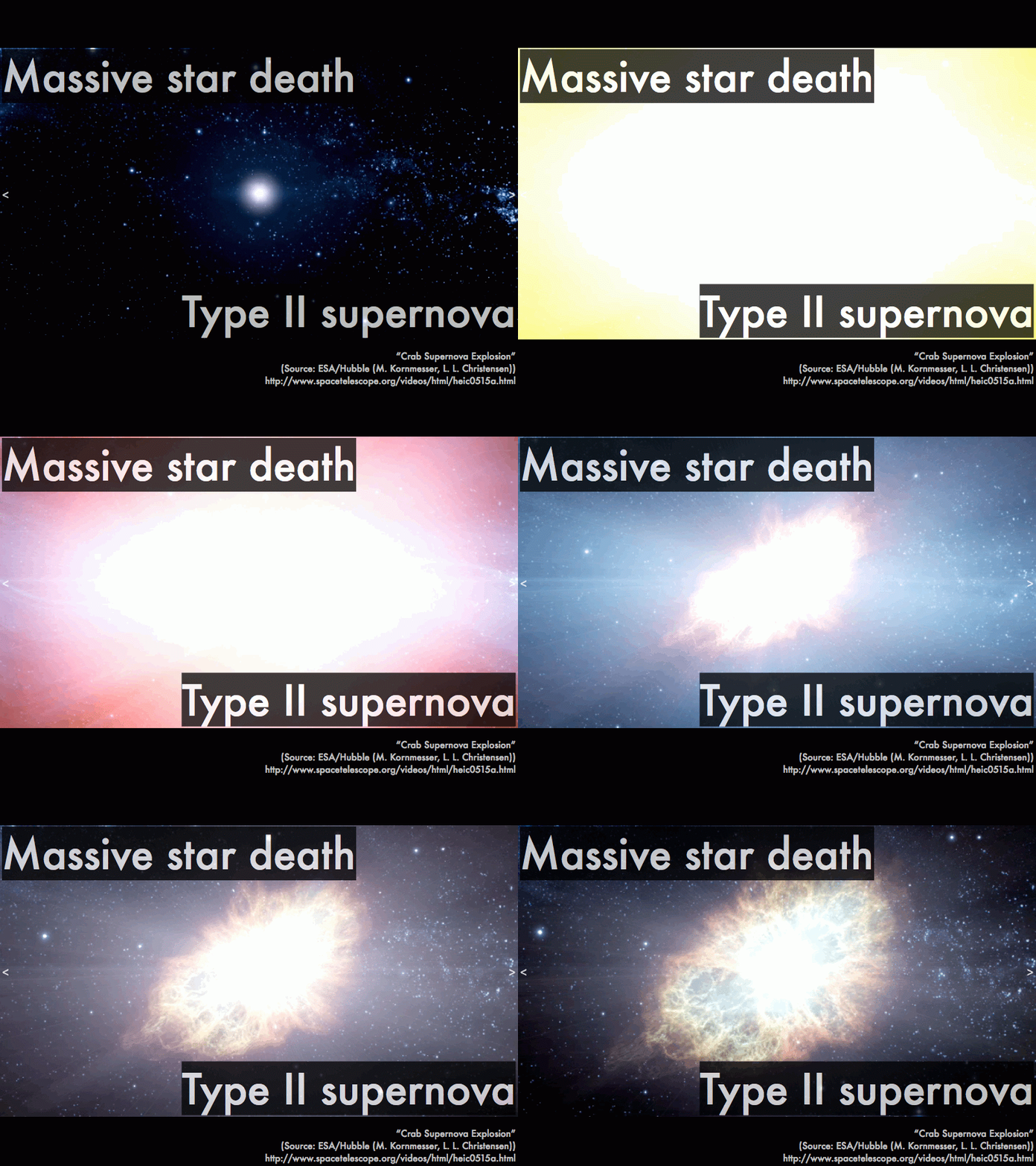
tight.
If you want to see this star with the naked eye, youll want to follow the handle of the Big Dipper through Arcturus, as the image below depicts

Fun Fact: Spica is one of the stars seen on the Brazillian national flag.
Seen above as the blue star to the right of the moon, Spica is the brightest star in Virgo and the 15th or 16th brightest star in the sky, as it and Antares are of similar brightness and sometimes listed differently. Spica is 250 light years (6 trillion x 250 miles) away and 23,000 times brighter than our sun. It is actually a binary star, which means that it is two stars that are orbiting one another around a common center, as shown below
Pretty gnarly huh? These two stars are just 0.12 astronomical units apart. An astronomical unit is the distance between our sun and Earth. One astronomical unit is roughly 93 million miles, so these two stars are only 11,160,000 miles apart from each other and orbit one another once every 4 days. This makes their mutual gravity so strong that it actually distorts each star into an egg shape, rather than spherical.
These two stars are very hot, burning at 40,000 and 33,000 degrees Fahrenheit. For comparison, our sun burns at just 10,000 degrees. The primary star has 10 times the mass and 7 times the radius of our sun and is actually the closest star to our sun that is capable of ending its life with a Type II Supernova. Which will, in turn, end the life of the smaller star.
Type II supernovae are distinguished from plain, old, boring supernovae by the presence of hydrogen. Unlike the Sun, massive stars possess the mass needed to fuse elements that have an atomic mass greater than hydrogen and helium, albeit at increasingly higher temperatures and pressures, causing increasingly shorter stellar life spans. The star fuses increasingly higher mass elements, starting with hydrogen and then helium, progressing up through the periodic table until a core of iron and nickel is produced. See below
Fusion of iron or nickel produces no net energy output, so no further fusion can take place, leaving the nickel-iron core inert. Due to the lack of energy output creating outward pressure, equilibrium is broken and the core collapses on itself due to how great its mass is, creating an explosion that looks like this:
tight.
If you want to see this star with the naked eye, youll want to follow the handle of the Big Dipper through Arcturus, as the image below depicts
Fun Fact: Spica is one of the stars seen on the Brazillian national flag.
 23
23


Posted on 12/28/17 at 3:01 pm to spaceranger
WNHI


Posted on 12/28/17 at 3:01 pm to spaceranger
enjoy an upvote
Posted on 12/28/17 at 3:02 pm to spaceranger
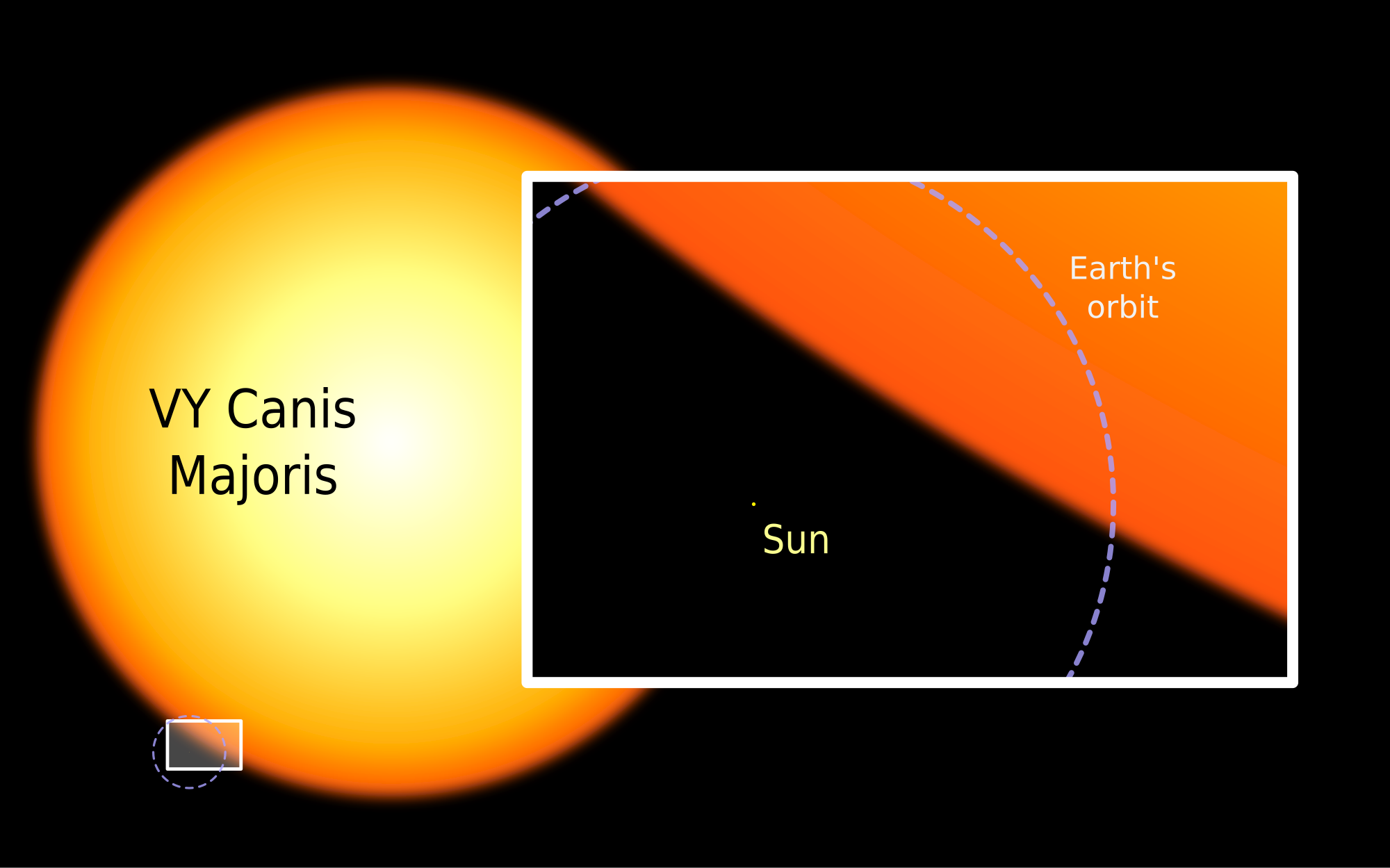
Poser stars bruh. I wanna see the explosion from this thing:

Posted on 12/28/17 at 3:02 pm to spaceranger
quote:
spaceranger
Keep following your dreams my man

Posted on 12/28/17 at 3:02 pm to spaceranger
quote:
spaceranger
Username checks out

Posted on 12/28/17 at 3:03 pm to spaceranger
Dumb questions...
How do you pronounce spica? Like "spic and span", or like speak-a?
Why haven't the two stars combined? Wouldn't their gravity pull them together?
How do you pronounce spica? Like "spic and span", or like speak-a?
Why haven't the two stars combined? Wouldn't their gravity pull them together?


Posted on 12/28/17 at 3:04 pm to spaceranger


Posted on 12/28/17 at 3:07 pm to spaceranger
I've been watching a ton of documentaries on space/the universe lately. Definitely interesting stuff.
I'm especially interested in the theories of how they think our universe will someday end. "The big rip", which many tend to believe. Meaning our universe is expanding so rapid, it will eventually be too much and will explode. Or, "the big freeze", meaning everything slowly starts dying off in our universe and everything essentially freezes.
The only conclusion I can come up with, is that they have no fricking clue. It's still interesting stuff though.
I'm especially interested in the theories of how they think our universe will someday end. "The big rip", which many tend to believe. Meaning our universe is expanding so rapid, it will eventually be too much and will explode. Or, "the big freeze", meaning everything slowly starts dying off in our universe and everything essentially freezes.
The only conclusion I can come up with, is that they have no fricking clue. It's still interesting stuff though.
This post was edited on 12/28/17 at 3:08 pm

Posted on 12/28/17 at 3:18 pm to spaceranger
God created the earth. Space isn't real

Posted on 12/28/17 at 3:28 pm to el Gaucho
quote:
God created the earth. Space isn't real
Whatever. I bet next you're going to try to tell us the earth is flat.


Posted on 12/28/17 at 3:33 pm to messyjesse
UY Scuti called VY Canis Majoris’s mom a fat hoe.
Posted on 12/28/17 at 3:34 pm to TigerstuckinMS
quote:
Whatever. I bet next you're going to try to tell us the earth is flat.
Hollow Earth Theory will be the talk of 2018.

Posted on 12/28/17 at 3:36 pm to saint tiger225
quote:
"The big rip", which many tend to believe. Meaning our universe is expanding so rapid, it will eventually be too much and will explode.
Not quite. The idea behind the "big rip" is that at some point the ever-accelerating expansion of the universe will exceed the speed of light everywhere. Since nothing can interact with anything else at such speeds, everything essentially is ripped apart by expanding space. Not really an explosion.
Don't worry though, even if it happens it won't be for over 20 billion years from now. LSU will beat Alabama before then and everything will be restored.


Posted on 12/28/17 at 3:45 pm to spaceranger
Pretty cool that atoms heavier than iron are made in supernova explosions. So, atoms in our body... in everything we see was once part of a star that blew up.

Posted on 12/28/17 at 3:46 pm to Spirit of Dunson
quote:
How do you pronounce spica? Like "spic and span", or like speak-a?
neither, actually
 . It's Spy-cuh
 quote:
Why haven't the two stars combined? Wouldn't their gravity pull them together?
Well thats actually a great question. The stars wouldnt actually combine, but they would explode. Some systems orbit around each other for the entire lifespan of the stars and die out naturally. However, if stars are close enough they can transfer mass between each other and if they are going fast enough, they can even strip helium off each other, causing the system to collapse and go boom. Different stars interact differently so it could look something like this
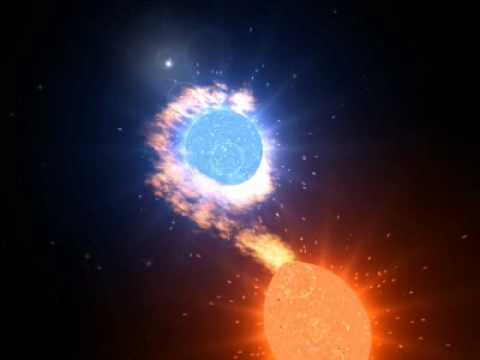
or

Posted on 12/28/17 at 3:51 pm to BoostAddict
quote:
So, atoms in our body... in everything we see was once part of a star that blew up.
NGT explains it
The most common elements in the universe are hydrogen, helium, oxygen, carbon, nitrogen. in that order.
The most common elements in the human body are Hydrogen, Oxygen, Carbon, Nitrogen.
So, to say that we are rare is pretty stupid, considering we are made up of the most common things in the universe
This post was edited on 12/28/17 at 4:29 pm


Posted on 12/28/17 at 3:57 pm to spaceranger
I love this stuff. I look forward to more.


Posted on 12/28/17 at 4:02 pm to spaceranger
I’m fascinated by this stuff. I consider myself to be of at least average intelligence and I still can’t wrap my mind around most of it. I guess my number one question would be: How do we (as a civilization) know what we know about things going on in the universe? I mean, it’s not like we have the ability to physically measure things. Most of what is “known” is based purely on observations from a lonnnnng way away. Maybe physics as we know it doesn’t behave the same in different parts of the solar system and universe. There could be elements that we can’t even imagine.
TLDR How do we know anything about anything if we can’t physically measure it?
TLDR How do we know anything about anything if we can’t physically measure it?
Posted on 12/28/17 at 5:01 pm to Tyga Woods
Love all things universe. My brain explodes every time. It’s great

 Page 1 of 3

Popular
Back to top
 Follow TigerDroppings for LSU Football News