




- My Forums
- Tiger Rant
- LSU Recruiting
- SEC Rant
- Saints Talk
- Pelicans Talk
- More Sports Board
- Fantasy Sports
- Golf Board
- Soccer Board
- O-T Lounge
- Tech Board
- Home/Garden Board
- Outdoor Board
- Health/Fitness Board
- Movie/TV Board
- Book Board
- Music Board
- Political Talk
- Money Talk
- Fark Board
- Gaming Board
- Travel Board
- Food/Drink Board
- Ticket Exchange
- TD Help Board
Customize My Forums- View All Forums
- Show Left Links
- Topic Sort Options
- Trending Topics
- Recent Topics
- Active Topics
Started By
Message
re: Is having anxiety the new trend for females?
Posted on 1/8/17 at 1:17 pm to 13SaintTiger


Posted on 1/8/17 at 1:17 pm to 13SaintTiger
I mean it varies.
I think a lot of anxiety is just introverted people that get worn out by being social and feel awkward and uncomfortable and public situations
I think a lot of the anxiety that needs actual treating is hypochondria based. People having an irrational fear that something is seriously wrong with them physically . They recognize the fear is irrational and yet still can't get over it. They recognize the fear is silly.
That's why people with really bad anxiety don't often tell anyone, as they see it as weak and embarrassing and don't think a balanced person can relate to something "irrational". If you know someone that is somewhat of a hermit, avoids situations they can't control like large crowds, not driving themselves to places, sometimes act aloof or quiet when out, and you can't figure out why they are being a bum or stick in the mud all the time. There is a good chance that suffer from real anxiety and are too ashamed to tell anyone
I think a lot of anxiety is just introverted people that get worn out by being social and feel awkward and uncomfortable and public situations
I think a lot of the anxiety that needs actual treating is hypochondria based. People having an irrational fear that something is seriously wrong with them physically . They recognize the fear is irrational and yet still can't get over it. They recognize the fear is silly.
That's why people with really bad anxiety don't often tell anyone, as they see it as weak and embarrassing and don't think a balanced person can relate to something "irrational". If you know someone that is somewhat of a hermit, avoids situations they can't control like large crowds, not driving themselves to places, sometimes act aloof or quiet when out, and you can't figure out why they are being a bum or stick in the mud all the time. There is a good chance that suffer from real anxiety and are too ashamed to tell anyone
This post was edited on 1/8/17 at 1:18 pm
 1
1


Posted on 1/8/17 at 2:39 pm to St Augustine
Definitely overdiagnosed. It's an easy way for a lot of these lazy people to get disability. Damn near every able-bodied, unemployed male that comes through our hospital has anxiety.
This post was edited on 1/8/17 at 2:47 pm
Posted on 1/8/17 at 2:40 pm to 13SaintTiger
Blame social media fueled validation culture.

Posted on 1/8/17 at 3:40 pm to TigerBait1971
quote:
Anxiety has been around for a long time
Posted on 1/8/17 at 3:54 pm to ThePoo
quote:
If you know someone that is somewhat of a hermit, avoids situations they can't control like large crowds, not driving themselves to places, sometimes act aloof or quiet when out, and you can't figure out why they are being a bum or stick in the mud all the time. There is a good chance that suffer from real anxiety and are too ashamed to tell anyone
Holy shite, you just described a relative of mine we're all having trouble relating to exactly. How can you help a person like this?
Posted on 1/8/17 at 4:00 pm to 13SaintTiger
Hysteria=wandering uterus
Posted on 1/8/17 at 4:22 pm to RabidTiger
Not too much you can do. It's hard for people who can't relate to grasp the issue. There are lots of medicines but many of them create addiction and dependency.
The best thing to do is not be condescending to them about it. They know what they are doing is not normal and irrational, but if there was a switch they could flip to "snap out of it" they would.
I think what helps the most is finding someone they can relate to and talk to. Someone that has been through it and come out the other side happy and healthy. Someone that can say I know exactly what you are feeling, you aren't alone, it happened to me and it's not something you can't manage and have to live with forever. Often times it's hereditary and someone in their own family may have had the issue and they don't even realize someone that close to them was in their shoes
Particularly for people with hypochondria related anxiety. Talking to people that had the same fears and physical ailments and just realizing how powerful the mind is at creating symptoms
The best thing to do is not be condescending to them about it. They know what they are doing is not normal and irrational, but if there was a switch they could flip to "snap out of it" they would.
I think what helps the most is finding someone they can relate to and talk to. Someone that has been through it and come out the other side happy and healthy. Someone that can say I know exactly what you are feeling, you aren't alone, it happened to me and it's not something you can't manage and have to live with forever. Often times it's hereditary and someone in their own family may have had the issue and they don't even realize someone that close to them was in their shoes
Particularly for people with hypochondria related anxiety. Talking to people that had the same fears and physical ailments and just realizing how powerful the mind is at creating symptoms
This post was edited on 1/8/17 at 4:23 pm

Posted on 1/8/17 at 4:23 pm to 13SaintTiger
quote:
new trend


Posted on 1/8/17 at 4:33 pm to 13SaintTiger
Old problem, wider scope
No resilience, allostatic stress overload (bred by the way current generations were raised and all the "shite" we get exposed to along the way
In pictures:
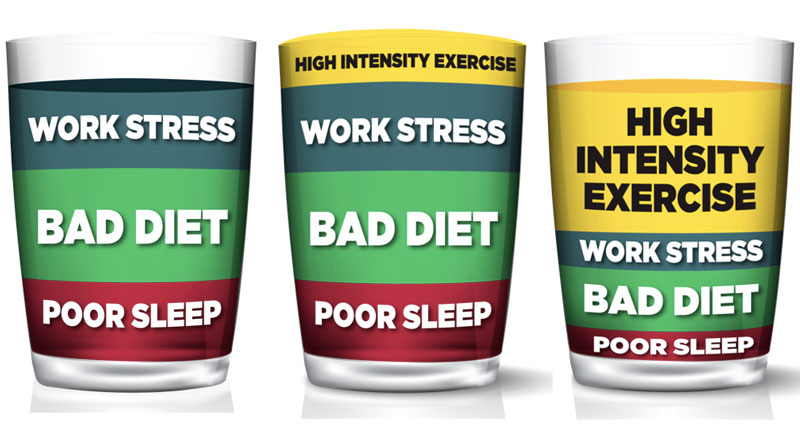
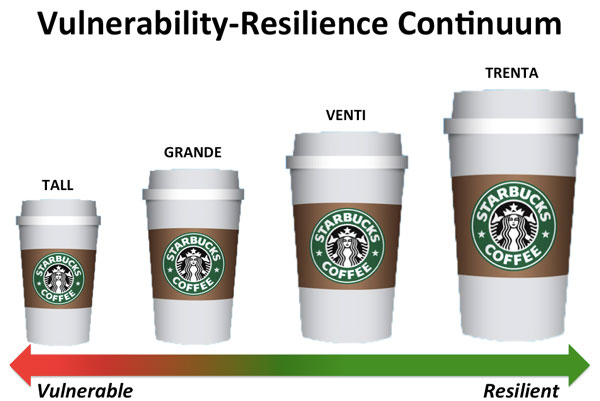
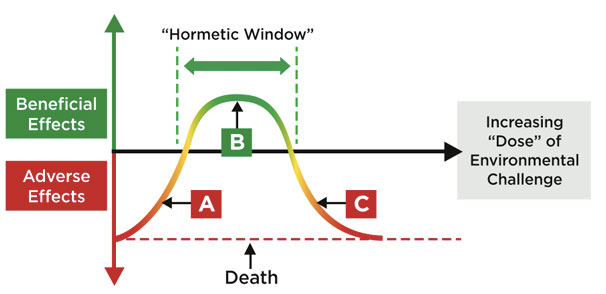
LINK
Good listen on anxiety
LINK
TL/DR
No resilience, allostatic stress overload (bred by the way current generations were raised and all the "shite" we get exposed to along the way
In pictures:
LINK
Good listen on anxiety
LINK
quote:
RHR: The Functional Medicine Approach to Anxiety
TL/DR
quote:
2) How HPA axis issues can impact anxiety
The second area I would look is called the HPA axis, or the SAS. The HPA stands for hypothalamic–pituitary–adrenal axis, and SAS stands for sympathoadrenal medullary system. So, those are a lot of fancy words, but in short, what this refers to is the system that governs our stress tolerance and our response to stress. You’ve probably heard about it in the context of the fight-or-flight response, which is when humans are faced with a stressful event, let’s say, from an evolutionary perspective, if we’re approached by a predator like a lion when we’re out for a walk on a plain and we see a predator. In a more modern context, if we’re in a dark alley and someone’s walking toward us and we feel our heartbeat increase and blood kind of rushing through our extremities and our respiration increases and all of these physiological responses that happen to prepare us for either a fight or to run away, these are part of the SAS and the HPA axis. We don’t just experience this acutely, of course. In our modern world, we have chronic stressors like financial stress, relationship stress, work stress. Just the stress of daily life is constantly activating these systems. What happens when these systems are chronically activated, which they weren’t really designed to be, is that it leads to changes in the output of stress hormones like DHEA and cortisol and pregnenolone, which in turn affects the production of many other hormones and neurotransmitters in the body. And so, essentially, we have a stress response system that evolved in an environment that was more characterized by acute stressors. So, warfare and trauma, predators, and things like that, but our stress system is not really designed well for the chronic low-level persistent stressors that we face on a daily basis, and that mismatch between our genes, our biology, and the stress system that evolved in the environment that humans lived in for thousands of generations, and the environment that we’re living in now is, I think, and the research supports this, one of the primary contributors to modern inflammatory disease. So, when we think about the HPA axis and the SAS, there are four main triggers that lead to dysfunction of these systems. One is the obvious one, which is perceived stress. So, perceived stress is important to understand. The only stress that affects our health in a negative way is the stress that we perceive to be stressful, and that might seem obvious, but it explains why not all stress is harmful. In some cases, what might stress one person out doesn’t cause stress for another person, and that’s a result of our background, belief system, and a number of other factors. But there are a number of factors that determine whether something is perceived as stressful. The novelty of the event, so generally we’re more stressed by new things than we are by familiar things, the unpredictability of an event, the more unpredictable something is, the more stressful it is for us. These are the kinds of factors that determine whether something is stressful for us in the first place. So, we have perceived stress as a major trigger, then we have inflammation. So, this is just a purely physiological thing. If you’re inflamed and you have an inflammatory condition like a GI problem we just talked about, even if you have no perceived stress, that’s still acting as a stressor on your body, and the same is true of blood sugar dysregulation, which is epidemic in our country, and also circadian disruption, which is another epidemic that’s not commonly recognized. That means too much exposure to artificial light at night and not enough exposure to natural light during the day. Humans, along with every other animal and organism on earth, evolved in a natural 24-hour light-dark cycle, and it’s only in the last 150 years where we’ve been able to alter that and move away from that, and that has had a profound impact on our health. So again, if you’re able to work with a functional medicine provider, they can assess your HPA axis and SAS using things like the DUTCH test—Dried Urine Total Comprehensive Hormone test—or the saliva or cortisol awakening response test, which is different than the adrenals stress index, saliva tests that are typically done, which are problematic for a number of reasons. But if you don’t have access to a practitioner or even if you do, you can also just focus on addressing those four triggers—perceived stress, inflammation, blood sugar, and circadian disruption. So, addressing perceived stress might involve reducing the stress that you’re exposed to, if that’s possible, learning to say “no” for example, not spending time with people that stress you out, if that’s possible and you have a choice about it, and then managing the stress that you can’t avoid. And that involves things like possibly a meditation practice, a yoga practice, tai-chi or qigong, deep relaxation practices, mindfulness-based stress reduction, prayer. I mean, any number of things that you can do to approach this, and if you need some support with this, I have my 14Four program. I have some videos that I recorded of instruction in tai chi and also meditation. There is lots of stuff online that you can find for this too, if you need support in implementing a practice like that. But then, regulating your light exposure, so not using tablets and other devices that emit blue light at night too close to bed and making sure you get some bright light exposure during the day, following an anti-inflammatory diet and taking other stuff to reduce inflammation, making sure that you’re not eating too many processed or refined carbohydrates, and doing things that help regulate your blood sugar, all that can play a big role in terms of regulating the HPA axis and the SAS.
This post was edited on 1/8/17 at 4:43 pm
Posted on 1/8/17 at 4:37 pm to 13SaintTiger
I know a few people with anxiety and they are all men.

Posted on 1/8/17 at 4:57 pm to 13SaintTiger
I had anxiety before it was cool. I was diagnosed with ms a few months ago so it hasn't let up.
I think many confuse stress with anxiety; severe anxiety can render you functionally moot. It's caused me to have night sweats, ibs and insomnia. Coupled with depression, it can be like living in abject terror 24/7.
I think many confuse stress with anxiety; severe anxiety can render you functionally moot. It's caused me to have night sweats, ibs and insomnia. Coupled with depression, it can be like living in abject terror 24/7.


Posted on 1/8/17 at 5:00 pm to 13SaintTiger
This and self diagnosis of OCD are epidemics.


Posted on 1/8/17 at 5:00 pm to JJBTiger2012
When you run into old friends that aren't successful they go out of their way to mention anxiety? That's pretty fricking strange
This post was edited on 1/8/17 at 7:21 pm
Posted on 1/8/17 at 7:20 pm to GVT
getting disability for anxiety would be nearly impossible
This post was edited on 1/8/17 at 7:22 pm


Posted on 1/8/17 at 7:25 pm to 13SaintTiger
Short answer: yes


Posted on 1/8/17 at 7:26 pm to 13SaintTiger
It used to be a sugar imbalance.
Posted on 1/8/17 at 7:48 pm to 13SaintTiger
I don't know about women, but I went through a time when I was dealing with anxiety. Long story short, I had a period of time when I was feeling really bad all of the time. I went to the doctor and after checking out some things, including my gallbladder, I was told everything seems to be okay. There was something on my gallbladder but it wasn't anything to be concerned with.
It felt like I was getting worse and it started to scare the shite out of me and I started having anxiety attacks. After the first one, it seemed like the several others I had after were happening more frequent. Anyway, about three months later I had to be rushed to the hospital to have my gallbladder taken out.
It felt like I was getting worse and it started to scare the shite out of me and I started having anxiety attacks. After the first one, it seemed like the several others I had after were happening more frequent. Anyway, about three months later I had to be rushed to the hospital to have my gallbladder taken out.

Posted on 1/8/17 at 9:14 pm to JumpingTheShark
I'm not a fan of self diagnosed OCD and anxiety. It hurts people who actually need to take meds to function to get them (same goes for chronic pain sufferers). I'm a high level OCD and take Anafril, Xanax, Seroquel, etc, etc by the handfuls everyday just to be somewhat normal. I get massive panic attacks from the OCD and I wouldn't wish them on my worst enemy. The best way to describe it is you're 1000% convinced you're dying and it sure as hell feels like it.
Maybe 5 people know this about me in the real world, and I don't tell anyone. Why would I? The people who love to talk about do not have it, and I've never met an exception. So when I hear one of my wife's dumbshit friends talk about taking her Xanax because she's "soooo stressed out", I usually just walk away because it's tough not to say anything. That and the, "OMG, I'm so OCD I have to brush my teeth twice a day" makes me want to slap a bitch.
Maybe 5 people know this about me in the real world, and I don't tell anyone. Why would I? The people who love to talk about do not have it, and I've never met an exception. So when I hear one of my wife's dumbshit friends talk about taking her Xanax because she's "soooo stressed out", I usually just walk away because it's tough not to say anything. That and the, "OMG, I'm so OCD I have to brush my teeth twice a day" makes me want to slap a bitch.
Posted on 1/8/17 at 9:19 pm to ksayetiger
quote:
Gluten allergy is another one of those.
Unless you can have this type of anxiety in infants, no. I have had nephews with this almost from birth.

Posted on 1/8/17 at 9:24 pm to 13SaintTiger
quote:you should get out more
I've never come in contact with a man claiming anxiety

 Page 3 of 4

Popular
Back to top
 Follow TigerDroppings for LSU Football News