




- My Forums
- Tiger Rant
- LSU Recruiting
- SEC Rant
- Saints Talk
- Pelicans Talk
- More Sports Board
- Fantasy Sports
- Golf Board
- Soccer Board
- O-T Lounge
- Tech Board
- Home/Garden Board
- Outdoor Board
- Health/Fitness Board
- Movie/TV Board
- Book Board
- Music Board
- Political Talk
- Money Talk
- Fark Board
- Gaming Board
- Travel Board
- Food/Drink Board
- Ticket Exchange
- TD Help Board
Customize My Forums- View All Forums
- Show Left Links
- Topic Sort Options
- Trending Topics
- Recent Topics
- Active Topics
Started By
Message

 0
0


Posted on 6/16/25 at 9:02 pm to CU_Tigers4life
I was around. And I hated Jimmy Carter by the time the election came up. He was feckless.

Posted on 6/16/25 at 9:04 pm to The Baker
I also remember the beruit barracks bombing Iran had a hand in.

Posted on 6/16/25 at 9:08 pm to Bengalbio
quote:
Ok, boomer
He’s Gen X
Posted on 6/16/25 at 9:10 pm to ReeseBobby
Was at LSU. Extremely embarrassing 444 days for the US. The hostages were in the air when Reagan took the oath. They knew what was going to happen if they weren't.


Posted on 6/16/25 at 9:12 pm to CU_Tigers4life
quote:
Who All Was Around During The Iranian Hostage Crisis?
I was in my late teens. That crisis ended Jimmy Carter and made Ted Koppel a star.

Posted on 6/16/25 at 9:15 pm to prouddawg
quote:
quote:
Ok, boomer
He’s Gen X
Nope...I'm proudly a Boomer. I beat the 1964 cutoff. I get a kick when some Millennial fig uses that like a burn.
Posted on 6/16/25 at 9:16 pm to Sid E Walker
Beano Cook had a great line in response to MLB offering lifetime passes to the freed hostages…
“Haven’t they suffered enough?”
“Haven’t they suffered enough?”
Posted on 6/16/25 at 9:17 pm to Alt26
LOL...Beano was a jewel.
Posted on 6/16/25 at 9:18 pm to CU_Tigers4life
I was 1 and probably pooping my pants.

Posted on 6/16/25 at 9:20 pm to CU_Tigers4life
I had Iranian friends who I had worked in 1980. They were hoping for the Ayatollah to fall
Posted on 6/16/25 at 9:22 pm to CU_Tigers4life
Gotcha you must have been a freshman 78-79; I was 79-80. Assumed you were born in 65. 
Posted on 6/16/25 at 9:23 pm to CU_Tigers4life
quote:
I've never forgotten what they did to the US.
What they did to the US wasn’t one tenth what we did to them.


Posted on 6/16/25 at 9:29 pm to Tiger in Texas
quote:
Who can forget local NOLA band Vince Vance & the Valiants and their hit song "Bomb Iran" But what I remember most was having a cuck POTUS peanut farmer who was an embarrassment to America!
Yep. Remember it well.
Bomb, bomb, bomb… bomb, bomb Iran!!

Posted on 6/16/25 at 9:33 pm to CU_Tigers4life
Was Jr in college then. Witnessed the hostages pushed around with black hoods over their heads, flag burnings, death to America chants, the whole damn thing. Actually experienced the whole revolution in a way as I had 2 older sisters attending UTx just in front of me since 73. The Iranian students were doing a lot of on campus protests with their revolution movement during those years.
Hell, I can remember Kent St. shootings. Modern protesting is baby stuff until I see water cannons, German shepherds, and M16s or whatever the military uses today.
Hell, I can remember Kent St. shootings. Modern protesting is baby stuff until I see water cannons, German shepherds, and M16s or whatever the military uses today.
Posted on 6/16/25 at 9:46 pm to CU_Tigers4life
I remember it well. Free Speech Ally was must see entertainment.
Posted on 6/17/25 at 11:57 am to CU_Tigers4life
I was. And not just around—I had lived in Tehran just a few years before the revolution, so when the hostage crisis unfolded in 1979, it hit close to home. I was a high school senior back in Louisiana, watching the chaos play out on the evening news. It felt surreal. How had the kind, curious Iranians I had known become the furious, America-hating mobs I was now seeing on TV? My memories of Iran were mostly positive, which made the sudden shift all the more disorienting.
Our family had lived in Tehran from the early to mid-1970s as American civilians. We weren’t diplomats or military—we were just part of the wave of Americans there to support modernization projects. My father was helping oversee the Shah’s $300 million national telecommunications initiative, and many other Americans were working in similar technical or educational capacities. As kids, my siblings and I moved freely around the city, catching cabs or hitching rides when needed. It was a very different time—well before the era of helicopter parenting—and we never felt in danger. Most Iranians we met were friendly, even curious about us.
That’s not to say everything was perfect. There were occasional moments of discomfort—especially for young blonde girls like me, who were often seen as fair game by the occasional obnoxious jerk trying to sneak a butt pinch. American females over there - even younger ones like me - were unfortunately often considered fair game to a lot of these losers. But real hostility? Not overtly, at least not at first. Toward the end of our time there, though, things began to shift. University students who were being exposed to revolutionary, anti-imperialistic ideas starting expressing dissatisfaction with the Shah's regime and whispers of unrest grew louder. Accusations of graft were rampant. The economy was uneven, the wealth gap glaring, and many Iranians viewed the Shah as a Western puppet propped up by U.S. interests. His authoritarian style, along with his use of SAVAK—the secret police—only deepened that distrust.
The Shah’s push for modernization and education reform also threatened the traditional power of the religious clerics. In 1974, for example, he declared that state education would be free through the 8th grade—a progressive move, but one that likely ruffled feathers among the mullahs, who saw their influence waning. While many Americans, like my father, were there in a spirit of progress, it’s clear in retrospect that this was also a time of cultural upheaval and growing tension.
At the time, I didn’t fully grasp what was unfolding. Looking back, I can see that resentment had been simmering for years. I remember our Iranian maid quietly warning us to avoid certain neighborhoods where demonstrations were beginning to occur. I remember hearing about an American military advisor being assassinated by a leftist guerilla group. At the time, we thought it was a one-off. But soon after we left, the violence escalated: a Black high school student from our American school was stabbed to death; two Air Force colonels were ambushed and murdered; three more American civilians were later gunned down in their car. Another student from our school - a female this time - was hit and killed by a cab under suspicious circumstances.
At the time, much of this unrest was underplayed to avoid panic or diplomatic fallout. It wasn’t until the hostage crisis exploded on the world stage that the true depth of the anger and instability became undeniable.
In retrospect, the rise in anti-American sentiment wasn’t sudden—it was the result of years of growing frustration with inequality, foreign influence, and rapid cultural change. The Iranian Revolution and subsequent hostage crisis weren’t spontaneous bursts of rage—they were the outcome of a slow erosion of trust in the Shah’s vision and in the Western presence behind it. What I witnessed as a teenager now feels like a front-row seat to a nation on the verge of political transformation—one driven by fear, pride, and the clash between tradition and modernization. It’s a powerful reminder of how quickly goodwill can unravel when identity, power, and foreign influence collide. As I watch today’s rising tensions between Iran and Israel, I can’t help but think of the Iranian people themselves—millions of whom have endured over four decades of political repression, economic hardship, and religious control under the Islamic Republic. Many of them are the very descendants of the students and families I once knew. I hold onto the hope that, whatever direction this current conflict takes, it might ultimately lead not to more suffering but to a new chapter—one where ordinary Iranian citizens can reclaim the freedoms, independence, and personal liberties they had only just begun to experience under the Shah. They deserve a future shaped by their own voices, not by fear.
Our family had lived in Tehran from the early to mid-1970s as American civilians. We weren’t diplomats or military—we were just part of the wave of Americans there to support modernization projects. My father was helping oversee the Shah’s $300 million national telecommunications initiative, and many other Americans were working in similar technical or educational capacities. As kids, my siblings and I moved freely around the city, catching cabs or hitching rides when needed. It was a very different time—well before the era of helicopter parenting—and we never felt in danger. Most Iranians we met were friendly, even curious about us.
That’s not to say everything was perfect. There were occasional moments of discomfort—especially for young blonde girls like me, who were often seen as fair game by the occasional obnoxious jerk trying to sneak a butt pinch. American females over there - even younger ones like me - were unfortunately often considered fair game to a lot of these losers. But real hostility? Not overtly, at least not at first. Toward the end of our time there, though, things began to shift. University students who were being exposed to revolutionary, anti-imperialistic ideas starting expressing dissatisfaction with the Shah's regime and whispers of unrest grew louder. Accusations of graft were rampant. The economy was uneven, the wealth gap glaring, and many Iranians viewed the Shah as a Western puppet propped up by U.S. interests. His authoritarian style, along with his use of SAVAK—the secret police—only deepened that distrust.
The Shah’s push for modernization and education reform also threatened the traditional power of the religious clerics. In 1974, for example, he declared that state education would be free through the 8th grade—a progressive move, but one that likely ruffled feathers among the mullahs, who saw their influence waning. While many Americans, like my father, were there in a spirit of progress, it’s clear in retrospect that this was also a time of cultural upheaval and growing tension.
At the time, I didn’t fully grasp what was unfolding. Looking back, I can see that resentment had been simmering for years. I remember our Iranian maid quietly warning us to avoid certain neighborhoods where demonstrations were beginning to occur. I remember hearing about an American military advisor being assassinated by a leftist guerilla group. At the time, we thought it was a one-off. But soon after we left, the violence escalated: a Black high school student from our American school was stabbed to death; two Air Force colonels were ambushed and murdered; three more American civilians were later gunned down in their car. Another student from our school - a female this time - was hit and killed by a cab under suspicious circumstances.
At the time, much of this unrest was underplayed to avoid panic or diplomatic fallout. It wasn’t until the hostage crisis exploded on the world stage that the true depth of the anger and instability became undeniable.
In retrospect, the rise in anti-American sentiment wasn’t sudden—it was the result of years of growing frustration with inequality, foreign influence, and rapid cultural change. The Iranian Revolution and subsequent hostage crisis weren’t spontaneous bursts of rage—they were the outcome of a slow erosion of trust in the Shah’s vision and in the Western presence behind it. What I witnessed as a teenager now feels like a front-row seat to a nation on the verge of political transformation—one driven by fear, pride, and the clash between tradition and modernization. It’s a powerful reminder of how quickly goodwill can unravel when identity, power, and foreign influence collide. As I watch today’s rising tensions between Iran and Israel, I can’t help but think of the Iranian people themselves—millions of whom have endured over four decades of political repression, economic hardship, and religious control under the Islamic Republic. Many of them are the very descendants of the students and families I once knew. I hold onto the hope that, whatever direction this current conflict takes, it might ultimately lead not to more suffering but to a new chapter—one where ordinary Iranian citizens can reclaim the freedoms, independence, and personal liberties they had only just begun to experience under the Shah. They deserve a future shaped by their own voices, not by fear.


Posted on 6/17/25 at 12:02 pm to CU_Tigers4life
quote:
I hope we give them the proper payback for the hostages and the failed rescue attempt where they dragged the bodies of dead US Soldiers from that failed attempt.
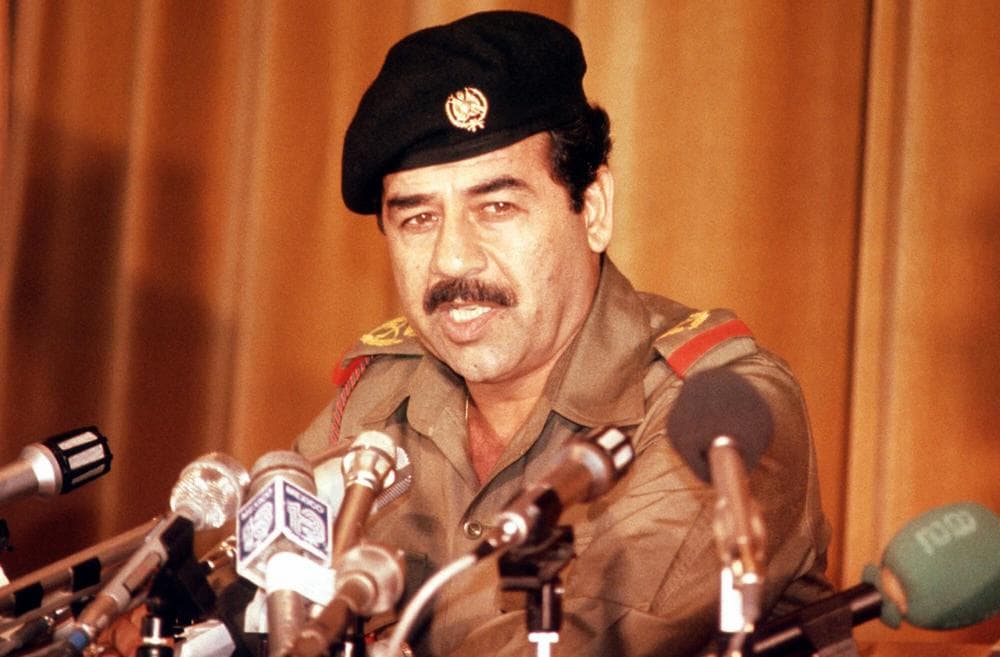
After the hostage crisis, we made a smart move to get revenge and gave this nice gentleman money, arms and training to invade Iran twice and kill 1 million Persians. Man aren't our politicians just the best! There's no way that could've backfired!
Posted on 6/17/25 at 12:06 pm to CU_Tigers4life
quote:
I was a freshman in High School when this went down and I've never forgotten what they did to the US. While I don't wish for war, if we have to go in I hope we give them the proper payback for the hostages and the failed rescue attempt where they dragged the bodies of dead US Soldiers from that failed attempt.
It's almost like someone overthrew their democratically elected government and installed a brutal dictator to be their puppet.
What you saw was a failure in US policy, and the fact that innocent people are the ones who paid the price, not the people who make those shitty decisions.
But yes, we should blame everyone else while continuing the failed policies because that's somehow the logical thing to do.
This post was edited on 6/17/25 at 12:07 pm

Posted on 6/17/25 at 12:08 pm to CU_Tigers4life
Same watching that on news I knew one day I would go into military.
Carter was impotent during that ordeal.
Carter was impotent during that ordeal.

 Page 3 of 4

Popular
Back to top
 Follow TigerDroppings for LSU Football News