




- My Forums
- Tiger Rant
- LSU Recruiting
- SEC Rant
- Saints Talk
- Pelicans Talk
- More Sports Board
- Fantasy Sports
- Golf Board
- Soccer Board
- O-T Lounge
- Tech Board
- Home/Garden Board
- Outdoor Board
- Health/Fitness Board
- Movie/TV Board
- Book Board
- Music Board
- Political Talk
- Money Talk
- Fark Board
- Gaming Board
- Travel Board
- Food/Drink Board
- Ticket Exchange
- TD Help Board
Customize My Forums- View All Forums
- Show Left Links
- Topic Sort Options
- Trending Topics
- Recent Topics
- Active Topics
Started By
Message
2nd sphinx & underground megastructure detected in Egypt
Posted on 3/26/26 at 1:34 pm


Posted on 3/26/26 at 1:34 pm
Loading Twitter/X Embed...
If tweet fails to load, click here. 2nd sphinx's, underground megastructures, aliens, meteors, war in Iran
Interesting times
quote:
Ancient Egyptians may have left behind a cryptic clue to a hidden second Sphinx, carved directly into stone more than 3,000 years ago.
The Dream Stele, positioned between the paws of the Great Sphinx, appears to depict two sphinx figures, hinting that the legendary monument may once have had a twin.
Now, Italian researchers who, in 2025, claimed to have uncovered massive underground structures beneath the Giza Plateau believe they have identified the second guardian buried deep beneath the sands.
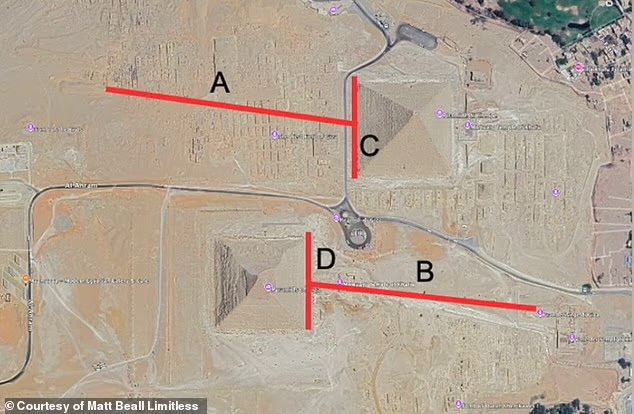
Filippo Biondi revealed the discovery on Thursday while speaking on the Matt Beall Limitless podcast, explaining that lines drawn from the pyramids to the known Sphinx point to an identical mirrored location where the buried structure is believed to lie.
'We are finding precise geometrical correlation, 100 percent of correlation, in this symmetry,' he said, adding: 'We are very confident to announce this… we have a confidence about 80 percent.'
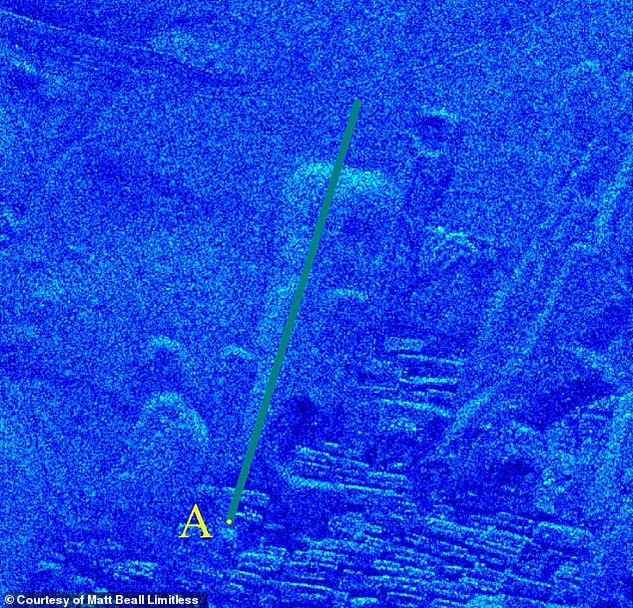
Using satellite radar technology capable of detecting subtle ground vibrations, Biondi claimed the data points to a massive structure concealed beneath a 180-foot-high mound of hardened sand, which he said is composed of solidified sand rather than natural bedrock.
Preliminary scans show vertical shafts and passageways strikingly similar to those already found beneath the original Sphinx, with dense vertical lines believed to represent the solid walls of underground shafts rather than empty voids.
Beyond the possible second Sphinx, Biondi believes the findings hint at something even larger, an extensive underground complex beneath the Giza Plateau itself.
'Down underneath the Giza Plateau, there is something very huge that we are measuring,' he said. 'There is an underground megastructure.'
The Dream Stele, also known as the Sphinx Stele, was erected between the front paws of the Great Sphinx of Giza by Pharaoh Thutmose IV around 1401 BC, during Egypt's 18th Dynasty.
The ancient inscription, like many created during the New Kingdom, was intended to reinforce the ruler's divine right to the throne.
Legend has it that the stele justified Thutmose IV's unexpected rise to power by recounting a dream where the Sphinx promised him the throne in exchange for restoring the monument, blending political propaganda with religious legitimacy and documenting early restoration efforts.
However, Biondi and his team believe there is more truth than myth behind the imagery, saying the carvings showing two sphinx figures may not have been symbolic at all, but instead a clue to the layout of the monuments themselves.
He and his team are not the only researchers to suggest a second Sphinx may be buried beneath the Giza Plateau, as Egyptologist Bassam El Shammaa first raised the theory more than a decade ago.
El Shammaa cited ancient Egyptian records and mythology describing lightning striking the Sphinx, which he believes may refer to a second monument that was later destroyed, possibly after being cursed by one of Egypt’s most powerful deities.
Egypt's former Minister of Antiquities Zahi Hawass has long dismissed El Shammaa's theory, noting in 2017 the area has been dug by so many archaeologists, and it yielded nothing.
However, Biondi explained that when they traced a line from the center of the Khafre Pyramid to the existing Sphinx, the alignment created a precise geometric path across the plateau, forming what he described as a mirrored reference line used to identify the second location.
When that same alignment was mirrored from the center of the Great Pyramid, it pointed to another location on the opposite side, the exact spot where scans now suggest a second Sphinx may be buried beneath a mound of hardened sand.
Satellite images of the Giza plateau, which features the Great Pyramid of Khufu, the Pyramid of Khafre, the Pyramid of Menkaure and the Great Sphinx, revealed a mound on the surface, and Filippo believes it is above the second sphinx.
'That small mountain has a height of approximately 108 feet,' he explained. 'The first Sphinx sits slightly below the surrounding surface, in a shallow depression, so it is possible the second Sphinx could be hidden beneath this higher mound.'
He noted that researchers are still working to compare elevations between the known Sphinx and the mound to determine whether their heights align, including measuring how far each sits relative to the surrounding plateau surface.
'We have to study this more carefully,' he said. 'It makes sense to compare the elevations, but we are still analyzing the data.'
Despite the remaining uncertainties, Biondi said the team believes the structure, if it exists, is likely buried beneath the mound rather than exposed above ground.
'Probably the second Sphinx is under that small mountain,' he said. 'Because it is high, about 108 feet above the background.'
Biondi said scans of the original Sphinx also revealed a network of shafts and chambers beneath the monument, features he now believes are mirrored beneath the suspected second structure.
The scans captured shafts on the first Sphinx and shafts on the hypothetical second Sphinx, he explained, noting that the similarities between the two sites are becoming increasingly difficult to ignore.
Biondi also said that preliminary images from the new scans show not only vertical shafts but also horizontal passages extending from deeper sections underground.
Scans of what the team calls the third, and lowest, shaft also revealed horizontal tunnels branching outward.
He added that researchers are now tracing those passageways, which appear to mirror similar horizontal routes previously identified beneath the first Sphinx, suggesting what he described as 'incredible symmetry' between both structures.
'There is an incredible symmetry between the first and the second,' Biondi added.
According to Biondi, the vertical features seen in the scans do not represent empty openings, but rather the dense outer walls of underground shafts.
Despite the dramatic implications, he emphasized that fieldwork remains essential before any definitive conclusions can be made.
'For the second Sphinx, it is important to go in situ with geologists and carefully study the mound,' Biondi said. 'We are very confident that it is not bedrock.... the sand has been solidified.'
The team has already begun preparing formal plans to move forward if permission is granted.
'We have located some special entrances where we can work in situ. It means that we have written a project proposal that can be submitted to the Egyptian authorities,' said Biondi.
In this project proposal, we have specifically indicated that some shafts are visible, which are located between the first Sphinx and the Khafre pyramid.
He said researchers have identified two or three shafts in the area, including one particularly large shaft that appears to be blocked by debris, which he said was measured during field visits and appears to obstruct deeper access points, adding that clearing those blockages could be the key to unlocking what lies beneath.'
The debris, according to Biondi, can also be easily removed, allowing him and his team safe access to the underground structures below, potentially opening what he described as entrances into a larger underground network beneath the plateau.
 22
22

Posted on 3/26/26 at 1:39 pm to hawgfaninc
Raise your hand if you started looking for tits just like a 90s low jacked skinemax video.


Posted on 3/26/26 at 1:39 pm to hawgfaninc
More and more it seems like we don't know shite about the history of our species
Mainstream archeologists will still call Graham Hancock a racist kook though
Mainstream archeologists will still call Graham Hancock a racist kook though

Posted on 3/26/26 at 1:42 pm to hawgfaninc
But Dr Hawass will probably run them out of the country saying the Egyptians built it all.

Posted on 3/26/26 at 1:47 pm to hawgfaninc
I cannot imagine spending as much time on the internet as you. Not hating.... just can't imagine

Posted on 3/26/26 at 1:48 pm to hawgfaninc
The earth called in sick today — turns out it never existed in the first place, and honestly, neither did the person who just read this sentence. Have a great day, figment!

Posted on 3/26/26 at 1:49 pm to hawgfaninc
Just need a backpack blower and we can get that shite uncovered real quick.
Posted on 3/26/26 at 2:01 pm to hawgfaninc
I don't trust the Daily Mail. Let me know when Josh Gates covers it.

Posted on 3/26/26 at 2:03 pm to hawgfaninc
Somebody find Nicholas Cage and get him on the trail.

Posted on 3/26/26 at 2:34 pm to hawgfaninc
I asked the Elves at Grok what they thought about this claim, and here is there reply;
Why this lacks substance as a confirmed discoveryIt's radar interpretation only, not physical archaeology. No digging, artifacts, or on-site confirmation has occurred. The "discovery" is their analysis of satellite data processed with Biondi's proprietary SAR Doppler tomography method (building on a 2022 peer-reviewed paper about the Great Pyramid's interior, not deep subsurface features). Critics note the technique's limitations for penetrating thousands of feet through limestone and groundwater.
ladbible.com
Strong expert skepticism and prior debunkings. Mainstream Egyptologists and archaeologists have rejected similar claims from this team. Former Egyptian Minister of Antiquities Dr. Zahi Hawass called the underground city claims "completely wrong," "fake news," and unvalidated by approved techniques—decades of prior surveys (muon tomography, gravimetry, etc.) found only minor voids, not megastructures. Theoretical physicist Sabine Hossenfelder and others (including detailed analyses by archaeologist Flint Dibble) have labeled the interpretations exaggerated, methodologically flawed, or inconsistent with Giza's geology/hydrology (e.g., the water table would flood such deep features). The latest Sphinx claim is too new for fresh peer-reviewed responses, but it follows the same contested pattern.
tribune.com.pk +1
No official Egyptian involvement or endorsement. Egyptian authorities are highly protective of the Giza site and have not confirmed, participated in, or authorized these scans as a formal discovery. Biondi's team is presenting proposals rather than reporting an accepted find.
Sensational media coverage vs. scientific consensus. Outlets like Daily Mail and LADbible amplified the podcast (often with dramatic headlines), but they also note the prior dismissals. This fits a pattern of viral but unverified remote-sensing claims that don't hold up under scrutiny from the broader archaeological community.
dailymail.co.uk
In short, Biondi and his collaborators made a public claim today based on their data processing, extending their ongoing (and disputed) underground Giza work. It has generated buzz on podcasts and fringe-leaning sites, but it is not a substantiated archaeological discovery. Reputable experts view it as unproven at best. If new peer-reviewed evidence or Egyptian-approved excavations emerge, that could change things—but as of now, there's no substance beyond the announcement itself. Your "usually reliable" site was probably covering the fresh podcast hype.
Why this lacks substance as a confirmed discoveryIt's radar interpretation only, not physical archaeology. No digging, artifacts, or on-site confirmation has occurred. The "discovery" is their analysis of satellite data processed with Biondi's proprietary SAR Doppler tomography method (building on a 2022 peer-reviewed paper about the Great Pyramid's interior, not deep subsurface features). Critics note the technique's limitations for penetrating thousands of feet through limestone and groundwater.
ladbible.com
Strong expert skepticism and prior debunkings. Mainstream Egyptologists and archaeologists have rejected similar claims from this team. Former Egyptian Minister of Antiquities Dr. Zahi Hawass called the underground city claims "completely wrong," "fake news," and unvalidated by approved techniques—decades of prior surveys (muon tomography, gravimetry, etc.) found only minor voids, not megastructures. Theoretical physicist Sabine Hossenfelder and others (including detailed analyses by archaeologist Flint Dibble) have labeled the interpretations exaggerated, methodologically flawed, or inconsistent with Giza's geology/hydrology (e.g., the water table would flood such deep features). The latest Sphinx claim is too new for fresh peer-reviewed responses, but it follows the same contested pattern.
tribune.com.pk +1
No official Egyptian involvement or endorsement. Egyptian authorities are highly protective of the Giza site and have not confirmed, participated in, or authorized these scans as a formal discovery. Biondi's team is presenting proposals rather than reporting an accepted find.
Sensational media coverage vs. scientific consensus. Outlets like Daily Mail and LADbible amplified the podcast (often with dramatic headlines), but they also note the prior dismissals. This fits a pattern of viral but unverified remote-sensing claims that don't hold up under scrutiny from the broader archaeological community.
dailymail.co.uk
In short, Biondi and his collaborators made a public claim today based on their data processing, extending their ongoing (and disputed) underground Giza work. It has generated buzz on podcasts and fringe-leaning sites, but it is not a substantiated archaeological discovery. Reputable experts view it as unproven at best. If new peer-reviewed evidence or Egyptian-approved excavations emerge, that could change things—but as of now, there's no substance beyond the announcement itself. Your "usually reliable" site was probably covering the fresh podcast hype.

Posted on 3/26/26 at 2:39 pm to hawgfaninc
The most important thing about this is to understand what pronouns the sphinx would have used

Posted on 3/26/26 at 2:58 pm to hawgfaninc
quote:
Italian researchers


Posted on 3/26/26 at 3:07 pm to hawgfaninc
quote:These guys are dubious at best.
Now, Italian researchers who, in 2025, claimed to have uncovered massive underground structures beneath the Giza Plateau believe they have identified the second guardian buried deep beneath the sands


Posted on 3/26/26 at 3:10 pm to hawgfaninc
This is legitimately very cool.

Posted on 3/26/26 at 3:17 pm to hawgfaninc


Posted on 3/26/26 at 3:25 pm to hawgfaninc
Wake up bae second sphinx just dropped

Posted on 3/26/26 at 3:46 pm to Fat and Happy
Aliens don't use pronouns.

Posted on 3/26/26 at 3:47 pm to hawgfaninc
Pretty cool.
Posted on 3/26/26 at 3:48 pm to forkedintheroad
quote:
Raise your hand if you started looking for tits just like a 90s low jacked skinemax video.
No, but the word ‘sphincter’ jumps in head first. Sphynx’s cousin.
Posted on 3/26/26 at 3:50 pm to hawgfaninc
quote:
Legend has it
I, in fact, do not.
This post was edited on 3/26/26 at 3:56 pm

 Page 1 of 2

Popular
Back to top
 Follow TigerDroppings for LSU Football News