




- My Forums
- Tiger Rant
- LSU Recruiting
- SEC Rant
- Saints Talk
- Pelicans Talk
- More Sports Board
- Fantasy Sports
- Golf Board
- Soccer Board
- O-T Lounge
- Tech Board
- Home/Garden Board
- Outdoor Board
- Health/Fitness Board
- Movie/TV Board
- Book Board
- Music Board
- Political Talk
- Money Talk
- Fark Board
- Gaming Board
- Travel Board
- Food/Drink Board
- Ticket Exchange
- TD Help Board
Customize My Forums- View All Forums
- Show Left Links
- Topic Sort Options
- Trending Topics
- Recent Topics
- Active Topics
Started By
Message

81 years ago this week
Posted on 12/1/23 at 12:12 pm

Posted on 12/1/23 at 12:12 pm
quote:LINK
The USS New Orleans (CA-32) carried the fight to the Japanese during the critical campaign year of 1942. A so-called “treaty cruiser,” it was the first of seven New Orleans-class heavy cruisers built during the 1930s. This class of cruiser was the last built by the US Navy to the treaty limitations of the Washington Naval Treaty of 1922, which limited the number, size, and firepower of the world’s major navies.
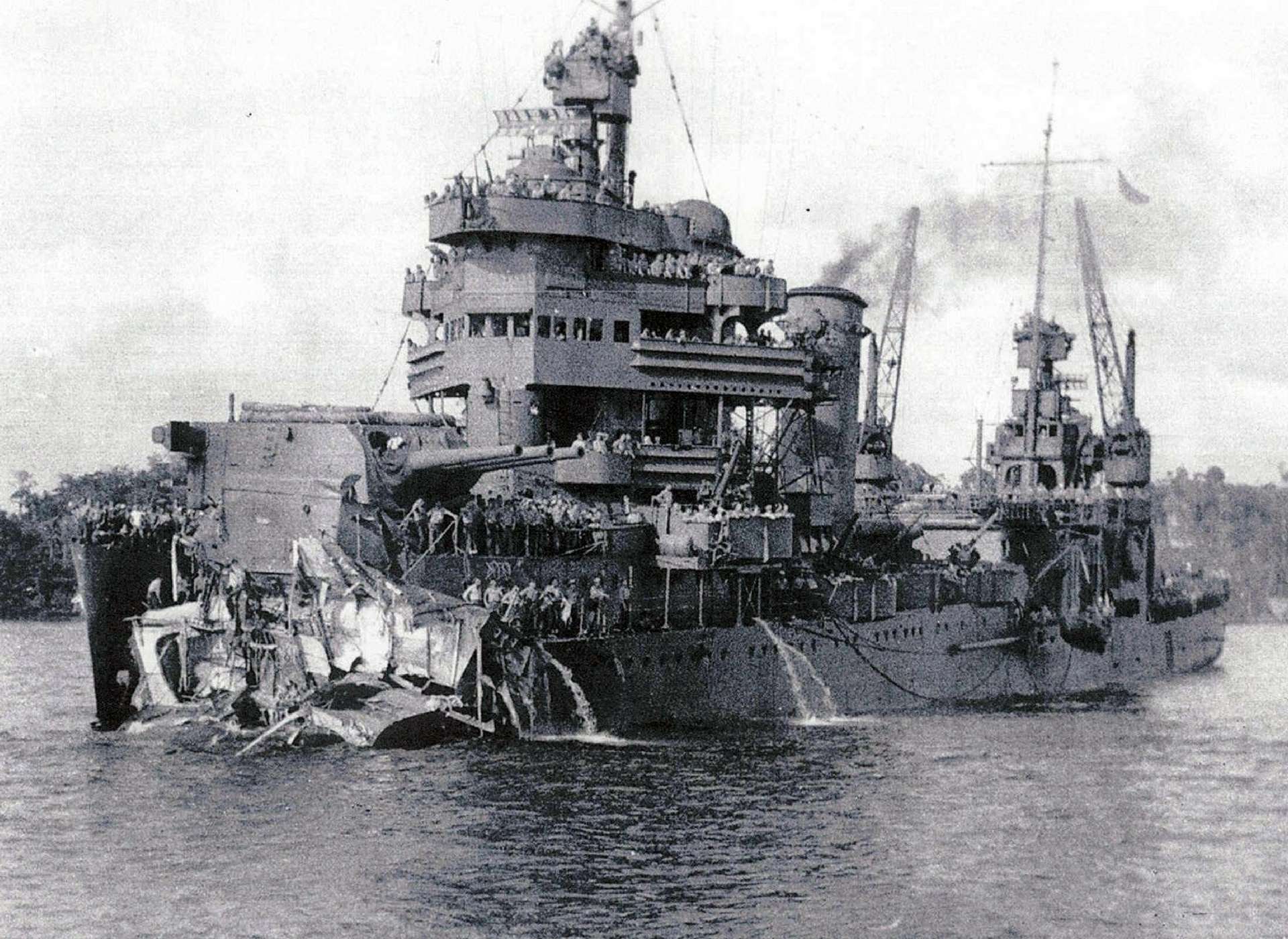
The New Orleans saw some of the heaviest fighting during the Pacific war, beginning on December 7, 1941, at Pearl Harbor and continuing with action at Coral Sea, Midway, Guadalcanal, and later in the Gilbert, Marshall, Marianas, Philippine, and Okinawa campaigns. It was during the Battle of Tassafaronga on November 30, 1942, off Guadalcanal that the New Orleans sustained its heaviest damage. A Japanese Type 93 “Long Lance” torpedo detonated the forward magazines and destroyed 150 feet of hull. The impact of the explosion killed 182 men. A further 50-yard length of the ship’s bow and forecastle tore away from the ship as she struggled to stay afloat.
The Damage Control Officer on the New Orleans, Lieutenant Commander Hubert M. Hayter, and two of his men, Lieutenant Richard A. Haines and Ensign Andrew L. Forman, remained at their damage control posts despite the fact that it was filling up with toxic fumes. These three brave men were eventually asphyxiated by the fumes and perished. The ship’s chaplain, Howell M. Forgy, later wrote about Hayter, “I wondered what he thought about in those final minutes, but I knew one thing: he was not afraid.”
?
?
?
The USS New Orleans (CA-32) at the Mare Island Navy Yard in California on March 8, 1945. The ship's welded bow structure (forward of her second 8/55 triple gun turret) is visible in this photograph. This replaced her original riveted-construction bow, which was lost during the Battle of Tassafaronga at the end of November 1942.
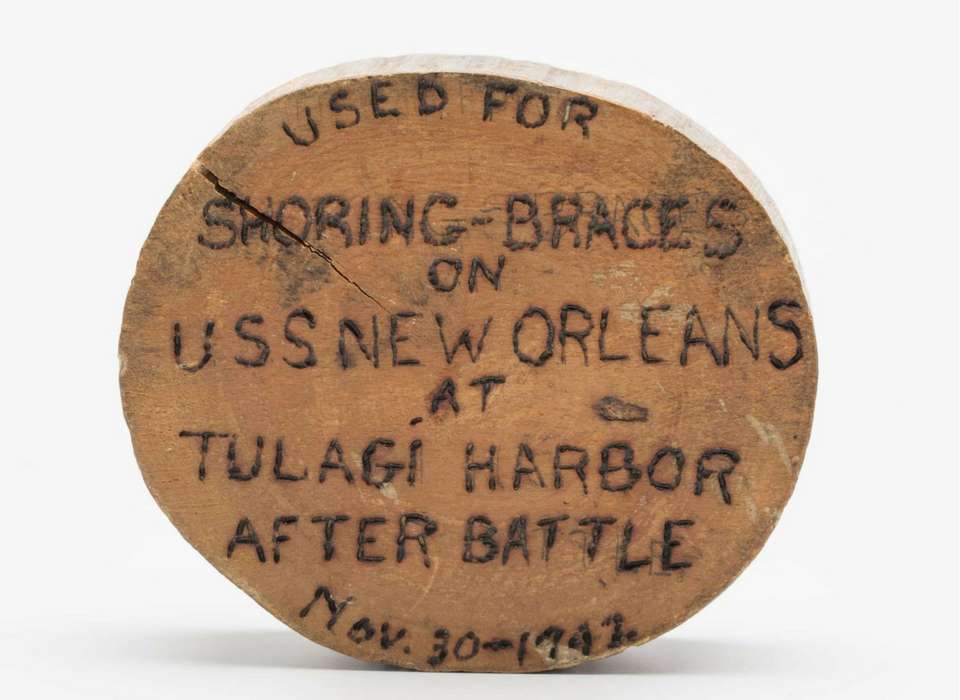
Following the end of the battle, the New Orleans limped back to Tulagi harbor across from Guadalcanal where temporary repairs were made to try to save the ship. After working furiously for 11 days, the crew of the New Orleans managed to get the ship in a good enough condition to sail for Australia for more permanent repairs. However, due to the temporary coconut log bow, the ship had to sail backward to prevent flooding from sinking the ship.
A piece of the coconut log is included in the Museum’s new special exhibit The Pelican State Goes to War: Louisiana in World War II. The log was brought back to the United States by John Richey, who served as an electrician on the New Orleans throughout the war. Richey’s bunk was destroyed by the explosion caused by the Japanese torpedo’s impact. The New Orleans was awarded 17 battle stars for its service in the Pacific, tying it for third most in the theater.
 10
10


Posted on 12/1/23 at 12:14 pm to Jim Rockford
quote:fricking badass
The Damage Control Officer on the New Orleans, Lieutenant Commander Hubert M. Hayter, and two of his men, Lieutenant Richard A. Haines and Ensign Andrew L. Forman, remained at their damage control posts despite the fact that it was filling up with toxic fumes. These three brave men were eventually asphyxiated by the fumes and perished. The ship’s chaplain, Howell M. Forgy, later wrote about Hayter, “I wondered what he thought about in those final minutes, but I knew one thing: he was not afraid.”

Posted on 12/1/23 at 12:33 pm to Hawgnsincebirth55
quote:
fricking badass
YESSIR!!!! And now we have a country full of limp wristed twat waffles that get offended by everything, including this post.
I wish America had the values and morals that were had back in the 40’s and 50’s.


Posted on 12/1/23 at 12:36 pm to 31TIGERS
quote:
wish America had the values and morals that were had back in the 40’s and 50’s.
Never coming back. Democrats want men as cucks only

Posted on 12/1/23 at 1:01 pm to Jim Rockford
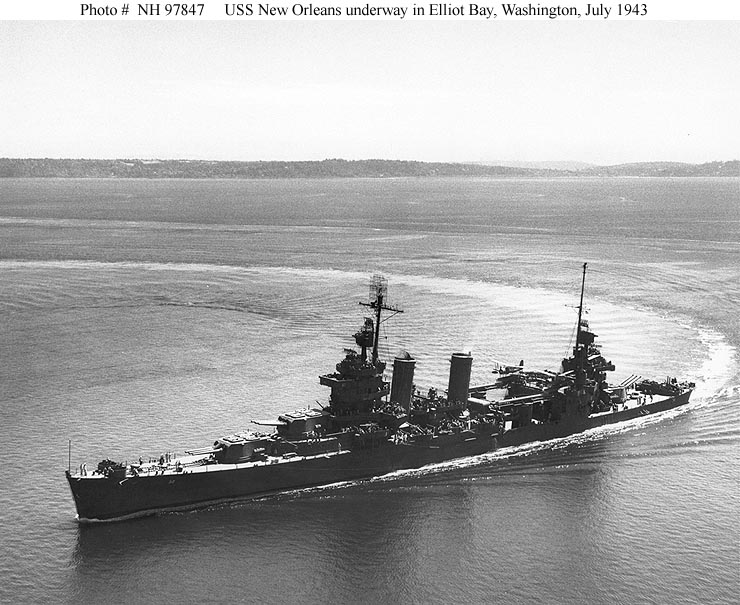
Here’s an after picture. Adding 150 feet to the bow makes a world of difference.
Posted on 12/1/23 at 1:32 pm to Jim Rockford
I would be interested to learn what this means:
“the ship had to sail backward to prevent flooding”
“the ship had to sail backward to prevent flooding”
Posted on 12/1/23 at 1:38 pm to Northshoretiger87
Literally just what it says. The bow was blown off so they reversed the engines and sailed backward to reduce the pressure on the damaged area.

Posted on 12/1/23 at 1:40 pm to Jim Rockford
Close to the same damage was taken by sister ship Minneapolis in the same battle.
 [/img]
Yet another sister ship, Pensacola, was also heavily damaged and the heavy cruiser Northampton was sunk.
This battle was a severe loss to the US Navy. 'Historian Samuel Eliot Morison assessed the outcome by saying: "It is a painful truth that the Battle of Tassafaronga was a sharp defeat inflicted on an alert and superior cruiser force by a partially surprised and inferior destroyer force."
There were many needed changes to tactical doctrine following this disaster. But the tuition for these lessons was far too high.
[/img] Yet another sister ship, Pensacola, was also heavily damaged and the heavy cruiser Northampton was sunk.
This battle was a severe loss to the US Navy. 'Historian Samuel Eliot Morison assessed the outcome by saying: "It is a painful truth that the Battle of Tassafaronga was a sharp defeat inflicted on an alert and superior cruiser force by a partially surprised and inferior destroyer force."
There were many needed changes to tactical doctrine following this disaster. But the tuition for these lessons was far too high.

Posted on 12/1/23 at 1:41 pm to Northshoretiger87
Just that...with props reversed and backing up all the way at a snail's pace.

Posted on 12/1/23 at 2:15 pm to Jim Rockford
At the start of the war the US navy had a lot of hard lessons to learn
1. The effective range of the Japanese “Long Lance” torpedo
2. The proficiency of the IJN at nighttime naval battle
3. The proper use of destroyers and crusiers.
4. How to use radar.
These were all high on a list of lessons to be learned. Sadly, a lot of sailors would lose their lives as the Navy learned these and other lessons.
1. The effective range of the Japanese “Long Lance” torpedo
2. The proficiency of the IJN at nighttime naval battle
3. The proper use of destroyers and crusiers.
4. How to use radar.
These were all high on a list of lessons to be learned. Sadly, a lot of sailors would lose their lives as the Navy learned these and other lessons.
This post was edited on 12/1/23 at 2:23 pm

Posted on 12/1/23 at 2:20 pm to Hawgnsincebirth55
quote:
fricking badass
fricking studs

Posted on 12/1/23 at 2:38 pm to Jim Rockford
From my Museums small collection... Pre-War.


This post was edited on 12/1/23 at 2:41 pm
Posted on 12/1/23 at 3:06 pm to 31TIGERS
all those brave men gave their lives only to see the country hand over leadership to an assortment of crooks, thieves, and girly men
Posted on 12/1/23 at 4:06 pm to Jim Rockford
quote:
The New Orleans saw some of the heaviest fighting during the Pacific war, beginning on December 7, 1941, at Pearl Harbor and continuing with action at Coral Sea, Midway, Guadalcanal, and later in the Gilbert, Marshall, Marianas, Philippine, and Okinawa campaigns.
So basically it saw the whole Pacific War

Posted on 12/1/23 at 4:26 pm to Jim Rockford
I’m still trying to figure out from that picture how it didn’t sink
Posted on 12/1/23 at 7:44 pm to deltaland
quote:
I’m still trying to figure out from that picture how it didn’t sink
I am not a Navy man, but I believe that the ship is divided into sections that can be closed off by large bulkhead doors.. So basically, just shutting water tight doors to the bow in the forward compartments.
It is amazing though with the damage that the ship had. If I am not mistaken it sailed backwards to Australia for emergency repairs before it sailed back to the USA for complete overhaul.

edit- yes.. That's right.. The Torpedo blew off the Bow when it ignited ammo and gasoline storage areas on DEC 1.. and she sailed backwards and arrived in Australia on CHristmas Eve 1942
This post was edited on 12/1/23 at 7:49 pm
Posted on 12/1/23 at 8:34 pm to Jim Rockford
I was stationed at Mare Island Naval Base Nov, 1962 until June 1963. They were building Polaris Missile Submarines there.
Posted on 12/1/23 at 8:41 pm to Darth_Vader
quote:
The effective range of the Japanese “Long Lance” torpedo
They had to find a torpedo that was reliable.
The best Submarine Capt/Commander was killed by his own torpedo.
Samuel David Dealey (September 13, 1906 – August 24, 1944) was the commanding officer of a United States Navy submarine killed in action with his crew ...
Torpedoes were designed to make a sweeping turn looking for the target. It made a U-turn and locked in on his Submarine. It was designed to have a kill switch to prevent such an accident. Malfunction!
Posted on 12/1/23 at 8:52 pm to Jim Rockford
quote:
However, due to the temporary coconut log bow, the ship had to sail backward
Badass sailors to keep her floating.
Those ships were tough.
Posted on 12/1/23 at 8:53 pm to SWCBonfire
quote:I’m someone who has decades of sea time.
Just that...with props reversed and backing up all the way at a snail's pace.
The thought of backing down a 10k ton displacement cruiser from Guadalcanal to Australia is amazing.
Cora Jahncke, the ship’s sponsor at it’s commissioning in 1933-


 Page 1 of 1


Popular
Back to top
 Follow TigerDroppings for LSU Football News