




- My Forums
- Tiger Rant
- LSU Recruiting
- SEC Rant
- Saints Talk
- Pelicans Talk
- More Sports Board
- Fantasy Sports
- Golf Board
- Soccer Board
- O-T Lounge
- Tech Board
- Home/Garden Board
- Outdoor Board
- Health/Fitness Board
- Movie/TV Board
- Book Board
- Music Board
- Political Talk
- Money Talk
- Fark Board
- Gaming Board
- Travel Board
- Food/Drink Board
- Ticket Exchange
- TD Help Board
Customize My Forums- View All Forums
- Show Left Links
- Topic Sort Options
- Trending Topics
- Recent Topics
- Active Topics
Started By
Message

Yellen's failure to lock in cheap debt was the worst mistake in Treasury history
Posted on 11/1/23 at 6:42 am


Posted on 11/1/23 at 6:42 am
... according to Stanley Druckenmiller.
ETA: Lest someone suspect partisanship, Druckenmiller is an avowed Democrat, to the extent he once even affiliated with Soros.
Meanwhile, in 2016, Trump was pilloried for the suggestion:
ETA: Lest someone suspect partisanship, Druckenmiller is an avowed Democrat, to the extent he once even affiliated with Soros.
quote:
MARKET INSIDER
Janet Yellen made the worst mistake in Treasury history when she failed to lock in cheap debt, elite investor Stanley Druckenmiller says
by Theron Mohamed
Oct 31, 2023
• Janet Yellen made the worst mistake in the US Treasury's history, Stanley Druckenmiller says.
• The Treasury chief should have issued more long-term government debt at low interest rates, he said.
• Druckenmiller noted that many American households and businesses managed to lock in lower rates.
Janet Yellen made the worst mistake in the history of the Treasury, which has helped pave the way for a debt disaster, Stanley Druckenmiller says.
Yellen, who was appointed Treasury secretary in January 2021, should have issued more long-dated government bonds before the Federal Reserve began hiking interest rates early last year, Druckenmiller said. The billionaire investor and head of Duquesne Family Office made the comments to elite trader Paul Tudor Jones during a fireside chat at a recent Robin Hood Foundation event.
"When rates were practically zero, every Tom, Dick, Harry, and Mary in the United States refinanced their mortgage," Druckenmiller said. "Unfortunately we had one entity that did not, and that was the US Treasury."
"Janet Yellen — I guess because political myopia, whatever — was issuing two years at 15 basis points when she could have issued 10 years at 70 basis points or 30 years at 180 basis points," Druckenmiller continued, referring to the terms of the debt issued by the Treasury.
"I literally think if you go back to Alexander Hamilton, it was the biggest blunder in the history of the Treasury. I have no idea why she's not been called out on this, she has no right to still be in that job after that," Druckenmiller said.
LINK
Meanwhile, in 2016, Trump was pilloried for the suggestion:
quote:

Donald Trump’s Idea to Cut National Debt: Get Creditors to Accept Less
By Binyamin Appelbaum
May 6, 2016
... Experts also described Mr. Trump’s debt refinancing proposal as fanciful, saying there was no reason to think America’s creditors would accept anything less than 100 cents on the dollar, regardless of Mr. Trump’s deal-making prowess.
“No one on the other side would pick up the phone if the secretary of the U.S. Treasury tried to make that call,” said Lou Crandall, chief economist at Wrightson ICAP. “Why should they? They have a contract” requiring payment in full.
Mr. Trump told CNBC that he was concerned about the impact of higher interest rates on the cost of servicing the federal debt. “We’re paying a very low interest rate,” he said. “What happens if that interest rate goes two, three, four points up? We don’t have a country. I mean, if you look at the numbers, they’re staggering.”
The Congressional Budget Office projects that interest payments on the federal debt will climb to $500 billion in 2020 from roughly $250 billion this year. That is based on a projection that rates on the benchmark 10-year Treasury will reach 4.1 percent in late 2019, still a low level by historical standards. If rates were to climb more quickly, or reach higher levels, debt payments would be higher.
Pressed to elaborate on his remarks, Mr. Trump did appear to step back. He said that he was not suggesting a default, but instead that the government could seek to repurchase debt for less than the face value of the securities. The government, in other words, would seek to repay less money than it borrowed.
Maya MacGuineas, president of the Committee for a Responsible Federal Budget, said that she shared Mr. Trump’s concern about the size of the federal debt, but that the issue needed to be addressed through changes in fiscal policy — some combination of less spending and more revenue.
“It’s a policy problem, not a debt-management problem,” she said. “When it comes to fiscal responsibility, people are always looking for the easiest of answers. If there were low-hanging fruit here, the Treasury Department would already be on it.”
LINK
 22
22


Posted on 11/1/23 at 6:47 am to NC_Tigah
quote:
there was no reason to think America’s creditors would accept anything less than 100 cents on the dollar,
That's exactly what is happening when they are paid back with inflated dollars.
Posted on 11/1/23 at 6:48 am to NC_Tigah
Her policies continue to be so bad and detrimental, there's no way it's an accident. It hurts, but I'm glad the Fed is raising interest rates to reign in inflation. No such thing as a free lunch.

Posted on 11/1/23 at 6:50 am to NC_Tigah
quote:Seems like she has an abundance of "worsts".
Yellen's failure to lock in cheap debt was the worst mistake in Treasury history


Posted on 11/1/23 at 6:50 am to NC_Tigah
quote:
... Experts also described Mr. Trump’s debt refinancing proposal as fanciful, saying there was no reason to think America’s creditors would accept anything less than 100 cents on the dollar, regardless of Mr. Trump’s deal-making prowess.
What in the frick does this nonsense have to do with the Yellen thing??

Posted on 11/1/23 at 6:54 am to NC_Tigah
How is degrading the full faith and credit of the United States, the bedrock of the current financial system, the same as issuing longer-term bonds at lower rates?
I don’t see the connection here. Connect the dots for us.
I don’t see the connection here. Connect the dots for us.
This post was edited on 11/1/23 at 6:55 am
Posted on 11/1/23 at 7:04 am to NC_Tigah
On the flip side anyone that bought that long term treasury would be getting crushed right now
Posted on 11/1/23 at 7:09 am to bayoudude
They are. Lots of banks and other institutions bought long term treasuries at low rates. In a matter of a few years they have seen the value of what they bought plummet.
Posted on 11/1/23 at 7:17 am to NC_Tigah
During Clinton’s years, his administration made a good call by switching from LT to ST debt to save interest costs. Help the deficit quite a bit and was a smart move.

Posted on 11/1/23 at 7:28 am to NC_Tigah
quote:
Yellen's failure to lock in cheap debt was the worst mistake in Treasury history
Was it, though? A mistake, I mean. Was it a mistake, or was it on purpose?
This post was edited on 11/1/23 at 7:29 am


Posted on 11/1/23 at 7:30 am to NC_Tigah
quote:travis gregory stano
Stanley Druckenmiller
Posted on 11/1/23 at 7:32 am to Lou Pai
quote:Well Lou, current Treasury rates have escalated. Perhaps you noticed?
What in the frick does this nonsense have to do with the Yellen thing??
As we are now likely to roll most of our $34T debt into ~5% instruments over time. At that rate, the cost-of-carry, or interest, on our national debt will jump to ~$1.7T per year.
For a perspective on $1.7T, here is a brief on last year's budget:
quote:
Total federal revenues - $4.274 trillion
Total federal outlays - $6.272 trillion
Major sources of revenue:
• Individual income taxes: $2.028 trillion
• Social Security/payroll taxes: $1.358 trillion
• Corporate income taxes: $371 billion
Major federal outlays:
• Social Security: $1.208 trillion
• Medicare: $665 billion
• Medicaid: $589 billion
• Defense: $813 billion
• Interest on debt: $479 billion
"The Yellen thing" is about failure to advantage the nation with low-rate borrowing opportunities when they existed.
Trump proposed availing ourselves of low-rate borrowing opportunities when they existed, and was excoriated for it.
Posted on 11/1/23 at 7:35 am to Placekicker
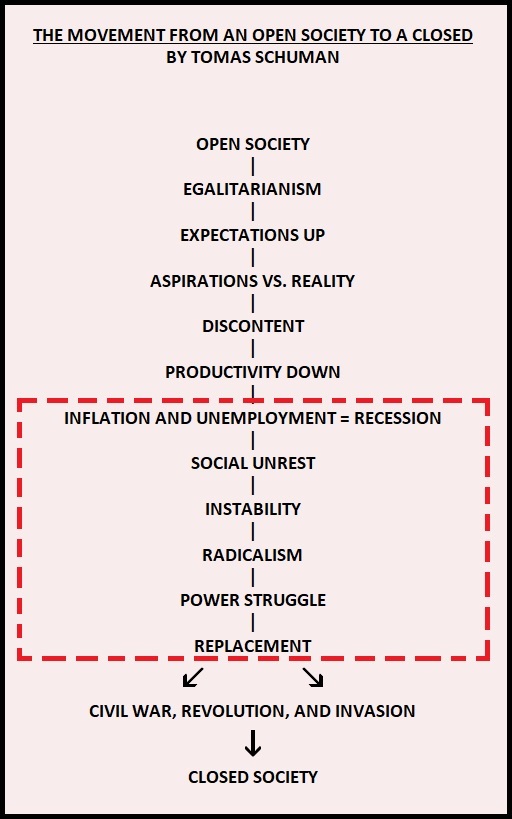

We are not far from crisis.

Posted on 11/1/23 at 7:42 am to boosiebadazz
He bolded it in op clownshow.

Posted on 11/1/23 at 7:47 am to Diamondawg
quote:
Seems like she has an abundance of "worsts".
But her worst are simply transitory
Posted on 11/1/23 at 7:54 am to NC_Tigah
Give her a break she didn't know this was an option at the time, so now that she does she'll do it next time. Thanks for your patience...

Posted on 11/1/23 at 7:59 am to NC_Tigah
So Drumpf was right yet again
Posted on 11/1/23 at 7:59 am to boosiebadazz
quote:Oh my! You really did swallow it, didn't you?
How is degrading the full faith and credit of the United States
Renegotiation and/or restructuring has nothing whatsoever to do with faith, credit, or default. E.g., At a time when the EU went to negative rates, the US could have severely limited public shortterm instrument offerings, while overborrowing longterm. In intragov issues, we had significant options as well.
The "default" and "full faith and credit" was "drink bleach" level bullshite.
Posted on 11/1/23 at 8:02 am to bayoudude
quote:Right.
On the flip side anyone that bought that long term treasury would be getting crushed right now
That is where the "adults in the room" stepped in and said we can't stick lenders with a "bad deal".

Posted on 11/1/23 at 8:23 am to NC_Tigah
quote:
Meanwhile, in 2016, Trump was pilloried for the suggestion:
Prior to COVID the production rate in the country was 3% and the Trump administration took OUT 1 trillion dollars. I.e, the Trump admin by refinancing the debt at near 0% helped tighten monetary policy and the economy still thrived.
This in combination with mild tariffs to slightly tighten the labor supply, drill baby drill to increase energy supply and massive deregulation gave us a very healthy economy...then COVID happened. The deep state wanted their misery back. They felt unimportant during the good times. They had to create their pandemic to feel needed.

 Page 1 of 3

Popular
Back to top
 Follow TigerDroppings for LSU Football News