




- My Forums
- Tiger Rant
- LSU Recruiting
- SEC Rant
- Saints Talk
- Pelicans Talk
- More Sports Board
- Fantasy Sports
- Golf Board
- Soccer Board
- O-T Lounge
- Tech Board
- Home/Garden Board
- Outdoor Board
- Health/Fitness Board
- Movie/TV Board
- Book Board
- Music Board
- Political Talk
- Money Talk
- Fark Board
- Gaming Board
- Travel Board
- Food/Drink Board
- Ticket Exchange
- TD Help Board
Customize My Forums- View All Forums
- Show Left Links
- Topic Sort Options
- Trending Topics
- Recent Topics
- Active Topics
Started By
Message
re: what size generator?
Posted on 8/24/20 at 11:16 am to Carson123987

Posted on 8/24/20 at 11:16 am to Carson123987
quote:
i wish i could just go be an electrical apprentice for a year to learn all this shite
My first year I only learned how to dig ditches, that the boss was a son of a bitch and how to get up a break order

Electrical work is, for the most part, outside the comfort zone for most home owners. The good part for homeowners is that once installed a system will function for many years without any problems....not like mechanical systems constantly needing attention. Electricity is not complicated and most systems are very simple because most electricians are lazy and simple...no difference in any electrical or electronic systems than a table lamp with a switch...just a source of current and a means of controlling the current...the devils are in the detail...
 1
1

Posted on 8/24/20 at 11:25 am to thejudge
quote:
I have. 30 amp 3500 predator inverter.
Runs my window unit, fridge, freezer.
It will do so forever but if one or more of the compressors cycle simultaneously you might be a bit undersized. Most inverters will not shut down they will merely "lug" and both compressors will attempt to cycle again, most likely at different times...but if one cycles and another starts to do so within miliseconds of one another you could notice it.
A 3500 240 volt generator will most likely run a central heat pump...most are fed with a 30 amp circuit but if it is a 12 SEER or more efficient unit it would operate on a 20 amp circuit and never be a problem....when the compressor cycles there is a huge spike in current and the generator may not handle that but if it is a newer heat pump even the start up current is decreased with scroll compressors and stepped compressors....and even larger banks of capacitors....
Resistive back up heat, on the other hand, is beyond the means of almost any portable generator, as is a stove with more than one element operating at any time. Modern motors and compressors do not have the start up currents that they used to but there ain't nothing can be done about resistive current...once set with a conductor (element) it will always pull the same load or get higher...it will never go down.
Posted on 8/24/20 at 11:34 am to Tigris
quote:
From what you listed 2,000 watts would cover it, not sure about "Small kitchen appliances" though, they can pull a lot of power. Forget about microwave/toaster with 2,000 watts.
Most microwaves, toasters and coffer pots operate at less than 16 amps because small appliance outlets required by NEC are 20 amp circuits and can be loaded at 80% for a continuous load which means the breaker, which will trip ideally at anything above 20 amps, will "hold" with a 20% buffer for start up current...even resistive loads have some saturation current. However, at 16 amps continuous for long periods of time #12 wire and 20 amp breakers will break down...especially at joints where heat is a problem (twisting wires creates resistance in a circuit). A 2000 watt generator should run any appliance with a 20 amp or less 120 volt plug. Of course if the generator is attached to the coffee put 3 - 100 foot #14 drop cords you will have problems because by the time the current gets to the load the voltage drop will be such that the current exceeds the 20 amp rating...the resistive element will create heat at any voltage but the current is inversely proportionate to voltage...as voltage drops current increases.

Posted on 8/24/20 at 11:37 am to Gtmodawg
quote:
welding clamp
This is my plan. Thats the only thing I have that is long enough.
quote:
The bond or grounding conductor is a separate duplicate path to ground for fault current that does not find its way to the grounded neutral.
This doesn't make sense to me. The ground bar and the neutral bar are connected in my panel IIRC.
Posted on 8/24/20 at 11:49 am to Gtmodawg
You cannot tell someone to isolate their utility neutral without knowing if their generator’s neutral is floating or bonded.
Even if you had some incremental return path back to the utility transformer, how would a center tapped neutral with no voltage excite the primary?
Panel interlocks that do not switch the neutral are legal for a reason.
Even if you had some incremental return path back to the utility transformer, how would a center tapped neutral with no voltage excite the primary?
Panel interlocks that do not switch the neutral are legal for a reason.
Posted on 8/24/20 at 11:58 am to rustyjohnson
quote:
generator’s neutral is floating or bonded.
I didn't know they made portable generators with a floating neutral? Thats how marine units are typically built but every portable ive dealt with has a bonded neutral.
Eta: but I guess since I haven't been grounding the frame it is running as a floating neutral?
This post was edited on 8/24/20 at 12:00 pm
Posted on 8/24/20 at 12:15 pm to DownshiftAndFloorIt
I am not sure what all is available, but bonds can easily be removed. I just wanted to throw caution to people reading it that it’s not always best to hop in your panel and disconnect the neutral.


Posted on 8/24/20 at 1:53 pm to Gtmodawg
quote:
Electrical work is, for the most part, outside the comfort zone for most home owners.
facts. best handyman is a guy I know named Mark. Dude will do the wildest, most ambitious jobs and build you the craziest shite you want. can do anything....
...except electricity. he wont touch it
Posted on 8/24/20 at 2:31 pm to rustyjohnson
I did some digging. Both are widely available.
Posted on 8/24/20 at 6:21 pm to DownshiftAndFloorIt
quote:
This doesn't make sense to me. The ground bar and the neutral bar are connected in my panel IIRC.
It is intentionally connected mechanically and electrically at the first means of disconnect, usually, depending on the requirements of the local authority having jurisdiction. They should not be connected either mechanically or electrically, intentionally or accidentally, anywhere else in the system lest the grounding conductor, which could include water lines and structural steel, become the grounded conductor or primary path to ground. This can still happen if the grounded conductor is compromised somehow and should happen as there is a redundant path to ground for fault current and unbalanced loads but the idea is to not have that redundant system connected intentionally except at one point, as close as practical to the ground system, to provide as near normal path to ground for both fault current and unbalanced loads. If they were connected elsewhere there is a potential difference at all points in the system...theoretically conductive surfaces such as the skin of a refrigerator could become current carrying conductors and carry the unbalanced load which is known to exist in a connected circuit to ground, through a person for example if they were touching the fridge and kitchen sink faucet, for example.
For all practical purposes the ground and neutral are one and the same, as you remember, because they are tied together at a single point....but that single point should be the only place and they should, in theory, carry out there intended purposes "upstream" of that point in the system. And they do for the most part. There are a LOT of knowledgeable electricians and engineers who do not get this and it wasn't uncommon 30 years ago to find neutrals and grounds tied together intentionally throughout a system. This was especially true in residential wiring....I can't begin to count the number of times I have found a bare copper ground wire in a piece of romex used for a traveler in a 3 way switch....not the same idea but illustrative of the kind of things some electricians, using the term lightly, will do.....

Posted on 8/24/20 at 8:21 pm to Gtmodawg
Man thats a long arse way to say make sure you have one grounded neutral in the system @ the source
Posted on 8/24/20 at 10:23 pm to Gtmodawg
quote:
Gtmodawg
Holy runon sentences. Not doubting the information but some of that is hard to read
Posted on 8/25/20 at 6:53 am to TigerKurt
Back 9 has is right- in a storm, few days out situation, all you need is a 5500W. It won’t start the central A/C- but will run most everything else. Just not the iron- ask me how I know.
Get the cheapest window unit from Wal Mart- put it in your master and call it good. Everyone gets a campout!
Get the cheapest window unit from Wal Mart- put it in your master and call it good. Everyone gets a campout!


Posted on 8/25/20 at 2:52 pm to TigerKurt
I have a 15kW Suburu from Gustav. It will run a very small central unit but a decent sized window unit. If the lights are out screw the HOA and get a window unit for a single large room to sleep at night.
The engine is a 22HP suburu and drinks the gas. I used it for Air Conditioner, 2 refrigerators, an oscillating fan (to stir the air) and portable lights.
Again it drinks the gas so go with the larger portable fuel tanks that have wheels.
Just my .02 cent.
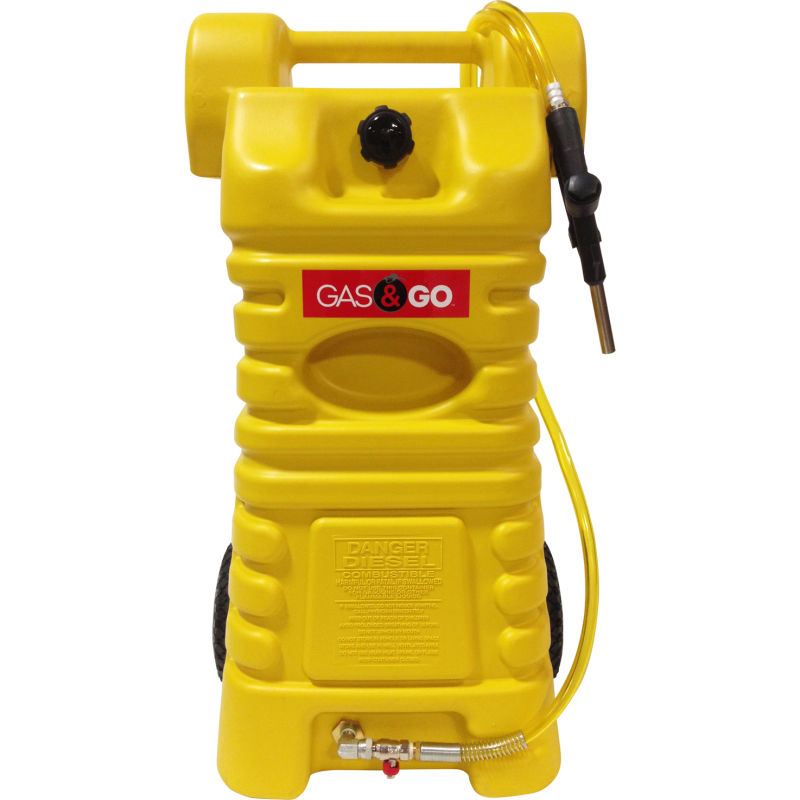
The engine is a 22HP suburu and drinks the gas. I used it for Air Conditioner, 2 refrigerators, an oscillating fan (to stir the air) and portable lights.
Again it drinks the gas so go with the larger portable fuel tanks that have wheels.
Just my .02 cent.
Posted on 8/25/20 at 3:15 pm to sleepytime
quote:
A regular generac 5000 watt generator uses about .72 gallons of gas per hour at 50% load. That’s 17 gallons per day and it’s loud as heck.

I have a 5.5KW Troy Bilt with a 10hp Briggs and it only burns 4 gallons every 12 hours at half load...

Posted on 8/25/20 at 6:09 pm to Hangover Haven
What do y’all do with fuel leftover in generator? Mines been in there since last year with stabil. Do y’all store with fuel in it or run dry?
Posted on 8/25/20 at 6:42 pm to subMOA
quote:
but will run most everything else. Just not the iron- ask me how I know.
So in the middle of a hurricane, you said, "Think I'll iron some clothes."
Posted on 8/25/20 at 8:52 pm to Uncle JackD
Empty it, turn off the valve and let it run till dry...
Posted on 8/25/20 at 10:31 pm to Uncle JackD
1st always check your generator once / year. When doing so I pour just enough to crank and test it at the 1st threat of a hurricane. Unfortunately, because the media overhyped shite I never add a lot of fuel initially. Once hurricane season is finished then I drain the fuel line. It’s usually linked to a small clear bulb on larger units. A regular pair of pliers or needle nose will do it. After that crank it and let the motor run until it’s bone dry. It should take long with the tank drained.
Finally, never use ethanol based gasoline. Pay a little extra for ethanol free.
Finally, never use ethanol based gasoline. Pay a little extra for ethanol free.

Posted on 8/25/20 at 11:00 pm to TigerKurt
quote:
I think I am finally going to break down and buy a portable generator for hurricane power outages. How much power would I need for refrigerator, freezer, lamps, computer modem/router, small kitchen appliances?
Day late and a dollar short, but you can turn all the things you want to power on and turn everything else off and then go outside and read your meter. Leave everything running for a half hour and then go read your meter again. The difference between the two readings will be the kilowatt-hours you used during the test. Divide that by 0.5 (because you ran everything for a half hour) and that is the average wattage all that stuff used. Multiply by 1.5 to account for startup amperage and some extra capacity and that'll be the ballpark you need to be looking in.
ETA: Most of the generator manufacturers have wattage estimators on their websites, too, where you can list the number and types of appliances and such you plan to power and it'll tell you how much wattage you'll need, based on typical requirements for the equipment you listed.
Personally, I'd buy two generators. One large noisy kind that you'll use to run your house and then one of the small quiet inverter generators to run your 110 air conditioner to keep your bedroom cool overnight. You'll be able to shut the noisy one down overnight while you're asleep, you'll still be comfortable, and your neighbors will thank you. Plus, the generator you use to power the AC is going to be one of those lightweight portable quiet ones, so it can easily do double duty when you need a power source for having fun when there isn't a hurricane.
This post was edited on 8/25/20 at 11:22 pm

 Page 3 of 4

Popular
Back to top
 Follow TigerDroppings for LSU Football News