




- My Forums
- Tiger Rant
- LSU Recruiting
- SEC Rant
- Saints Talk
- Pelicans Talk
- More Sports Board
- Fantasy Sports
- Golf Board
- Soccer Board
- O-T Lounge
- Tech Board
- Home/Garden Board
- Outdoor Board
- Health/Fitness Board
- Movie/TV Board
- Book Board
- Music Board
- Political Talk
- Money Talk
- Fark Board
- Gaming Board
- Travel Board
- Food/Drink Board
- Ticket Exchange
- TD Help Board
Customize My Forums- View All Forums
- Show Left Links
- Topic Sort Options
- Trending Topics
- Recent Topics
- Active Topics
Started By
Message

OT What-If History Discussion: USS Iowa vs. IJN Yamato
Posted on 4/12/17 at 8:54 am

Posted on 4/12/17 at 8:54 am
The premise is simple, in your opinion, had these two apex dreadnaughts even gone toe to toe, which one would have come out on top?
The USS Iowa

LINK
IJN Yamato

LINK
Key Factors:
1. Iowa had radar controlled fire control system, Yamato did not.
2. American damage control was generally superior to Japanese measures.
3. Iowa was faster than Yamato
4. Yamato had heavier armor & guns than Iowa
5. Yamato had longer main battery range (26 Mi.) than Iowa (20.5)
6. Iowa's 16" guns had almost the same penetration ability as Yamato's 18" guns, but with a slightly higher rate of fire.
Side note:
below is a picture of a 26" thick sample of armor taken from Yamato's sister ship, the Musashi. The US Navy fired the same 16" shell into the armor as was used on the Iowa. The results speak for themselves.
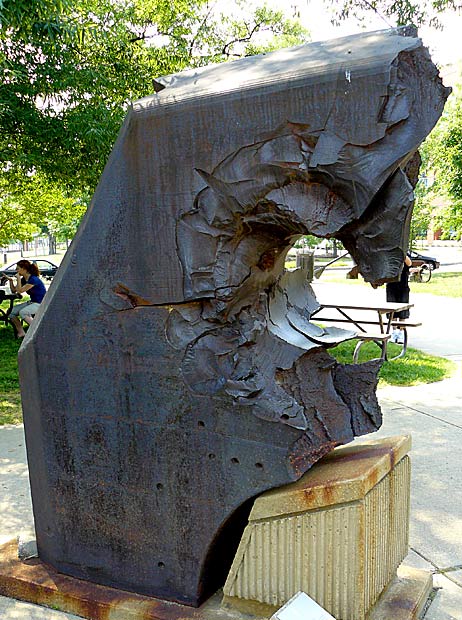
(In my opinion, had these two behemoths ever faced off, the superior fire control and speed of the Iowa, coupled with her superior damage control would have been the difference. I think the Iowa would have won, probably in decisive fashion.
The USS Iowa
quote:
Class and type: Iowa-class battleship
Displacement: 45,000 tons empty, 57000 tons full load
Length: 887 ft 3 in (270.43 m)
Beam: 108 ft 2 in (32.97 m)
Draft: 37 ft 2 in (11.33 m)
Propulsion:
8 Babcock & Wilcox "M"-type 600 PSI dual furnace, controlled superheat boilers
4 engine sets (high pressure & low pressure turbines, reduction gear), 212,000 total shaft horsepower
4 shafts/props
4 boiler rooms
4 engine rooms
Speed: 33 kn (38 mph; 61 km/h)
Complement: 151 officers, 2637 enlisted (WWII)
Armament: 1943:
9 × 16 in (406 mm)/50 cal Mark 7 guns
20 × 5 in (127.0 mm)/38 cal Mark 12 guns
80 × 40 mm/56 cal anti-aircraft guns
49 × 20 mm/70 cal anti-aircraft cannons
1984:
9 × 16 in (406 mm)/50 cal Mark 7 guns
12 × 5 in (127.0 mm)/38 cal Mark 12 guns
32 × BGM-109 Tomahawk cruise missiles
16 × RGM-84 Harpoon Anti-Ship missiles
4 × 20 mm/76 cal Phalanx CIWS
Armor: Belt: 12.1 in (307.3 mm)
Bulkheads: 11.3 in (287.0 mm)
Barbettes: 11.6 to 17.3 in (294.6 to 439.4 mm)
Turrets: 19.7 in (500 mm)
Decks: 7.5 in (190.50 mm)
LINK
IJN Yamato
quote:
Class and type: Yamato-class battleship
Displacement: 65,027 t (64,000 long tons)
71,659 t (70,527 long tons) (full load)
Length: 256 m (839 ft 11 in) (waterline)
263 m (862 ft 10 in) (overall)
Beam: 38.9 m (127 ft 7 in)
Draft: 11 m (36 ft 1 in)
Installed power: 12 Kampon boilers
150,000 shp (110,000 kW)
Propulsion: 4 shafts; 4 steam turbines
Speed: 27 knots (50 km/h; 31 mph)
Range: 7,200 nmi (13,300 km; 8,300 mi) at 16 knots (30 km/h; 18 mph)
Complement: 2,500–2,800
Armament: (1941)
9 × 46 cm Type 94 guns (3x3)
12 × 15.5 cm 3rd Year Type guns (4x3)
12 × 127 mm Type 89 (6x2)
24 × 25 mm Type 96 AA guns (8x3)
4 × 13.2 mm Type 93 (2x2)
(1945)
9 × 46 cm Type 94 guns (3x3)
6 × 15.5 cm 3rd Year Type guns (2x3)
24 × 127 mm Type 89 (12x2)
162 × 25 mm Type 96 AA guns
4 × 13.2 mm Type 93 (2x2)
Armor: Waterline belt: 410 mm (16 in)
Deck: 200–226.5 mm (7.9–8.9 in)
Gun turrets: 650 mm (25.6 in) (face)
Barbettes:
Conning tower:
Bulkheads
Aircraft carried: 7 Nakajima E8N or Nakajima E4N
Aviation facilities: 2 catapults
LINK
Key Factors:
1. Iowa had radar controlled fire control system, Yamato did not.
2. American damage control was generally superior to Japanese measures.
3. Iowa was faster than Yamato
4. Yamato had heavier armor & guns than Iowa
5. Yamato had longer main battery range (26 Mi.) than Iowa (20.5)
6. Iowa's 16" guns had almost the same penetration ability as Yamato's 18" guns, but with a slightly higher rate of fire.
Side note:
below is a picture of a 26" thick sample of armor taken from Yamato's sister ship, the Musashi. The US Navy fired the same 16" shell into the armor as was used on the Iowa. The results speak for themselves.
(In my opinion, had these two behemoths ever faced off, the superior fire control and speed of the Iowa, coupled with her superior damage control would have been the difference. I think the Iowa would have won, probably in decisive fashion.
 14
14


Posted on 4/12/17 at 8:57 am to Darth_Vader
quote:
Iowa had radar controlled fire control system, Yamato did not.
Game over.
Posted on 4/12/17 at 9:02 am to terd ferguson
quote:
Iowa had radar controlled fire control system, Yamato did not.
Game over.
I think this would have been the key factor, especially had they engaged one another at night. There's long been a myth of Japanese superior night fighting skills. But that was true only early in the war and only on their destroyers and cruisers. By 1944-45, the USN had come along way. and thanks to their radar controlled fire control, the Japanese could not hope to go toe to toe in a night fight without getting wiped out with quickness.
This post was edited on 4/12/17 at 9:03 am

Posted on 4/12/17 at 9:02 am to Darth_Vader
This isn't a real debate is it? Murica' frick yeah 
Posted on 4/12/17 at 9:04 am to Hawgnsincebirth55
quote:
This isn't a real debate is it? Murica' frick yeah
In Naval History nerd circles, it's been an ongoing debate since about 1945.

This post was edited on 4/12/17 at 9:04 am

Posted on 4/12/17 at 9:09 am to Darth_Vader
Is that piece in Fredericksburg at the museum? I really want to go back and have time to visit the museum.
Posted on 4/12/17 at 9:10 am to Hawgnsincebirth55
quote:
This isn't a real debate is it? Murica' frick yeah
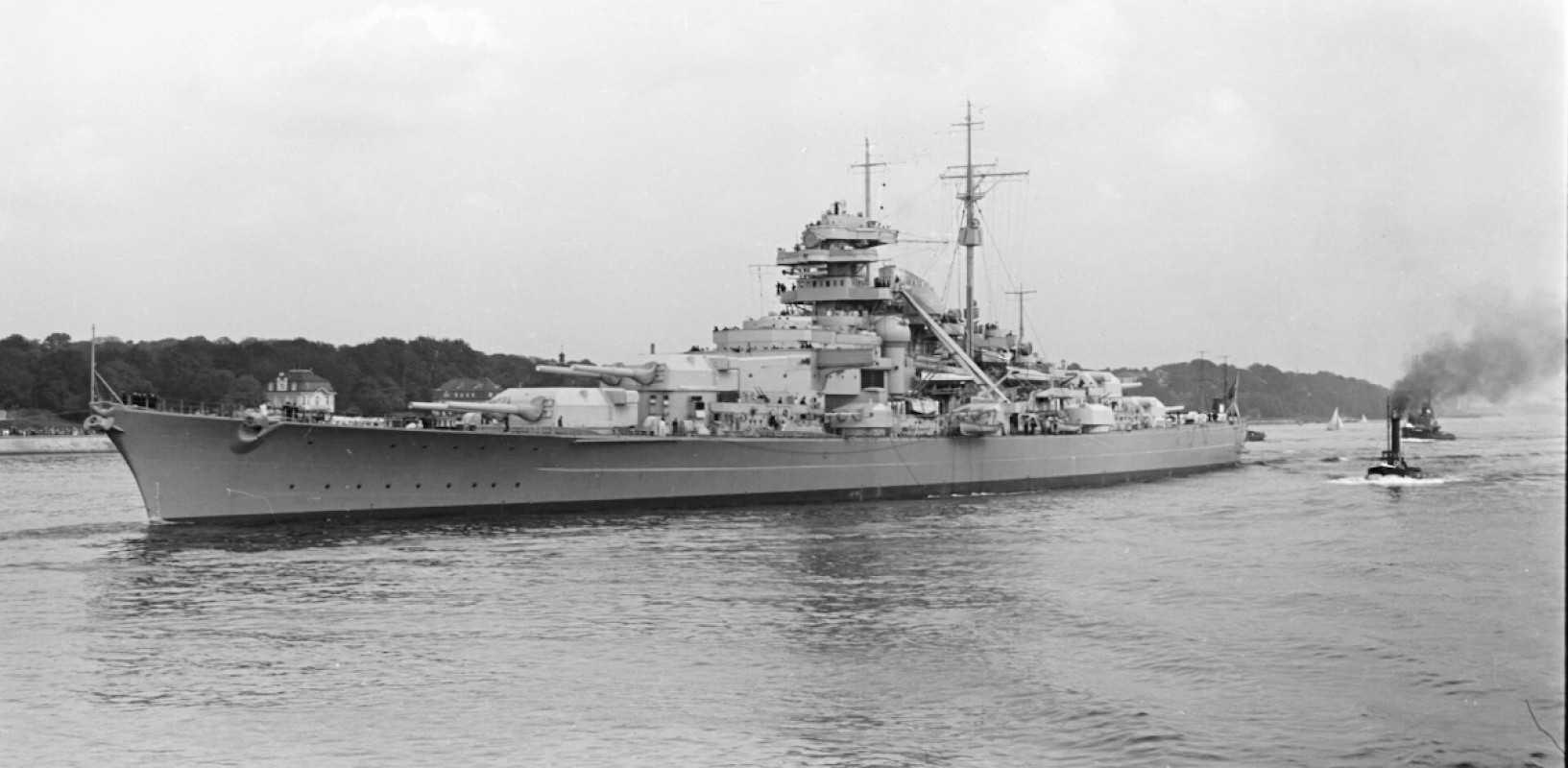
Another major debate has always been what would have happened if the Bismarck had faced the HMS King George V one on one without being damaged and still operating at 100%.
king George V

Bismarck
Posted on 4/12/17 at 9:12 am to burgeman
quote:
Is that piece in Fredericksburg at the museum? I really want to go back and have time to visit the museum.
I'm not 100% sure. I thought it was at the Naval Academy in Annapolis.


Posted on 4/12/17 at 9:14 am to terd ferguson
I agree. The Iowa with its fire control also had better night fighting capabilities, too.


Posted on 4/12/17 at 9:14 am to Darth_Vader
Just saw a piece on the Yamato on Mega Weapons. That thing was incredible. The 3,000 lb shells and naval steel would've been tough to combat. IIRC, we found some steel like the Yamato's at the end of the war and were only able to penetrate it after it was shot point blank.


Posted on 4/12/17 at 9:19 am to Darth_Vader
I think a six mile range difference is a pretty big factor.
Source: I don't know crap about naval battles except from video games.
Also, maybe the Japanese have a tiny advantage in they would fight to the death?
Source: I don't know crap about naval battles except from video games.
Also, maybe the Japanese have a tiny advantage in they would fight to the death?


Posted on 4/12/17 at 9:21 am to Darth_Vader
Which one had a rail gun?


Posted on 4/12/17 at 9:22 am to Darth_Vader
Give me the side that made dirt glow in Hiroshima and Nagasaki
Posted on 4/12/17 at 9:27 am to upgrayedd
quote:
IIRC, we found some steel like the Yamato's at the end of the war and were only able to penetrate it after it was shot point blank.
I think you're referring to the piece of armor from her sister Ship the Musashi. The one I posted in the OP. There's nothing left of the Yamato that not sitting on the bottom of the East China Sea.
As to what range, it was fired from, I found this...
quote:
TWO BALLISTIC TESTS:
PROJECTILE USED:
U.S. Navy 2700-lb 16" Mark 8 Mod 6 AP with inert filler ("BL&P") (last version of this projectile manufactured during WWII)
OBLIQUITY: Near-normal (0°)
TEST #1 on 16 October 1946 (IMPACT #33443):
POINT OF IMPACT: Upper center near joint with turret roof at 0.33° obliquity from normal where plate was 25.99" thick.
STRIKING VELOCITY: 1992 feet/second (607.2 m/sec)
RESULT: Complete penetration and plate snapped in two through impact between side edge and upper end of curved gun port hollow. Hole more-or-less cylindrical, with little difference between front and back of plate. Numerous small cracks also put in plate around impact. No damage to projectile indicated, though projectile had considerable remaining velocity and ended up in the Potomac River, never being recovered. Considerable amount of lamination noted in hole (layering effect parallel to face, much like pages in a book glued together). The upper portion of this broken plate is now on display at the U.S. Navy Memorial Museum at the Washington Navy Yard, Washington, DC, just in front of the old Gun Factory building which houses much of the museum today.
TEST #2 on 23 October 1946 (IMPACT #33459):
POINT OF IMPACT: About halfway between first impact and base of plate, centered between cutout for gun port and left edge of plate, at 0.5° obliquity from normal where plate was 25.98" thick.
STRIKING VELOCITY: 1707 feet/second (502.3 m/sec)
RESULT: Projectile nose tip only penetrated 21" (53.34cm) into the plate, though punching a hole entirely through. Projectile was completely undamaged (merely lost its windscreen and AP cap, as usual). Plate had exactly the same thing happen to it as with the first test, with numerous small cracks, many laminations, and a complete break through hole between left edge and curved gun port cutout.
CONCLUSIONS:
The U.S. Navy Ballistic Limit (complete penetration minimum velocity with this projectile at normal) estimated at 1839 feet/second (560.5 m/sec), plus or minus 3%, which gives it about a relative plate quality of 0.839 compared to U.S. Class "A" armor (estimated, as no such super-thick plate was ever made in the U.S.). This was about the same as the best WWI-era British KC-type armor, which was what the Japanese were trying for--they had not attempted to make improved face-hardened armor, as the U.S. Navy did during the 1930's, for actual ship installation.
The plate was excessively brittle internally, with too much "upper bainite" crystal structure due to too-slow cooling. This was due to using the same pre-WWI British Vickers KC-type armor-hardening techniques on plates over 17" (55.8cm) thick, for which they were never intended. This problem was solved during WWII, but no more VH was ever made except for some thin experimental plates. Brittleness did not seem to reduce resistance to penetration, though cracking might cause problems due to hits that ricocheted off.
Note that one of these experimental plates--7.21" (18.3cm) VH plate NPG #3133--was patterned on Krupp KC n/A (probably from data traded with Germany during WWII) and was tested by the U.S. Navy at the NPG using 335-pound 8" Mark 21 Mod 3 and Mod 5 (the latter with the super-hard AP cap, which turned out to be required to penetrate that plate intact) during this same test series. It was found to be THE BEST PLATE OF ITS THICKNESS RANGE (6-8" (15.2-20.3cm)) EVER TESTED BY THE U.S. NAVY, even though its steel was of the same rather poor quality as the other VH plates tested!!! This caused the U.S. test conductors to state that obviously they did not understand what it took to make a high-quality Class "A" plate, since the 7.21" VH plate should not have been so good from everything they thought they knew about face-hardened armor!!! Obviously the Japanese could make armor as good as anyone if the specifications had required it!
*********************
At about 40,000 yards, the U.S. Navy 16"/50 firing a 16" Mark 8 Mod 6 AP projectile (the later Mod 7 and Mod 8 designs were post-WWII, so I usually do not count them and they were no better ballistically, to my knowledge) will hit at about 45° downward angle and 1607 feet/second (489.8 m/sec). Just as with a point blank hit at 2500 feet/second (762 m/sec) and 45° obliquity, this hit too will barely hole the plate as the projectile is hitting at 0° (normal) obliquity, though not completely penetrate it. Any slight barrel wear will lower the muzzle and striking velocities and no holing will occur at THESE OR ANY OTHER ranges, as mentioned. However, this is so far above any real fighting range (even with radar it is hard to see the target due to the earth's curvature interfering, especially in any kind of imperfect seeing conditions) that I do not even consider it in my computations, while putting the gun barrel up to almost touching the enemy turret is also a pipe dream in real life! Thus, no holing or complete penetrations, ever, though possibly some cracking of the plate and possible jamming of the turret if the crack-off plate piece is dislodged badly enough.
Therefore, these plates are the only warship armor plates that could not be completely penetrated by ANY gun ever put on a warship when installed leaning back at 45°, as they were in the actual turrets!!! Even to completely hole the plate all the way through at that inclination requires a brand new 16"/50 Mark 7 or German 38cm SK C/34 gun at point-blank range firing the latest versions of their respective AP projectiles; it might be cracked at a lower striking velocity, but no hole put entirely through it! AND THEY SAID GUNS HAD COMPLETELY OVERMATCHED ALL ARMOR--*NOT SO*!!!
LINK
But that's firing at the turret armor, or in other words, the thickest armor on the ship. The armor on the decks and other parts of the ship were not nearly as thick and would have been easily penetrated from even maximum range of the 16" guns on the Iowa.

Posted on 4/12/17 at 9:28 am to Darth_Vader
Do these kinds of thoughts run through your head this early in the morning?

Posted on 4/12/17 at 9:29 am to Darth_Vader
quote:
Another major debate has always been what would have happened if the Bismarck had faced the HMS King George V one on one without being damaged and still operating at 100%.
Had the Bismarck been operating at 100% both the KGV and Rodney would have been badly damaged or sunk in the ensuing engagement. They would have literally suffered the same fate as the Hood and Prince of Wales.
Posted on 4/12/17 at 9:30 am to vilma4prez
quote:
I think a six mile range difference is a pretty big factor. Source: I don't know crap about naval battles except from video games. Also, maybe the Japanese have a tiny advantage in they would fight to the death?
You're right, the six mile range difference is a significant advantage for the Japanese. However, this could be negated by Iowa's faster speed and higher maneuverability.
Basically the Iowa could stay just outside Yamato's range until nightfall then use her radar controlled fire control system to close in and pound the Yamato into a flaming hulk before the Yamato could effectively engage their main batteries.
Posted on 4/12/17 at 9:33 am to Darth_Vader
Without knowing the specific quality of either side's personnel, this comparison cannot be made without bringing the crews into the debate.
A machine is only as good as the people operating it, after all.
Can anyone say with confidence that one crew was better or more experienced than the other?
Just throwing that out there for more debate.
A machine is only as good as the people operating it, after all.
Can anyone say with confidence that one crew was better or more experienced than the other?
Just throwing that out there for more debate.
Posted on 4/12/17 at 9:34 am to HoustonGumbeauxGuy
quote:
Do these kinds of thoughts run through your head this early in the morning?
These kind of thoughts run through my mind all the time.
This morning I actually debated whether I should start a thread on this subject or one that took an in-depth look at the German blunder of allowing a huge gap to open in their line between 1st and 2nd Armies as they neared Paris in 1914.
Posted on 4/12/17 at 9:37 am to Darth_Vader
The Yamato's main Guns may have had a 5 or 6 mile longer range thanks the Iowa's, but Iowa's 16 Harpoon missles would more than make up for that. At flank speed, she would cover 5 or 6 miles in about ten minutes. The 16 missle hits, launched from out of range of Yamato's guns wound more than make up for any gunnery disadvantage.
(I know Iowa didn't have Harpoons in WWII, but they're lost under armament, so I'm going with it.)
(I know Iowa didn't have Harpoons in WWII, but they're lost under armament, so I'm going with it.)

 Page 1 of 2

Popular
Back to top
 Follow TigerDroppings for LSU Football News