




- My Forums
- Tiger Rant
- LSU Recruiting
- SEC Rant
- Saints Talk
- Pelicans Talk
- More Sports Board
- Fantasy Sports
- Golf Board
- Soccer Board
- O-T Lounge
- Tech Board
- Home/Garden Board
- Outdoor Board
- Health/Fitness Board
- Movie/TV Board
- Book Board
- Music Board
- Political Talk
- Money Talk
- Fark Board
- Gaming Board
- Travel Board
- Food/Drink Board
- Ticket Exchange
- TD Help Board
Customize My Forums- View All Forums
- Show Left Links
- Topic Sort Options
- Trending Topics
- Recent Topics
- Active Topics
Started By
Message
re: Louisiana Tropical Fruit Gardening - Experiences and Updates
Posted on 3/3/25 at 2:59 pm to TimeOutdoors

Posted on 3/3/25 at 2:59 pm to TimeOutdoors
OK, so you're zone 9a like me but likely with significantly cooler lows over the winter on average.
Recommendations in order for a newbie to tropicals:
1) Lemon cattley guava (Psidium cattleianum var. littorale). This does not taste like a lemon at all. It gets the name from the yellow color of the fruit. Very sweet and tart bite sized fruits with a hint of the tropical guava flavor. Prolific and will bear tons of fruit in containers. Hardy to 22F, so it will have to be a deep freeze to kill it if you forget to protect. You could even put it in the ground if you are willing to cover and heat during the winter, but it will try to get very tall. Almost no pest pressure due to its tough waxy leaves. This is the yellow variant of "strawberry guava," which is a smaller red fruit with a more astringent taste. You want the yellow not the red. This tree is almost impossible to screw up.
2) Kary starfruit (Averrhoa carambola var. Kary): begins bearing at a young age and can fruit in a 3 gallon container. Put it in a 15gal and it will quickly grow into a 6-7 foot tree that takes pruning well. Kary is the smallest starfruit cultivar that also tastes good and does not really need cross pollination. Starfruit are probably the most prolific trees I can think of. One small tree will feed your whole neighborhood. They need a soil pH around 6 and cold protection. They will stop growing at about 65F and they will start yellowing and dropping leaves in the 50s. This is not the tree dying. They just look ugly in cold weather and want full sun with high heat and humidity. Will not survive freezing temps. They also HATE wind. Leaves will burn if exposed to too much strong wind. They are drama queens that love to defoliate with the slightest stress but this somehow does not stop them from producing massive amounts of fruit. Do not choose starfruit if you have kidney disease. They have 2 different toxins in them that are only a problem if you have kidney dysfunction and eat a massive amount of fruit.
3) Ruby supreme guava (Psidium guajava var. Ruby x Supreme): this may be my favorite tree and I feel like I am squarely in the minority in this opinion. Guava is my favorite fruit and ruby is fantastic. Beautiful foliage, handles heat like a champ, not fussy at all about soil conditions or quality. Almost impossible to overwater. These are tough trees. Mid 20s for any significant period of time will cause heavy damage if not kill it. On the Northshore, people grow them in ground and they return from the roots every year. They do not fruit. It needs a couple of years without dying to the ground to produce. The fruit are huge and if you let it ripen on the tree all the way to yellow they are unbelievable. The shelf life of a perfectly ripe guava is like 1 day. You simply aren't ever going to get this experience unless you travel to the tropics or grow it yourself. Ruby supreme is a magnet for mealy bugs which love to attack the leaves. I have every pesticide known to man including some crazy commercial stuff but the only thing that controls the mealy bugs is a 50/50 mix of isopropyl alcohol and water in a spray bottle. It dries them out. Their waxy coating shields them from pretty much everything else except natural predators. Bonus: Louisiana does not have the carribean fruit fly so our guavas do not get worms in the fruit. I bag em anyway to prevent squirrels and birds from meddling and also to catch the ripe yellow fruit when they fall off the stem. I only put this at #3 because I already had another guava at #1. If I had to pick 2 off this list it would be the 2 guavas for quality of fruit and ease of cultivation.
If you like more sour fruit barbados cherry is easy in a container. I just don't like tart fruit and don't grow it.
If you want something in the ground then feijoa is the answer. If you only want one of them, you have to get a self-fertile variety. That limits you to Coolidge, improved Coolidge, and Unique. Hardy to around 5-10F.
The Oliver loquat is a fantastic small fruit and the tree is extremely cold hardy in the ground. The fruits however are not. They flower in winter so you need to protect the fruit from freezes. Great foliage.
I am a fairly ambitious gardener so I'll try anything, but things I would not recommend for a newbie in LA would be the following: lychee, longan, mango, sugar apple, custard apple, cherimoya, atemoya, mangosteen, white sapote, black sapote, and ultra tropicals like durian. All of these are possible with the right setup but you really have to dive into soil chemistry, micronutrients, watering practices, cold exposure, hand pollination, selective pruning, fungal prevention, etc. Start with something bulletproof and when you understand how container growing really works step up.
Recommendations in order for a newbie to tropicals:
1) Lemon cattley guava (Psidium cattleianum var. littorale). This does not taste like a lemon at all. It gets the name from the yellow color of the fruit. Very sweet and tart bite sized fruits with a hint of the tropical guava flavor. Prolific and will bear tons of fruit in containers. Hardy to 22F, so it will have to be a deep freeze to kill it if you forget to protect. You could even put it in the ground if you are willing to cover and heat during the winter, but it will try to get very tall. Almost no pest pressure due to its tough waxy leaves. This is the yellow variant of "strawberry guava," which is a smaller red fruit with a more astringent taste. You want the yellow not the red. This tree is almost impossible to screw up.
2) Kary starfruit (Averrhoa carambola var. Kary): begins bearing at a young age and can fruit in a 3 gallon container. Put it in a 15gal and it will quickly grow into a 6-7 foot tree that takes pruning well. Kary is the smallest starfruit cultivar that also tastes good and does not really need cross pollination. Starfruit are probably the most prolific trees I can think of. One small tree will feed your whole neighborhood. They need a soil pH around 6 and cold protection. They will stop growing at about 65F and they will start yellowing and dropping leaves in the 50s. This is not the tree dying. They just look ugly in cold weather and want full sun with high heat and humidity. Will not survive freezing temps. They also HATE wind. Leaves will burn if exposed to too much strong wind. They are drama queens that love to defoliate with the slightest stress but this somehow does not stop them from producing massive amounts of fruit. Do not choose starfruit if you have kidney disease. They have 2 different toxins in them that are only a problem if you have kidney dysfunction and eat a massive amount of fruit.
3) Ruby supreme guava (Psidium guajava var. Ruby x Supreme): this may be my favorite tree and I feel like I am squarely in the minority in this opinion. Guava is my favorite fruit and ruby is fantastic. Beautiful foliage, handles heat like a champ, not fussy at all about soil conditions or quality. Almost impossible to overwater. These are tough trees. Mid 20s for any significant period of time will cause heavy damage if not kill it. On the Northshore, people grow them in ground and they return from the roots every year. They do not fruit. It needs a couple of years without dying to the ground to produce. The fruit are huge and if you let it ripen on the tree all the way to yellow they are unbelievable. The shelf life of a perfectly ripe guava is like 1 day. You simply aren't ever going to get this experience unless you travel to the tropics or grow it yourself. Ruby supreme is a magnet for mealy bugs which love to attack the leaves. I have every pesticide known to man including some crazy commercial stuff but the only thing that controls the mealy bugs is a 50/50 mix of isopropyl alcohol and water in a spray bottle. It dries them out. Their waxy coating shields them from pretty much everything else except natural predators. Bonus: Louisiana does not have the carribean fruit fly so our guavas do not get worms in the fruit. I bag em anyway to prevent squirrels and birds from meddling and also to catch the ripe yellow fruit when they fall off the stem. I only put this at #3 because I already had another guava at #1. If I had to pick 2 off this list it would be the 2 guavas for quality of fruit and ease of cultivation.
If you like more sour fruit barbados cherry is easy in a container. I just don't like tart fruit and don't grow it.
If you want something in the ground then feijoa is the answer. If you only want one of them, you have to get a self-fertile variety. That limits you to Coolidge, improved Coolidge, and Unique. Hardy to around 5-10F.
The Oliver loquat is a fantastic small fruit and the tree is extremely cold hardy in the ground. The fruits however are not. They flower in winter so you need to protect the fruit from freezes. Great foliage.
I am a fairly ambitious gardener so I'll try anything, but things I would not recommend for a newbie in LA would be the following: lychee, longan, mango, sugar apple, custard apple, cherimoya, atemoya, mangosteen, white sapote, black sapote, and ultra tropicals like durian. All of these are possible with the right setup but you really have to dive into soil chemistry, micronutrients, watering practices, cold exposure, hand pollination, selective pruning, fungal prevention, etc. Start with something bulletproof and when you understand how container growing really works step up.
This post was edited on 3/3/25 at 3:55 pm
 0
0


Posted on 3/3/25 at 3:43 pm to Tigerlaff
great thread
i'll reiterate have a couple dozen loquat seedlings in pots that need homes. anyone who wants some is welcome (i'm in hammond)
i'll reiterate have a couple dozen loquat seedlings in pots that need homes. anyone who wants some is welcome (i'm in hammond)
Posted on 3/3/25 at 3:49 pm to cgrand
I've got a couple of seedlings growing in the yard but keep in mind they won't fruit for 6-10 years from seed. I have the seedlings out for eventual cross pollination of my named grafted cultivars (Oliver, Big Jim, Golden Nugget).
Posted on 3/3/25 at 3:56 pm to Tigerlaff
thats what i'd been told but the ones i've transplanted flowered and fruited in just a few years. my original tree was a seedling someone gave me and it fruited prodigiously (thus all the seedlings  )
)
)

Posted on 3/3/25 at 4:43 pm to Tigerlaff
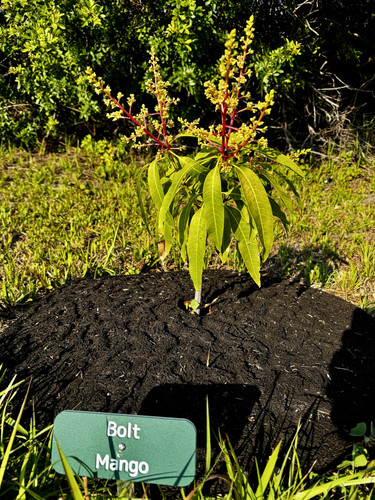
Bolt; got as a 1 gallon tree. Attempted to flush; unfortunately, Hurricane Milton arrived the same day. Roughly one year old now. Grafted to Turpentine rootstock.
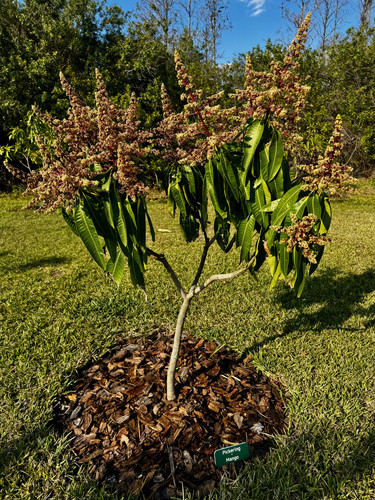
Pickering; this tree was purchased as a 7g and put in the ground about the same time as Bolt. Give or take a few weeks. It’s now about 4.5’ tall and about as wide. Probably 2-2.5 years old. As you can see both are flowering now. The Pickering has ton of fruit set already.
I will pluck all the fruit off Bolt and give it another year or possibly two to get better established.
This post was edited on 3/3/25 at 4:45 pm
Posted on 3/3/25 at 6:41 pm to cgrand
quote:
thats what i'd been told but the ones i've transplanted flowered and fruited in just a few years. my original tree was a seedling someone gave me and it fruited prodigiously (thus all the seedlings )
OK, now that is interesting. If the fruit is of good quality you may have something. Loquats will not grow true to seed but the one that fruits so heavily and early from seed could be an amazing find for grafting. How tall is the tree and how is the fruit?
Posted on 3/3/25 at 6:44 pm to wiltznucs
Those mangos look great man. That Pickering lollipop shape is just so amazingly consistent. I will probably only grow one mango and I've yet to see anything to dissuade me from Pickering.
Bolt looks very healthy. I'm curious to see how dwarf it ends up being.
You have any experience with honey kiss?
Bolt looks very healthy. I'm curious to see how dwarf it ends up being.
You have any experience with honey kiss?
This post was edited on 3/3/25 at 7:10 pm
Posted on 3/3/25 at 6:50 pm to Tigerlaff
the "mother" tree was about 30' tall, outstanding fruit. unfortunately a pine came down on it in gustav and destroyed it. ive got a smaller one now that fruited last year and is in bloom now...plus all the seedlings in pots
Posted on 3/3/25 at 7:07 pm to cgrand
I'd plant some of your seedlings if I had the room! There are obviously some good genes lurking in there that may come out.
Posted on 3/3/25 at 7:22 pm to Tigerlaff
I’ve not tried Honey Kiss. There’s so many varieties and it feels like new ones come out every year. I’ve got tons I haven’t tried. Sugarloaf gets a lot of new hype. Bolt did too.
There’s a big mango fest in West Palm this summer. There will likely be 100+ different varieties on hand. Hope to check some off.
I’ve got two new ones coming. Lemon-esh and Monty. Will probably keep them in pots for a year or so. Lemon Zest tastes amazing and I have one; unfortunately, it’s also a terrible producer. It hasn’t even flushed or added a leaf in almost 15 months. Didn’t flower this year yet. Supposedly Lemon-esh tastes on par and with good vigor and production.
Monty is a seedling of Fruit Punch that has been said to taste like a blend of peach and passion fruit.
I’ve reached that point where I’m running out of real estate for planting in the ground. I’m going to start grafting limbs/scions of ones I wish to try onto established trees. I’ve seen some “cocktail mango” trees with as many as 5-7 different varieties on the same tree.
There’s a big mango fest in West Palm this summer. There will likely be 100+ different varieties on hand. Hope to check some off.
I’ve got two new ones coming. Lemon-esh and Monty. Will probably keep them in pots for a year or so. Lemon Zest tastes amazing and I have one; unfortunately, it’s also a terrible producer. It hasn’t even flushed or added a leaf in almost 15 months. Didn’t flower this year yet. Supposedly Lemon-esh tastes on par and with good vigor and production.
Monty is a seedling of Fruit Punch that has been said to taste like a blend of peach and passion fruit.
I’ve reached that point where I’m running out of real estate for planting in the ground. I’m going to start grafting limbs/scions of ones I wish to try onto established trees. I’ve seen some “cocktail mango” trees with as many as 5-7 different varieties on the same tree.

Posted on 3/3/25 at 9:34 pm to wiltznucs
yes when the yard is filled and now you're top working trees you know you've got the sickness. But what are you gonna do? Mango is the king of fruit. We gotta grow it. This post was edited on 3/3/25 at 9:35 pm

Posted on 3/3/25 at 9:44 pm to Tigerlaff
Any experience with Spanish lime (quenepa)? It was one of my favorite things about Puerto Rico. I’ve been wondering if I could grow or in a container and produce fruit.
Posted on 3/3/25 at 10:01 pm to TimeOutdoors
LINK
I have never grown it but it is a subtropical fruit and produces in south Florida, which is just one zone above us. More importantly it appears to be very slow growing with a symmetrical rounded canopy and tolerates pruning to 7 feet well. This really lends itself to container culture. Honestly you may be able to do this with the appropriate cold protection and supplemental lighting during winter. Only some varieties are self fertile so make sure you are getting the right one. One a 1-10 scale of difficulty this is probably a 7 to 7.5.
This is exactly the kind of gateway thing that gets you into this. Mine was Mexican limes in Costa Rica on my honeymoon. 6 years later and I have mastered it. You should go for it and post pictures in this thread of your progress. Most important thing will be your soil and I'm happy to talk to you about that if you decide to pull the trigger. You want all your stuff ready before the tree arrives.
I have never grown it but it is a subtropical fruit and produces in south Florida, which is just one zone above us. More importantly it appears to be very slow growing with a symmetrical rounded canopy and tolerates pruning to 7 feet well. This really lends itself to container culture. Honestly you may be able to do this with the appropriate cold protection and supplemental lighting during winter. Only some varieties are self fertile so make sure you are getting the right one. One a 1-10 scale of difficulty this is probably a 7 to 7.5.
This is exactly the kind of gateway thing that gets you into this. Mine was Mexican limes in Costa Rica on my honeymoon. 6 years later and I have mastered it. You should go for it and post pictures in this thread of your progress. Most important thing will be your soil and I'm happy to talk to you about that if you decide to pull the trigger. You want all your stuff ready before the tree arrives.
This post was edited on 3/3/25 at 10:31 pm
Posted on 3/3/25 at 10:47 pm to Tigerlaff
quote:
1) broad knowledge of container gardening (soil, fertilizer, water, root biology). Almost everything you read about soil requirements for containers is wrong. I look forward to talking about this in depth.
why is jumping up multiple container sizes generally discouraged? Ive got a 5 gallon mandarin that i want to put straight into a 45 gallon next year. with good drainage and plenty of slow release fertilizer to spare, what could go wrong?
Posted on 3/4/25 at 6:09 am to Warwick
It is discouraged because 95% of "soil" on the market is actually ground up trees that holds too much moisture and rots, ultimately killing roots. In smaller containers, the roots are able to drink up more of the water and keep it drier.
If you have actual soil (minerals, not organics) and you have excellent drainage, it is perfectly fine to go straight to the big pot in most cases. All of the container citrus I ever grew went straight into 25gal and they thrived. The earth is the largest pot size possible and everything in nature goes straight into it.
The drawbacks are that you still have to water evenly (more water required) and weight (mineral soil is HEAVY). Also some plants just do better with restricted root systems (bougainvillea, bird of paradise, etc.). This usually means flowering plants that are shy bloomers if they have plenty of space and can focus on vegetative growth instead.
If you have actual soil (minerals, not organics) and you have excellent drainage, it is perfectly fine to go straight to the big pot in most cases. All of the container citrus I ever grew went straight into 25gal and they thrived. The earth is the largest pot size possible and everything in nature goes straight into it.
The drawbacks are that you still have to water evenly (more water required) and weight (mineral soil is HEAVY). Also some plants just do better with restricted root systems (bougainvillea, bird of paradise, etc.). This usually means flowering plants that are shy bloomers if they have plenty of space and can focus on vegetative growth instead.
This post was edited on 3/4/25 at 6:12 am
Posted on 3/4/25 at 7:49 am to Tigerlaff
This thread has my mouth watering with some of these fruit descriptions! I’ll be following this one for sure, so cool to see. I have been saying I was going to start a key lime tree any year now.
This post was edited on 3/4/25 at 7:50 am
Posted on 3/4/25 at 7:56 am to Tigerlaff
Just an idea. If you have a list of some tropical nurseries you could add to the first post it might be useful.
Posted on 3/4/25 at 8:09 am to Tigerlaff
Do you have any recommendations on where to get the good soil?
Posted on 3/4/25 at 8:33 am to CalcuttaTigah
quote:
This thread has my mouth watering with some of these fruit descriptions! I’ll be following this one for sure, so cool to see. I have been saying I was going to start a key lime tree any year now.
My key lime produces more limes than I know what to do with. I drink a lot of 'Ti Punch. They do great in containers if given cold protection.
Posted on 3/4/25 at 8:37 am to TimeOutdoors
Done.

 Page 2 of 110

Back to top
 Follow TigerDroppings for LSU Football News