




- My Forums
- Tiger Rant
- LSU Recruiting
- SEC Rant
- Saints Talk
- Pelicans Talk
- More Sports Board
- Fantasy Sports
- Golf Board
- Soccer Board
- O-T Lounge
- Tech Board
- Home/Garden Board
- Outdoor Board
- Health/Fitness Board
- Movie/TV Board
- Book Board
- Music Board
- Political Talk
- Money Talk
- Fark Board
- Gaming Board
- Travel Board
- Food/Drink Board
- Ticket Exchange
- TD Help Board
Customize My Forums- View All Forums
- Show Left Links
- Topic Sort Options
- Trending Topics
- Recent Topics
- Active Topics
Started By
Message
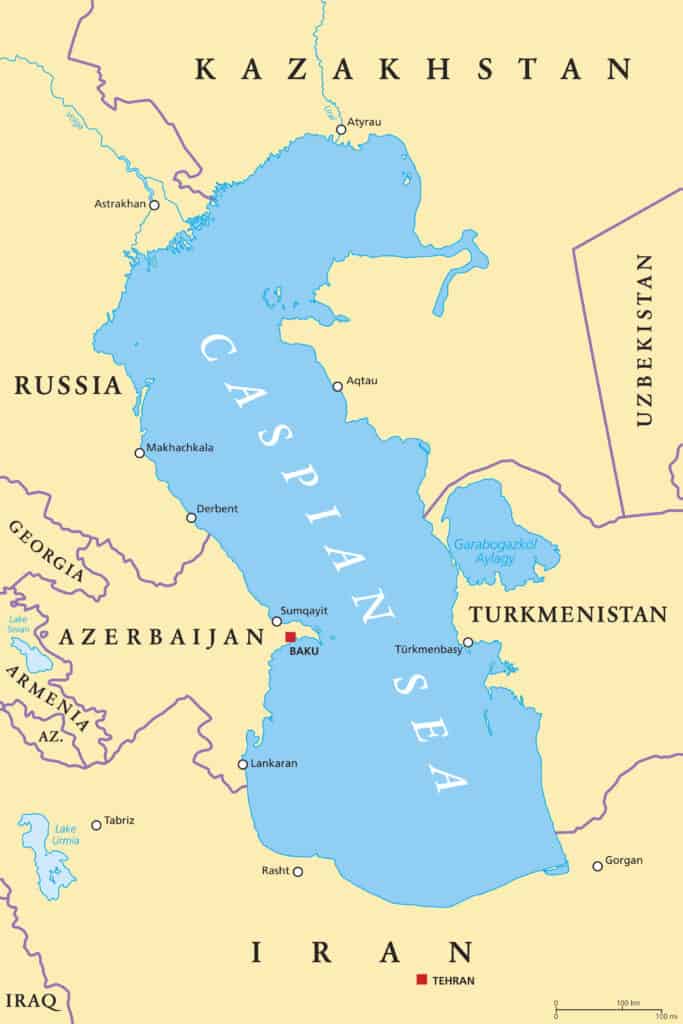
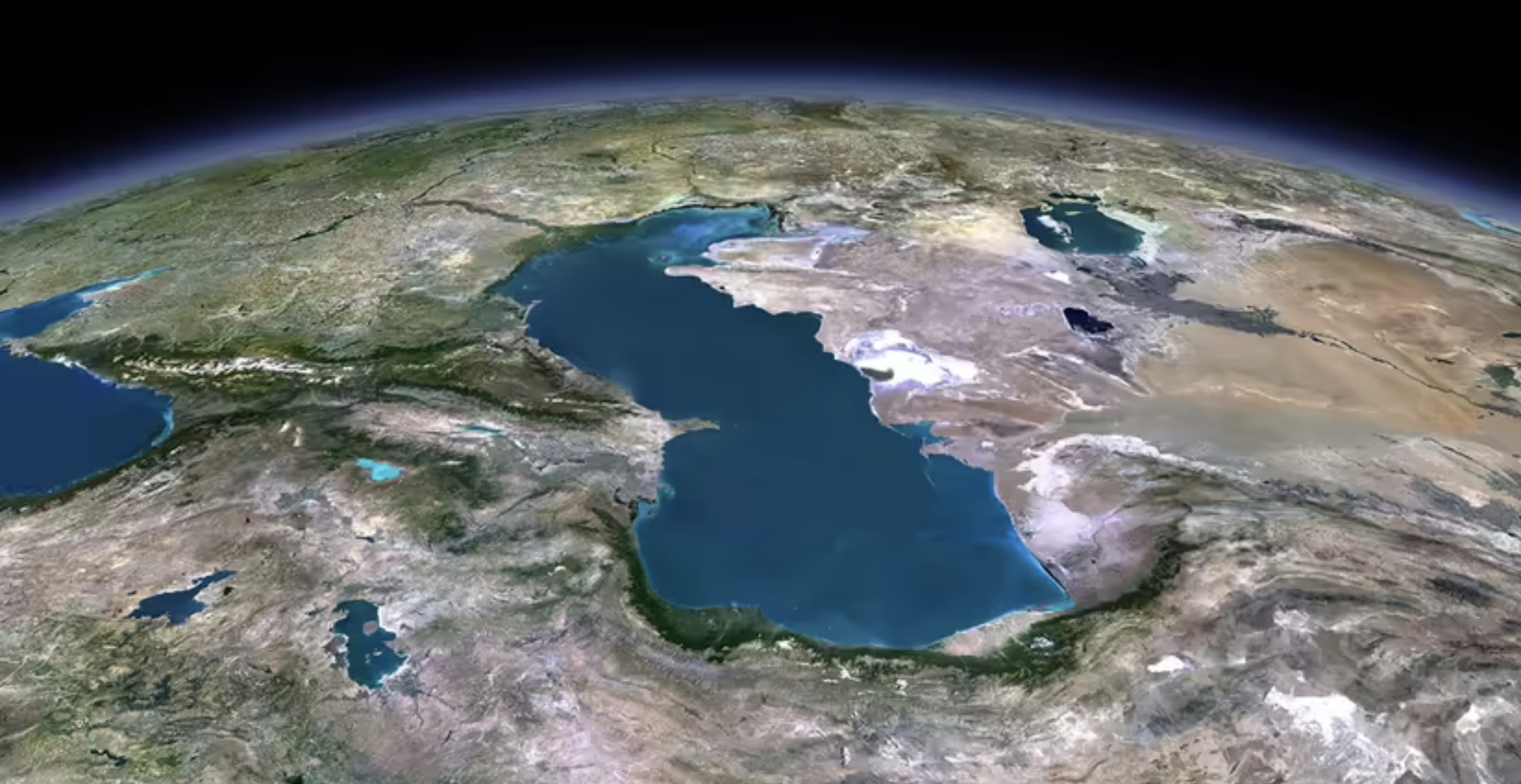
How the hell is the Caspian Sea brackish?
Posted on 3/13/26 at 9:38 am


Posted on 3/13/26 at 9:38 am
That flow-in from the north you see is fresh water Volga River
 12
12


Posted on 3/13/26 at 9:40 am to Harry Rex Vonner
Great question — it's actually a fascinating geological story.
The Caspian Sea is landlocked, meaning it has no outlet to any ocean. Here's why that makes it brackish rather than either fully fresh or fully salty:
It used to be connected to the ocean. Millions of years ago, the Caspian was part of a vast ancient sea called the Paratethys, which was itself connected to the world ocean. As tectonic shifts raised the land around it, it got cut off — trapping ancient seawater inside.
Rivers dilute it constantly. The Volga River (and several others) dump enormous amounts of freshwater into it. With no outflow to the ocean, this freshwater just mixes with the trapped saltwater, diluting it over time. That's why it's only about one-third as salty as the ocean — roughly 1.2% salinity vs. the ocean's ~3.5%.
Evaporation concentrates what's left. Water evaporates from the surface, but the salt stays behind. So you have two competing forces: rivers constantly freshening it, and evaporation constantly concentrating whatever salt remains.
It's also uneven. The northern part (where the Volga empties) is nearly fresh, while the southern parts are saltier — so it's not even uniformly brackish throughout.
Essentially it's a relic of an ancient ocean that's been slowly freshening for millions of years but hasn't finished the job yet. Given enough time with no geological changes, the rivers would theoretically freshen it completely — but evaporation and residual salt keep it in this in-between state.
The Caspian Sea is landlocked, meaning it has no outlet to any ocean. Here's why that makes it brackish rather than either fully fresh or fully salty:
It used to be connected to the ocean. Millions of years ago, the Caspian was part of a vast ancient sea called the Paratethys, which was itself connected to the world ocean. As tectonic shifts raised the land around it, it got cut off — trapping ancient seawater inside.
Rivers dilute it constantly. The Volga River (and several others) dump enormous amounts of freshwater into it. With no outflow to the ocean, this freshwater just mixes with the trapped saltwater, diluting it over time. That's why it's only about one-third as salty as the ocean — roughly 1.2% salinity vs. the ocean's ~3.5%.
Evaporation concentrates what's left. Water evaporates from the surface, but the salt stays behind. So you have two competing forces: rivers constantly freshening it, and evaporation constantly concentrating whatever salt remains.
It's also uneven. The northern part (where the Volga empties) is nearly fresh, while the southern parts are saltier — so it's not even uniformly brackish throughout.
Essentially it's a relic of an ancient ocean that's been slowly freshening for millions of years but hasn't finished the job yet. Given enough time with no geological changes, the rivers would theoretically freshen it completely — but evaporation and residual salt keep it in this in-between state.
Posted on 3/13/26 at 9:41 am to diat150
It does not connect to the Black Sea at any point
Yes it's fascinating
Yes it's fascinating


Posted on 3/13/26 at 9:41 am to Harry Rex Vonner
Same reason the Dead Sea is salty AF?

Posted on 3/13/26 at 9:43 am to Harry Rex Vonner
Looks like it has no southern release points/rivers.

Posted on 3/13/26 at 9:45 am to diat150
Yep yep. Take a pot of salty water and boil it. As water evaporates out, pour in more fresh water. As long as you keep the water level relatively stable, your salt to water ratio will remain relatively stable as well.

Posted on 3/13/26 at 9:48 am to diat150
quote:
diat150
That is awesome.

Posted on 3/13/26 at 9:48 am to Harry Rex Vonner
quote:
How the hell is the Caspian Sea brackish?
That flow-in from the north you see is fresh water Volga River
Two reasons.
1. Because there is a ton of leftover salt from when it was part of a much larger sea.
2. Because you touch yourself at night.

Posted on 3/13/26 at 9:50 am to Harry Rex Vonner
Great Salt Lake?


Posted on 3/13/26 at 9:50 am to TBoy
Aral sea (which the soviets detroyed) same story as Caspian

Posted on 3/13/26 at 9:57 am to diat150
and sure enough, the smaller lakes around it, also with zero connect to any ocean, are also brackish
I wonder why no sharks were included in the ancient saltwater dump? Caspian Sea has no sharks, not even small ones.
I wonder why no sharks were included in the ancient saltwater dump? Caspian Sea has no sharks, not even small ones.

Posted on 3/13/26 at 9:57 am to SallysHuman
quote:Perhaps but you know the source is robot?
That is awesome
Posted on 3/13/26 at 9:58 am to Harry Rex Vonner
You are talking salty, right?
I thought maybe you are Chinese and that would be different.
I thought maybe you are Chinese and that would be different.
Posted on 3/13/26 at 10:00 am to cattus
quote:
Perhaps but you know the source is robot?
I like robots.

Posted on 3/13/26 at 10:01 am to TBoy
quote:
Great Salt Lake?
Yes, but how is Utah Lake, south of there maybe 40 miles, fresh water? It's a natural lake.
Why no salt there from the ancient dump of ocean water theory.
Posted on 3/13/26 at 10:02 am to Harry Rex Vonner
quote:
I wonder why no sharks were included in the ancient saltwater dump? Caspian Sea has no sharks, not even small ones.
Certainly not my area of expertise, but aren't most sharks heavily migratory? I wonder if there was a population initially that died out due to disruption to their reproductive behaviors.

Posted on 3/13/26 at 10:07 am to Joshjrn
quote:
aren't most sharks heavily migratory
Depends on if they are African sharks or European sharks. African sharks are non-migratory.

Posted on 3/13/26 at 10:09 am to Harry Rex Vonner
no real knowledge if this is true, and honestly you could google it as much as I could, but the freshwater lake is most likely spring fed
Posted on 3/13/26 at 10:09 am to Joshjrn
quote:
Certainly not my area of expertise, but aren't most sharks heavily migratory? I wonder if there was a population initially that died out due to disruption to their reproductive behaviors.
Mine either obviously
but the Caspian is almost as big as the Black sea (which of course is connected to oceans) and the Black sea has small sharks.
Seems like small sharks would have had plenty of room to reproduce in the Caspian.
Posted on 3/13/26 at 10:09 am to Harry Rex Vonner
quote:
Yes, but how is Utah Lake, south of there maybe 40 miles, fresh water? It's a natural lake.
Why no salt there from the ancient dump of ocean water theory.
Just eyeballing it, Great Salt Lake is surrounded by relatively low lying plains while Utah Lake is surrounded by high elevation, so it's possible Utah Lake wasn't part of the salt ocean to begin with. If it was, then the explanation is that Utah Lake has an outlet (Jordan River) while Great Salt Lake does not.
Lakes with outlets will, generally speaking, get progressively get less mineral dense because rainwater is going to be fresh.

 Page 1 of 3

Popular
Back to top
 Follow TigerDroppings for LSU Football News