- My Forums
- Tiger Rant
- LSU Recruiting
- SEC Rant
- Saints Talk
- Pelicans Talk
- More Sports Board
- Fantasy Sports
- Golf Board
- Soccer Board
- O-T Lounge
- Tech Board
- Home/Garden Board
- Outdoor Board
- Health/Fitness Board
- Movie/TV Board
- Book Board
- Music Board
- Political Talk
- Money Talk
- Fark Board
- Gaming Board
- Travel Board
- Food/Drink Board
- Ticket Exchange
- TD Help Board
Customize My Forums- View All Forums
- Topic Sort Options
- Trending Topics
- Recent Topics
- Active Topics

Tiger503
| Favorite team: | LSU  |
| Location: | |
| Biography: | |
| Interests: | |
| Occupation: | |
| Number of Posts: | 67 |
| Registered on: | 9/4/2026 |
| Online Status: | Not Online |
Recent Posts
Message
re: The offense in the nfl is disgusting now
Posted by Tiger503 on 10/25/26 at 1:24 pm to Lysolgetsthejobdone
quote:
What has caused this? What’s changed since the 2017ish range?
Sports betting legalization: How we got here
quote:
Dec. 4, 2017
The Supreme Court hears opinions on New Jersey's sports betting case.
May 14, 2018
The Supreme Court strikes down PASPA, the federal ban on sports betting.
"Congress can regulate sports gambling directly, but if it elects not to do so, each State is free to act on its own," the court writes in its opinion. "Our job is to interpret the law Congress has enacted and decide whether it is consistent with the Constitution. PASPA is not."

 0
0
re: Time to stock up on Oatmeal. Prices are about to skyrocket.
Posted by Tiger503 on 10/25/26 at 9:27 am to duckblind56
Just be aware of Glyphosate levels. Quaker Oats is a big offender.
Glyphosate Residue Free – Certified Products
Glyphosate Residue Free – Certified Products

re: Why is it so hard for dogs to grasp a sound coming out of their butts
Posted by Tiger503 on 10/25/26 at 7:42 am to shutterspeed
quote:
looking back at us with both an accusatory and questioning stare
She just wants to know what's in her food that makes her gassy.
re: New release from Zebra!
Posted by Tiger503 on 10/23/26 at 5:16 pm to northernvatiger
Zebra performs 4:30PM-6PM
Kenner Food Truck Festival Sun, Oct 25, 2026
Free Admission

Kenner Food Truck Festival Sun, Oct 25, 2026
Free Admission
re: Yahoo Mail forced changes...
Posted by Tiger503 on 10/23/26 at 2:25 pm to WWII Collector
If you care at all about privacy, Gmail, Outlook, and Yahoo should be avoided.
quote:
Surveillance and Privacy:
Google scans all email content to build advertising profiles, tracking purchases, travel, and communications. It lacks default end-to-end encryption, meaning Google holds the keys to your data, and it collects extensive metadata including location and device information.
Security and Account Lockouts:
Because Gmail is tied to your broader digital identity, a single breach can compromise all linked services. Additionally, Google can suspend accounts without warning or human review for perceived policy violations, potentially locking users out of their entire online existence.
A few broadcast recordings from 1987 and 1992:
WBRH 90 FM: An audio history
The format has changed to Jazz
WBRH Listen Live
WBRH 90 FM: An audio history
The format has changed to Jazz
WBRH Listen Live

re: Yahoo Mail forced changes...
Posted by Tiger503 on 10/23/26 at 8:58 am to WWII Collector
quote:
some guy that doesn't know what a compound is
There are references included on that site at the end of the articles, but no direct links.
quote:
can you share some?
If you're truly interested, here's a good place to start:
The Fluoride Action Network
quote:
Study Tracker
The most up-to-date and comprehensive source for studies on fluoride's multifaceted effects on human and animal health, with 100+ years of research organized by health category, type of study, author, journal, and date.
Strawman argument
Poison
quote:
The dose makes the poison. Its then number 1 rule of toxicology.
Poison
quote:
1. a substance with an inherent property that tends to destroy life or impair health.
re: Fluoride in drinking water
Posted by Tiger503 on 10/22/26 at 9:26 am to SaltyMcKracker
quote:
Flouride occurs naturally in groundwater
quote:
What is Fluoride?
To understand fluoride we first have to talk about fluorine.
Fluorine is an element, the most electronegative element on the periodic table which makes it extremely reactive. This means it loves electrons and like all elements it wants to become stable, to do so it has to pick up one more electron. In the process of picking up one more electron it becomes a negative ion. In other words, it now becomes fluoride (F-).
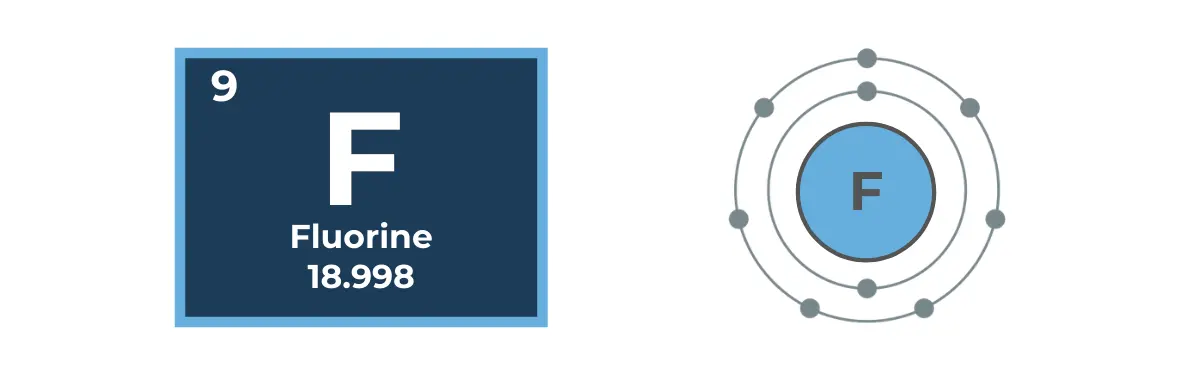
Now when fluorine the element becomes fluoride the ion, it also becomes a compound in the process. It’s these compounds that we find added into our water and toothpaste, like fluorosilicic acid and sodium fluoride.
The reason why the subject of fluoride has to be started like this is because most websites, organizations and public figures paint the picture of fluoride in a very misleading manner. They say it’s a naturally occurring substance that’s very abundant on earth. Adding that it’s found in soil, water, rocks, air, plants and animals. By painting fluoride as “natural” it makes many people believe it’s good for them.
This is misguiding in two main ways.
Even though fluorine is a naturally occurring element, that does not mean it is good for you. Not all things made by the earth were made to put in our body. For example, lead, lithium, aluminum, arsenic, mercury and radium are all naturally occurring elements on Earth but we all know how deadly they are for the human body.
Second, you don’t have fluorine added to your water and toothpaste, you have the different compounds of fluoride added. And as you will learn in the next section, none of these different compound additives occur naturally.
In fact, it’s quite unnatural.
EWG - Baton Rouge Water Company
quote:
EWG's drinking water quality report shows results of tests conducted by the water utility and provided to the Environmental Working Group by the Louisiana Department of Health and Hospitals, as well as information from the U.S. EPA Enforcement and Compliance History database (ECHO). For the latest quarter assessed by the U.S. EPA (April 2024 - June 2024), tap water provided by this water utility was in compliance with federal health-based drinking water standards.
re: Fluoride in drinking water
Posted by Tiger503 on 10/21/26 at 5:21 pm to Auburn1968
69 Reasons To Oppose Adding Fluoride To Water LINK
quote:
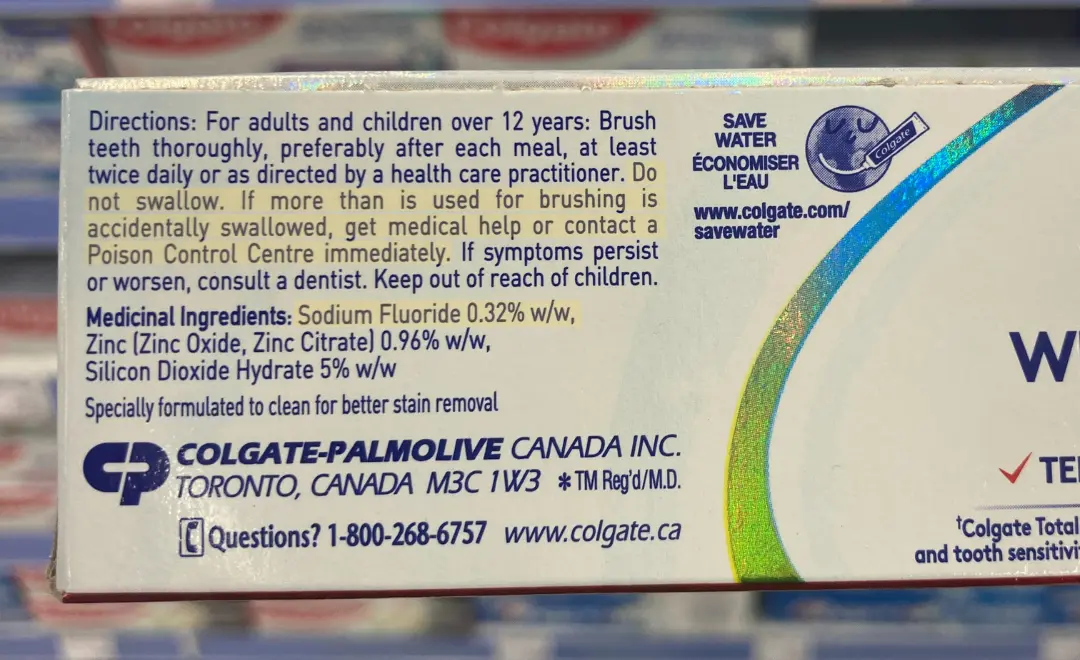
Fluoride is poison, just look at a tube of fluoride toothpaste.
The Food and Drug Administration (FDA) requires all fluoride toothpaste sold in the USA to be labeled with a poison warning, instructing those that swallow more than is used for brushing to contact the Poison Control Center.
quote:
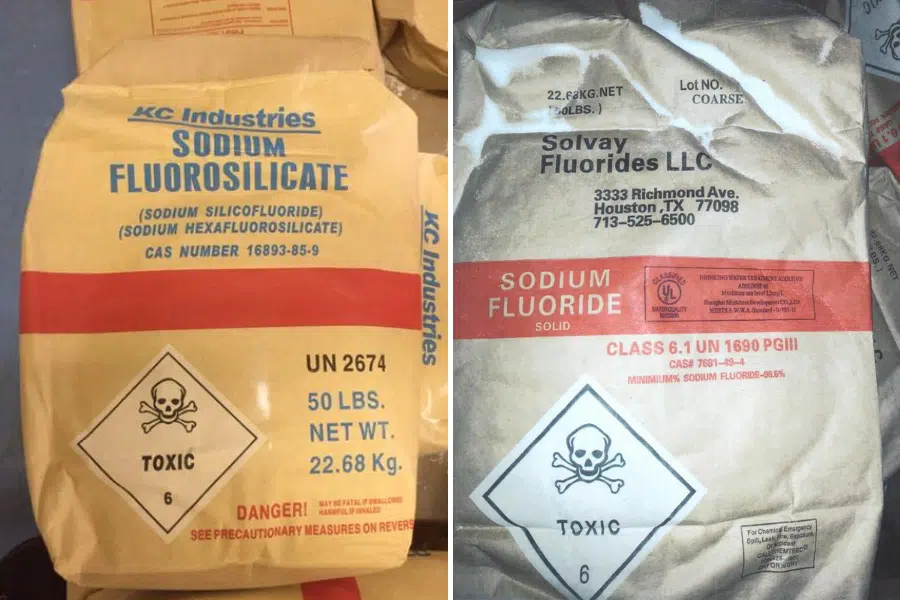
Fluoride is a toxic industrial by-product.
The most common type of fluoride used for water fluoridation is fluorosilicic acid and is well known as a chemical “byproduct” of the aluminum, steel, cement, and phosphate industries.
Don’t believe me? I don’t blame you.
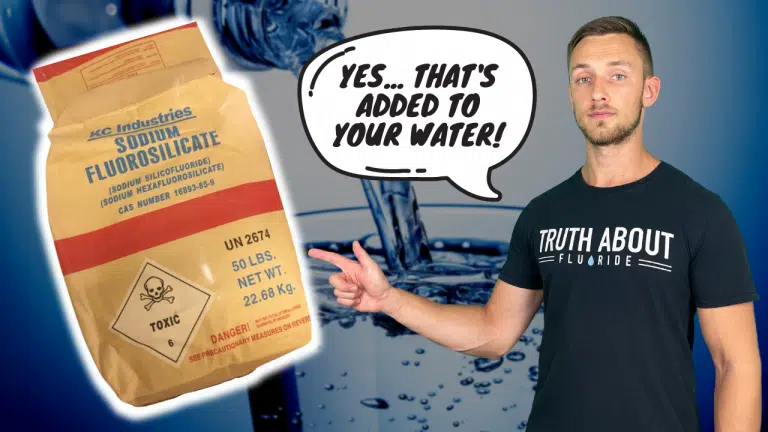
So here’s a photo of the other two types of fluoride added to our water, sodium fluorosilicate (left) and sodium fluoride (right):
re: Fluoride in drinking water
Posted by Tiger503 on 10/21/26 at 4:56 pm to Auburn1968
re: Former Chargers/LSU DT says NFL is rigged
Posted by Tiger503 on 10/20/26 at 6:03 am to Downeast12
quote:
hear it come out of literally any other former player’s mouth
ETA:
Rigged NFL: It’s Not Just The Refs; The Professional Actor “Players” Are In On It Too
quote:
It’s not the refs vs. the players. It’s the NFL versus its viewers. The refs and players are fed by the same hand. It’s one big theater production designed to consume viewers’ emotions and money in one fell swoop.
quote:
We’ve already covered the documented fact that the NFL sidesteps anti-trust laws by acting as a singular entertainment enterprise making money through yearly TV contracts and advertising revenue. Therefore, they cannot be sued for fixing games because the only obligation to attendees is a ticket to a sporting event.
Mayer v. Belichick 3rd Circuit Court of Appeals case from 2010. The NFL destroyed evidence of the Patriots videotaping Jets sideline signals and argued in federal court that it has a legal right to tamper games because it is “sports entertainment,” not “sport” by its business designation.
As an entertainment business, the NFL makes its money from the major networks that pay to broadcast their games, drawing hundreds of advertising partners to pay for ad space during every NFL game. We must ask ourselves: why does a 60-minute game with a 15-minute halftime, take up nearly four hours of programming?
Because the NFL is a TV show. And just like every TV show, it’s been scripted beforehand. The only difference is that it’s being filmed and broadcast live in front of our eyes. It’s like a live play shown across the country. The story has already been scripted, with its actors playing their parts.
This brings us to the hidden reveal in Dwight Smith’s courageous appearance on talk radio in 2020. What is he saying exactly? Well, he’s saying that the players are somewhat involved in this rigging of NFL games.
Recent players like Benny Cunningham, Larry Johnson, Junior Galette, and Chris Borland have all blown the whistle on signing non-disclosure agreements contractually obligating them to go along with the script. Raiders’ wide receivers Tim Brown and Jerry Rice called this out after the same 2003 Super Bowl:
re: Looking for and ergonomic office chair
Posted by Tiger503 on 10/14/26 at 8:40 pm to boxcarbarney

.webp)
re: Carpe Deodorant Has anyone tried it?
Posted by Tiger503 on 10/14/26 at 3:35 pm to highcotton2
quote:
There is not one single reputable scientific or medical study linking aluminum in deodorant to dementia, Alzheimer’s or breast cancer.
If that's true, you realize those studies do not exist for a reason, right?
quote:
Not sure about aluminum. That would probably be put in energy drinks.
Aluminum exposure is common from the food supply, water, medications, and vaccines.
quote:
Aluminum is a neurotoxin and systemic toxin that accumulates in the brain, bones, kidneys, and liver when exposure exceeds the body's excretory capacity. While low-level dietary exposure is generally considered safe, chronic high-level exposure leads to oxidative stress, inflammation, and cellular damage through mechanisms like enzyme inhibition and disrupted protein synthesis.
Neurological and Cognitive Effects
Aluminum crosses the blood-brain barrier, where it interferes with neuronal transport and promotes the formation of amyloid plaques and neurofibrillary tangles. High concentrations are linked to neurotoxicity, causing memory loss, disorientation, and cognitive decline in workers exposed to aluminum dust. While some studies associate elevated aluminum levels with Alzheimer’s disease and other neurodegenerative disorders, major health organizations note that conclusive causal evidence for the general population remains under investigation.
Bone, Renal, and Respiratory Health
In the skeletal system, aluminum displaces calcium and magnesium, disrupting bone mineralization and leading to osteomalacia, osteoporosis, and increased fracture risk, particularly in patients with kidney disease. Renally impaired individuals are at highest risk for systemic accumulation, which can cause anemia by interfering with heme synthesis and iron metabolism. Respiratory issues, such as lung fibrosis, chronic bronchitis, and aluminosis, arise from inhaling high concentrations of aluminum dust or fumes.
Other Potential Health Impacts
Endocrine and Immune Disruption: Aluminum acts as a metallostrogen, potentially influencing estrogen receptors and immune responses, with some studies suggesting links to breast cancer and autoimmune conditions, though causality is not firmly established.
Metabolic Stress: It induces mitochondrial dysfunction by inhibiting ATP production and alters cellular iron homeostasis, contributing to systemic fatigue and weakened immune function.
Gut Health: Oral exposure may disrupt intestinal homeostasis, affecting permeability and gut microbiota, which can further impact overall immune health.
AI-generated answer. Please verify critical facts.
Popular

 28
28