




 5
5



- My Forums
- Tiger Rant
- LSU Recruiting
- SEC Rant
- Saints Talk
- Pelicans Talk
- More Sports Board
- Fantasy Sports
- Golf Board
- Soccer Board
- O-T Lounge
- Tech Board
- Home/Garden Board
- Outdoor Board
- Health/Fitness Board
- Movie/TV Board
- Book Board
- Music Board
- Political Talk
- Money Talk
- Fark Board
- Gaming Board
- Travel Board
- Food/Drink Board
- Ticket Exchange
- TD Help Board
Customize My Forums- View All Forums
- Show Left Links
- Topic Sort Options
- Trending Topics
- Recent Topics
- Active Topics
Started By
Message
442nd American Infantry Regiment (Japanese-Americans).
Posted on 7/15/26 at 3:36 pm
Posted on 7/15/26 at 3:36 pm
Many young men of Japanese origin were swept up in the internment camps. After some time, they were given a choice to go to Japan or join the American Army. It was about a 50/50 split as I recall.
I can only imagine what the boys from Texas thought when they were rescued by Americans who were Japanese.
442nd's most legendary action—the rescue of the "Lost Battalion" (1st Battalion, 141st Infantry Regiment, 36th Division, mostly Texans) in France's Vosges Mountains in late October 1944. The 442nd was ordered to break through to ~200–275 surrounded troops. They succeeded after six days of ferocious fighting but suffered hundreds of casualties (some companies reduced to a handful of men). This is one of the most celebrated feats by Nisei soldiers and among the U.S. Army's bloodiest small-unit actions.
I can only imagine what the boys from Texas thought when they were rescued by Americans who were Japanese.
442nd's most legendary action—the rescue of the "Lost Battalion" (1st Battalion, 141st Infantry Regiment, 36th Division, mostly Texans) in France's Vosges Mountains in late October 1944. The 442nd was ordered to break through to ~200–275 surrounded troops. They succeeded after six days of ferocious fighting but suffered hundreds of casualties (some companies reduced to a handful of men). This is one of the most celebrated feats by Nisei soldiers and among the U.S. Army's bloodiest small-unit actions.
Posted on 7/15/26 at 3:40 pm to Auburn1968
Go for Broke.
Posted on 7/15/26 at 3:42 pm to Auburn1968
Posted on 7/15/26 at 5:27 pm to Auburn1968
They’re basically everything we were told the red tails were but actually weren’t.
Posted on 7/15/26 at 5:36 pm to upgrayedd
You know we have an LSU football player who was in the 442?
And from Eunice of all places!
And from Eunice of all places!
Posted on 7/15/26 at 5:43 pm to vl100butch
quote:LINK
Joe Nagata
Sergeant, Company L
442nd Regimental Combat Team, U.S. Army
Against All Odds A Leader and A Winner
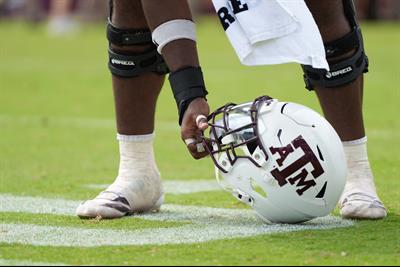
Joe Nagata, a Japanese-American, was the fullback for the LSU Tigers in 1944 when Coach Bernie Moore played him in the Orange Bowl game against Texas A&M. LSU won the game, but this was 1944, a critical moment in World War II on both the European and Pacific fronts. At the time, it was especially significant that a Japanese-American was playing for the Tigers and playing very well.
Honoring the Call To Service
When he entered World War II, Joe Nagata fought with the most highly decorated unit in American military history, the famous 442nd Regimental Combat Team. The 442nd Infantry Regiment, as it was sometimes called, was an infantry regiment of the United States Army. The regiment is best known for its history as a fighting unit composed almost entirely of second-generation American soldiers of Japanese ancestry (Nisei) who fought in World War II. Beginning in 1944, the regiment fought primarily in the European theater, in particular Italy, southern France and Germany. The 442nd Regimental Combat Team (RCT) was organized on March 23, 1943, in response to the War Department’s call for volunteers to form the segregated Japanese-American army combat unit. Although they were permitted to volunteer to fight, Americans of Japanese ancestry were generally forbidden to fight in combat in the Pacific Theater. The newly formed Nisei 442nd Regiment went into battle in Europe in June 1944.
Humility Strengthened During Combat
The 442nd Regiment was the most decorated unit for its size and length of service in the history of American warfare. The 4,000 men who initially comprised the unit in April 1943 had to be replaced nearly two and a half times. In total, about 14,000 men served, earning 9,486 Purple Hearts. The unit was awarded eight Presidential Unit Citations (five earned in one month). Twenty-one of its members were awarded the Congressional Medal of Honor. The unit’s motto was "Go for Broke."
The 442nd RCT was inactivated in 1946 and reactivated as a reserve battalion in 1947, garrisoned at Fort Shafter, Hawaii. The 442nd lives on through the 100th Battalion/442nd Infantry Regiment and is the only current infantry formation in the Army Reserve.
Bravery and Valor Acknowledged
Nagata, a proud American and Tiger, was honored to fight for his country. And given the prejudice surrounding him in 1944, he joined the 442nd .
"I was no hero," Nagata said. "They kept telling us to take the high ground, and the high ground always had a lot of Germans.”
He served with honor and pride. Nagata was awarded the Bronze Star and the Combat Infantryman Badge for valor during three campaigns with the 442nd Regimental Combat Team, including the Po Valley Campaign.
Joe’s wife, Jen, said in an interview,He didn't talk much about the war … but he did tell me that he was afraid. He said he fought with the bravest men he ever met … Their parents were in camps, retained by the federal government. Joe said those men were determined to prove that they were true Americans and good soldiers.
From Athlete To Soldier To Coach
After the war, Joe returned to LSU and graduated in 1951 with a degree in agriculture. He went back home to Eunice to live his dream of coaching. As head football coach at Eunice High and St. Edmund, Nagata's teams won 142 games, six district championships, made the state playoffs 11 times and reached the state finals twice.
A true American hero, Joe Nagata passed away in 2001.
Posted on 7/16/26 at 8:59 am to Jim Rockford
I sent a link to this page to Joe Nagata's daughter. She, her brother, and I were friends at LSU. Their mother was from Cajun stock and her brother used to refer to himself as the world's only Japanese coonass. She responded that a few years ago her father was inducted into the Hall of Honor for Distinguished LSU Military Alumni. I never met her father but anyone I ever knew from Eunice would tell you that he was one hell of a man.
This post was edited on 7/16/26 at 1:41 pm

 Page 1 of 1



Popular
Back to top
 Follow TigerDroppings for LSU Football News