




- My Forums
- Tiger Rant
- LSU Recruiting
- SEC Rant
- Saints Talk
- Pelicans Talk
- More Sports Board
- Fantasy Sports
- Golf Board
- Soccer Board
- O-T Lounge
- Tech Board
- Home/Garden Board
- Outdoor Board
- Health/Fitness Board
- Movie/TV Board
- Book Board
- Music Board
- Political Talk
- Money Talk
- Fark Board
- Gaming Board
- Travel Board
- Food/Drink Board
- Ticket Exchange
- TD Help Board
Customize My Forums- View All Forums
- Show Left Links
- Topic Sort Options
- Trending Topics
- Recent Topics
- Active Topics
Started By
Message
Yet another HVAC question - solved
Posted on 6/11/26 at 9:18 pm

Posted on 6/11/26 at 9:18 pm
New system, 3 ton American Standard Gold 17, variable speed compressor. It drains like crazy when running. 2-3 drips per sec to a steady, pencil lead-thin stream. This pic was taken in the evening when outside temperatures weren’t blazing. Tech says it’s normal because the unit is highly efficient at removing moisture from the air, running longer and slower. I’ve never had one drip like this but then again I’ve never had a variable speed compressor. Pan is dry. Emergency float switches (2) installed.
Normal for south LA climate? I want to believe the tech but it’s under warranty if there is something amiss.
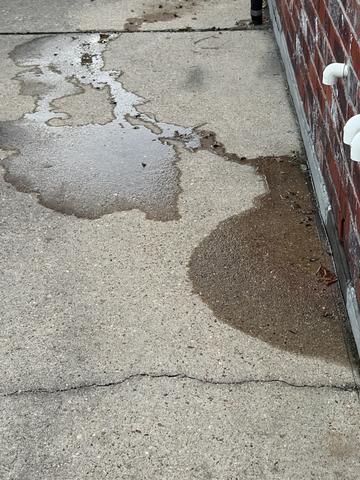
Normal for south LA climate? I want to believe the tech but it’s under warranty if there is something amiss.
This post was edited on 6/12/26 at 6:37 pm
 6
6


Posted on 6/11/26 at 9:38 pm to HeyCap
A/C can put out up to a gallon per ton per hour in humid climates. Is that the main drain?
Posted on 6/11/26 at 10:58 pm to HeyCap
Hook it up to a plumbing vent so it's not running all over the concrete
Posted on 6/12/26 at 12:42 am to HeyCap
Yes, tech is right - normal.
A properly functioning HVAC can remove 3 to 4 pounds of water per ton per hour, so for a 3 ton unit 9 to 12 pounds of water, roughly 1 to 1.5 gallons per hour. This is true for a variable capacity system as well as a single stage system.
In Louisiana, it's more common for the condensate water to be plumbed into a vent stack rather than outside, but in some states or counties around the USA it’s required by code to be plumbed to drain outside as your’s is. Since you are in south LA, not sure why yours is plumbed to drain outside, maybe that’s the way that HVAC company likes to do it.
A properly functioning HVAC can remove 3 to 4 pounds of water per ton per hour, so for a 3 ton unit 9 to 12 pounds of water, roughly 1 to 1.5 gallons per hour. This is true for a variable capacity system as well as a single stage system.
In Louisiana, it's more common for the condensate water to be plumbed into a vent stack rather than outside, but in some states or counties around the USA it’s required by code to be plumbed to drain outside as your’s is. Since you are in south LA, not sure why yours is plumbed to drain outside, maybe that’s the way that HVAC company likes to do it.
Posted on 6/12/26 at 7:32 am to CrawDude
That could be his secondary. Primary could be clogged.

Posted on 6/12/26 at 7:45 am to HeyCap
I had this same thing couple years ago. I believe my main drain was clogged and this was the overflow or secondary drain (can't remember exactly). They blew it out with compressed air and all good. He also told me I need to run faucet in my laundry room sink periodically. We never use it and he said it contributes to the issue. I never understood how they were related but it was fixed.
Posted on 6/12/26 at 9:32 am to CalcuttaTigah
quote:
That could be his secondary. Primary could be clogged.
He said in is post that his drain pan was dry (he had to be referring to his secondary drain pan) - plus he said he has 2 condensate overflow switches to shut the system down if the primary condensate drain is clogged, I assume one is in the secondary drain pan and another in a secondary drain outlet (mine is set up the same). In those cases the secondary drain pan is usually not plumbed to the outside (though anything is possible). And he said the tech said that amount of condensate water discharge was normal, which I assumed to mean the tech looked at the system, but maybe he talked to him on the phone.
This post was edited on 6/12/26 at 9:49 am
Posted on 6/12/26 at 9:47 am to The Mick
quote:
I had this same thing couple years ago. I believe my main drain was clogged and this was the overflow or secondary drain (can't remember exactly)
Again, the OP stated “Pan is dry. Emergency float switches (2) installed”. Sounds like to me the primary is plumbed to discharge outside the house. Doesn’t mean the secondary isn’t plumbed to the outside as well, but with 2 float switches to shut the unit down if condensate water overflows into the secondary pan if the primary is clogged that would be unusual, though still possible.
Posted on 6/12/26 at 1:15 pm to CrawDude
i have the same unit upstairs, its actually better than my main unit. Like one poster said, if it's the primary, its normal, mine runs through the upstairs bathroom sink. If it's the safety/backup, the main is blocked. These units produce a ton of condensation. keep the lines clear.
ive burned through 2 motors already on my 5 ton, luckily under warranty but i think i need more return air and the motor is working too hard.
Installer said im right in range on the return flow so IDK, may install a 3rd return.
ive burned through 2 motors already on my 5 ton, luckily under warranty but i think i need more return air and the motor is working too hard.
Installer said im right in range on the return flow so IDK, may install a 3rd return.

Posted on 6/12/26 at 3:26 pm to FMtTXtiger
quote:
ive burned through 2 motors already on my 5 ton, luckily under warranty but i think i need more return air and the motor is working too hard.
Yikes - sounds like you have high static pressure (resistance to air flow) from under sized return ducts, supply ducts or both. That will cause blower motors to fail prematurely. EMC motors are expensive, eventually warranties run out. Return air flow should equal supply air flow, which is 350 to 400 cfm per ton, or 1750-2000 cfm for a 5 ton unit. This table will allow you to estimate your return air flow based on return duct size.
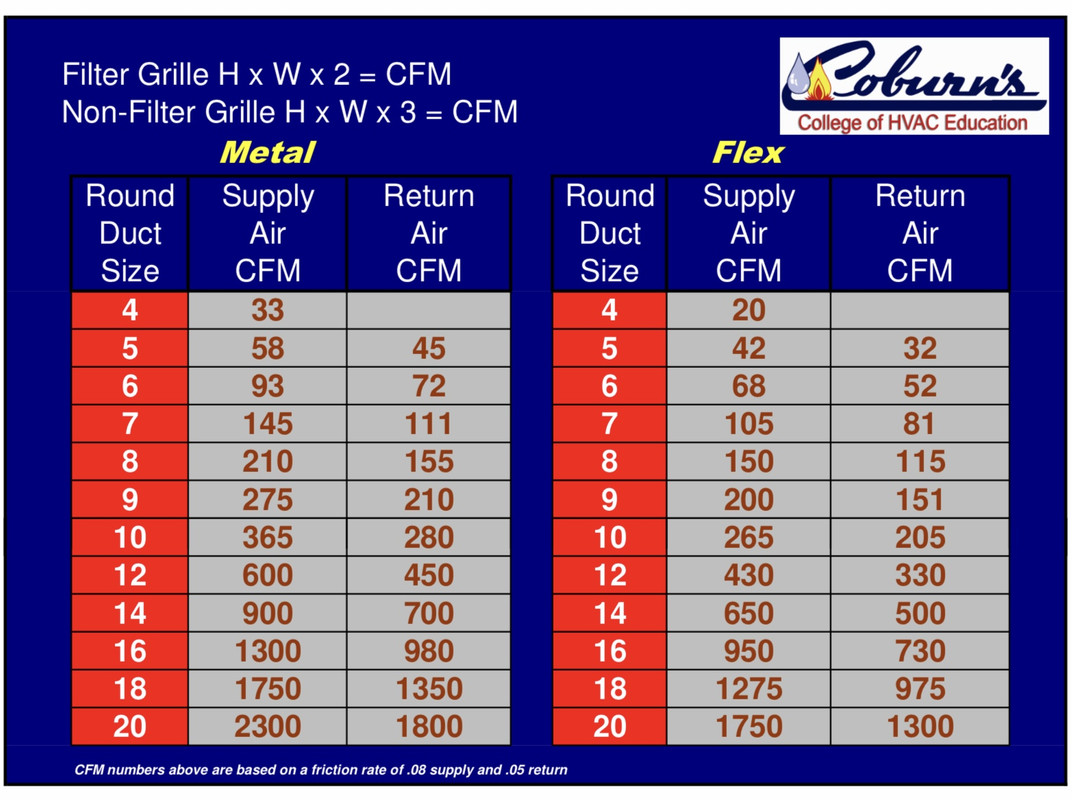
As you can see, it requires some pretty large return ducts (red numbers are diameter, in inches) to supply 1750 to 2000 cfm of return air. If you are short, I’d add another.
Sadly, TESP (Total External Static Pressure) is another parameter techs in our area seem to never measure. Takes all of 10 min, and that includes the time it takes to drill the two holes in the cabinet to place the 2 manometer probes and it is and the easiest diagnostic tool to determine air flow and if ducts are undersized.
Do you use high MERV filters that are 1 inch thick - like MERV 13? If so, don’t.
Posted on 6/12/26 at 3:31 pm to CrawDude
thanks Craw dude, yeah i do believe that is my issue
I'll have to pony up and get another return installed but didn't want another ugly grill showing. limited on placements.
and i thnk my filter is Merv 11
I'll have to pony up and get another return installed but didn't want another ugly grill showing. limited on placements.
and i thnk my filter is Merv 11
This post was edited on 6/12/26 at 3:33 pm
Posted on 6/12/26 at 6:40 pm to FMtTXtiger
quote:
and i thnk my filter is Merv 11
High MERV filters are OK if they are thick, 4 to 5 inches, as they don’t restrict air flow that much b/c of vastly increased surface area, but those are usually “cabinet” filters attached to the furance-air handler - not those in ceiling grills. If you have 1 inch thick filters I’d change those to MERV 4. The primary purpose of the filter is to protect the equipment, not improve indoor air quality (IAQ) for humans, and MERV 4s will do that. Nice when you can do both at the same time, but high MERV 1 inch thick filters restrict air flow, makes the blower motor work harder trying to pull air through the filter, and shortens the life of the blower motor - might be contributing to your blower motor failures. .
Posted on 6/12/26 at 6:48 pm to HeyCap
Tech came out today and sure enough, the primary drain was clogged AND the emergency float switch sensor was bad.
In retrospect the outcome could have been much worse but I’m not sure why they wouldn’t have checked out the drain when installing the new system 8 months ago.
I’ve also learned that the drain pan I was looking at was the secondary/emergency pan, not the primary. How do you view the primary without taking apart the unit? Also, I still don’t know how the primary could be clogged and the secondary dry.
Hoping it’s fixed now.
In retrospect the outcome could have been much worse but I’m not sure why they wouldn’t have checked out the drain when installing the new system 8 months ago.
I’ve also learned that the drain pan I was looking at was the secondary/emergency pan, not the primary. How do you view the primary without taking apart the unit? Also, I still don’t know how the primary could be clogged and the secondary dry.
Hoping it’s fixed now.
Posted on 6/12/26 at 8:03 pm to HeyCap
Thanks for the update.
You can’t.
Well the secondary pan has to be plumbed to the outside as well, hence all the water on your driveway. If it was draining to the outside the pan would be dry, but still wet.
Both were bad? You said you had 2. I wonder if they just just wired them wrong. I better check mine just in case…lol.
If your secondary drain pan wasn’t plumbed to the outside, many aren’t when they have a float switch to shut the system down, then you likely would have had a wet ceiling. You are very lucky. Had this happen to a friend, float switch went bad, overflowed the secondary pan and wet the ceiling.
My brother in law, a master plumber, gave me a good tip. Check your drain pans under the HVAC and water heaters on occasions when you go into the attic - often insulation and other debris can find their way into the pans and should they leak that debris can clog the drain lines to the outside causing an overflow of water onto the ceiling. He’s seen it plenty times.
You can poor a cup or 2 of vinegar monthly through the primary condensate drain to help prevent it from clogging up, at least downstream of the vent tube.
quote:
How do you view the primary without taking apart the unit?
You can’t.
quote:
Also, I still don’t know how the primary could be clogged and the secondary dry.
Well the secondary pan has to be plumbed to the outside as well, hence all the water on your driveway. If it was draining to the outside the pan would be dry, but still wet.
quote:
the emergency float switch sensor was bad.
Both were bad? You said you had 2. I wonder if they just just wired them wrong. I better check mine just in case…lol.
If your secondary drain pan wasn’t plumbed to the outside, many aren’t when they have a float switch to shut the system down, then you likely would have had a wet ceiling. You are very lucky. Had this happen to a friend, float switch went bad, overflowed the secondary pan and wet the ceiling.
My brother in law, a master plumber, gave me a good tip. Check your drain pans under the HVAC and water heaters on occasions when you go into the attic - often insulation and other debris can find their way into the pans and should they leak that debris can clog the drain lines to the outside causing an overflow of water onto the ceiling. He’s seen it plenty times.
You can poor a cup or 2 of vinegar monthly through the primary condensate drain to help prevent it from clogging up, at least downstream of the vent tube.
This post was edited on 6/13/26 at 8:56 am

Posted on 6/13/26 at 12:40 am to CrawDude
quote:
Check your drain pans under the HVAC and water heaters
This needs to happen every trip in the attic for anybody that owns a house and this equipment was installed overhead. Especially if you’ve had blown-in insulation recently installed, a roof replaced or anybody in your attic for whatever reason - go check these two items. These are some of the most non-catastrophe insurance claims I see daily and they’ll cause your already inflated rates to increase 30% which is a fact if you do indeed file a claim. Water claims are some of the worst claims you can file.
When looking at the a/c check the pan for debris and water. If there is any debris, clean it out with a vac. If there is water in the pan you have a problem and it’s usually a quick and easy DIY fix.
Check the water heater every time you’re in the attic. If you see water or an accumulation of rust/corrosion on top of the unit or in the drip pan you have a problem. If the water heater is more than 10 years old but working fine, start working on a budget to replace it…it will fail at the worst time. The warranty for most is only 6 years and depending on your water supply it can fail shortly after that warranty period especially if you’re on a well as opposed to city water. I’ve seen some WHs in the city last well over 20 years but that is definitely rolling the dice.
Both of these issues are easy to catch before they become a problem and can literally save you thousands.
Posted on 6/13/26 at 12:30 pm to HeyCap
Thank God they put those secondary drains where we can see them!
My AC guy switched the primary and secondary on a system replacement. My outside drain was flowing constantly and I caught it and swapped them over.
My AC guy switched the primary and secondary on a system replacement. My outside drain was flowing constantly and I caught it and swapped them over.
Posted on 6/13/26 at 3:43 pm to ItzMe1972
quote:
Thank God they put those secondary drains where we can see them!

I also put water leak sensors in the HVAC secondary pan and water heater pans - all in the attic. Sends me message to my phone if it detects water in the pans - gives me a head start on resolving issue, at least with the HVAC, before the safety float switch shuts the system down.
Posted on 6/13/26 at 4:22 pm to CrawDude
Didn't know about those wireless sensors. They sound like a great idea.
I have a couple of properties with wired sensors on the closet floor if they get wet it shuts down.. They don't have that secondary pan protection.
-----
From initial post on this thread:
Tech says it’s normal because the unit is highly efficient at removing moisture from the air, running longer and slower.
I have a couple of properties with wired sensors on the closet floor if they get wet it shuts down.. They don't have that secondary pan protection.
-----
From initial post on this thread:
Tech says it’s normal because the unit is highly efficient at removing moisture from the air, running longer and slower.
This post was edited on 6/13/26 at 4:27 pm

 Page 1 of 1


Popular
Back to top
 Follow TigerDroppings for LSU Football News