




- My Forums
- Tiger Rant
- LSU Recruiting
- SEC Rant
- Saints Talk
- Pelicans Talk
- More Sports Board
- Fantasy Sports
- Golf Board
- Soccer Board
- O-T Lounge
- Tech Board
- Home/Garden Board
- Outdoor Board
- Health/Fitness Board
- Movie/TV Board
- Book Board
- Music Board
- Political Talk
- Money Talk
- Fark Board
- Gaming Board
- Travel Board
- Food/Drink Board
- Ticket Exchange
- TD Help Board
Customize My Forums- View All Forums
- Show Left Links
- Topic Sort Options
- Trending Topics
- Recent Topics
- Active Topics
Started By
Message
re: Homebrewing Thread: Volume II
Posted on 8/11/20 at 9:33 am to puffulufogous

Posted on 8/11/20 at 9:33 am to puffulufogous
quote:
Before I kegged, I cold crashed the fermenter before transferring to bottling bucket.
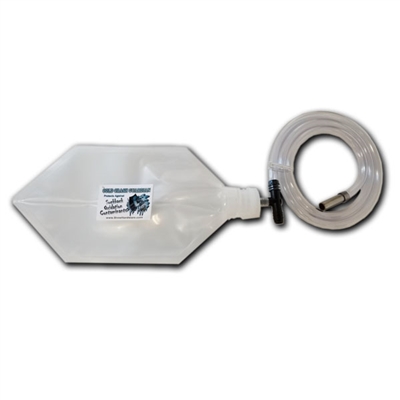
A little piece of equipment that will help you out, that i bought a while back which is awesome, the cold crash guardian. When you cold crash, the fermenter will suck in ambient air/oxygen back into the fermenter. To prevent this, the cold crash guardian is filled with CO2 and the CO2 is sucked into the fermenter, not O2. They are out of stock, but i'd get one if i were you. I managed to get one for $5, because it was the last round of testing. A week later, and they went on sale at full price for $18.99
LINK
quote:
Now that I'm kegging is my best bet to transfer to the keg at fermentation temp leaving as much of the trub behind as possible before cold crashing and fining under pressure?
That's one way to prevent oxygen suck back. However, you will pull particulates into the keg, because cold crashing allows the particulates to fall out of suspension and settle to the bottom. So you can do this way, or buy the guardian (above).
quote:
How long of a process is your cold crashing and fining? I've read on AHA forums that some people cold crash 2 days and fine with gelatin for a day under low pressure.
I don't fine, but i typically cold crash for 2 days. Last beer, i took the temperature probe off of the fermenter and let it rest in the fermentation chamber and put the ambient to 50. And let it sit for 12 hours. Then i cranked it down to 38 ambient, and let it sit for another 12 hours, then i put the probe back against the fermenter and let it sit another day before i transferred to keg.
quote:
Do you force carb if you aren't in a rush? Palmer recommends force carbing (30 psi rocking the keg) but online forum posts suggest lower pressures over a longer period.
I force carb every one. I set my PSI to about 32 and rock, as you mentioned, and let it sit 24 hours. Then i release the excess CO2 and set it to the correct CO2 level for the style. It usually sits a couple days before i taste the beer. If it's a hazy pale ale, then you'll need a few more days before the hops settle and smooth out a little bit.
 0
0



Posted on 8/11/20 at 9:43 am to puffulufogous
quote:
How long of a process is your cold crashing and fining?
I typically cold crash for several days for an ale and a week or two for lagers. I then keg, add gelatin, put it at 30-40 psi, give it a good shake, and then wait about 24 hours. By then it's carbed and the gelatin has done what it needs to do. I bleed it back down to serving temp, blow out pint or two of gunk, and start drinking.

Posted on 8/11/20 at 9:57 am to BottomlandBrew
quote:
I typically cold crash for several days for an ale and a week or two for lagers. I then keg, add gelatin, put it at 30-40 psi, give it a good shake, and then wait about 24 hours. By then it's carbed and the gelatin has done what it needs to do. I bleed it back down to serving temp, blow out pint or two of gunk, and start drinking.
I do basically the same except I don't bother to rock or shake it anymore
and usually don't bother to add gelatin either
Posted on 8/11/20 at 10:42 am to LoneStarTiger
Next question. Do you guys shorten your dip tubes? I know some people like the floating dip tubes.

Posted on 8/11/20 at 11:12 am to puffulufogous
I never cold crash. I force carb at about 23 psi for 2 days and then is usually ready to drink. Higher gravity beers take longer to carb, maybe 3-4 days.
This post was edited on 8/11/20 at 11:40 am

Posted on 8/11/20 at 11:14 am to puffulufogous
On my serving keg, no. On my fermenting keg, yes.
Posted on 8/11/20 at 11:33 am to GeauxPack81
How short on the fermenting kegs? Just a couple inches to keep the tube out of the trub?
Posted on 8/11/20 at 12:29 pm to puffulufogous
I use a floating dip tube currently, but I am planning on buying a straight one that is 21 inches. They normally are just shy of 23. I figure 2 inches should be a good buffer. Will depend on the beer though, as some will have more trub than others.
Posted on 8/11/20 at 12:30 pm to puffulufogous
quote:
Do you guys shorten your dip tubes? I know some people like the floating dip tubes.
I cut off about 1/2" from my dip tubes. If i don't, when i'm screwing on the keg posts, the dip tube turns as well and ends up pointing towards the side of the keg.
This post was edited on 8/11/20 at 12:31 pm


Posted on 8/22/20 at 1:18 pm to BugAC
I recently got back into brewing and brewed by first batch back. Im set up all grain. brew went well no hiccups. Hit mash temp perfectly and mashed for an hour, batch sparged with 170ish degree water and boiled no problems. It was a ipa clone kit. Dry hopped for 5 days. Just tasted it after a week botled and im kinda disappointed. Its ok. Nothing special at all. Ive brewed probably 30 beers (mostly extract ) and all had a twang to them. I thought it as from the extract. This has it as well although much less pronounced.
Liquid white labs Opshaug Kviek yeast was used. Fermentation temps were 70-80s as the optimum fermentation temp range called. cooled down to about 65 for dry hopping. Then bottled. Its pretty cloudy. i know ipas are typically hazy.
Im about to get a new fridge delivered monnday. Next brew is an oktoberfest so ill be lagering it.
I also just purchased a used kegerator with 2 corny kegs.Ive never kegged before.
Any tips? What have you done to improve your beer?
Liquid white labs Opshaug Kviek yeast was used. Fermentation temps were 70-80s as the optimum fermentation temp range called. cooled down to about 65 for dry hopping. Then bottled. Its pretty cloudy. i know ipas are typically hazy.
Im about to get a new fridge delivered monnday. Next brew is an oktoberfest so ill be lagering it.
I also just purchased a used kegerator with 2 corny kegs.Ive never kegged before.
Any tips? What have you done to improve your beer?

Posted on 8/22/20 at 1:49 pm to Lucky_Stryke
I've never used Kviek yeasts before, but I know people like them because of the esters they throw off during fermentation. Maybe use a cleaner ale yeast, ferment at around 68, and see what you get. Should give you a better idea of what off flavor you think you are getting.
I enjoy my kegging setup much more than the bottles. Could also be that you are getting your beers oxidized because you are bottling. Hoppy beers are more prone to oxidation. Should be easier to avoid with kegging.
I enjoy my kegging setup much more than the bottles. Could also be that you are getting your beers oxidized because you are bottling. Hoppy beers are more prone to oxidation. Should be easier to avoid with kegging.
Posted on 8/22/20 at 5:48 pm to GeauxPack81
any tips on kegging?
Posted on 8/22/20 at 9:35 pm to Lucky_Stryke
I just kegged for the first time and it's pretty easy. If you look back within the last 3-4 pages the old hands gave me a lot of pointers.
Posted on 8/23/20 at 8:25 am to Lucky_Stryke
I think there are some pretty decent posts on that in the last few pages... Biggest thing in my opinion is to make sure you are getting the right line lengths and IDs. For me, and for most, that's about 10ft 3/16 ID. There are some calculators out there but the only thing that would make it much different is if you will have your taps well above or well below the top of your keg.
Posted on 8/23/20 at 10:31 am to Lucky_Stryke
Look up oxygen free transfer. When I get some time I’ll try and find some pictures for you if the setup. There are several in this thread. Start from page 200 or so and read through.
Posted on 8/23/20 at 11:03 am to GeauxPack81
My sour beer aging room is getting crowded. Roughly 40 gallons of sour beer in various stages.

The one in the center is getting bottled next weekend. Once I do that I’ll have a fermented freed up to begin my sour base program.
So the way I started with sours initially, is i would brew a batch with low amounts of hops (3-6 IBUs) then add the microbes. After about a year of aging I’d bottle with Brett or champagne yeast. The beers were good, but man were they tart. After about a year in the bottle the acidity would calm down some, but they were still very sour.
Eventually i started messing around with blending. I’d take the same very sour beer, and blend it with a new beer, with more IBUs. I’d experiment with samples to determine the ratio, and when I got it how I wanted it, I’d then blend and bottle.
However, as I’m doing this, I’m still making long aged sours to keep a pipeline going. As I’m doing this, I’m adding more hops to restrain the acidity. The problem, now, is the beers with more hops (10-20 IBUs) are moderate levels of acidity, requiring more of the sour blend to the new beer ratio to get it how I like. Which is fine for taste, but I also lose some volume because rather than having sour base beers and blending with a 3/2 or 4/1 new beer to sour beer ratio, I have to use more of the higher IBUs sour beer to blend with the new beer.
So, my new plan of attack is to brew 2 or 3 base beer styles to be my sour house blends. They will be very low IBUs sours so they become very tart. And then I can more easily control the flavors of my blends. Base 1 - will be a golden saison base. Base 2 will be an Amber base, and I may try a base 3 of a darker stout base. And rather than using different microbe blends, I want to combine some of my older sour blends and develop a singular house sour base. On the picture you’ll see some 1 gallon demijohns. One is the dregs from my first ever sour. Not sure what generation it’s on, the other is my initial wicked weed built up dregs, again a later generation (4 or 5) from when I first made it.
Once these sour bases are up and running and I have some good quantity stock (I hope to have about 2 fermenters of each sour base going) I should be able to pump out sour blends much quicker. Currently I’m bottling 5 gallons every 2 or 3 months.
I’ll top off the fermenters periodically, likely with the blender batch. However, if the blender batch is higher in hops, I’ll have to brew some specific low ibu sour batches to maintain acidity. It will essentially be like a solera.
In addition to my sour base program I also have a solera in process. In the picture, it’s the 2nd fermented from the left. I’ll keep this going as well.
And then finally, in the winter I’ll be making a Lambic. Plan to make one once or twice a year. I’ll use Roselaire blend as my base incoculate, along with some gueuze dregs. And I’ll attempt some wild capture with some wort in some jars that I’ll place at my grandmas old house along the bayou bank and Indian mound. If what I capture is not awful, I’ll throw than in as well. If it turns out great, then I may brew up a special batch to use solely wild fermentation. In the end, these lambics will be blended into a gueuze. So the first beer to drink will be ready in 4-5 years.
I have a lot of plans for sour beer coming up. Sorry for the wall of text.
The one in the center is getting bottled next weekend. Once I do that I’ll have a fermented freed up to begin my sour base program.
So the way I started with sours initially, is i would brew a batch with low amounts of hops (3-6 IBUs) then add the microbes. After about a year of aging I’d bottle with Brett or champagne yeast. The beers were good, but man were they tart. After about a year in the bottle the acidity would calm down some, but they were still very sour.
Eventually i started messing around with blending. I’d take the same very sour beer, and blend it with a new beer, with more IBUs. I’d experiment with samples to determine the ratio, and when I got it how I wanted it, I’d then blend and bottle.
However, as I’m doing this, I’m still making long aged sours to keep a pipeline going. As I’m doing this, I’m adding more hops to restrain the acidity. The problem, now, is the beers with more hops (10-20 IBUs) are moderate levels of acidity, requiring more of the sour blend to the new beer ratio to get it how I like. Which is fine for taste, but I also lose some volume because rather than having sour base beers and blending with a 3/2 or 4/1 new beer to sour beer ratio, I have to use more of the higher IBUs sour beer to blend with the new beer.
So, my new plan of attack is to brew 2 or 3 base beer styles to be my sour house blends. They will be very low IBUs sours so they become very tart. And then I can more easily control the flavors of my blends. Base 1 - will be a golden saison base. Base 2 will be an Amber base, and I may try a base 3 of a darker stout base. And rather than using different microbe blends, I want to combine some of my older sour blends and develop a singular house sour base. On the picture you’ll see some 1 gallon demijohns. One is the dregs from my first ever sour. Not sure what generation it’s on, the other is my initial wicked weed built up dregs, again a later generation (4 or 5) from when I first made it.
Once these sour bases are up and running and I have some good quantity stock (I hope to have about 2 fermenters of each sour base going) I should be able to pump out sour blends much quicker. Currently I’m bottling 5 gallons every 2 or 3 months.
I’ll top off the fermenters periodically, likely with the blender batch. However, if the blender batch is higher in hops, I’ll have to brew some specific low ibu sour batches to maintain acidity. It will essentially be like a solera.
In addition to my sour base program I also have a solera in process. In the picture, it’s the 2nd fermented from the left. I’ll keep this going as well.
And then finally, in the winter I’ll be making a Lambic. Plan to make one once or twice a year. I’ll use Roselaire blend as my base incoculate, along with some gueuze dregs. And I’ll attempt some wild capture with some wort in some jars that I’ll place at my grandmas old house along the bayou bank and Indian mound. If what I capture is not awful, I’ll throw than in as well. If it turns out great, then I may brew up a special batch to use solely wild fermentation. In the end, these lambics will be blended into a gueuze. So the first beer to drink will be ready in 4-5 years.
I have a lot of plans for sour beer coming up. Sorry for the wall of text.
This post was edited on 8/23/20 at 11:07 am
Posted on 8/31/20 at 7:40 am to BugAC
quote:
BugAC
I need help with a berliner weisse im planning on doing. Can you email me or something?
Posted on 8/31/20 at 7:45 am to Lucky_Stryke
Well I brewed an all grain hacker pschorr clone Oktoberfest. SG came in really high at 1.071 instead of the listed 1.062. Using white labs liquid 820 Oktoberfest yeast. Glad i made a starter lol
Currently in fridge with inkbird temp controller on it. Pitched at 230 yesterday and got up this morning for work and checked. No activity yet. Hopefully this afternoon will see some.
Wonder how i came in so high on the gravity? I had a little more water than i wanted so had to boil a little longer. Think im going to use a little less sparge water. Oh and i batch sparge not fly sparge
Currently in fridge with inkbird temp controller on it. Pitched at 230 yesterday and got up this morning for work and checked. No activity yet. Hopefully this afternoon will see some.
Wonder how i came in so high on the gravity? I had a little more water than i wanted so had to boil a little longer. Think im going to use a little less sparge water. Oh and i batch sparge not fly sparge
Posted on 8/31/20 at 8:07 am to Lucky_Stryke
quote:
I need help with a berliner weisse im planning on doing. Can you email me or something?
What's the issue? We can discuss it here. Is this a quick sour?
Posted on 8/31/20 at 8:25 am to BugAC
I dont know how to sour it. With lactobacillus or lactic acid? Pitch lactobacillus or use good belly probiotics? I dont have a way to keep temps rock steady at 95 degrees, I thought about pitching lacto at around 100, putting the carboy in my garage in the afternoon and wrapping in a blanket. That should hold it pretty well for about 24 hours probably. I dont have a way to measure ph. what do you use?
Then boil for 15 minutes? Cool down and then pitch yeast? What yeast do you use? I imagine something really clean or really fruity. I also planned on pitching in some fruit puree. When should that be done? During fermentation?
Then boil for 15 minutes? Cool down and then pitch yeast? What yeast do you use? I imagine something really clean or really fruity. I also planned on pitching in some fruit puree. When should that be done? During fermentation?

 Page 231 of 281

Popular
Back to top
 Follow TigerDroppings for LSU Football News