




- My Forums
- Tiger Rant
- LSU Recruiting
- SEC Rant
- Saints Talk
- Pelicans Talk
- More Sports Board
- Winter Olympics
- Fantasy Sports
- Golf Board
- Soccer Board
- O-T Lounge
- Tech Board
- Home/Garden Board
- Outdoor Board
- Health/Fitness Board
- Movie/TV Board
- Book Board
- Music Board
- Political Talk
- Money Talk
- Fark Board
- Gaming Board
- Travel Board
- Food/Drink Board
- Ticket Exchange
- TD Help Board
Customize My Forums- View All Forums
- Show Left Links
- Topic Sort Options
- Trending Topics
- Recent Topics
- Active Topics
Started By
Message
Christian Existentialism?
Posted on 12/16/25 at 9:52 am

Posted on 12/16/25 at 9:52 am
Where to begin? Kierkegaard? Tillich?
Somewhere else?
I've been a Christian all my life, and I'm kind of starting to think that nearly everyone in the church is just full of shite. By this I mean that they probably don't question what they profess to believe, and if they did seriously evaluate it all, they would probably be afraid to admit the results.
That's where I'm at.
Thanks for reading.
Somewhere else?
I've been a Christian all my life, and I'm kind of starting to think that nearly everyone in the church is just full of shite. By this I mean that they probably don't question what they profess to believe, and if they did seriously evaluate it all, they would probably be afraid to admit the results.
That's where I'm at.
Thanks for reading.
This post was edited on 12/16/25 at 10:05 am
 7
7



Posted on 12/16/25 at 10:32 am to bayoubengals88
quote:
I've been a Christian all my life, and I'm kind of starting to think that nearly everyone in the church is just full of shite. By this I mean that they probably don't question what they profess to believe, and if they did seriously evaluate it all, they would probably be afraid to admit the results.
Go start reading Aquinas.
And don't be afraid of using a guide. You are welcome.

Posted on 12/16/25 at 12:46 pm to bayoubengals88
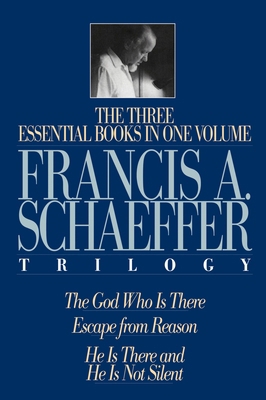
Francis Schaeffer. Most authentic who lived the authentic life
This post was edited on 12/17/25 at 8:59 am
Posted on 12/16/25 at 12:47 pm to Freauxzen
quote:
Go start reading Aquinas.
I've got a couple of Acquinas books in my lineup because he seems so fascinating. Which ones do you recommend. I have Guide to Thomas Acquinas by Joseph Pieper and Acquinas's Shorter Summa on my list

Posted on 12/16/25 at 11:52 pm to bayoubengals88
The Dynamics of Faith and The Courage to Be are good starting points for Tillich.
Posted on 12/17/25 at 9:27 am to CCT
quote:Grabbed this one a few days ago and read a good chunk of it last night.
The Dynamics of Faith
I don't hope to ever view Christianity as Tillich did. For example, as a naturalist he didn't believe in the supernatural, which includes the resurrection (as I'm sure you know).
However, I find his definitions of faith helpful at the moment.
Namely, that faith is of ultimate concern. It is as serious as it gets.
And if you (or your literal church creed for that matter) can't allow doubt and risk to be a part of faith, then you don't have what he calls a dynamic faith. It's static. It's been given to you by the church, whether Catholic or Protestant, and you tuck it away blathering on about God knows what, mistaking belief in propositional claims as faith.
If there's anything that I've struggled with over the past 2-3 years it's that. How can a belief in a propositional claim amount to faith in the living God? Surely there's got to be more to it than that.
While I know that faith and belief are often used interchangeably in the greek word pistos, for Tillich, faith is NOT what it has popularly become.
In modern evangelicalism, faith is equivolent to belief based on evidence (thank you Enlightenment :yak:). We've heard apologists for decades state that there is a rational basis for faith. However, Tillich argues that limited evidence, where limited means "anything less than experiential certainty" is can only take us so far as a belief in forming knowledge. And guess what, every event that has ever occurred is accompanied by limited evidence, that is, less than 100% certainty.
So, do we have faith that Jesus walked out of the tomb? By Tillich's definition, no, we believethat Jesus walked out of the tomb in the same way we might believe that humans are a product of evolution or that The Russians used a scorched earth strategy against Napoleon's army.
I'll add one more. That our soul continues on after we die.
None of those things can be believed with certainty, but that is the defnition of belief based on limited evidence. It is not faith.
Tillich states that "The certitude of faith has not this character...the certitude of faith is existential, meaning that the whole existence of man is involved...(Faith) is not belief and it is not knowledge with a low degree of probability. Its certitude is not the uncertain certitude of a theoretical judgment."
Now, why is faith of ultimate concern for Tillich? I'm not quite sure yet.
Does it save us from despair?
Does it lead to truth? or is it truth itself when grounded in the correct object??
I have a feeling that I'm going to be disappointed in the answer/non answer.
Posted on 12/17/25 at 9:32 am to bayoubengals88
Tillich - stay away from him. I’m telling you, Schaeffer’s Trilogy is the way to go. Also his The Church at the End of the 20th Century calls out a lot of BS.
ETA - plus I used to work with his son in law and the L’Abri community.
ETA - plus I used to work with his son in law and the L’Abri community.
This post was edited on 12/17/25 at 9:34 am
Posted on 12/17/25 at 9:47 am to Alyosha
quote:I read How Should We Then Live many, many, years ago now.
Schaeffer’s Trilogy is the way to go.
Probably before I even should have read it.
quote:
plus I used to work with his son in law and the L’Abri community.

Posted on 12/17/25 at 9:52 am to bayoubengals88
How Should is a good read but the trilogy is more the response to secular existentialism and written in that style. True Spirituality is his “manifesto” on Christian existentialism.
Posted on 12/17/25 at 6:15 pm to bayoubengals88
While CS Lewis helped me find my way back to the Church, I think it was more a lived experience thing than intellectual reasoning.
The Confessions of St Augustine is worth your time.
Orthodoxy by Chesterton
The Kingdom of God is Within You by Tolstoy may be more of what you are looking for, the first 2 I listed are not existential.
The Confessions of St Augustine is worth your time.
Orthodoxy by Chesterton
The Kingdom of God is Within You by Tolstoy may be more of what you are looking for, the first 2 I listed are not existential.

Posted on 12/17/25 at 6:39 pm to cdur86
quote:
I've got a couple of Acquinas books in my lineup because he seems so fascinating. Which ones do you recommend. I have Guide to Thomas Acquinas by Joseph Pieper and Acquinas's Shorter Summa on my list
Both of those are solid, but you really have to just start reading the Summa. Kreeft's Summa of the Summa is probably your best overall guide. I do like Pieper's work though too.
In terms of the OP, that no one questions their beliefs, it's the perfect antidote if you want someone who voraciously questioned everything. Did his best to respond ad critique and laid it all out on paper. I would say start on page 1, i did, but that's tough. It might better to move to whatever section of the Summa is more relevant to your interests, and any of the short guides can do a pretty good guide of summarizing sections or arguments that you may pass over by not going cover to cover.
Posted on 12/17/25 at 8:07 pm to Freauxzen
Or, I could just read the Summa with Grok’s help, asking it was Kreeft says about any given topic!
Peter Kreeft, a prominent Thomist philosopher and editor of abridged versions of Aquinas's *Summa Theologica* (such as *Summa of the Summa* and *A Shorter Summa*), extensively engages with Thomas Aquinas's opening question in the *Summa Theologica* (Prima Pars, Question 1), where Aquinas addresses the nature of **sacred doctrine** (or theology).
Specifically, in **Article 2** ("Whether sacred doctrine is a science"), Aquinas argues affirmatively that sacred doctrine is indeed a **science**, but of a unique kind: it is a **subaltern science** (or "subordinated science") that derives its principles not from human reason alone (as in natural sciences like physics or metaphysics) but from a higher science—God's own knowledge, revealed through Scripture.
Kreeft highlights and explains this in his footnotes and commentaries:
- Sacred doctrine qualifies as a science in the Aristotelian sense (systematic knowledge through causes), but it is **subalternated** to divine science. It proceeds from divinely revealed principles accepted on faith, rather than being demonstrable by unaided reason.
- This makes theology superior in certainty and dignity to human sciences, even though it borrows from philosophy and reason as ancillary tools. The argument from divine authority is the strongest, far outweighing human reasoning.
- Kreeft emphasizes that theology's "data" or material cause is **Scripture**—the revealed truths that form its foundation—distinguishing it from philosophical theology (which Aristotle called "metaphysics" or "first philosophy").
Kreeft presents Aquinas's view as a profound synthesis: theology is scientific, rational, and evidence-based, yet it transcends mere human science by resting on divine revelation. This elevates its status without diminishing reason; instead, reason serves faith.
For direct access to Kreeft's treatment, see his *Summa of the Summa* (Ignatius Press), where Question 1 is included with detailed explanatory footnotes that clarify Aquinas's Aristotelian framework and its implications for understanding theology as a true, albeit higher, science.
Peter Kreeft, a prominent Thomist philosopher and editor of abridged versions of Aquinas's *Summa Theologica* (such as *Summa of the Summa* and *A Shorter Summa*), extensively engages with Thomas Aquinas's opening question in the *Summa Theologica* (Prima Pars, Question 1), where Aquinas addresses the nature of **sacred doctrine** (or theology).
Specifically, in **Article 2** ("Whether sacred doctrine is a science"), Aquinas argues affirmatively that sacred doctrine is indeed a **science**, but of a unique kind: it is a **subaltern science** (or "subordinated science") that derives its principles not from human reason alone (as in natural sciences like physics or metaphysics) but from a higher science—God's own knowledge, revealed through Scripture.
Kreeft highlights and explains this in his footnotes and commentaries:
- Sacred doctrine qualifies as a science in the Aristotelian sense (systematic knowledge through causes), but it is **subalternated** to divine science. It proceeds from divinely revealed principles accepted on faith, rather than being demonstrable by unaided reason.
- This makes theology superior in certainty and dignity to human sciences, even though it borrows from philosophy and reason as ancillary tools. The argument from divine authority is the strongest, far outweighing human reasoning.
- Kreeft emphasizes that theology's "data" or material cause is **Scripture**—the revealed truths that form its foundation—distinguishing it from philosophical theology (which Aristotle called "metaphysics" or "first philosophy").
Kreeft presents Aquinas's view as a profound synthesis: theology is scientific, rational, and evidence-based, yet it transcends mere human science by resting on divine revelation. This elevates its status without diminishing reason; instead, reason serves faith.
For direct access to Kreeft's treatment, see his *Summa of the Summa* (Ignatius Press), where Question 1 is included with detailed explanatory footnotes that clarify Aquinas's Aristotelian framework and its implications for understanding theology as a true, albeit higher, science.
Posted on 12/18/25 at 12:34 am to bayoubengals88
quote:
Or, I could just read the Summa with Grok’s help, asking it was Kreeft says about any given topic!
As someone who works in AI, don't do that.


Posted on 12/18/25 at 6:48 pm to bayoubengals88
Just a word of caution. I went through something very, very similar about 10 years ago. I walked out of church one day and never went back. I’ve read 2-3 of the authors listed in this thread, plus a few that I won’t mention. Because. I challenged my faith to the point I ultimately couldn’t believe in the Jesus I’d worshiped for decades. I walked away from belief. The SBC can be dangerous for a curious Christian mind. They allow zip, zero, nada questions. And when you go off on your own to answer those questions, concerns and doubts, the results can be devastating.
Now? I’m no atheist and never could be, but I’m wandering and searching somewhere between agnostic and a true Jesus that doesn’t DEMAND I believe he actually turned water into grape juice, a 6000 year old earth and zero errors/contradictions in the Bible. I’m pretty content here.
Now? I’m no atheist and never could be, but I’m wandering and searching somewhere between agnostic and a true Jesus that doesn’t DEMAND I believe he actually turned water into grape juice, a 6000 year old earth and zero errors/contradictions in the Bible. I’m pretty content here.


Posted on 12/19/25 at 5:19 am to bayoubengals88
Mere Christianity by CS Lewis is a fantastic book
Posted on 12/19/25 at 5:03 pm to DomesticatedBoar
quote:Damn. Are you in BR? I’d like to have a beer.
DomesticatedBoar
Or are we already friends?
Very similar story here so far…SBC and all, but I’ll probably be in a church for good now.
I’m 37 fwiw
Posted on 12/19/25 at 5:03 pm to Breesus
quote:It is
Mere Christianity by CS Lewis is a fantastic book

Posted on 12/20/25 at 7:42 pm to bayoubengals88
quote:
I've been a Christian all my life, and I'm kind of starting to think that nearly everyone in the church is just full of shite. By this I mean that they probably don't question what they profess to believe, and if they did seriously evaluate it all, they would probably be afraid to admit the results.
Kierkegaard definitely has a lot to say to you. He was extremely frustrated with a Church of Denmark that endorsed the view that practically every Danish citizen was a "Christian" but he was surrounded by wickedness in Copenhagen.
Fear and Trembling is where to start with Kierkegaard and decide if you like reading him or not. It's about God's telling Abraham to sacrifice his son. Kierkegaard obsessed about this story, because how could God tell Abraham to do something (human sacrifice) that he otherwise condemns in the strongest terms? How could Abraham have the kind of faith to go through with the act and, as it says in Hebrews, believe that if he did sacrifice Isaac, God would raise him back from the dead? There's a level of faith, says Kierkegaard, that's possible with human power, but the kind of faith that Abraham shows requires a "leap" (the famous "leap of faith")
I struggled a lot with doubt when I was younger. A little over 20 years ago, I was blessed with a religious experience that removed all doubt. I know that I can't persuade other people based on my personal experience---just explaining why I no longer personally question the reality of Jesus Christ.
Again, are you in BR? Wanna get together?
Posted on 12/21/25 at 3:44 pm to GOP_Tiger
What’s a good email for you?
I picked up Church Dogmatics this weekend. I like Barth so far.
I picked up Church Dogmatics this weekend. I like Barth so far.
Posted on 12/21/25 at 4:06 pm to bayoubengals88
quote:
I like Barth so far
Noooooo

 Page 1 of 2

Popular
Back to top
 Follow TigerDroppings for LSU Football News