




- My Forums
- Tiger Rant
- LSU Recruiting
- SEC Rant
- Saints Talk
- Pelicans Talk
- More Sports Board
- Fantasy Sports
- Golf Board
- Soccer Board
- O-T Lounge
- Tech Board
- Home/Garden Board
- Outdoor Board
- Health/Fitness Board
- Movie/TV Board
- Book Board
- Music Board
- Political Talk
- Money Talk
- Fark Board
- Gaming Board
- Travel Board
- Food/Drink Board
- Ticket Exchange
- TD Help Board
Customize My Forums- View All Forums
- Show Left Links
- Topic Sort Options
- Trending Topics
- Recent Topics
- Active Topics
Started By
Message

College campuses shut down by the dozens - Epoch Times
Posted on 9/29/24 at 1:23 pm
Posted on 9/29/24 at 1:23 pm
LINK
Ninety-nine degree-granting institutions closed in the past year, according to the National Center for Education Statistics. That includes community colleges, four-year schools, and universities. Seventeen of the schools were four-year nonprofit private schools, some of which had operated for more than a century before encountering severe financial problems in recent years.
Particularly impacted are small, private residential liberal arts colleges, where a typical student is in their late teens or early 20s and attends full-time and in-person.
Stocker said he expects that at least another 99 schools will announce their closures in the coming months. He estimates there are more than 2 million unfilled student slots across U.S. colleges and universities.
A slight increase in students enrolled in higher education classes between 2022 and 2023, mainly due to the spike in online course offerings and high schools that allow students to complete college-level credits, according to the National Center for Education Statistics.
Stocker called college closures a regional problem that has so far disproportionately affected campuses in the northeast, but it’s approaching the tipping point as a national epidemic.
The flurry of closures in New York could be a sign of things to come,
According to Emily Wadhwani, lead higher education analyst for Fitch Ratings credit rating agency, enrollments at most small private colleges and universities in New York, New Jersey, and Pennsylvania have decreased because there aren’t enough students in a saturated higher-ed market where schools continually discount tuition rates to stay competitive.
While this appears to be a regional trend, she said, less competitive schools of all types nationwide are feeling the pinch.
Public colleges and universities in Pennsylvania, Ohio, Georgia, and Texas have cut or consolidated services to stay afloat, Wadhwani said.
She anticipates that regional campuses in Midwestern public university systems will usher in a new trend of financial problems and eventual closures for the same main reason: There are not enough students and tuition money to go around.
Politically, it would be great to see some of the larger institutions hurt financially due to extreme left-wing politics at all levels of administration and among the student body. But as long as large public state universities are funded by tax payers, there is little such chance.
Those in higher education should be afraid, very afraid. There is a lot of writing on the wall.
Ninety-nine degree-granting institutions closed in the past year, according to the National Center for Education Statistics. That includes community colleges, four-year schools, and universities. Seventeen of the schools were four-year nonprofit private schools, some of which had operated for more than a century before encountering severe financial problems in recent years.
Particularly impacted are small, private residential liberal arts colleges, where a typical student is in their late teens or early 20s and attends full-time and in-person.
Stocker said he expects that at least another 99 schools will announce their closures in the coming months. He estimates there are more than 2 million unfilled student slots across U.S. colleges and universities.
A slight increase in students enrolled in higher education classes between 2022 and 2023, mainly due to the spike in online course offerings and high schools that allow students to complete college-level credits, according to the National Center for Education Statistics.
Stocker called college closures a regional problem that has so far disproportionately affected campuses in the northeast, but it’s approaching the tipping point as a national epidemic.
The flurry of closures in New York could be a sign of things to come,
According to Emily Wadhwani, lead higher education analyst for Fitch Ratings credit rating agency, enrollments at most small private colleges and universities in New York, New Jersey, and Pennsylvania have decreased because there aren’t enough students in a saturated higher-ed market where schools continually discount tuition rates to stay competitive.
While this appears to be a regional trend, she said, less competitive schools of all types nationwide are feeling the pinch.
Public colleges and universities in Pennsylvania, Ohio, Georgia, and Texas have cut or consolidated services to stay afloat, Wadhwani said.
She anticipates that regional campuses in Midwestern public university systems will usher in a new trend of financial problems and eventual closures for the same main reason: There are not enough students and tuition money to go around.
Politically, it would be great to see some of the larger institutions hurt financially due to extreme left-wing politics at all levels of administration and among the student body. But as long as large public state universities are funded by tax payers, there is little such chance.
Those in higher education should be afraid, very afraid. There is a lot of writing on the wall.
This post was edited on 9/29/24 at 1:25 pm
 4
4

Posted on 9/29/24 at 1:29 pm to conservativewifeymom
If they are having money problems in these conditions they are incompetent or stealing
Posted on 9/29/24 at 1:30 pm to UncleFestersLegs
Have to increase the numbers of DEI hires and pay them inflated salaries. 
Posted on 9/29/24 at 1:31 pm to UncleFestersLegs
My wife and I both have advanced degrees, and my first child graduated college, but my other two, I've told them to learn a trade....fk all that woke shite in college now.


Posted on 9/29/24 at 1:40 pm to conservativewifeymom
Charging someone hundreds of thousands of dollars for that which they can get for free is not a great business model.


Posted on 9/29/24 at 1:53 pm to Mandtgr47
quote:
My wife and I both have advanced degrees, and my first child graduated college, but my other two, I've told them to learn a trade....fk all that woke shite in college now.
My buddy just handed off his AC business to his son in Lafayette. They are killing it with no hints of ever slowing down. Units have a life of around 5 years now.
Posted on 9/29/24 at 1:57 pm to conservativewifeymom
We probably need more skilled laborers and less social science degrees.

Posted on 9/29/24 at 3:09 pm to conservativewifeymom
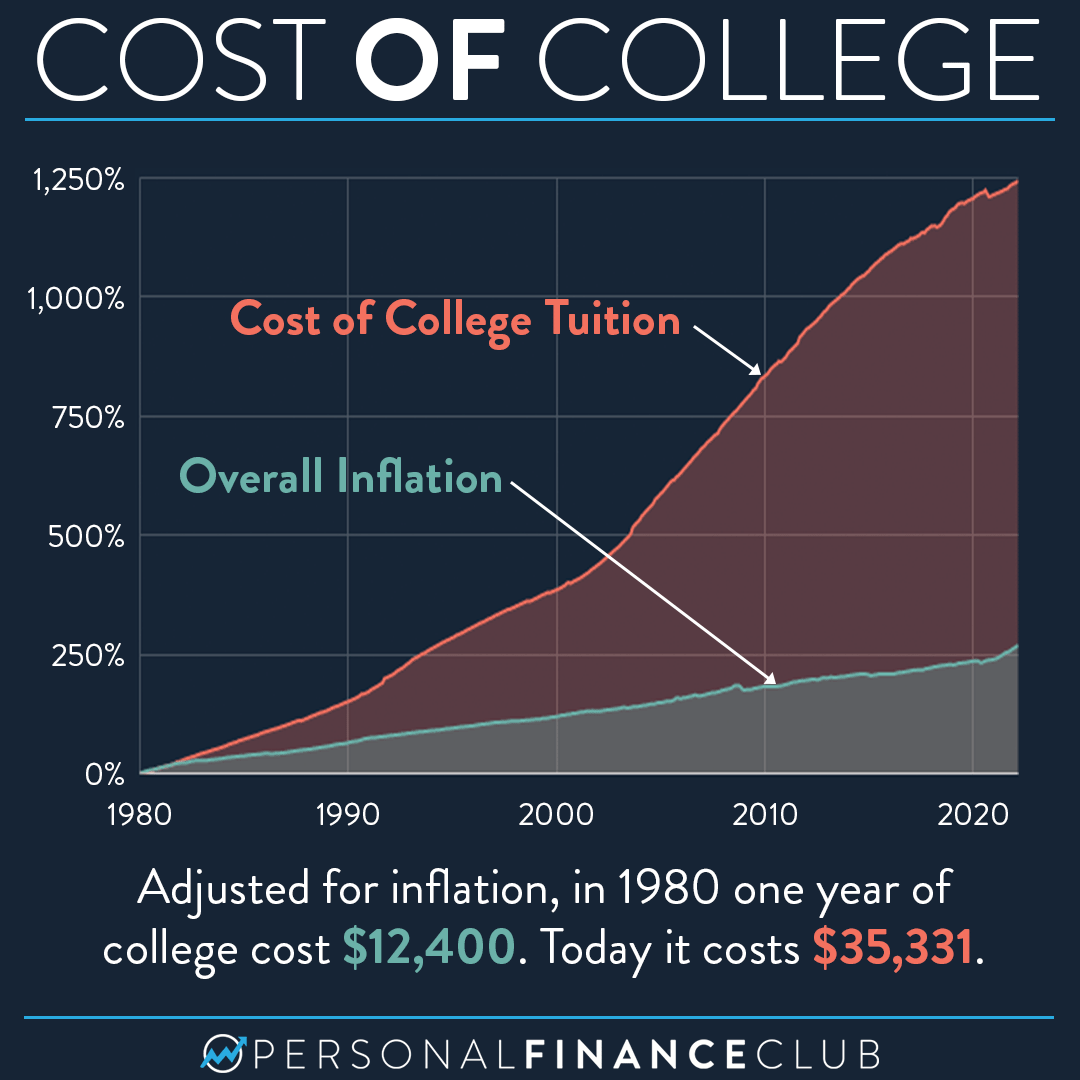
1) Obvious bubble in tuition.
2) The Feds bumbling the FAFSA rollout certainly didn’t help a lot of schools this year.
3) Some schools severely mismanaged Covid dollars.
4) Private liberal arts colleges should all be very wary of their 10-year outlook.
2) The Feds bumbling the FAFSA rollout certainly didn’t help a lot of schools this year.
3) Some schools severely mismanaged Covid dollars.
4) Private liberal arts colleges should all be very wary of their 10-year outlook.

 Page 1 of 1


Popular
Back to top
 Follow TigerDroppings for LSU Football News