




- My Forums
- Tiger Rant
- LSU Recruiting
- SEC Rant
- Saints Talk
- Pelicans Talk
- More Sports Board
- Fantasy Sports
- Golf Board
- Soccer Board
- O-T Lounge
- Tech Board
- Home/Garden Board
- Outdoor Board
- Health/Fitness Board
- Movie/TV Board
- Book Board
- Music Board
- Political Talk
- Money Talk
- Fark Board
- Gaming Board
- Travel Board
- Food/Drink Board
- Ticket Exchange
- TD Help Board
Customize My Forums- View All Forums
- Show Left Links
- Topic Sort Options
- Trending Topics
- Recent Topics
- Active Topics
Started By
Message

Today is the 157th anniversary of one of the worst defeats in U.S. military history
Posted on 12/13/19 at 12:20 pm

Posted on 12/13/19 at 12:20 pm
The Battle of Fredericksburg.
Ambrose Burnside and his 122,000 men of the Union Army of the Potomac faced off against the 78,000 men of Robert E. Lee and the Confederate Army of Northern Virginia. In terms of troops involved, the Battle of Fredericksburg would be the largest battle of the Civil War.
Elements of Burnside's army had fought their way across the Rappahannock River and into Fredericksburg on December 11. All throughout the day on December 12, Burnside marched his army across the river via pontoon bridges. Arrayed against Burnside, Lee's army was well dug in on the ridges behind the town. Any attack against his lines would be up hill over wide open ground. Edward Porter Alexander, the famed artillery captain, remarked to Lee that "a chicken couldn't live on that field" once his artillery opened up on the attacking Federals.
Burnside's attack plan for December 13 would be to strike at Lee's right flank, held by Stonewall Jackson's 35,000 men, with his I and VI Corps. The hope was that the attack would turn Jackson's line and then hook right, where it would then trap Longstreet's 40,000 men entrenched atop Marye's Heights. To support the attacks on Jackson, elements of the II Corps would apply pressure to Longstreet atop Marye's Heights.

The morning of December 13, 1862, dawned cold and gray. A heavy fog had settled over the battlefield, forcing the Union army to delay the start of the attack. It was during this interlude that Major General William Franklin, commander of the "Right Grand Division" ordered his I Corps commander - Major General John F. Reynolds - to select a single division to attack Jackson's line. Reynolds chose his smallest, that of George G. Meade. The division of John Gibbon was assigned by Reynolds to support Meade's attack.
When the fog finally lifted around 10:30 AM, the order was given to commence the attack. Meade's 4,500 men went forward and immediately found a gap in Jackson's position. Chaos reigned as the division of Union soldiers poured into the breach and began to attack unsuspecting Confederate units in their flank. Thousands of Confederates broke and ran due to the ferocity of Meade's attack. The breakthrough Burnside had planned for was now possible if the Union army would simply follow up the attack by pouring reinforcements into the breach. For whatever reason, those reinforcements were never ordered forward and Meade was left to fight Jackson's entire force all by himself. The weight of Confederate numbers soon began to tell as Jackson rushed reinforcements into the area to contain Meade's advance. While some 40,000 Union soldiers looked on from a distance, Jackson's forces violently expelled Meade's division from their lines with frightful losses on both sides.
Jackson ordered an immediate counterattack, led by Jubal Early's division. The remaining divisions of the I Corps - those of Gibbon and Birney - were there to receive the attack. Jackson quickly realized the futility of attacking the Union position and ordered his men to fall back to the safety of their own lines. Some 5,000 Union soldiers had fallen killed or wounded in the attack, compared to 3,400 casualties for Jackson. But the Union army had missed out on a golden opportunity to deal a decisive blow to the Confederate army. Of the 40,000 men present for duty on that part of the field, scarcely half of them saw action against Jackson's forces.
The battle shifted to the north, where the Union II Corps had turned its demonstration against Marye's Heights into a full blown attack. A single Confederate brigade, backed up by artillery, took up position at the base of the heights behind a chest-high stonewall. Four Union divisions from the II and V Corps made multiple assaults against the stonewall and were all thrown back with staggering losses. Some 7,500 Union soldiers were shot down in front of Marye's Heights without ever coming close to penetrating the Confederate position.
Mercifully, Burnside called a halt to the attacks. Some 12,500 Union soldiers lay dead, dying, and wounded in the fields between the two armies. The Confederates lost barely 5,000 men in total. While overlooking the carnage that lay before him, Lee is said to have remarked: "It is well that war is so terrible, for we should grow too fond of it."
Ambrose Burnside and his 122,000 men of the Union Army of the Potomac faced off against the 78,000 men of Robert E. Lee and the Confederate Army of Northern Virginia. In terms of troops involved, the Battle of Fredericksburg would be the largest battle of the Civil War.
Elements of Burnside's army had fought their way across the Rappahannock River and into Fredericksburg on December 11. All throughout the day on December 12, Burnside marched his army across the river via pontoon bridges. Arrayed against Burnside, Lee's army was well dug in on the ridges behind the town. Any attack against his lines would be up hill over wide open ground. Edward Porter Alexander, the famed artillery captain, remarked to Lee that "a chicken couldn't live on that field" once his artillery opened up on the attacking Federals.
Burnside's attack plan for December 13 would be to strike at Lee's right flank, held by Stonewall Jackson's 35,000 men, with his I and VI Corps. The hope was that the attack would turn Jackson's line and then hook right, where it would then trap Longstreet's 40,000 men entrenched atop Marye's Heights. To support the attacks on Jackson, elements of the II Corps would apply pressure to Longstreet atop Marye's Heights.
The morning of December 13, 1862, dawned cold and gray. A heavy fog had settled over the battlefield, forcing the Union army to delay the start of the attack. It was during this interlude that Major General William Franklin, commander of the "Right Grand Division" ordered his I Corps commander - Major General John F. Reynolds - to select a single division to attack Jackson's line. Reynolds chose his smallest, that of George G. Meade. The division of John Gibbon was assigned by Reynolds to support Meade's attack.
When the fog finally lifted around 10:30 AM, the order was given to commence the attack. Meade's 4,500 men went forward and immediately found a gap in Jackson's position. Chaos reigned as the division of Union soldiers poured into the breach and began to attack unsuspecting Confederate units in their flank. Thousands of Confederates broke and ran due to the ferocity of Meade's attack. The breakthrough Burnside had planned for was now possible if the Union army would simply follow up the attack by pouring reinforcements into the breach. For whatever reason, those reinforcements were never ordered forward and Meade was left to fight Jackson's entire force all by himself. The weight of Confederate numbers soon began to tell as Jackson rushed reinforcements into the area to contain Meade's advance. While some 40,000 Union soldiers looked on from a distance, Jackson's forces violently expelled Meade's division from their lines with frightful losses on both sides.
Jackson ordered an immediate counterattack, led by Jubal Early's division. The remaining divisions of the I Corps - those of Gibbon and Birney - were there to receive the attack. Jackson quickly realized the futility of attacking the Union position and ordered his men to fall back to the safety of their own lines. Some 5,000 Union soldiers had fallen killed or wounded in the attack, compared to 3,400 casualties for Jackson. But the Union army had missed out on a golden opportunity to deal a decisive blow to the Confederate army. Of the 40,000 men present for duty on that part of the field, scarcely half of them saw action against Jackson's forces.
The battle shifted to the north, where the Union II Corps had turned its demonstration against Marye's Heights into a full blown attack. A single Confederate brigade, backed up by artillery, took up position at the base of the heights behind a chest-high stonewall. Four Union divisions from the II and V Corps made multiple assaults against the stonewall and were all thrown back with staggering losses. Some 7,500 Union soldiers were shot down in front of Marye's Heights without ever coming close to penetrating the Confederate position.
Mercifully, Burnside called a halt to the attacks. Some 12,500 Union soldiers lay dead, dying, and wounded in the fields between the two armies. The Confederates lost barely 5,000 men in total. While overlooking the carnage that lay before him, Lee is said to have remarked: "It is well that war is so terrible, for we should grow too fond of it."
 14
14


Posted on 12/13/19 at 12:23 pm to RollTide1987
Is this the one that involved the little German fella?
Posted on 12/13/19 at 12:23 pm to RollTide1987
Roll Tide What? frick You!
Posted on 12/13/19 at 12:25 pm to RollTide1987
quote:
Today is the 157th anniversary of one of the greatest victories in U.S. military history

Posted on 12/13/19 at 12:25 pm to RollTide1987
“OMG, why are glorifying a bunch of losers, you racist. I bet you probably live on a plantation and wear your MAGA hat in church.” - a bunch of pussies on the Poli Board.

Posted on 12/13/19 at 12:27 pm to RollTide1987
Go South!


Posted on 12/13/19 at 12:37 pm to RollTide1987
Now get to the part where the Confederacy collapses and the Union wins the war.
Posted on 12/13/19 at 12:44 pm to GetCocky11
I’ve visited both Fredericksburg and Gettysburg. It amazes me Lee did not take Longstreet’s advice at Gettysburg to simply move around the union army embedded on the ridge across from him. Lee observed firsthand the advantage his army had at Fredericksburg by embedding on the high ground. How are me and so astute Lee aware of both geography, engineer ring and tactics ignored something so simple and obvious amazes me. It truly explains what happens to soldiers at every rank as a result of the fog of war.

Posted on 12/13/19 at 12:48 pm to GetCocky11
quote:
Now get to the part where the Confederacy collapses and the Union wins the war.
It was inevitable given that the South was mainly an agrarian society whereas the industrial might of the North put them at an extreme advantage.
Posted on 12/13/19 at 12:53 pm to michael corleone
quote:
It amazes me Lee did not take Longstreet’s advice at Gettysburg to simply move around the union army embedded on the ridge across from him.
1) Lee wasn't about to make that move without knowing where the entirety of the Federal army was. To find out that information, he needed cavalry. And while there was cavalry on hand, it wasn't the cavalry that he trusted. He wanted Stuart. Stuart had gone off on a joyride that Lee had inadvertently sanctioned with his ambiguously written orders.
2) Even if Lee had listened to Longstreet and redeployed away from Gettysburg, the road network worked against him. He would have had to withdraw back behind the Blue Ridge mountains - some 10 miles to the west - to safely move his army around Meade's. Meade had the advantage in interior lines of communication and supply, however. All he had to do was move his army down the Taneytown Road and Baltimore Pike while he sent Pleasanton's cavalry out in front to keep an eye on Lee's movements. There was almost no way Lee could have successfully maneuvered between Meade and Washington from Gettysburg.

Posted on 12/13/19 at 12:57 pm to GetCocky11
quote:
Now get to the part where Abraham Lincoln bloats the federal government
Posted on 12/13/19 at 12:59 pm to eScott
Glad America turned it around under Grant/Sherman and won that war...aren't you?
Posted on 12/13/19 at 1:13 pm to RollTide1987
Fredericksburg and the subsequent Federal actions along the same front at Chancellorsville marked the high point of the war for the South in the Eastern theater.
Fredericksburg stopped the Federal thrust against Richmond cold, but the Feds did not retreat. Instead they stayed in place and divided their army and tried to flank Lee to the West. At Chancellorsville Lee was brilliant. His small but fast army almost enveloped the larger Union army while a smaller army held the Feds at bay at Fredericksburg.
Lee nearly pulled off the greatest feet of the war. The destruction of an entire union army,
Poor communications, Jackson’s death, and heroics by the Union denied the Rebs a complete and total destruction of a union army.
After that was Gettysburg.
Fredericksburg stopped the Federal thrust against Richmond cold, but the Feds did not retreat. Instead they stayed in place and divided their army and tried to flank Lee to the West. At Chancellorsville Lee was brilliant. His small but fast army almost enveloped the larger Union army while a smaller army held the Feds at bay at Fredericksburg.
Lee nearly pulled off the greatest feet of the war. The destruction of an entire union army,
Poor communications, Jackson’s death, and heroics by the Union denied the Rebs a complete and total destruction of a union army.
After that was Gettysburg.
Posted on 12/13/19 at 1:26 pm to doubleb
quote:
At Chancellorsville Lee was brilliant. His small but fast army almost enveloped the larger Union army while a smaller army held the Feds at bay at Fredericksburg.
Lee showed great audacity at Chancellorsville, but his success at that battle had more to do with the Federal high command than it did his own brilliance. Jackson's flank attack took no one but the high command by surprise. The victims of that attack, the 11th Corps, had been sending back reports to their corps commander as well as to Hooker's HQ, that a large Confederate force was attempting to outflank them to the right. These reports were all ignored because Hooker was sure that Lee was retreating.
The next day, Hooker should have won the battle outright. His men repulsed every single attack against the defensive line Hooker had set up, but a Confederate artillery shell hit the pillar Hooker was standing near and gave him a major concussion. Before turning command over to his subordinate, Darius Couch, he gave the order to retreat from the field. This after he was informed that the Confederate left flank was ripe for the taking and that Meade and Reynolds were in the perfect position to attack and annihilate the Confederate forces in that area.
Of the 75,000 men Hooker had at the Chancellorsville battlefield, less than half of them actually participated in the fight. And while the battle was a tactical victory for the Confederacy, strategically it did nothing for them. The Union army simply retreated back to the same place they had been all winter. Lee also suffered more killed and wounded at Chancellorsville than the Union army did. The casualties included his best corps commander and some of his most seasoned brigade and regimental commanders.
Chancellorsville hurt Lee far more than it helped him.
Posted on 12/13/19 at 1:27 pm to doubleb
quote:
His small but fast army almost enveloped the larger Union army while a smaller army held the Feds at bay at Fredericksburg.
The Union won the Second Battle of Fredericksburg. The town and the famous stone wall were in Union hands by May 1863.
Posted on 12/13/19 at 1:32 pm to RollTide1987
JEB returned before Pickett’s charge. Lee knew where the entire Union army and Calvary were before Day Three started. He felt “committed” which is silly and a microcosm of the war. His honor and ego did not let him tactically retreat or move from his position. Again, having visited both places it is obvious to a novice that a frontal assault against an embedded position on the high ground was doomed to fail.
Posted on 12/13/19 at 1:36 pm to GetCocky11
quote:
The Union won the Second Battle of Fredericksburg.
Yep. And then pissed it away at the Battle of Salem Church. That was another missed opportunity by Hooker. Lee sent a large portion of his army to deal with Sedgewick's forces as they advanced on his rear. Had Hooker not lost his nerve, he could have attacked Lee as soon as he got word from Sedgewick that he was under assault. Instead...he just sat there and let the VI Corps get wrecked.
Nine times out of 10, the Union wins the Chancellorsville campaign decisively.
This post was edited on 12/13/19 at 1:38 pm
Posted on 12/13/19 at 1:41 pm to RollTide1987
Thanks for the writeup. There's still battle damage at Salem Church and Marye's Heights.

Posted on 12/13/19 at 3:36 pm to RollTide1987
Fine post. The site is not so well preserved as some but you can look downslope from the wall and be overwhelmed with the impossibility of the Union's attack on the Heights.
Federal troops, dead, dying, wounded, mixed in among themselves lay on the frozen field at the foot of Marye's Heights that night and both sides were bedazzled by an unusual and spectacular display of the Aurora Borealis.
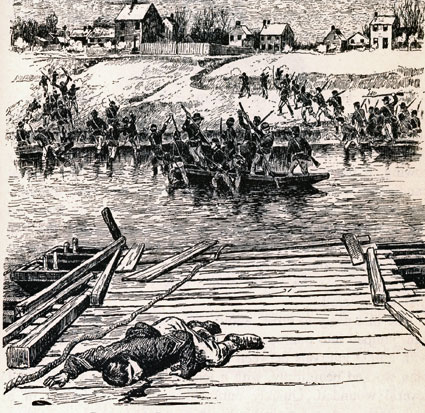
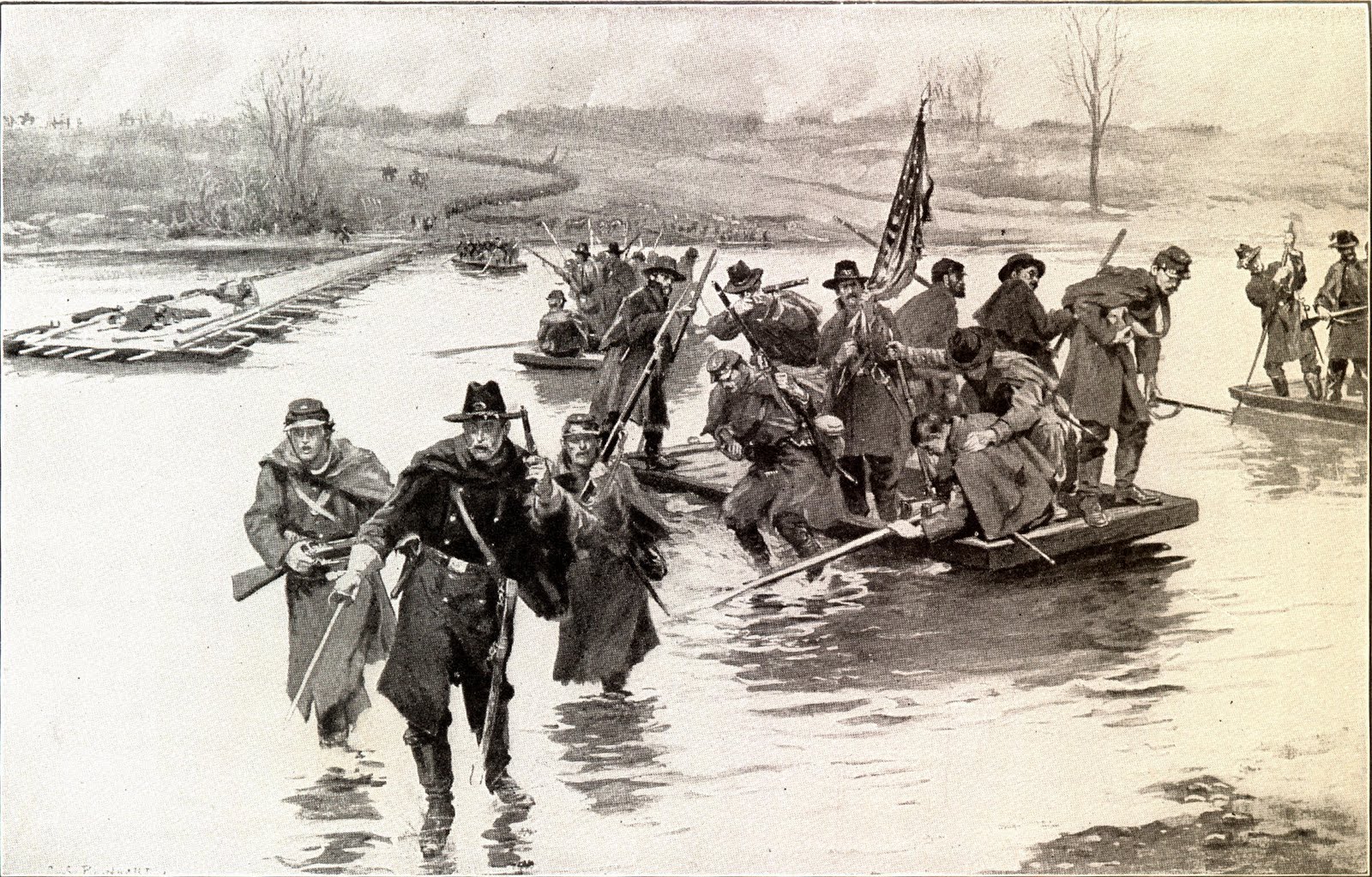
The battle was also marked by bitter urban combat preceded by a riverine assault on Fredericksburg by Massachusetts and Maine infantry made under fire using pontoon boats to cross the river.
An assault made necessary by Barksdale's Mississippians refusal to be dug out of the town by Federal artillery. They kept crawling out from the rubble to fire on the sounds of Union sappers laying pontoon bridges in the freezing fog. The pontoons were repurposed as assault landing craft and it was, unless I'm mistaken, the US Army's first combat river crossing.
I've stood at the unmarked spot on the river where they landed. It was in late December and it had been so cold for several days that ice was spreading from the bank several feet into the water.
And then there's this- Richard Rowland Kirkland
Federal troops, dead, dying, wounded, mixed in among themselves lay on the frozen field at the foot of Marye's Heights that night and both sides were bedazzled by an unusual and spectacular display of the Aurora Borealis.
The battle was also marked by bitter urban combat preceded by a riverine assault on Fredericksburg by Massachusetts and Maine infantry made under fire using pontoon boats to cross the river.
An assault made necessary by Barksdale's Mississippians refusal to be dug out of the town by Federal artillery. They kept crawling out from the rubble to fire on the sounds of Union sappers laying pontoon bridges in the freezing fog. The pontoons were repurposed as assault landing craft and it was, unless I'm mistaken, the US Army's first combat river crossing.
I've stood at the unmarked spot on the river where they landed. It was in late December and it had been so cold for several days that ice was spreading from the bank several feet into the water.
And then there's this- Richard Rowland Kirkland
This post was edited on 12/15/19 at 5:32 pm
Posted on 12/13/19 at 3:43 pm to GetCocky11
quote:
The Union won the Second Battle of Fredericksburg. The town and the famous stone wall were in Union hands by May 1863.
Yes, but Lee shifted men back to Fredericksburg to keep the Union from pushing to Richmond.
Lee did more with much less.
This post was edited on 12/13/19 at 3:56 pm

 Page 1 of 2

Popular
Back to top
 Follow TigerDroppings for LSU Football News