




- My Forums
- Tiger Rant
- LSU Recruiting
- SEC Rant
- Saints Talk
- Pelicans Talk
- More Sports Board
- Fantasy Sports
- Golf Board
- Soccer Board
- O-T Lounge
- Tech Board
- Home/Garden Board
- Outdoor Board
- Health/Fitness Board
- Movie/TV Board
- Book Board
- Music Board
- Political Talk
- Money Talk
- Fark Board
- Gaming Board
- Travel Board
- Food/Drink Board
- Ticket Exchange
- TD Help Board
Customize My Forums- View All Forums
- Show Left Links
- Topic Sort Options
- Trending Topics
- Recent Topics
- Active Topics
Started By
Message

Question for OT Geologists and O&G guys
Posted on 3/13/17 at 9:12 am

Posted on 3/13/17 at 9:12 am
I was reading an article today talking about the large oil deposit found in Alaska
Link to article
My question is, "What makes states like Alaska and Texas ideal for the development of large oil formations?"
Thanks for taking my call, I'll hang up and listen
Link to article
My question is, "What makes states like Alaska and Texas ideal for the development of large oil formations?"
Thanks for taking my call, I'll hang up and listen
 7
7

Posted on 3/13/17 at 9:12 am to Tigeralum2008
quote:
What makes states like Alaska and Texas ideal for the development of large oil formations?"
That's where the oil is. Next question.

Posted on 3/13/17 at 9:14 am to Tigeralum2008
As an oil and gas professional with many years' experience.... Dinosaurs?
This post was edited on 3/13/17 at 9:15 am
Posted on 3/13/17 at 9:16 am to jonboy
quote:
That's where the oil is. Next question
Obvious answer is obvious.
I'm asking why did oil develop there rather than in other areas? I know Pennsylvania had some oil in the early 1900's but nothing on the scale of what was found in TX/AK
I'm assuming prehistoric life was a little more widespread than just TX and AK
This post was edited on 3/13/17 at 9:18 am
Posted on 3/13/17 at 9:17 am to Tigeralum2008
quote:
question is, "What makes states like Alaska and Texas ideal for the development of large oil formations?"
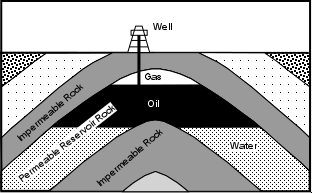

Posted on 3/13/17 at 9:18 am to Tigeralum2008
quote:That's where them fossils wuz at.
I'm asking why did oil develop there rather than in other areas?

Posted on 3/13/17 at 9:19 am to Tigeralum2008
quote:
I know Pennsylvania had some oil in the early 1900's but nothing on the scale of what was found in TX/AK
I'm assuming prehistoric life was a little more widespread than just TX and AK
pennsylvannia still has plenty

Posted on 3/13/17 at 9:20 am to Tigeralum2008
quote:
My question is, "What makes states like Alaska and Texas ideal for the development of large oil formations?"
What about North Dakota, Colorado, Montana, Saudi Arabia, Venezuela, Mexico, etc?

Posted on 3/13/17 at 9:21 am to Tigeralum2008
quote:
What makes states like Alaska and Texas ideal for the development of large oil formations?
Millions of years ago, Texas was a shallow sea conducive to marine life whose shells fell to the bottom to to be covered and compressed to create limestone deposits with enough porosity and permeability to hold reservoirs of O&G. It wasn't always rocks and cactus.
Alaska is not really in my wheelhouse...
Posted on 3/13/17 at 9:22 am to Tigeralum2008
quote:
prehistoric life
Zero to do with fossil fuels.
Give a look at the research.
Posted on 3/13/17 at 9:24 am to Clyde Tipton
quote:
Millions of years ago, Texas was a shallow sea conducive to marine life whose shells fell to the bottom to to be covered and compressed to create limestone deposits with enough porosity and permeability to hold reservoirs of O&G. It wasn't always rocks and cactus.
Thanks Clyde
I know other states have oil but didn't think they compare to the mega deposit sizes those found in TX/AK.

Posted on 3/13/17 at 9:30 am to Tigeralum2008
Texas and Alaska are totally different geology in the oil and gas realm.
West Texas is, for the most part, a Dolomite/Shale environment. When the intercontinental seaway flooded 1/3 of the North American continent during the Mesozoic (dinosaur times), in west Texas you had areas that were continuously flooded and the water would evaporate leaving behind shales and organics (microorganisms and plants -> oil and gas). Limestones developed in the reef zones that were closer to the surface in clearer waters.
The shales hold/cook/develop the oil and gas from the organics, where it either stays there or migrates out into the dolomitized limestones above it. Both rock types are horizontally drilled and fracked.
Alaska is mainly delta-based similar to Louisiana oil and gas. Except in Alaska the mountains, where the rock fragments originate that flow down the river and eventually form the hard rock the oil is stored in, are much closer to where the are deposited. The reservoir rock in Alaska deltas, compared to Louisiana can be harder to work with. They will have more clays and feldspars (shite that makes the ability to store oil and get out harder).
There's your 3 paragraph article, you can find much better material online.
West Texas is, for the most part, a Dolomite/Shale environment. When the intercontinental seaway flooded 1/3 of the North American continent during the Mesozoic (dinosaur times), in west Texas you had areas that were continuously flooded and the water would evaporate leaving behind shales and organics (microorganisms and plants -> oil and gas). Limestones developed in the reef zones that were closer to the surface in clearer waters.
The shales hold/cook/develop the oil and gas from the organics, where it either stays there or migrates out into the dolomitized limestones above it. Both rock types are horizontally drilled and fracked.
Alaska is mainly delta-based similar to Louisiana oil and gas. Except in Alaska the mountains, where the rock fragments originate that flow down the river and eventually form the hard rock the oil is stored in, are much closer to where the are deposited. The reservoir rock in Alaska deltas, compared to Louisiana can be harder to work with. They will have more clays and feldspars (shite that makes the ability to store oil and get out harder).
There's your 3 paragraph article, you can find much better material online.

Posted on 3/13/17 at 9:41 am to Tigeralum2008
These areas were previously covered by water. If you dig into the bed rock in much of Texas you can pull up all kinds of fossilized shells.
This post was edited on 3/13/17 at 9:50 am
Posted on 3/13/17 at 9:45 am to MadtownTiger
quote:
Texas and Alaska are totally different geology in the oil and gas realm.
West Texas is, for the most part, a Dolomite/Shale environment. When the intercontinental seaway flooded 1/3 of the North American continent during the Mesozoic (dinosaur times), in west Texas you had areas that were continuously flooded and the water would evaporate leaving behind shales and organics (microorganisms and plants -> oil and gas). Limestones developed in the reef zones that were closer to the surface in clearer waters.
The shales hold/cook/develop the oil and gas from the organics, where it either stays there or migrates out into the dolomitized limestones above it. Both rock types are horizontally drilled and fracked.
Alaska is mainly delta-based similar to Louisiana oil and gas. Except in Alaska the mountains, where the rock fragments originate that flow down the river and eventually form the hard rock the oil is stored in, are much closer to where the are deposited. The reservoir rock in Alaska deltas, compared to Louisiana can be harder to work with. They will have more clays and feldspars ( shite that makes the ability to store oil and get out harder).
There's your 3 paragraph article, you can find much better material online.
Thanks

 Page 1 of 1


Popular
Back to top
 Follow TigerDroppings for LSU Football News