




- My Forums
- Tiger Rant
- LSU Recruiting
- SEC Rant
- Saints Talk
- Pelicans Talk
- More Sports Board
- Fantasy Sports
- Golf Board
- Soccer Board
- O-T Lounge
- Tech Board
- Home/Garden Board
- Outdoor Board
- Health/Fitness Board
- Movie/TV Board
- Book Board
- Music Board
- Political Talk
- Money Talk
- Fark Board
- Gaming Board
- Travel Board
- Food/Drink Board
- Ticket Exchange
- TD Help Board
Customize My Forums- View All Forums
- Show Left Links
- Topic Sort Options
- Trending Topics
- Recent Topics
- Active Topics
Started By
Message
The Battle of Franklin was fought on this day 161 years ago...
Posted on 11/30/25 at 9:17 pm

Posted on 11/30/25 at 9:17 pm
November 30, 1864.
After being outmaneuvered at Spring Hill the night before, Union Major General John M. Schofield’s force dug in south of the town of Franklin, Tennessee, forming a strong defensive line anchored on the Harpeth River. Confederate General John Bell Hood, furious at the missed opportunity and determined to destroy Schofield before he could link up with Union forces at Nashville, ordered a frontal assault across nearly two miles of open ground in the late afternoon hours of November 30.
At about four o'clock, 18 Confederate brigades (roughly 20,000 men) from Hood’s Army of Tennessee stepped off in one of the war’s largest and most desperate assaults. With almost no artillery preparation and against well-prepared Union infantry and artillery behind earthworks, the attack slammed into the Federal center near the Carter House and the Cotton Gin. Fighting became hand-to-hand; Confederate divisions under Patrick Cleburne, John C. Brown, and others temporarily broke the line but were thrown back with horrific losses.
In five hours of savage combat, Hood lost 6,300 men (including six generals killed outright: Cleburne, Granbury, Adams, Strahl, Gist, and Carter, and 6 more wounded or captured), one of the highest casualty rates of loss for any major Confederate army in a single battle. Union casualties were 2,300.
Schofield withdrew across the Harpeth River that night and continued toward Nashville, leaving Franklin as a ghastly Confederate Pyrrhic defeat that effectively wrecked Hood’s army just two weeks before its final destruction at Nashville. The Carter House and Carnton Plantation still bear the scars and bloodstains from that evening, often called “the Pickett’s Charge of the West," only far bloodier and across the entire front.
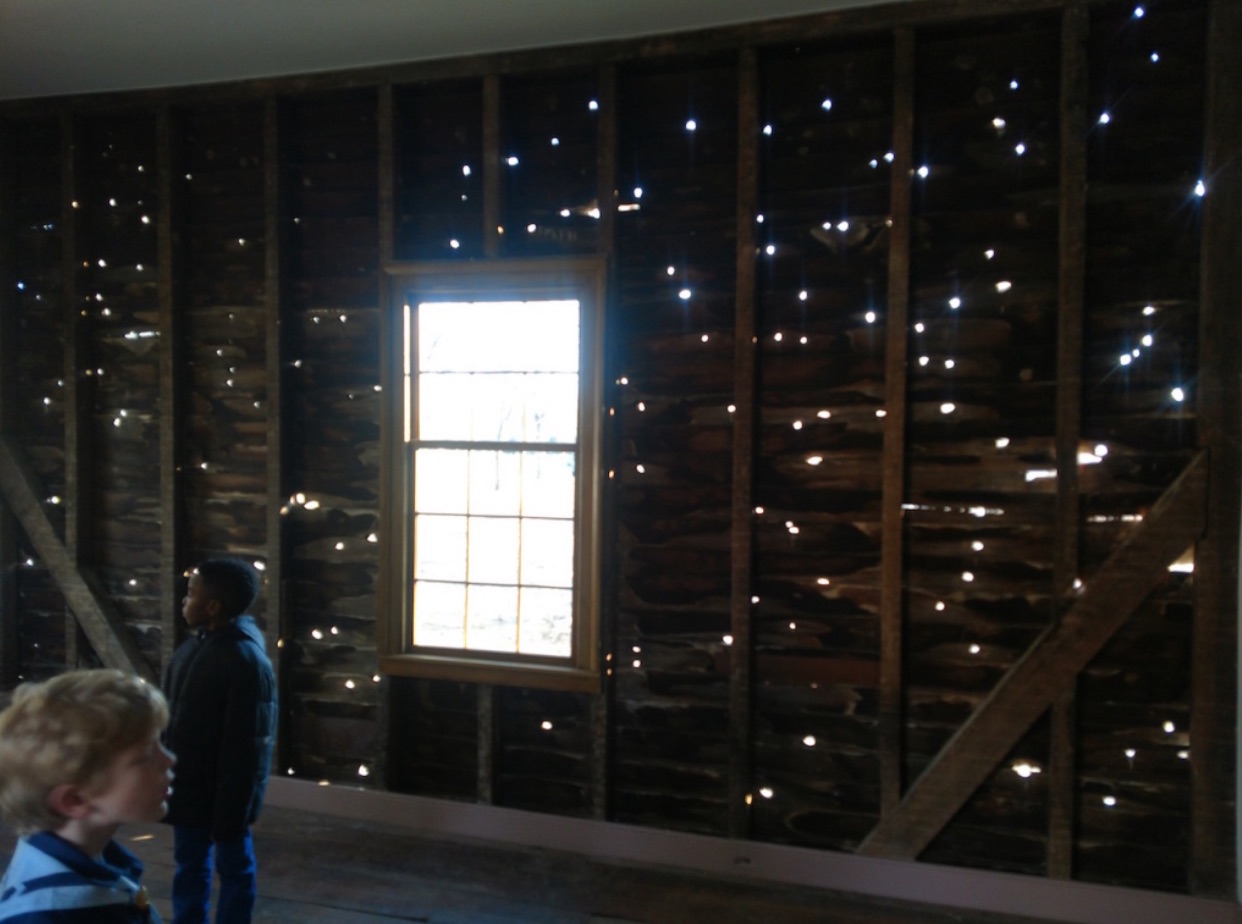
Elementary students stare at the bullet holes inside the Carter House - still visible in 2025.
After being outmaneuvered at Spring Hill the night before, Union Major General John M. Schofield’s force dug in south of the town of Franklin, Tennessee, forming a strong defensive line anchored on the Harpeth River. Confederate General John Bell Hood, furious at the missed opportunity and determined to destroy Schofield before he could link up with Union forces at Nashville, ordered a frontal assault across nearly two miles of open ground in the late afternoon hours of November 30.
At about four o'clock, 18 Confederate brigades (roughly 20,000 men) from Hood’s Army of Tennessee stepped off in one of the war’s largest and most desperate assaults. With almost no artillery preparation and against well-prepared Union infantry and artillery behind earthworks, the attack slammed into the Federal center near the Carter House and the Cotton Gin. Fighting became hand-to-hand; Confederate divisions under Patrick Cleburne, John C. Brown, and others temporarily broke the line but were thrown back with horrific losses.
In five hours of savage combat, Hood lost 6,300 men (including six generals killed outright: Cleburne, Granbury, Adams, Strahl, Gist, and Carter, and 6 more wounded or captured), one of the highest casualty rates of loss for any major Confederate army in a single battle. Union casualties were 2,300.
Schofield withdrew across the Harpeth River that night and continued toward Nashville, leaving Franklin as a ghastly Confederate Pyrrhic defeat that effectively wrecked Hood’s army just two weeks before its final destruction at Nashville. The Carter House and Carnton Plantation still bear the scars and bloodstains from that evening, often called “the Pickett’s Charge of the West," only far bloodier and across the entire front.
Elementary students stare at the bullet holes inside the Carter House - still visible in 2025.
 10
10


Posted on 11/30/25 at 9:22 pm to RollTide1987
All those lives lost just so the Washington DC can maintain the boot heel to the necks of the states that refused to comply.
Posted on 11/30/25 at 9:25 pm to bayouteche
quote:
All those lives lost just so the Washington DC can maintain the boot heel to the necks of the states that refused to comply.
That and John Bell Hood was one of the Top 3 worst army commanders of the American Civil War.
Posted on 11/30/25 at 9:31 pm to RollTide1987
Braxton Bragg was rumored to have retreated from the gates of heaven.
Posted on 11/30/25 at 9:35 pm to RollTide1987
I went to Battle Ground Academy when it was still at the old campus. Lots of hearsay about it being haunted as shite. It was always pretty crazy when you were sitting in class and had the realization that thousands of people died right where you are currently learning Latin or having PE.
I had some friends that lived over in Heath Place and it was a yearly tradition of ours to walk around the Carnton cemetery at night this time of year. Pretty ghostly feeling on cold nights while dry leaves remained on the oaks and moved in the nighttime breeze. You could feel the suffering in the air.
I had some friends that lived over in Heath Place and it was a yearly tradition of ours to walk around the Carnton cemetery at night this time of year. Pretty ghostly feeling on cold nights while dry leaves remained on the oaks and moved in the nighttime breeze. You could feel the suffering in the air.

Posted on 11/30/25 at 9:41 pm to RollTide1987
Good regimental commander, out of his depth an an army commander
Posted on 11/30/25 at 9:49 pm to RollTide1987
quote:
including six generals killed outright: Cleburne, Granbury, Adams, Strahl, Gist, and Carter,
Wasn’t Gist’s name States Rights Gist? I thought I read that somewhere?


Posted on 11/30/25 at 10:06 pm to RollTide1987
quote:
ordered a frontal assault across nearly two miles of open ground in the late afternoon hours of November 30.
Stupid doesn't even begin to describe this maneuver

Posted on 12/1/25 at 7:02 am to RollTide1987
quote:
That and John Bell Hood was one of the Top 3 worst army commanders of the American Civil War.
I would argue that he was the worst
Posted on 12/1/25 at 7:33 am to Lexis Dad
quote:
I would argue that he was the worst
A compelling argument can definitely be made for either him, Bragg, or Burnside.


Posted on 12/1/25 at 8:33 am to RollTide1987
quote:
18 Confederate brigades (roughly 20,000 men) from Hood’s Army of Tennessee
I've always wondered when seeing the casualty numbers from battles, do the number of troops listed include just the infantry/cavalry or is it everyone from supply, medical etc.? Just trying to get a perspective of the percentage of casualties. For example Hoods Army had 20,000 men and lost 6,300 of them. Out of the 20,000 were 5,000 men supporting the infantry bringing supplies, helping with the wagon train or were all 20,000 actively fighting in the battle?
Posted on 12/1/25 at 8:35 am to RollTide1987
JB Hood was so over rated.
He did have one good point, the Confederate Army in the West just wouldnt fight.
He did have one good point, the Confederate Army in the West just wouldnt fight.
Posted on 12/1/25 at 8:48 am to Lakeboy7
Serial downvoter/stalker, if you hate Civil War history, you'll downvote this post.
Posted on 12/1/25 at 9:01 am to Lakeboy7
Hood was 33 at the time. A lot of guys were made generals barely 10-12 years out of West Point.
Some of them obviously shouldn't have been.
Some of them obviously shouldn't have been.
Posted on 12/1/25 at 9:03 am to RollTide1987
quote:
That and John Bell Hood was one of the Top 3 worst army commanders of the American Civil War.
Hood himself called his decision to attack at Franklin an attempt to "punish perceived timidity" after his subordinates allowed the Union to slip away from Spring Hill.
I haven't seen evidence that his use of morphine to treat his recent amputations was a factor, but it was pretty clear that he was furious at everyone involved and failed to take any sort of measure of the union strength or entrenchments due to that anger and desperation.
His entire campaign had failed at that point and rather than accept it and plan an alternative course of action he destroyed his entire army.
Even if you want to forgive him for the early attacks and failure to reconnoiter the field, I can't see any defense for his attacks later in the day where he was just sending wave after wave of men to be shot to pieces for no gain or chance of success whatsoever.
It was as bad or worse than Fredericksburg or the last charge at Cold Harbor for the Union and he should've been court martialed IMO.
Posted on 12/1/25 at 9:05 am to Lakeboy7
quote:
JB Hood was so over rated.
As a brigade commander? He was pretty good.
He was just promoted over his level of competency and frankly shouldn't have even been in the field given his previous wounds.
Posted on 12/1/25 at 9:06 am to FightinTigersDammit
quote:
Some of them obviously shouldn't have been.
Hood was an outstanding brigade commander. Lost an arm and a leg because he led from the front.
But sometimes that doesnt transfer to division and corps competence.
Sad ending, he moved to New Orleans his entire family died of yellow fever I think, he died shortly thereafter.
Posted on 12/1/25 at 9:07 am to Lakeboy7
If he were ten years older, he might have been a better army commander.

Posted on 12/1/25 at 9:11 am to FightinTigersDammit
quote:
Hood was 33 at the time. A lot of guys were made generals barely 10-12 years out of West Point. Some of them obviously shouldn't have been.
As someone of similar age that is wild to think about
Posted on 12/1/25 at 9:20 am to Mstate
quote:
As someone of similar age that is wild to think about
Based on talking with people who've experienced ground combat, a year at war is like a dog year where its ~1 year of combat = 7 normal years.
The guys who came back from Iraq or Afghanistan sure as hell weren't 22 or 23 in any way other than on their drivers licenses and most of them didn't see anything close to what these men in the civil war experienced.

 Page 1 of 2

Popular
Back to top
 Follow TigerDroppings for LSU Football News