




- My Forums
- Tiger Rant
- LSU Recruiting
- SEC Rant
- Saints Talk
- Pelicans Talk
- More Sports Board
- Fantasy Sports
- Golf Board
- Soccer Board
- O-T Lounge
- Tech Board
- Home/Garden Board
- Outdoor Board
- Health/Fitness Board
- Movie/TV Board
- Book Board
- Music Board
- Political Talk
- Money Talk
- Fark Board
- Gaming Board
- Travel Board
- Food/Drink Board
- Ticket Exchange
- TD Help Board
Customize My Forums- View All Forums
- Show Left Links
- Topic Sort Options
- Trending Topics
- Recent Topics
- Active Topics
Started By
Message
Ethiopia Trip Report
Posted on 7/21/23 at 6:40 pm

Posted on 7/21/23 at 6:40 pm
Booked my trip over Christmas break. Currently planning to visit the Danakil depression, the Simien Mountains, and the rock churches of Lalibela.
Any tips?
UPDATE: I had to cancel and rebook. Finally traveled 12/23/24 - 1/6/25. Report is below.
Any tips?
UPDATE: I had to cancel and rebook. Finally traveled 12/23/24 - 1/6/25. Report is below.
This post was edited on 1/22/25 at 6:04 pm
 5
5


Posted on 7/22/23 at 5:32 pm to GOP_Tiger
Take lots of pics. Ethiopia intrigues me.

Posted on 7/22/23 at 10:39 pm to GOP_Tiger
Not really but I flew through Addis on Ethiopian Airlines in business class and thought the food was pretty good.
Posted on 1/22/25 at 7:02 pm to GOP_Tiger
I booked my airfare in Ethiopian business class for 104k Amex Membership Rewards points, transferred to ANA. Ethiopian doesn't add on much in the way of extra fees, so this is outstanding value to travel to Africa in business class. ANA has since raised the price to 140k, but that's still an amazing deal (and indeed, I'm booked on Ethiopian all the way to JNB in June for that amount).
Ethiopian Airlines is the very best African airline. They have high quality food, the service onboard is excellent, and they have a great lounge in ADD if you're connecting. In fact, the dominance of Ethiopian Airlines has meant that a lot of corporations, NGOs, etc. have their African headquarters in Addis Ababa, because it's the place with the air connections to easily get almost anywhere else on the continent.
I had flown to ORD the evening before and stayed in the Hilton Rosemont with some Hilton points, because my ORD-ADD flight departed at 9:30 am. Normally, someone flying in international business class on a Star Alliance airline would get to use the Polaris Lounge in ORD, but it's in another terminal and there's no transportation out of Terminal 1 until 11:30 am, so I got stuck with the rather crummy Swissport Lounge in Terminal 1.
Ethiopian flies 787s with at least three different kinds of seats, plus 777s and a350s, and they are notorious for aircraft swaps, so you never really know what you're going to get. I was a bit unfortunate in that my 787 flight featured Ethiopian's oldest biz seats, in a 2-2-2 layout. These seats are actually angle-flat, which I didn't exactly like. (My return to the US was supposed to be on a new a350, but it got swapped out for a newer 787 with reverse-herringbone seats.)

The amenity kit was nice. I ended up using the lip balm the entire trip, as I was in dry areas and hadn't brought any of my own.

Departing at 9:30 am, Ethiopian serves a big "lunch," and then it's dark a few hours later as the plane nears Greenland. The food was excellent. There's a choice of champagne or juice upon boarding, then a hot towel and a small snack of crackers or roasted barley, then the appetizers and salad, followed by the main course, then dessert/cheese course, and finally coffee or tea with chocolates. It's up there with some of the best. Here's the appetizer/salad and the main course (I chose the fish).


ORD-ADD is a 13-hour flight, so I had plenty of time to sleep, but 9 hours time change meant that we landed at 7:30 am the next morning. After buying my visa ($62) and clearing immigration and customs, I bought a SIM card and got some birr out of an ATM.
I had used points for the Hilton, and their shuttle picked me up at the airport. Here was my view from the 11th floor. The pool you see is geothermically heated and a real treat.

But I didn't come to Ethiopia primarily to enjoy business class flights and stay in nice hotels. This first post is just for H2O, VA Buckeye, and those others in here who I know enjoy using miles to book business class. More to follow.
Ethiopian Airlines is the very best African airline. They have high quality food, the service onboard is excellent, and they have a great lounge in ADD if you're connecting. In fact, the dominance of Ethiopian Airlines has meant that a lot of corporations, NGOs, etc. have their African headquarters in Addis Ababa, because it's the place with the air connections to easily get almost anywhere else on the continent.
I had flown to ORD the evening before and stayed in the Hilton Rosemont with some Hilton points, because my ORD-ADD flight departed at 9:30 am. Normally, someone flying in international business class on a Star Alliance airline would get to use the Polaris Lounge in ORD, but it's in another terminal and there's no transportation out of Terminal 1 until 11:30 am, so I got stuck with the rather crummy Swissport Lounge in Terminal 1.
Ethiopian flies 787s with at least three different kinds of seats, plus 777s and a350s, and they are notorious for aircraft swaps, so you never really know what you're going to get. I was a bit unfortunate in that my 787 flight featured Ethiopian's oldest biz seats, in a 2-2-2 layout. These seats are actually angle-flat, which I didn't exactly like. (My return to the US was supposed to be on a new a350, but it got swapped out for a newer 787 with reverse-herringbone seats.)
The amenity kit was nice. I ended up using the lip balm the entire trip, as I was in dry areas and hadn't brought any of my own.
Departing at 9:30 am, Ethiopian serves a big "lunch," and then it's dark a few hours later as the plane nears Greenland. The food was excellent. There's a choice of champagne or juice upon boarding, then a hot towel and a small snack of crackers or roasted barley, then the appetizers and salad, followed by the main course, then dessert/cheese course, and finally coffee or tea with chocolates. It's up there with some of the best. Here's the appetizer/salad and the main course (I chose the fish).
ORD-ADD is a 13-hour flight, so I had plenty of time to sleep, but 9 hours time change meant that we landed at 7:30 am the next morning. After buying my visa ($62) and clearing immigration and customs, I bought a SIM card and got some birr out of an ATM.
I had used points for the Hilton, and their shuttle picked me up at the airport. Here was my view from the 11th floor. The pool you see is geothermically heated and a real treat.
But I didn't come to Ethiopia primarily to enjoy business class flights and stay in nice hotels. This first post is just for H2O, VA Buckeye, and those others in here who I know enjoy using miles to book business class. More to follow.
This post was edited on 1/22/25 at 7:04 pm
Posted on 1/22/25 at 8:08 pm to GOP_Tiger
Days 2-4: Danakil Depression

I had wanted to explore Addis a bit my first day, but the altitude bothered me (Addis is at 8700 feet, one of the highest capital cities in the world).
I had a 6:00 am flight the next morning to Semera, the capital of the Afar province. The Afar province is one of Ethiopia's least populated, as much of it sits below sea level, and it's characterized by scorching desert and volcanoes. It's actually somehow surprising that the Afar tribe can live there at all, as temps normally reach 125 degrees in the summer and 95 in the winter. This trip is really an expedition, as there aren't any cities north of Semera, and only a couple of what one might refer to as towns, because the Afar people are nomadic, taking their camels and goats to new places to grow on the few scrubby bushes that grow on the sparse water that flows down out of the Tigrayan highlands during the rainy season.
I had booked this 3-day trip with Ethio Tours and Travel, which is the largest outfit operating in the Danakil, with daily tours. The cost is $300, or $400 with RT flights from Addis. In the end, I wished I'd paid a bit more for a better operation, but it wasn't horrible.
Our first day, we drove for a total of almost seven hours, to the salt mining camp near the northern border with Eritrea. We slept under the stars, on simple cots with one-inch mattresses, and that was fine, because there was enough of a breeze in the evening that 80 degrees wasn't too hot to sleep. (Don't be one of those idiots who does this tour in the summer, as that's guaranteed misery, and there have been three tourist deaths in the last seven years from the heat.)
Before dawn the next morning, we went to what they call Lake Assal (not its name on Google Maps, because there's another Lake Assal in nearby Djibouti). This is a huge salt lake formed when water flows down from Tigray in the rainy season that then evaporates. For centuries until three years ago, the Afar people chopped the salt into blocks and loaded them onto camel caravans to transport for sale, but now there are trucks.
But it looked like Louisiana this week, with white as far as the eye could see. The actual still water of the lake is so shallow that it was a perfect mirror in the early light.


After breakfast, we drove several miles to the edge of the whiteness, to the Dallol salt flats. This is an area where some of the water underground interacts with the magma chamber of an extinct volcano, and the minerals from the magma give the water shocking colors as it bubbles up and then evaporates. It's an otherwordly place.


It's a short drive from there to "Salt Mountain," which has one formation sure to provoke some sardonic remarks from posters here.

After lunch, it was time to drive to Erta Ale, a volcano that's been continuously erupting for decades. In fact, until about five years ago, there was a true lava lake here. There's no lake of lava anymore, but there were big lava flows two weeks before my visit and again on January 13th.
At dusk, we walked on the two-week-old lava (still warm) to two of the four current eruption sites, one of which was regularly throwing "fireworks" into the air. After sleeping on the ground again, we went back for another look before dawn and watched the sunrise over the volcano rim.


All in all, Erta Ale was very impressive, but I do envy a bit the folks who were there a couple of weeks earlier or later and got to see a much bigger show.
The next morning, we drove five hours to Lake Afdera for a saltwater swim, and that's when I realized that I had left my phone by our campsite at Erta Ale. So, none of these pictures on the trip are ones that I took. The pics you see today were shared by another member of our group (but I'm still in some of them, representing in my LSU shirt). For the rest of the trip, I had my guides take pics of me and then send them to me afterwards.
Finally, we went west (and up, as in going from below sea level up to 8500 feet) to Mekele, where I checked into a hotel and enjoyed a hot shower.
I had wanted to explore Addis a bit my first day, but the altitude bothered me (Addis is at 8700 feet, one of the highest capital cities in the world).
I had a 6:00 am flight the next morning to Semera, the capital of the Afar province. The Afar province is one of Ethiopia's least populated, as much of it sits below sea level, and it's characterized by scorching desert and volcanoes. It's actually somehow surprising that the Afar tribe can live there at all, as temps normally reach 125 degrees in the summer and 95 in the winter. This trip is really an expedition, as there aren't any cities north of Semera, and only a couple of what one might refer to as towns, because the Afar people are nomadic, taking their camels and goats to new places to grow on the few scrubby bushes that grow on the sparse water that flows down out of the Tigrayan highlands during the rainy season.
I had booked this 3-day trip with Ethio Tours and Travel, which is the largest outfit operating in the Danakil, with daily tours. The cost is $300, or $400 with RT flights from Addis. In the end, I wished I'd paid a bit more for a better operation, but it wasn't horrible.
Our first day, we drove for a total of almost seven hours, to the salt mining camp near the northern border with Eritrea. We slept under the stars, on simple cots with one-inch mattresses, and that was fine, because there was enough of a breeze in the evening that 80 degrees wasn't too hot to sleep. (Don't be one of those idiots who does this tour in the summer, as that's guaranteed misery, and there have been three tourist deaths in the last seven years from the heat.)
Before dawn the next morning, we went to what they call Lake Assal (not its name on Google Maps, because there's another Lake Assal in nearby Djibouti). This is a huge salt lake formed when water flows down from Tigray in the rainy season that then evaporates. For centuries until three years ago, the Afar people chopped the salt into blocks and loaded them onto camel caravans to transport for sale, but now there are trucks.
But it looked like Louisiana this week, with white as far as the eye could see. The actual still water of the lake is so shallow that it was a perfect mirror in the early light.
After breakfast, we drove several miles to the edge of the whiteness, to the Dallol salt flats. This is an area where some of the water underground interacts with the magma chamber of an extinct volcano, and the minerals from the magma give the water shocking colors as it bubbles up and then evaporates. It's an otherwordly place.
It's a short drive from there to "Salt Mountain," which has one formation sure to provoke some sardonic remarks from posters here.
After lunch, it was time to drive to Erta Ale, a volcano that's been continuously erupting for decades. In fact, until about five years ago, there was a true lava lake here. There's no lake of lava anymore, but there were big lava flows two weeks before my visit and again on January 13th.
At dusk, we walked on the two-week-old lava (still warm) to two of the four current eruption sites, one of which was regularly throwing "fireworks" into the air. After sleeping on the ground again, we went back for another look before dawn and watched the sunrise over the volcano rim.
All in all, Erta Ale was very impressive, but I do envy a bit the folks who were there a couple of weeks earlier or later and got to see a much bigger show.
The next morning, we drove five hours to Lake Afdera for a saltwater swim, and that's when I realized that I had left my phone by our campsite at Erta Ale. So, none of these pictures on the trip are ones that I took. The pics you see today were shared by another member of our group (but I'm still in some of them, representing in my LSU shirt). For the rest of the trip, I had my guides take pics of me and then send them to me afterwards.
Finally, we went west (and up, as in going from below sea level up to 8500 feet) to Mekele, where I checked into a hotel and enjoyed a hot shower.
Posted on 1/22/25 at 8:39 pm to GOP_Tiger
Days 5-9: Tigray
I paid Tesfa Tours $539 for the following private tour, which I was extremely pleased with. The first three days of this tour was my favorite part of the trip.
I was picked up at 8:00 am and driven to Gheralta to meet my guide Gebre ("Gary") as we climbed up to Abuna Yemata Guh, one of the world's most astonishing churches.
Gary:

Abuna Yemata (Father Yemata) was one of the Nine Saints who, after the conversion of King Ezana in about 350 AD, came to from Syria to teach the Ethiopian people about Christianity. Yemata is said to have founded this church, and there is evidence that it dates back to at least 500 AD.
I'll post some of my own pics, but you can click through this graphic from the Washington Post and see this video from Great Big Story to get a fuller picture of what this is like.
Unlike most tourists, I rejected the rope and harness and did the free climb without any help, other than the help from the teenage boy who (in expectation of a tip) goes ahead of you and suggests things like "put your right hand here" and "you need to switch feet." There's nothing like the fear of death to truly make you feel alive.


My pics of the church interior aren't so great, so do see the WaPo graphic or the GBS video I linked above to see better. These are the Nine Saints.

Abuna Yemata church was my favorite thing that I did on the whole trip. After we went down, we drove back into town and I said goodbye to Gary and met Mulat, who would be my guide for the next four days.
Up next: hiking in Tigray
I paid Tesfa Tours $539 for the following private tour, which I was extremely pleased with. The first three days of this tour was my favorite part of the trip.
I was picked up at 8:00 am and driven to Gheralta to meet my guide Gebre ("Gary") as we climbed up to Abuna Yemata Guh, one of the world's most astonishing churches.
Gary:
Abuna Yemata (Father Yemata) was one of the Nine Saints who, after the conversion of King Ezana in about 350 AD, came to from Syria to teach the Ethiopian people about Christianity. Yemata is said to have founded this church, and there is evidence that it dates back to at least 500 AD.
I'll post some of my own pics, but you can click through this graphic from the Washington Post and see this video from Great Big Story to get a fuller picture of what this is like.
Unlike most tourists, I rejected the rope and harness and did the free climb without any help, other than the help from the teenage boy who (in expectation of a tip) goes ahead of you and suggests things like "put your right hand here" and "you need to switch feet." There's nothing like the fear of death to truly make you feel alive.
My pics of the church interior aren't so great, so do see the WaPo graphic or the GBS video I linked above to see better. These are the Nine Saints.
Abuna Yemata church was my favorite thing that I did on the whole trip. After we went down, we drove back into town and I said goodbye to Gary and met Mulat, who would be my guide for the next four days.
Up next: hiking in Tigray
This post was edited on 1/23/25 at 7:44 pm
Posted on 1/22/25 at 8:59 pm to GOP_Tiger
Thanks for sharing. Absolutely amazing pictures. 
Posted on 1/22/25 at 9:50 pm to GOP_Tiger
Abuna Yemata and the city where I had spent the night before, Mekele, are in the Tigray region of Ethiopia:

In late 2020, the Tigray region teamed up with the Oromia region in a failed civil war against the federal government. Hundreds of thousands of people died, and the region is still not recovered. ("That's the engine factory -- it's still closed." "See that building with the damage from shelling?")
Tourism to Tigray right now is an important help in the recovery. Mulat said that now, when people see ferenji, or foreigners, it feels like a sign that normalcy is starting to return.
Tesfa Tours operates three "community guesthouses" in the Agame Mountains of the Tigray region. (They had seven before the war, but four of them were damaged/destroyed.) These are homes built by locals in the same fashion as their own homes. So, the guesthouses are homey and comfortable enough, but they don't have running water or electricity.

It's chilly at night up near 9000 feet, so you need to bring some warm clothing, even with the blankets provided.
The first night was at Shimbrety, which was simply stunning, perched on a plateau high above valleys on either side.

Here I am with Mulat:

The next morning, we came upon a herd of 50 or so gelada monkeys. I don't have any close-up pics, but they let me get as close as maybe 125 feet away -- closer than my guide could get. "The monkeys know that white people don't shoot at them. Locals sometimes do shoot at them during harvest times when the monkeys try to eat their grain."

Ahead of me, you can see the donkey carrying my luggage. A donkey and a man to manage the donkey come along with the package from Tesfa Tours.

These three days were mainly not so much about pictures, but the serenity and peace from the landscapes, combined with the pleasure of meeting locals. Here's some food I got invited into someone's home to eat. The "bread" on the bottom is injera, which is made from a grain called tef. Ethiopians normally eat injera at every meal, and I wanted to like it, but it's got a bit of a sour taste that I never really acquired. I can eat injera, but I don't really enjoy eating injera.
In the bowl, there's a chili paste that's very spicy, and then there's a fermented bean paste that's more sour. In addition to the injera, there were barley paste balls that we dipped into the sauces.

This was a meal -- no meat -- because Ethiopian Orthodox Christians fast from meat for several weeks before Christmas. They also fast from meat every Wednesday and Friday throughout the year, and for 55 days before Easter. Almost half of the year is fasting from meat.
But as I said, walking across a valley and only hearing the calls of birds and the noises of farm animals -- because there are no tractors in the valley and most of it doesn't even have electricity -- is incredibly peaceful. Pics don't do justice to the experience.
Up next: Ancient Axum
In late 2020, the Tigray region teamed up with the Oromia region in a failed civil war against the federal government. Hundreds of thousands of people died, and the region is still not recovered. ("That's the engine factory -- it's still closed." "See that building with the damage from shelling?")
Tourism to Tigray right now is an important help in the recovery. Mulat said that now, when people see ferenji, or foreigners, it feels like a sign that normalcy is starting to return.
Tesfa Tours operates three "community guesthouses" in the Agame Mountains of the Tigray region. (They had seven before the war, but four of them were damaged/destroyed.) These are homes built by locals in the same fashion as their own homes. So, the guesthouses are homey and comfortable enough, but they don't have running water or electricity.
It's chilly at night up near 9000 feet, so you need to bring some warm clothing, even with the blankets provided.
The first night was at Shimbrety, which was simply stunning, perched on a plateau high above valleys on either side.
Here I am with Mulat:
The next morning, we came upon a herd of 50 or so gelada monkeys. I don't have any close-up pics, but they let me get as close as maybe 125 feet away -- closer than my guide could get. "The monkeys know that white people don't shoot at them. Locals sometimes do shoot at them during harvest times when the monkeys try to eat their grain."
Ahead of me, you can see the donkey carrying my luggage. A donkey and a man to manage the donkey come along with the package from Tesfa Tours.
These three days were mainly not so much about pictures, but the serenity and peace from the landscapes, combined with the pleasure of meeting locals. Here's some food I got invited into someone's home to eat. The "bread" on the bottom is injera, which is made from a grain called tef. Ethiopians normally eat injera at every meal, and I wanted to like it, but it's got a bit of a sour taste that I never really acquired. I can eat injera, but I don't really enjoy eating injera.
In the bowl, there's a chili paste that's very spicy, and then there's a fermented bean paste that's more sour. In addition to the injera, there were barley paste balls that we dipped into the sauces.
This was a meal -- no meat -- because Ethiopian Orthodox Christians fast from meat for several weeks before Christmas. They also fast from meat every Wednesday and Friday throughout the year, and for 55 days before Easter. Almost half of the year is fasting from meat.
But as I said, walking across a valley and only hearing the calls of birds and the noises of farm animals -- because there are no tractors in the valley and most of it doesn't even have electricity -- is incredibly peaceful. Pics don't do justice to the experience.
Up next: Ancient Axum
Posted on 1/22/25 at 10:19 pm to GOP_Tiger
The community trek finished near Adrigat, and from there, we drove to Axum, a drive which gets very interesting near the Adwa Mountains, where Ethiopian forces defeated the Italian Army in 1898 to remain independent. (Ethiopia is the only African country to successfully resist European colonization.)
The pre-Christian kings of ancient Axum built large stelae to commemorate their reigns. There are several still standing, but the largest fell in antiquity -- in fact, archaeologists think it fell when it was being erected. There are a number of tombs of kings here as well. After the conversion of King Ezana about 350 AD, Axumite kings built churches to leave a legacy, and they no longer built stelae or tombs.

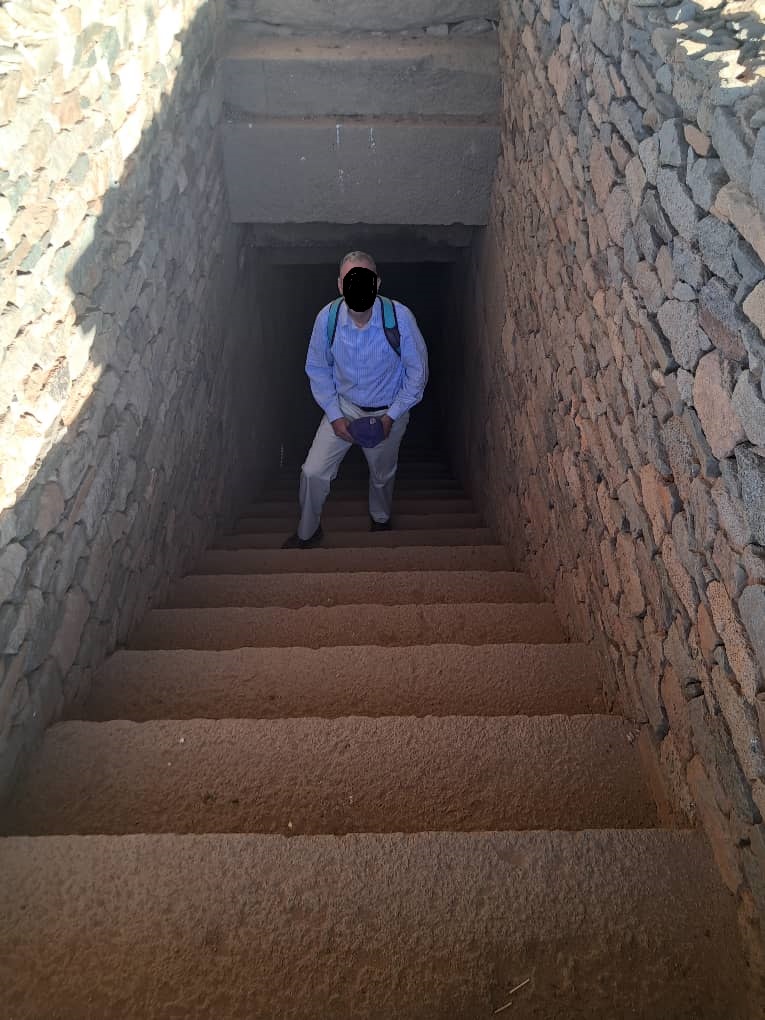
The building behind me in this next picture is where Ethiopians believe the Ark of the Covenant is held. Who knows, though, since only one priest goes in the Holy of Holies there each year, and no outside archaeologists have ever examined the holy relic inside?

The church museum there at Axum has a number of treasures, such as the crowns of Ethiopian kings, but photos aren't allowed in the museum.
Up next: Lalibela
The pre-Christian kings of ancient Axum built large stelae to commemorate their reigns. There are several still standing, but the largest fell in antiquity -- in fact, archaeologists think it fell when it was being erected. There are a number of tombs of kings here as well. After the conversion of King Ezana about 350 AD, Axumite kings built churches to leave a legacy, and they no longer built stelae or tombs.
The building behind me in this next picture is where Ethiopians believe the Ark of the Covenant is held. Who knows, though, since only one priest goes in the Holy of Holies there each year, and no outside archaeologists have ever examined the holy relic inside?
The church museum there at Axum has a number of treasures, such as the crowns of Ethiopian kings, but photos aren't allowed in the museum.
Up next: Lalibela


Posted on 1/23/25 at 7:26 am to GOP_Tiger
This is awesome

Posted on 1/23/25 at 7:40 am to GOP_Tiger
The following morning, I flew to Lalibela, in Ethiopia's Amhara region:

During the Tigray War, the regional militia (FANO) was a key participant in suppressing the Tigray revolt, but after the war, the federal government demanded that FANO turn over its weapons and disband and/or join the federal armed forces. FANO refused and is now fighting a low-level guerilla war in the region.
As a result, some people think that the Amhara region is currently unsafe. I chose to fly into Lalibela and Gondar and avoid long road trips outside the cities. For example, the Simien Mountains near Gondar are considered Ethiopia's premier hiking destination, and I decided to save this for a future trip. But of course, neither FANO nor the federal government wants to harm tourism (and no tourists have been harmed since the beginning of the conflict), so I didn't feel unsafe in any way. There is, however, a substantial number of federal troops on the outskirts of these cities which one sees even going to and from the airports.
During the Tigray War, the regional militia (FANO) was a key participant in suppressing the Tigray revolt, but after the war, the federal government demanded that FANO turn over its weapons and disband and/or join the federal armed forces. FANO refused and is now fighting a low-level guerilla war in the region.
As a result, some people think that the Amhara region is currently unsafe. I chose to fly into Lalibela and Gondar and avoid long road trips outside the cities. For example, the Simien Mountains near Gondar are considered Ethiopia's premier hiking destination, and I decided to save this for a future trip. But of course, neither FANO nor the federal government wants to harm tourism (and no tourists have been harmed since the beginning of the conflict), so I didn't feel unsafe in any way. There is, however, a substantial number of federal troops on the outskirts of these cities which one sees even going to and from the airports.
Posted on 1/23/25 at 8:15 am to GOP_Tiger
The story of the construction of Lalibela is that King Lalibela had made a pilgrimage to Jerusalem as a young man, and after Jerusalem was captured by Muslim forces in 1187, he decided to build a "new Jerusalem" where Christians could come and worship and dedicate themselves to God.
Many Ethiopians, such as my guide there ("Lelu") believe that King Lalibela miraculously carved all 11 churches all by himself, assisted by angels. Everything that you see there is infused with religious significance: if you see a wall supported by two pillars, then they stand for the Old and New Testaments. If there are three pillars, then they stand for the Trinity. If there are four, then they stand for the Four Evangelists (Gospel writers). Etc.
Lalibela is sometimes compared to sites such as Machu Picchu and Petra, but the difference is that Lalibela isn't some ruin that primarily functions as a museum today. Rather, Lalibela continues to serve its primary purpose as a place of religious worship. For example, if you are there a few days before Christmas, as I was, then you'll see tens of thousands of people in and around the site, praying, attending services, and hoping for blessing for their devotion. Many or even most of these worshippers will have walked for a week or two to get to Lalibela, and many of them will simply sleep out in the open (it can't even properly be called camping for most of them), while locals will help feed those who can't afford to buy their own food. Even if you don't agree with their beliefs, their devotion is humbling.
What's unique about Lalibela is that the churches are not "built." Rather, they are all carved, inside and out, from solid rock, with tunnels and passageways connecting them (some of which are off limits to all except priests).


The most famous of the churches is the Church of St. George, carved straight down in a cruciform pattern. It's magnificent:


Finally, Lalibela is surrounded by beautiful mountains. My guide and I went out to a couple of nearby monasteries and churches, as much for the views as for the churches themselves.


Up next: Gondar
Many Ethiopians, such as my guide there ("Lelu") believe that King Lalibela miraculously carved all 11 churches all by himself, assisted by angels. Everything that you see there is infused with religious significance: if you see a wall supported by two pillars, then they stand for the Old and New Testaments. If there are three pillars, then they stand for the Trinity. If there are four, then they stand for the Four Evangelists (Gospel writers). Etc.
Lalibela is sometimes compared to sites such as Machu Picchu and Petra, but the difference is that Lalibela isn't some ruin that primarily functions as a museum today. Rather, Lalibela continues to serve its primary purpose as a place of religious worship. For example, if you are there a few days before Christmas, as I was, then you'll see tens of thousands of people in and around the site, praying, attending services, and hoping for blessing for their devotion. Many or even most of these worshippers will have walked for a week or two to get to Lalibela, and many of them will simply sleep out in the open (it can't even properly be called camping for most of them), while locals will help feed those who can't afford to buy their own food. Even if you don't agree with their beliefs, their devotion is humbling.
What's unique about Lalibela is that the churches are not "built." Rather, they are all carved, inside and out, from solid rock, with tunnels and passageways connecting them (some of which are off limits to all except priests).
The most famous of the churches is the Church of St. George, carved straight down in a cruciform pattern. It's magnificent:
Finally, Lalibela is surrounded by beautiful mountains. My guide and I went out to a couple of nearby monasteries and churches, as much for the views as for the churches themselves.
Up next: Gondar
Posted on 1/23/25 at 8:20 am to GetCocky11
quote:
This is awesome
I'm glad that some of y'all are enjoying it. Ethiopia deserves more American tourists. Most of the Americans I saw were Ethiopian-Americans going home to visit family over Christmas break, and almost all the white tourists I saw were European (and there weren't even that many of them). It wasn't until I got to Lalibela that I ran into my first (and only) American tourists, and it was a family from New Orleans, of all places!
Posted on 1/23/25 at 8:51 am to GOP_Tiger
Thank you so much for sharing. I know nothing about Ethiopia so this is really educating me.

Posted on 1/23/25 at 10:40 am to GOP_Tiger
quote:
but you can click through this graphic from the Washington Post
quote:
Nobody ever dies, if they fall, God saves them.
Then, a picture full of skulls and human bones in a cave.

Posted on 1/23/25 at 11:15 am to GOP_Tiger
After the depredations caused by the invasion of Ahmed Gragn (Ahmed the Left-Handed) in 1530-1540 (the Ethiopians were really only saved by their alliance with Portugal), it was clear that Ethiopia needed better fortified castles, and a number were built.
The most magnificent of those that remain are those in Gondar, founded by King Fasildas in 1636. The "Fasil Ghebbi," or Royal Enclosure, is a complex containing the castles of Fasildas and his grandson, along with many related buildings such as baths and stables.
Unfortunately for me, I arrived at a time when the Royal Enclosure is undergoing a thorough renovation, and the structures were covered with scaffolding.

However, right after I left, the Ethiopian prime minister came to Gondar to see the results of the renovation work so far, and the work on the new town square and painting most of the downtown. And they actually took down most of the scaffolding for him to make everything look great. Now that he's gone, I'm sure it's back up, because the work isn't scheduled to be completed until 2026, but the video that his office just made is awesome if you want to see what the site really looks like:
Fasildas also built a huge "bath" which is the epicenter of the Ethiopian celebration of Timkat, as Ethiopians celebrate the baptism of Jesus by John the Baptist (I recommend googling videos of Timkat in Gondar -- here's a good Facebook video.

Finally, I visited the church of Debre Berhan Selassie, possibly the most beautiful church in Ethiopia. which also dates back to the 17th century. The most striking feature of the church is the ceiling with all of its angels looking down, but the paintings on the walls are striking as well, especially the painting of Satan chained in hell and the painting of St. George and the dragon. There's simply no other church that's anything like it, in Ethiopia or elsewhere.


The most magnificent of those that remain are those in Gondar, founded by King Fasildas in 1636. The "Fasil Ghebbi," or Royal Enclosure, is a complex containing the castles of Fasildas and his grandson, along with many related buildings such as baths and stables.
Unfortunately for me, I arrived at a time when the Royal Enclosure is undergoing a thorough renovation, and the structures were covered with scaffolding.
However, right after I left, the Ethiopian prime minister came to Gondar to see the results of the renovation work so far, and the work on the new town square and painting most of the downtown. And they actually took down most of the scaffolding for him to make everything look great. Now that he's gone, I'm sure it's back up, because the work isn't scheduled to be completed until 2026, but the video that his office just made is awesome if you want to see what the site really looks like:
Loading Twitter/X Embed...
If tweet fails to load, click here. Fasildas also built a huge "bath" which is the epicenter of the Ethiopian celebration of Timkat, as Ethiopians celebrate the baptism of Jesus by John the Baptist (I recommend googling videos of Timkat in Gondar -- here's a good Facebook video.
Finally, I visited the church of Debre Berhan Selassie, possibly the most beautiful church in Ethiopia. which also dates back to the 17th century. The most striking feature of the church is the ceiling with all of its angels looking down, but the paintings on the walls are striking as well, especially the painting of Satan chained in hell and the painting of St. George and the dragon. There's simply no other church that's anything like it, in Ethiopia or elsewhere.
This post was edited on 1/23/25 at 7:39 pm
Posted on 1/23/25 at 11:18 am to LemmyLives
quote:
Then, a picture full of skulls and human bones in a cave.
Yeah, just like local churches in America sometimes have graveyards on the site, it was the same there, as families buried their dead in small caves in and around the church. For some of these, the bricks that covered their bodies are now gone.
Posted on 1/23/25 at 11:24 am to GOP_Tiger
That's the end of my report on the 13 days I spent in northern Ethiopia this Christmas break. If y'all have any questions, I'll be happy to try to answer.
I've traveled to 45 countries and don't often return to them, because the world's a big place with lots more to see, but I'll likely go back to Ethiopia at some point, as there's so much more there than what I had time for on this trip.
I want to see the Bale Mountains in the south (and see the cloudforests and the Ethiopian wolf), tour the many monasteries on Lake Tana, see the ancient Muslim city of Harar in Ethiopia's east, and (as I mentioned up above) hike in the Simien Mountains near Gondar.
But my next trips are both back to Africa: Egypt for Spring Break, and then South Africa in June.
I've traveled to 45 countries and don't often return to them, because the world's a big place with lots more to see, but I'll likely go back to Ethiopia at some point, as there's so much more there than what I had time for on this trip.
I want to see the Bale Mountains in the south (and see the cloudforests and the Ethiopian wolf), tour the many monasteries on Lake Tana, see the ancient Muslim city of Harar in Ethiopia's east, and (as I mentioned up above) hike in the Simien Mountains near Gondar.
But my next trips are both back to Africa: Egypt for Spring Break, and then South Africa in June.
Posted on 1/23/25 at 1:48 pm to GOP_Tiger
Thanks for sharing. Terrific post.

Posted on 1/23/25 at 7:19 pm to GOP_Tiger
Thanks for sharing. Thoroughly enjoyed the read.

 Page 1 of 2

Popular
Back to top
 Follow TigerDroppings for LSU Football News