




- My Forums
- Tiger Rant
- LSU Recruiting
- SEC Rant
- Saints Talk
- Pelicans Talk
- More Sports Board
- Fantasy Sports
- Golf Board
- Soccer Board
- O-T Lounge
- Tech Board
- Home/Garden Board
- Outdoor Board
- Health/Fitness Board
- Movie/TV Board
- Book Board
- Music Board
- Political Talk
- Money Talk
- Fark Board
- Gaming Board
- Travel Board
- Food/Drink Board
- Ticket Exchange
- TD Help Board
Customize My Forums- View All Forums
- Show Left Links
- Topic Sort Options
- Trending Topics
- Recent Topics
- Active Topics
Started By
Message

Couple of new Astrophotography pics I took over the weekend M16 and M63
Posted on 6/12/23 at 2:33 pm


Posted on 6/12/23 at 2:33 pm
M63 Sunflower Galaxy

Messier 63 or M63, also known as NGC 5055 or the seldom-used Sunflower Galaxy, is a spiral galaxy in the northern constellation of Canes Venatici with approximately 400 billion stars. M63 was first discovered by the French astronomer Pierre Méchain, then later verified by his colleague Charles Messier on June 14, 1779. The galaxy became listed as object 63 in the Messier Catalogue. In the mid-19th century, Anglo-Irish astronomer Lord Rosse identified spiral structures within the galaxy, making this one of the first galaxies in which such structure was identified.
M16 Eagle Nebula

The Eagle Nebula (catalogued as Messier 16 or M16, and as NGC 6611, and also known as the Star Queen Nebula) is a young open cluster of stars in the constellation Serpens, discovered by Jean-Philippe de Cheseaux in 1745–46. Both the "Eagle" and the "Star Queen" refer to visual impressions of the dark silhouette near the center of the nebula, an area made famous as the "Pillars of Creation" imaged by the Hubble Space Telescope. The nebula contains several active star-forming gas and dust regions, including the aforementioned Pillars of Creation. The Eagle Nebula lies in the Sagittarius Arm of the Milky Way.
Messier 63 or M63, also known as NGC 5055 or the seldom-used Sunflower Galaxy, is a spiral galaxy in the northern constellation of Canes Venatici with approximately 400 billion stars. M63 was first discovered by the French astronomer Pierre Méchain, then later verified by his colleague Charles Messier on June 14, 1779. The galaxy became listed as object 63 in the Messier Catalogue. In the mid-19th century, Anglo-Irish astronomer Lord Rosse identified spiral structures within the galaxy, making this one of the first galaxies in which such structure was identified.
M16 Eagle Nebula
The Eagle Nebula (catalogued as Messier 16 or M16, and as NGC 6611, and also known as the Star Queen Nebula) is a young open cluster of stars in the constellation Serpens, discovered by Jean-Philippe de Cheseaux in 1745–46. Both the "Eagle" and the "Star Queen" refer to visual impressions of the dark silhouette near the center of the nebula, an area made famous as the "Pillars of Creation" imaged by the Hubble Space Telescope. The nebula contains several active star-forming gas and dust regions, including the aforementioned Pillars of Creation. The Eagle Nebula lies in the Sagittarius Arm of the Milky Way.
 16
16


Posted on 6/12/23 at 2:35 pm to JCinBAMA
Brah, those new Iphones are badass eh....

Posted on 6/12/23 at 2:36 pm to JCinBAMA
That's awesome 
Posted on 6/12/23 at 2:37 pm to JCinBAMA
quote:Pretty sweet. Is this one of those things where every tiny dot we see in the picture is itself a galaxy?
Couple of new Astrophotography pics I took over the weekend M16 and M63
M63 Sunflower Galaxy

Posted on 6/12/23 at 2:37 pm to JCinBAMA
Amazing....is your telescope as big as a truck?


Posted on 6/12/23 at 2:38 pm to JCinBAMA
Forgive my ignorance but how did they discover them in the 1700s? Did they actually have telescopes that powerful back then?

Posted on 6/12/23 at 2:40 pm to JCinBAMA
Great image of the Eagle - I've never been able to get such definition of that object.


Posted on 6/12/23 at 2:40 pm to JCinBAMA
I listened to this Spotify Podcast of Lex Fridman with astronomer/astrophysicist Anna Frebel and it's pretty amazing that all this started with just Hydrogen, Helium and a pinch of Lithium (If you believe her) and that the reactions of these 3 elements over billions of years got us here now......
Origins of the Universe
Origins of the Universe
This post was edited on 6/12/23 at 2:42 pm
Posted on 6/12/23 at 2:41 pm to LordSaintly
Thanks,
Posted on 6/12/23 at 2:44 pm to Big Scrub TX
quote:
Pretty sweet. Is this one of those things where every tiny dot we see in the picture is itself a galaxy?
No, but there is one very faint in M63, it's at about 8:30
a long faint slit.

Posted on 6/12/23 at 2:50 pm to Tiger in Gatorland
quote:
Amazing....is your telescope as big as a truck?
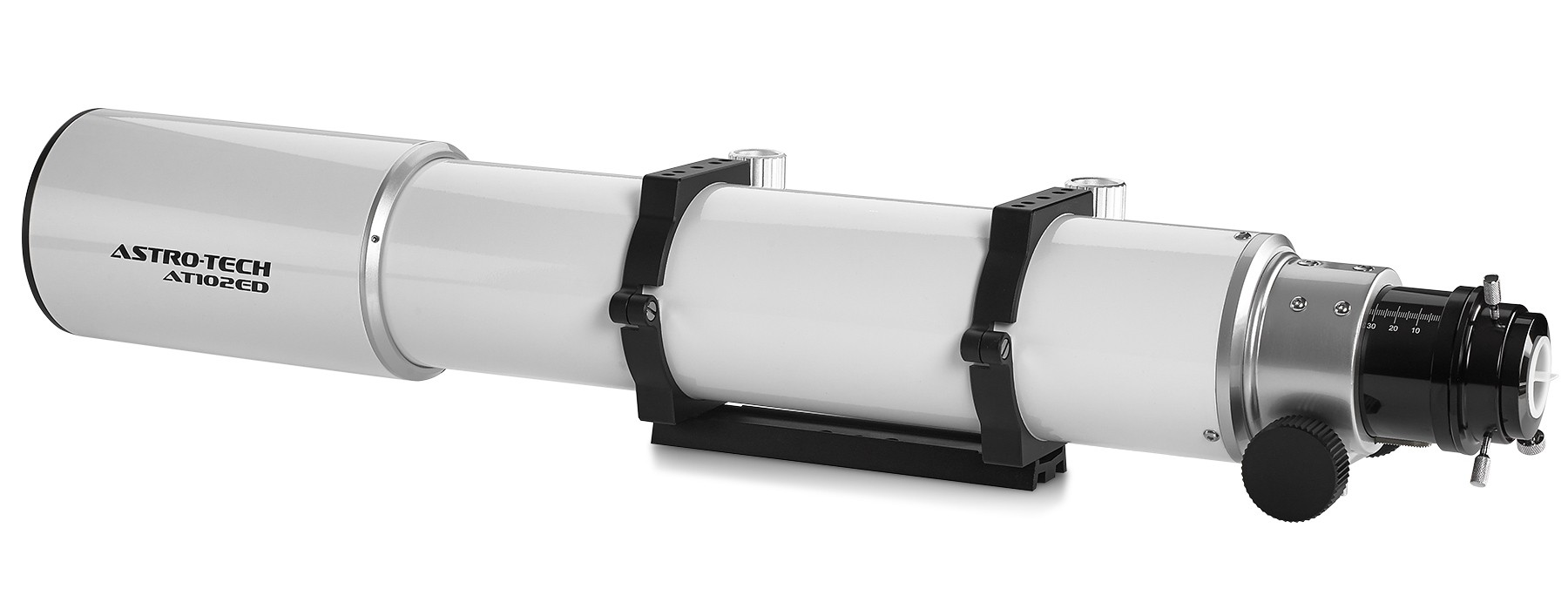
No, just 102mm aperture
Posted on 6/12/23 at 2:51 pm to JCinBAMA
That’s awesome. What kind of telescope do you use for this. I’m obsessed with space and been wanting to get something. Or any recommendations for a beginner?
I see the above post. Thanks
I see the above post. Thanks
This post was edited on 6/12/23 at 3:01 pm

Posted on 6/12/23 at 2:52 pm to JCinBAMA
Solid work, post more
Posted on 6/12/23 at 2:54 pm to blueridgeTiger
quote:
Great image of the Eagle - I've never been able to get such definition of that object.
Thanks blueridge, had about 10 hrs from this weekend and about 20 hrs.
from last year and used a Duo band filter this weekend that
brought out the colors.
Posted on 6/12/23 at 3:08 pm to swamp frog
quote:
That’s awesome. What kind of telescope do you use for this. I’m obsessed with space and been wanting to get something. Or any recommendations for a beginner?
I use two different ones for astrophotography one is a Orion
80mmed the other is AstroTech 102mmed both on a german equatorial mount goto mount.
For viewing i would go with a dobsonian telescope
It's an expensive Hobby, I warn you

Posted on 6/12/23 at 3:10 pm to ArHog
quote:
Solid work, post more
Thanks,
Posted on 6/12/23 at 3:10 pm to JCinBAMA
I also have a 102mm. I’d love to be able to see this kind of definition.
Posted on 6/12/23 at 3:24 pm to RockinDood
quote:
I also have a 102mm. I’d love to be able to see this kind of definition.
You will never see it with your eye
M63 has about 120 3 mints. exposure stack to one Pic.
M16 has about 20 hrs. or more exposure stack to one pic.
Then they are process in pixinsight
Posted on 6/12/23 at 3:48 pm to Tygerfan
quote:
Forgive my ignorance but how did they discover them in the 1700s? Did they actually have telescopes that powerful back then?
The nebulae in the OP were cataloged by Charles Messier in the 1700s. His telescopes were not nearly as powerful as the one used by the OP, and his view was more seeing a fuzzy nebula than a well-defined object. He was seeking to find comets, and he cataloged various objects so as not to mistake them for comets in future observations.
Here is a report from ChatGPT about Messier's telescopes:
quote:
Charles Messier, an 18th-century astronomer, primarily used a small refracting telescope to observe deep-sky objects for his catalog. The specifications of his telescope were as follows:
Aperture: Messier's telescope had an aperture of approximately 4 inches or 102 millimeters. This means that the diameter of the objective lens (the front lens) of his telescope was around 102 mm.
Focal Length: The focal length of Messier's telescope was approximately 800-1000 mm. The focal length is the distance between the objective lens (or primary mirror in the case of a reflector telescope) and the point where the light rays converge to form an image.
Focal Ratio: The focal ratio of Messier's telescope is estimated to be around f/8 to f/10. The focal ratio is determined by dividing the focal length by the aperture. In this case, if we assume an average focal length of 900 mm, the focal ratio would be approximately f/9.

Posted on 6/12/23 at 4:32 pm to JCinBAMA
What kind of light pollution are you dealing with? I would love to have a TD get together for these type of things
This post was edited on 6/12/23 at 4:36 pm

 Page 1 of 2

Popular
Back to top
 Follow TigerDroppings for LSU Football News