




- My Forums
- Tiger Rant
- LSU Recruiting
- SEC Rant
- Saints Talk
- Pelicans Talk
- More Sports Board
- Fantasy Sports
- Golf Board
- Soccer Board
- O-T Lounge
- Tech Board
- Home/Garden Board
- Outdoor Board
- Health/Fitness Board
- Movie/TV Board
- Book Board
- Music Board
- Political Talk
- Money Talk
- Fark Board
- Gaming Board
- Travel Board
- Food/Drink Board
- Ticket Exchange
- TD Help Board
Customize My Forums- View All Forums
- Show Left Links
- Topic Sort Options
- Trending Topics
- Recent Topics
- Active Topics
Started By
Message
Pond Boss Pro "the block"
Posted on 2/24/20 at 3:01 pm


Posted on 2/24/20 at 3:01 pm
Is this an effective product for cutting down muck?
It's basically bacteria and enzymes that are supposed to eat up the muck without eating up oxygen.
Reviews are mixed online, could be people with expectations too high or improper use, or could be the product is garbage.
Anyone here with insight on this product?
It's basically bacteria and enzymes that are supposed to eat up the muck without eating up oxygen.
Reviews are mixed online, could be people with expectations too high or improper use, or could be the product is garbage.
Anyone here with insight on this product?
 3
3


Posted on 2/24/20 at 3:28 pm to deeprig9
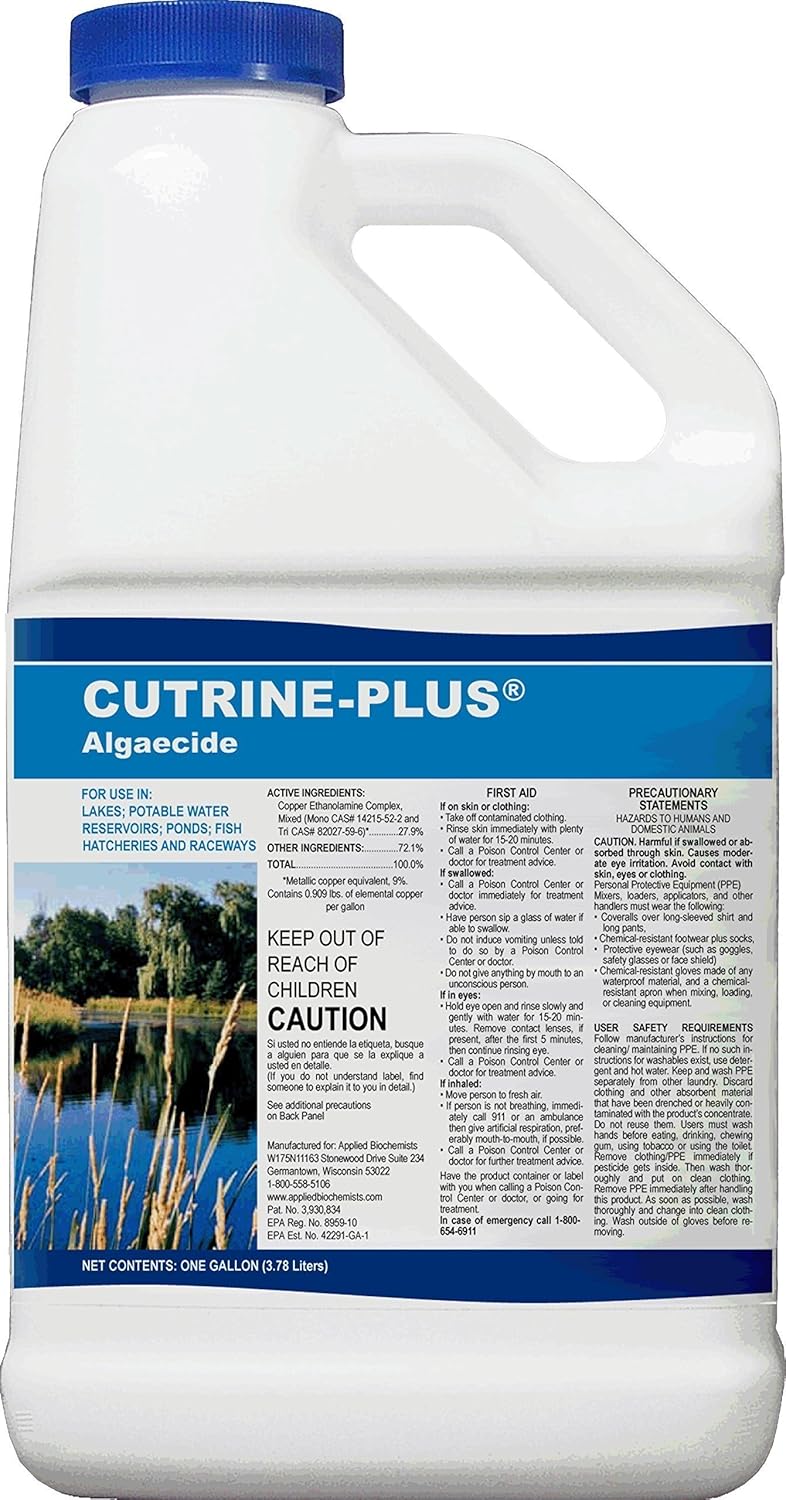
do not know about that but i use cutrine plus with good results, depends on the culprit

Posted on 2/24/20 at 5:51 pm to deeprig9
Don’t have any first hand knowledge of this specific product and the SDS sheet states it is a probiotic of facultative bacteria. IMHO the odds this product has bacteria that aren’t already present in your pond current decomposing organic matter on the pond bottom is likely pretty remote.
It certainly won’t hurt anything, other than your wallet, to use it, but you’d likely be better off with a diffused aeration system in the pond to insure you have sufficient oxygen present at the pond bottom to aid in the aerobic decomposition of organic matter that accumulates there. But it is a pond, plankton are going to die, sink to the bottom, and over time “muck” is going to accumulate, there is no silver bullet that going to prevent/fix that.
It certainly won’t hurt anything, other than your wallet, to use it, but you’d likely be better off with a diffused aeration system in the pond to insure you have sufficient oxygen present at the pond bottom to aid in the aerobic decomposition of organic matter that accumulates there. But it is a pond, plankton are going to die, sink to the bottom, and over time “muck” is going to accumulate, there is no silver bullet that going to prevent/fix that.
Posted on 2/24/20 at 7:54 pm to deeprig9
Use copper sulfate for algae and whatnot.
Posted on 2/24/20 at 9:37 pm to Tigerpaw123
I’ve also had success using cutrine.
Did my pond in 3 different sections over a month to prevent fish kills.
Dyed it black afterwards. No issues since
Did my pond in 3 different sections over a month to prevent fish kills.
Dyed it black afterwards. No issues since
This post was edited on 2/24/20 at 9:37 pm
Posted on 2/24/20 at 9:38 pm to HeadBusta4LSU
Looks like two different discussions are going on.
Posted on 2/25/20 at 10:20 pm to AlxTgr
quote:
Looks like two different discussions are going on.
Yep.
OP (me) asking about muck, and other people chiming in on weed control.
Posted on 2/25/20 at 10:22 pm to CrawDude
quote:
but you’d likely be better off with a diffused aeration system i
Already in existence. Big fountain, pumping water from deep, you can smell the funk in summer./fall.
Posted on 2/25/20 at 11:05 pm to deeprig9
quote:
Already in existence. Big fountain, pumping water from deep, you can smell the funk in summer./fall.
How old and deep is this pond? Size? Does it have fish? Earthen pond or lined pond? Smell - “rotten egg” (hydrogen sulfide) odor? Methane odor?
You won’t like to hear this, but sometimes the only solution to the problem you are describing is to drain the pond, allow it to dry (assuming it has a drain) for several months in the heat of summer and let the organic muck oxidize to “nothing” in the presence of sunlight and air. This is a common practice in commercial aquaculture and fish farmers don’t like to hear or do this either because a dry pond is not making them money. Not uncommon for people with old backyard koi ponds to do something similar. Once a decade may be sufficient.
Really there is no chemical or probiotic solution available that can reliably and effectively correct this although as you can see, many products are marketed with this claim, rarely with any independent scientific evidence to back up their claims.
This post was edited on 2/26/20 at 9:05 am
Posted on 2/26/20 at 7:51 am to CrawDude
So, should I change my mind about tossing one in the bayou behind my house that has tons of rotting hyacinths?

Posted on 2/26/20 at 8:25 am to AlxTgr
quote:What's your goal?
So, should I change my mind about tossing one in the bayou behind my house that has tons of rotting hyacinths?
This post was edited on 2/26/20 at 8:26 am
Posted on 2/26/20 at 8:49 am to White Bear
Reduce muck
Posted on 2/26/20 at 9:16 am to AlxTgr
quote:
So, should I change my mind about tossing one in the bayou behind my house that has tons of rotting hyacinths?
Your $ to do as you wish with, but I can say with certainty taking same $ and lighting a match to it in the driveway will be just as effective.


Posted on 2/26/20 at 9:30 am to CrawDude
quote:What makes you say this?
I can say with certainty taking same $ and lighting a match to it in the driveway will be just as effective.
Posted on 2/26/20 at 10:34 am to AlxTgr
quote:So based on your earlier reply, define muck, pls.
Reduce muck
Posted on 2/26/20 at 11:28 am to White Bear
Stuff that was once live vegetation.
Posted on 2/26/20 at 11:39 am to AlxTgr
quote:
What makes you say this?
Multiple decades experience in higher ed research and extension as an aquatic/fisheries biologist/ecologist with significant background/experience in applied water quality issues in recreational and commercial pond management. I, and my colleagues, in other states have come across similar products, with similar claims, over the years, and off-hand I can’t think of a single product like this that can validate its claims through independent, published, scientific research.
First thing I did before replying to the OP was a quick check of google scholar to find any research papers on the product - nothing found. The SDS states it is facultative bacteria, no details as the product composition is proprietary, and as I stated aquatic habitats have dozens, hundreds of facultative bacteria already present decomposing organic matter in aquatic habitats.
University extension personnel at land-grant institutions are rarely, if ever, going to recommend/suggest a product or management procedure to a stakeholders unless it can be backed up through scientific research clearly demonstrating efficacy of said product or management procedure, or absent that, years of personal observation seeing a product used by stakeholders with consistently positive results. When one comes across a product that makes claims, and where supporting scientific data is not available, extension or research personnel may offer a professional opinion based based on their academic training and past experiences (as I’ve done here) or simply provide a “I don’t know” answer.
I believe if you were to contact the fisheries/aquaculture extension specialist at any land-grant university in the southern states they all would provide you a similar opinion to mine on the likelihood the potential efficacy of this product, as claimed in their promotional advertising.
Bottom line, you can try the product if you want, not expensive, but I tend to treat other person’s money as if it were my own when making recommendations. I would not spend my $ on this product. “Muck” is going to accumulate over time in warm, highly eutrophic habitats, the process of ecological succession, no one chemical or product, is going to prevent that - no silver bullets.
This post was edited on 2/26/20 at 9:15 pm
Posted on 2/26/20 at 12:52 pm to CrawDude
There sure are a bunch of products out there.
Posted on 2/26/20 at 3:44 pm to CrawDude
Good info, im not looking for a silver bullet to completely eliminate it, but to cut down on it.
4 acre, 1960's build. Deepest spot about 25'. Has all the regular fish you'd expect in a southern pond.
In your opinion is the anaerobic bacteria in the product a good thing, eats muck without consuming o2?
4 acre, 1960's build. Deepest spot about 25'. Has all the regular fish you'd expect in a southern pond.
In your opinion is the anaerobic bacteria in the product a good thing, eats muck without consuming o2?
This post was edited on 2/26/20 at 3:46 pm
Posted on 2/26/20 at 6:09 pm to deeprig9
quote:
4 acre, 1960's build. Deepest spot about 25'. Has all the regular fish you'd expect in a southern pond. In your opinion is the anaerobic bacteria in the product a good thing, eats muck without consuming o2?
I think I missed the part in their advertisement of the product they mentioned anaerobic bacteria and not consuming oxygen. Anyway, decomposition of organic matter via anaerobic bacteria is a very, slow and inefficient process - many times slower than aerobic decomposition. Plus as by-product of anaerobic decomposition, you get the production of potentially toxic gases (to the biological community) such as hydrogen sulfide and methane. And all aquatic habitats in the south are going to have anaerobic bacteria in the sediment, slightly under the sediment surface. It’s not good, it’s not bad, it’s nature.
As an analogy, if you are a gardener with a compost pile, if you turn the pile frequently providing oxygen you might have useable compost in a month, but if you don’t turn it and have anaerobic decomposition, it will still decay but slowly and you may get useable compost in a year. The presence of oxygen speeds up decomposition and carbon dioxide is the only gas by-product - you won’t smell that.
As you can imagine an old pond, that hasn’t been possibly drained in 60 years, is going a have a massive amount of organic matter in the sediment. In deep areas of the pond, it’s stratified in summer and fall, anaerobic conditions exist in the deeper area of the pond, and your fountain is not circulating oxygenated water to the deeper zones of the pond, and if it was you wouldn’t be smelling “funk” which is probably hydrogen sulfide. Deep ponds are incredibly hard to mix/circulate during the summer because of thermal/water density differences from surface to bottom. The surface fountain aerator is not moving and aerating the pond water to the depth you may think it is. If it’s a fountain/aerator designed to pull water from depth to the surface, and it’s working properly, this tells me that it is undersized for the volume of water present in the deeper area of the pond.
Tell me the size (horsepower) of the fountain aerator and if you can provide me a link to the unit you have or something similar so I see see how the system you have is supposed to operate, then I might be able to provide a little more insight. To solve your issue of ridding yourself of this funky smell you are going to need to get more oxygen down to the deeper zone of your pond in summer. That’s not going to be done with a chemical or bacterial probiotic. In the meantime I’ll look for some links to some literature that might help you with this.
This post was edited on 2/26/20 at 9:19 pm

 Page 1 of 2

Popular
Back to top
 Follow TigerDroppings for LSU Football News