




- My Forums
- Tiger Rant
- LSU Recruiting
- SEC Rant
- Saints Talk
- Pelicans Talk
- More Sports Board
- Fantasy Sports
- Golf Board
- Soccer Board
- O-T Lounge
- Tech Board
- Home/Garden Board
- Outdoor Board
- Health/Fitness Board
- Movie/TV Board
- Book Board
- Music Board
- Political Talk
- Money Talk
- Fark Board
- Gaming Board
- Travel Board
- Food/Drink Board
- Ticket Exchange
- TD Help Board
Customize My Forums- View All Forums
- Show Left Links
- Topic Sort Options
- Trending Topics
- Recent Topics
- Active Topics
Started By
Message

Water Institute of the Gulf faces an identity crisis: Baton Rouge Business Report
Posted on 8/28/19 at 9:25 am

Posted on 8/28/19 at 9:25 am
quote:
LINK
The close-knit community of coastal scientists was stunned earlier this summer when the U.S. Attorney for the Middle District announced he had indicted renowned coastal hydrologist Ehab Meselhe, along with a junior associate, for allegedly stealing intellectual property—coastal modeling software—from The Water Institute of the Gulf.
To many, the charges didn’t make sense. For one thing, Meselhe, who had recently left the Baton Rouge-based institute for a faculty position at Tulane University, has an impeccable reputation, both personally and professionally. For another, Meselhe had developed the software in question—the Basin Wide Model—with funding from the state using an open-source platform. In other words, the model was public, not proprietary.
Still, it was equally surprising when, just one month later, the U.S. Attorney dropped the charges, leaving The Institute, which had blown the whistle on the scientist in the first place, with egg on its face and a lot of explaining to do.
The scandal raised a lot of questions that remain unanswered—like, why did the feds, who typically take years to carefully and methodically investigate allegations, do such a hasty, sloppy job in this case? How had The Institute gotten the FBI involved in the first place? And when was the last time the U.S. Attorney dropped charges against anyone?
quote:
Federal money was pouring into the state in the years following hurricanes Katrina and Rita, and there was a recognition that Louisiana had an opportunity to build on those resources and do something more than just produce coastal master plans. The vision for The Institute was to create a repository of knowledge on coastal and deltaic issues that could be applied to the specific challenges facing the state, and also exported worldwide.
“At its most basic, their niche is to help develop, house and distribute the best science, engineering and technology that we can get that is independent and credible,” says Bren Haase, executive director of the CPRA.
BRAF and the state put together a package to fund The Institute in its early years and managed to attract an impressive group of scientists, whose clout helped put the facility on the map. They included: Mead Allison, who had made his name at Tulane in the 1990s and kept a joint appointment with the New Orleans university, even while working at The Institute; Denise Reed, one of the top coastal scientists at the University of New Orleans; Clint Wilson, who ran LSU’s Center for River Studies Center and divided his time between the two entities; and, Meselhe, who left the University of Louisiana at Lafayette, where he was working on developing the Basin Wide Model.
quote:
Despite The Institute’s stated focus on doing applied research in a collaborative fashion, it alienated some in academia early on when it went up against LSU for a lucrative grant from the National Oceanic and Atmospheric Administration to house the Southern Regional Climate Center, one of just seven such centers in the country. LSU had been home to the NOAA’s southern regional center for years. Why, some at the university wondered, was The Institute trying to take it from them?
In the end, the NOAA selected LSU over The Institute for the grant. But some of LSU’s coastal scientists never forgot it.
quote:
The Institute has, over the past two years, pursued contracts that appear to be outside its original scope. It ruffled feathers locally by teaming up with Arcadis in 2017 to go after the contract to do a storm water master plan for East Baton Rouge Parish, which it lost to HNTB. It also competed against the private sector when it sought, unsuccessfully, the contract with the state Office of Community Development to relocate the Isle de Jean Charles coastal community, which ultimately went to a team that includes CSRS and the Center for Planning Excellence.
It has had better success with other contracts—a study for the Capital Area Ground Water Conservation Commission on protecting the water table in Baton Rouge from salt water intrusion, and a project to do resiliency planning for the city of Houston
quote:
Ehrenwerth points to several other positive developments under way at The Institute that he says signal its commitment to the best available science and to collaboration. Among them:
• The recent appointment of veteran UNO researcher Ioannis Georgiou, chair of the university’s department of earth and environmental science, as director of coastal and deltaic systems.
• A Memorandum of Understanding with LSU, the LSU Sea Grant College Program, and the University of Iowa to form the Coastal-Hydrologic Consortium, which calls for collaboratively developing research projects focused on coastal-hydrologic processes that will make both coast and inland communities more resilient.
• A five-year agreement with the Israel-based Zuckerberg Institute for Water Research to collaborate on shared research initiatives.
• An agreement with Nicholls State University to formalize a working relationship with the university, the state’s “closest to the coast” institution.
quote:
“The way we have approached our work has become much more collaborative over the last two to three years, in particular,” Ehrenwerth says. “I think that is reflected in some of the remarkably talented scientists and engineers that have joined The Institute.”
There remains, however, a lingering problem among many in the scientific community, who question how The Institute will recover and rebuild from the Meselhe incident.
“They have a reputation problem,” says Don Boesch, professor emeritus at the University of Maryland Center for Environmental Science. “This is a black mark and people don’t forget it very easily and the question now is, how do they deal with this and improve it in a positive way? They’re going to need bright people to work for them, and no one wants to go work at a place where they might get arrested.”
Given the importance of water management in Louisiana, can the institute carve out a niche for itself as a proper intermediary between all of Louisiana's coastal academic study programs? It seems like it's experiencing some friction with LSU and Tulane and is in the middle of re-focusing itself in response.
Can Louisiana actually take advantage of its position on the Gulf of Mexico and first hand experience with water management for something other than oil and gas?
This post was edited on 8/28/19 at 9:28 am
 7
7


Posted on 8/28/19 at 9:27 am to member12
quote:
Federal money was pouring into the state in the years following hurricanes Katrina and Rita, and there was a recognition that Louisiana had an opportunity to build on those resources and do something more than just produce coastal master plans.
To bad we failed miserably
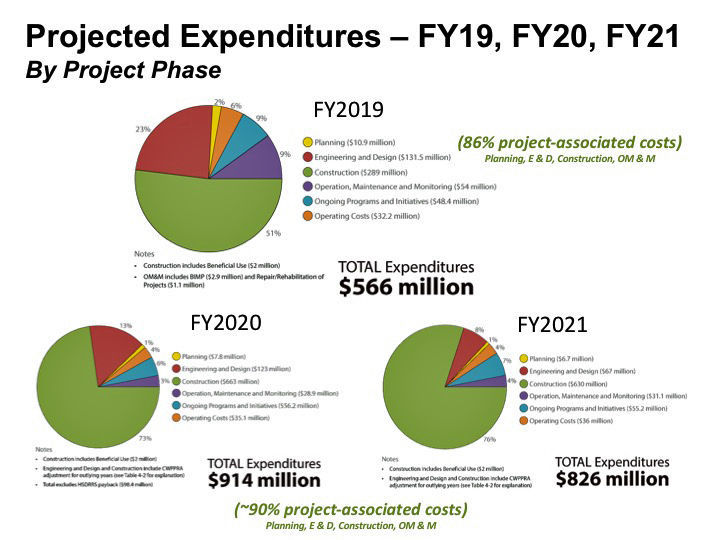
We were given literal billions to update and improve New Orleans infrastructure, develop artificial barriers to disrupt/weaken storm surge and help rebuild marshes, and improve so many other aspects of south Louisiana and it was all squandered.
This post was edited on 8/28/19 at 9:33 am
Posted on 8/28/19 at 9:27 am to member12
Shout out Dr. Clint Wilson for being the best Civil professor at LSU by a longshot.
Posted on 8/28/19 at 9:29 am to BlackCoffeeKid
quote:He's awesome, but Dr. Wolshon says "Hi!"
Shout out Dr. Clint Wilson for being the best Civil professor at LSU by a longshot.

Posted on 8/28/19 at 9:30 am to member12
Sounds like they have a leadership problem
Posted on 8/28/19 at 9:33 am to Grit-Eating Shin
quote:
but Dr. Wolshon says "Hi!"
To be fair, I learned more in Wolshon's class, but his exams were a biotch.
This post was edited on 8/28/19 at 9:33 am


Posted on 8/28/19 at 9:39 am to member12
Louisiana typically bombs on public-private relationships.
Government created entities soon think it is their role to go after the same work local private firms perform while, simultaneously, the public entities are often hamstrung by dated state laws and regulations that leave them less competitive against similar organizations in other states for getting the work they should go after.
Government created entities soon think it is their role to go after the same work local private firms perform while, simultaneously, the public entities are often hamstrung by dated state laws and regulations that leave them less competitive against similar organizations in other states for getting the work they should go after.
Posted on 8/28/19 at 11:17 am to Oilfieldbiology
quote:
Louisiana
quote:Is "squander" another word for "stolen"?
it was all squandered.


Posted on 8/28/19 at 11:20 am to member12
And everyone wonders why this state is at the bottom of every state-ranking metric.
Posted on 8/28/19 at 11:22 am to member12
So this is a separate institution ? I thought it was part of LSU.


Posted on 8/28/19 at 11:46 am to Oilfieldbiology
This post was edited on 8/28/19 at 11:47 am

Posted on 8/28/19 at 11:57 am to member12

 Page 1 of 1


Popular
Back to top
 Follow TigerDroppings for LSU Football News