




- My Forums
- Tiger Rant
- LSU Recruiting
- SEC Rant
- Saints Talk
- Pelicans Talk
- More Sports Board
- Fantasy Sports
- Golf Board
- Soccer Board
- O-T Lounge
- Tech Board
- Home/Garden Board
- Outdoor Board
- Health/Fitness Board
- Movie/TV Board
- Book Board
- Music Board
- Political Talk
- Money Talk
- Fark Board
- Gaming Board
- Travel Board
- Food/Drink Board
- Ticket Exchange
- TD Help Board
Customize My Forums- View All Forums
- Show Left Links
- Topic Sort Options
- Trending Topics
- Recent Topics
- Active Topics
Started By
Message
re: The First Council of Nicaea came to an end 1,700 years ago this week...
Posted on 6/17/25 at 7:24 am to DesScorp

Posted on 6/17/25 at 7:24 am to DesScorp
quote:
Those are pretty unambiguous statements from Christ himself about his inferiority of rank compared to the Father. There's no "twisting" there. Those are straight up statements that "He's the boss not me". Now, that doesn't rule out Jesus Christ from being a part of the Trinity in theory, but it does put the Kibosh on any kind of "co-equals" thing.
See the post above this one.
 0
0


Posted on 6/17/25 at 8:10 am to CatholicLSUDude
quote:
There is nothing written there that indicates that it's necessary to draw the conclusion that Christ wants his followers to be to him what he is to the father is every single imaginable way
Except Jesus says he wants his followers to be one with him just as he is one with the father. It’s clear to me because I can interpret the plain meaning without having to add to it to support a dogma.
Jesus never says he is the Father or made up of the same substance as the father, but I bet you believe that too because it’s part of the dogma drilled into you by fallible men.
quote:
You admit Jesus is divine.
I don’t think I said that, but as Jesus is believed to be the incarnate version of the Lord, the same Lord who led Moses across the Red Sea and who knocked down the walls of Jericho, the scriptures do make the case that he is divine. It’s just that there isn’t a word in the scriptures that equate him to God the Father. You must realize that simply being divine does not make one God the Father. There are many divine beings in scripture. The Lord has like 70 brothers who all inherited a people group to rule over from their father. See Deuteronomy 32:8-9. This is a very important concept to Christianity (at least the original earliest versions) as the Lord was said to be taking over the authority of all his brothers’ inherited people groups so he would rule the entire earth (see psalm 82). Saint Paul wrote there are many gods and many lords but for us there is one God the Father and one Lord. The father and the (most special) son, all divine but not the same divinity.
quote:
Again, you have to insert "exactly" or "every" in there to come up with the idea that he wants his followers relationship with him to be like his relationship with the father in every way
No it’s you who inserted. Imagine if I said “I hope my boy grows up to be just like me.” And then you tell someone else “he doesn’t mean literally just like him, but like him in only some ways.” Doesn’t that sound ridiculous? That’s your argument.
quote:
How in the world do you expect mortals relationship with the divine to be exactly like a divine beings relationship with the divine?
Most experts explain this as being one in purpose and mind - shared goals.
quote:
the truth about God (as stated in scripture, by the way)
He should have made it unambiguous if he inspired it. Perfect deity perfect scripture don’t you think? You and I wouldn’t be able to have this disagreement if everything was clear and unambiguous an open to interpretation.
quote:
divine (equal)
Yeah I don’t know why you equate divine with being equal. The angels and cherubim and satan and demons and archons and seraphim etc are all divine but not equal to god the Father, wouldn’t you say?
quote:
The reason you have some passages that seem to indicate oneness/equality with the Father and some that indicate inferiority with the father is because Christ was human
I think you think that because you are misinformed and misinterpreting the text. No offense. I don’t think there is a contradiction though. Christ was inferior to his father, but he was one in purpose.
quote:
When he says he is inferior to God. I believe that too.
Do you????
quote:
You sure you aren't a JW (or never were?) You argue like one.
Positive.
You do realize they didn’t invent the co-equal trinity idea until about 400++ years after Jesus’ death. If it was clear in scriptures they wouldn’t have had to invent that framework to explain a bunch of contradictory ideas about Jesus and God.
Posted on 6/17/25 at 8:19 am to RollTide1987
quote:
The Date of Easter
…They decreed that Easter should be celebrated… on the first Sunday after the first full moon following the spring equinox.
Wish they would have just picked a date.
Cool thread, I enjoyed reading

Posted on 6/17/25 at 8:46 am to RollTide1987
Old news, man creates religion.
Posted on 6/17/25 at 9:07 am to Harald Ekernson
quote:
No it’s you who inserted. Imagine if I said “I hope my boy grows up to be just like me.” And then you tell someone else “he doesn’t mean literally just like him, but like him in only some ways.” Doesn’t that sound ridiculous? That’s your argument.
So, you're telling me that every father who says "I hope he grows up to be just like me" literally means in everything? He wants his boy to have his same faults and shortcomings? He wants his boy to experience all the worst pains he's ever endured? He wants the boy to marry the same woman (the boys mother)?
quote:
Most experts explain this as being one in purpose and mind - shared goals.
Well, look at this addition to scripture you and your "experts" just made.
quote:
Yeah I don’t know why you equate divine with being equal.
By divine I mean God. The One eternal God.
quote:
Christ was inferior to his father, but he was one in purpose.
One in purpose? Why did you just add words to scripture again?
quote:
You do realize they didn’t invent the co-equal trinity idea until about 400++ years after Jesus’ death. If it was clear in scriptures they wouldn’t have had to invent that framework to explain a bunch of contradictory ideas about Jesus and God.
I'm not sure what evidence you have for the idea being "invented" four centuries after Christ died. Generally speaking, Catholics accept that points about God can be clarified (not invented) over time. In fact, Christ himself indicated that would happen. Furthermore, you can clearly see the basic understanding that Jesus, the Son, is God in early church writings from people like Ignatius of Antioch (early 100's), Irenaeus (late 100's) or Tertullian (early 200's). It's not hard to look it up and read it for yourself.
Posted on 6/17/25 at 9:39 am to GREENHEAD22
quote:
Self castration?
We call them transgenders now and pretend they’re normal
Posted on 6/17/25 at 9:44 am to Harald Ekernson
Do you read and write koine Greek?
The consensus among most scholars is that the anarthrous Theos in “the Word was God” underscores the divine nature of the Word, not a lesser or separate deity.
*Edited the greek letters
The consensus among most scholars is that the anarthrous Theos in “the Word was God” underscores the divine nature of the Word, not a lesser or separate deity.
*Edited the greek letters
This post was edited on 6/17/25 at 9:52 am
Posted on 6/17/25 at 9:46 am to biglego
quote:
We call them transgenders now
No.
Posted on 6/17/25 at 10:16 am to CatholicLSUDude
quote:
So, you're telling me that every father who says "I hope he grows up to be just like me" literally means in everything?
Rationalize it any way you like.
quote:
Well, look at this addition to scripture you and your "experts" just made
Reject the experts’ life long research. More power to you bud.
quote:
By divine I mean God. The One eternal God.
Well you are redefining divine. There is not one god in the Bible. Have you opened the book?
quote:
I'm not sure what evidence you have for the idea being "invented" four centuries after Christ died
You can read about it yourself. The co-equal rationalization was invented in the 4th century.
Posted on 6/17/25 at 10:56 am to Synoptic
quote:
Do you read and write koine Greek?
I wish
quote:
The consensus among most scholars is that the anarthrous Theos in “the Word was God” underscores the divine nature of the Word, not a lesser or separate deity.
The author had just used “ton Theon” (the God, talking about a very specific god because the definite article was used). But then he says the Logos is “Theos” without a definite article. If he wanted to say the logos was ton Theon he could’ve, but he didn’t. The way it is written it should be understood that the logos was with the God, and the logos was divine (but NOT that the logos was the God). Get it?

Posted on 6/17/25 at 1:41 pm to Harald Ekernson
Everyone is hung up on Jesus being co-equal with God the Father, but I find the Holy Spirit even more mysterious and interesting to ponder.
For further information on Jesus’ divinity, I would recommend Dr. Brant Pitre’s latest release, ‘Jesus and the Divine Christology’.
At the end of the day, it’s a mystery that is difficult for us to comprehend. One God: Three “Persons”. I love it!
For further information on Jesus’ divinity, I would recommend Dr. Brant Pitre’s latest release, ‘Jesus and the Divine Christology’.
At the end of the day, it’s a mystery that is difficult for us to comprehend. One God: Three “Persons”. I love it!
Posted on 6/17/25 at 3:07 pm to DVA Tailgater
quote:
Everyone is hung up on Jesus being co-equal with God the Father, but I find the Holy Spirit even more mysterious and interesting to ponder.
I think the OP subject about the council of Nicaea is interesting in that it was at this council that all the senior leadership in the church had to acknowledge (by vote) that Jesus was divine (not that he was co-equal to or a part of god the father). The co-equal thing and the Trinity were still later inventions used to reconcile contradictions of scriptures and traditions.
quote:
At the end of the day, it’s a mystery that is difficult for us to comprehend. One God: Three “Persons”. I love it!
It can’t be comprehended because it is illogical and irrational. It’s simply a philosophical framework to rationalize their worship of 3 gods and others’ belief in 1 god all within the same organization.
And such a framework was so evident from scripture (just kidding) that they had to invent the idea nearly 500 years after Jesus died. Then they had to start redacting and editing the scriptures to add Trinity “evidence” such Matthew 28:19 which is a later forgery inserted into the text (which we know based on earlier church fathers quoting this passage and making no mention of the father or Holy Spirit).
Posted on 6/17/25 at 5:12 pm to Harald Ekernson
You don’t read or write koine Greek but the majority of scholars who do don’t agree with your translation or view on it.
Posted on 6/17/25 at 5:24 pm to Synoptic
quote:
You don’t read or write koine Greek
Right, but my comment is easily verified as fact.
quote:
the majority of scholars who do don’t agree with your translation or view on it.
False. It’s the majority of Bible publishers and translators who purposely mistranslate John 1:1 because of their dogma and bias.
ETA - the Jehovah’s Witness translation actually properly translates John 1:1
This post was edited on 6/17/25 at 5:26 pm
Posted on 6/17/25 at 10:48 pm to Harald Ekernson
I easily determined your comment is false by reading John 1:1 in koine Greek. The absence of the definite article before Theos in the phrase “and the Word was God” in John 1 is significant in Greek grammar, particularly in a predicate nominative construction such as this. A predicate noun that precedes the verb and lacks the definite article often emphasizes the quality, nature, or essence of the subject (the Logos, "the Word") rather than its identity. This is why most translations render it as "and the Word was God" emphasizing that the Word shares the divine nature or essence of God. This has to do with the accepted rules of koine Greek grammar and not belief systems.
The New World Translation used by Jehovah’s Witnesses insert an indefinite article ("and the Word was a god"), arguing that the lack of the definite article suggests an indefinite or qualitative sense. This interpretation is not widely accepted among mainstream biblical scholars, regardless of their belief system. Not all biblical scholars are Christian (Many are agnostic or atheist). Koine Greek does not have an indefinite article, and so it is the Jehovah’s Witnesses who have added a word not in the original Greek to fit their beliefs.
In any case, all of this seems a bit pointless for one to argue if they don’t believe in any of it and are arguing from a point of Internet atheism and “ha, re-LIE-gion”, which seems to be the case for you because you make statements such as:
“The angels and cherubim and satan and demons and archons and seraphim etc are all divine but not equal to god the Father, wouldn’t you say?”
Your posts contain very crude and blatant misunderstandings of basic concepts like this one, presumably because you don’t actually care about these things and you only seek to learn enough to argue (but not enough to really know what you’re talking about). For example, in this case you are conflating divine with spiritual or supernatural. You are giving bad faith arguments from a position of extreme ignorance regarding the language and concepts that are central to the topic.
The New World Translation used by Jehovah’s Witnesses insert an indefinite article ("and the Word was a god"), arguing that the lack of the definite article suggests an indefinite or qualitative sense. This interpretation is not widely accepted among mainstream biblical scholars, regardless of their belief system. Not all biblical scholars are Christian (Many are agnostic or atheist). Koine Greek does not have an indefinite article, and so it is the Jehovah’s Witnesses who have added a word not in the original Greek to fit their beliefs.
In any case, all of this seems a bit pointless for one to argue if they don’t believe in any of it and are arguing from a point of Internet atheism and “ha, re-LIE-gion”, which seems to be the case for you because you make statements such as:
“The angels and cherubim and satan and demons and archons and seraphim etc are all divine but not equal to god the Father, wouldn’t you say?”
Your posts contain very crude and blatant misunderstandings of basic concepts like this one, presumably because you don’t actually care about these things and you only seek to learn enough to argue (but not enough to really know what you’re talking about). For example, in this case you are conflating divine with spiritual or supernatural. You are giving bad faith arguments from a position of extreme ignorance regarding the language and concepts that are central to the topic.
Posted on 6/18/25 at 3:46 am to RollTide1987
quote:
Five times Athanasius was exiled for his defense of the doctrine of Christ’s divinity. During one period of his life, he enjoyed 10 years of relative peace—reading, writing, and promoting the Christian life along the lines of the monastic ideal to which he was greatly devoted. His dogmatic and historical writings are almost all polemic, directed against every aspect of Arianism.
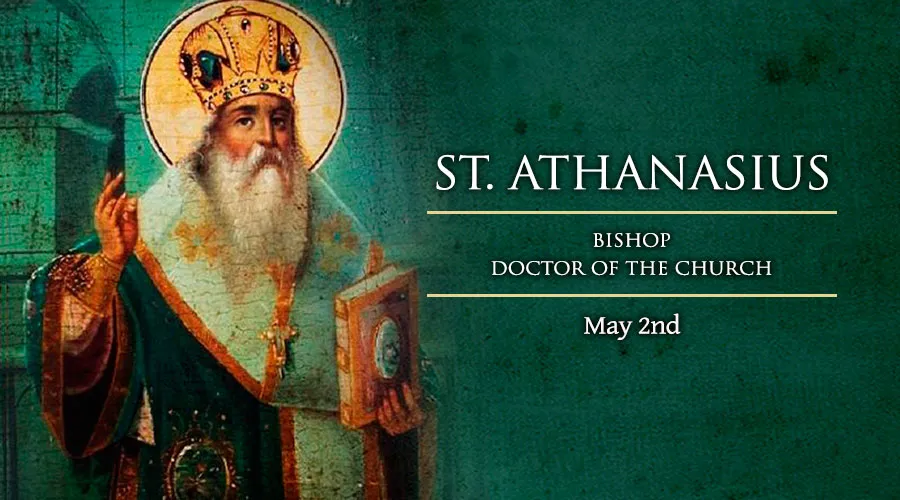
Thank God for this man!!! What a good Saint especially in this time of false teachings being spread.
Posted on 6/18/25 at 4:18 am to Synoptic
quote:
I easily determined your comment is false by reading John 1:1 in koine Greek.
Wow, awesome.
quote:
The absence of the definite article before Theos in the phrase “and the Word was God” in John 1 is significant in Greek grammar, particularly in a predicate nominative construction such as this. A predicate noun that precedes the verb and lacks the definite article often emphasizes the quality, nature, or essence of the subject (the Logos, "the Word") rather than its identity.
Excellent. You’ve corroborated my point.
quote:
This is why most translations render it as "and the Word was God" emphasizing that the Word shares the divine nature or essence of God.
And it’s precisely why it’s an intentional mistranslation. It would most accurately be that the Logos is divine - a deity in the qualitative sense.
quote:
The New World Translation used by Jehovah’s Witnesses insert an indefinite article ("and the Word was a god"), arguing that the lack of the definite article suggests an indefinite or qualitative sense
Which is what I have said and what you have said. I’m glad we agree.
quote:
Koine Greek does not have an indefinite article, and so it is the Jehovah’s Witnesses who have added a word not in the original Greek to fit their beliefs.
“A god” is still more accurate than “God” in this sense. They could have used “divine” or “deity-qualitatively” which could make it better but the way the JW’s translated this verse is accurate grammatically and practically already and superior to the mainstream translations.
quote:
For example, in this case you are conflating divine with spiritual or supernatural.
Why argue that angels are not divine? Is Jesus divine? I think you would say yes. Is Jesus an angel of God? The scriptures say he is. I think you are splitting hairs with your comments of divine vs supernatural. The beings in heaven are all divine. “God” (the father) does not exhaust the category of “divine”. Simply look up the English word in a dictionary.
quote:
You are giving bad faith arguments from a position of extreme ignorance regarding the language and concepts that are central to the topic.
I think you have your head squarely up your arse on this one. You corroborated my argument but are calling me wrong. I had already made the comment about the Logos being divine-qualitatively in John 1:1c. I think maybe your own beliefs are biasing your interpretation in your head. Maybe it’s because you think “divine-qualitatively” only applies to “the one true God” or something. It doesn’t. Maybe you should read psalm 89.
Posted on 6/22/25 at 1:57 pm to Harald Ekernson
The major point of disagreement between the arians and the trinitarians at the council of Nicea was the nature and essence of Christ. Trinitarians argued that Christ was the same substance, nature, and essence of God. The word they used for this is "homoousian." The arians rejected this term and argued that Christ was not the same essence of God, because arians do not think Christ is the same essence or nature as God the Father. That was the point of the dispute. You think trinitarian arguments corroborate your point because you do not understand the basic concepts and language that are fundamental to the dispute.
Additional evidence of your nonexistent understanding of the topic is your absurd conflation of spiritual and divine and asserting that it is hair splitting to object to such absurdity regarding the concept of divinity, which is fundamental to the discussion. Couple of other points for you: 1) the Greek word for angel simply means "messenger." The word refers to a function or role and not an ontological category. 2) Neither trinitarians, arians, nor jews considered demons to be divine. No one involved in these disputes claimed that. Your positions are based on the most uniformed claims I have ever seen given on this very misunderstood topic.
Additional evidence of your nonexistent understanding of the topic is your absurd conflation of spiritual and divine and asserting that it is hair splitting to object to such absurdity regarding the concept of divinity, which is fundamental to the discussion. Couple of other points for you: 1) the Greek word for angel simply means "messenger." The word refers to a function or role and not an ontological category. 2) Neither trinitarians, arians, nor jews considered demons to be divine. No one involved in these disputes claimed that. Your positions are based on the most uniformed claims I have ever seen given on this very misunderstood topic.
This post was edited on 6/22/25 at 2:01 pm
Posted on 6/22/25 at 2:44 pm to Synoptic
quote:
You think trinitarian arguments corroborate your point
What point is that? You might need to remind me.
quote:
you do not understand the basic concepts and language that are fundamental to the dispute.
You described yourself perfectly.
quote:
Additional evidence of your nonexistent understanding of the topic is your absurd conflation of spiritual and divine and asserting that it is hair splitting to object to such absurdity regarding the concept of divinity
Ok Mr. koine Greek, you should seriously look up the word “divine” in Oxford and Webster’s dictionaries and you’ll learn something new.
You must know of all the unique words used for what would just be “Elohim” in Hebrew. Words such as demons, archons, theos, angels, etc.
The English word “divine” belongs to a category of heavenly spirit beings and does not only point to the one true God. John 1:1c is evidence as the writer could have said the Logos was the God but he did not, he said the Logos was (a god/divine).
quote:
Couple of other points for you: 1) the Greek word for angel simply means "messenger." The word refers to a function or role and not an ontological category.
Dude I’m not stupid. Lol
quote:
Neither trinitarians, arians, nor jews considered demons to be divine
The English word “divine” didn’t exist yet 1600-2000 years ago. The Jews would have called them all “Elohim” which obviously is translated into English as “God” or “god” or “gods” depending on the syntax and grammar.
Go look at the English definition.
This post was edited on 6/22/25 at 2:47 pm
Posted on 6/22/25 at 3:32 pm to Harald Ekernson
You claimed “The angels and cherubim and satan and demons and archons and seraphim etc are all divine…” and I told you that neither the trinitarians, the arians, nor in Judaism are angels and demons considered to be divine. That assertion demonstrates no understanding of the fundamental debate.
Since you won’t take my word for it, I put the below questions (in italics) in google and copied the top response. Try it out yourself to verify:
Are angels and demons considered to be divine by trinitarians?
“No, Trinitarian Christians do not consider angels and demons to be divine…Angels are created beings, not part of the divine nature of God. They are often described as messengers or servants of God…[Demons] are also created beings and not divine.”
Are angels and demons considered to be divine by arians?
“No, Arians do not consider angels or demons to be divine. While Arianism acknowledges the existence of angels and demons as created beings, it does not equate them with divinity.”
Are angels and demons considered to be divine in Judaism?
“In Judaism, angels are not considered divine. They are understood as messengers or servants of God, not as deities themselves. Demons, or evil spirits, are also not considered divine.”
As to your claim that “And it’s precisely why it’s an intentional mistranslation. It would most accurately be that the Logos is divine - a deity in the qualitative sense.” I did the below search for you:
Do arians think that Christ is the same quality as God the Father?
“No, Arians do not believe that Christ is the same quality as God the Father.”
It helps to look up topics and attempt to gain a basic level of understanding before arguing at length.
Back to my earlier question, you clearly aren’t a trinitarian, and you presumably aren’t an arian since you do not understand their position or claims at all, so why are you arguing a topic you don’t understand and that you don’t agree with either side? Makes no sense.
Since you won’t take my word for it, I put the below questions (in italics) in google and copied the top response. Try it out yourself to verify:
Are angels and demons considered to be divine by trinitarians?
“No, Trinitarian Christians do not consider angels and demons to be divine…Angels are created beings, not part of the divine nature of God. They are often described as messengers or servants of God…[Demons] are also created beings and not divine.”
Are angels and demons considered to be divine by arians?
“No, Arians do not consider angels or demons to be divine. While Arianism acknowledges the existence of angels and demons as created beings, it does not equate them with divinity.”
Are angels and demons considered to be divine in Judaism?
“In Judaism, angels are not considered divine. They are understood as messengers or servants of God, not as deities themselves. Demons, or evil spirits, are also not considered divine.”
As to your claim that “And it’s precisely why it’s an intentional mistranslation. It would most accurately be that the Logos is divine - a deity in the qualitative sense.” I did the below search for you:
Do arians think that Christ is the same quality as God the Father?
“No, Arians do not believe that Christ is the same quality as God the Father.”
It helps to look up topics and attempt to gain a basic level of understanding before arguing at length.
Back to my earlier question, you clearly aren’t a trinitarian, and you presumably aren’t an arian since you do not understand their position or claims at all, so why are you arguing a topic you don’t understand and that you don’t agree with either side? Makes no sense.
This post was edited on 6/22/25 at 3:39 pm

 Page 4 of 6

Popular
Back to top
 Follow TigerDroppings for LSU Football News