




- My Forums
- Tiger Rant
- LSU Recruiting
- SEC Rant
- Saints Talk
- Pelicans Talk
- More Sports Board
- Fantasy Sports
- Golf Board
- Soccer Board
- O-T Lounge
- Tech Board
- Home/Garden Board
- Outdoor Board
- Health/Fitness Board
- Movie/TV Board
- Book Board
- Music Board
- Political Talk
- Money Talk
- Fark Board
- Gaming Board
- Travel Board
- Food/Drink Board
- Ticket Exchange
- TD Help Board
Customize My Forums- View All Forums
- Show Left Links
- Topic Sort Options
- Trending Topics
- Recent Topics
- Active Topics
Started By
Message

The Battle of Gettysburg - 157th Anniversary | Prologue | June 28-30, 1863
Posted on 6/30/20 at 7:58 pm

Posted on 6/30/20 at 7:58 pm
“I’M HERE TO GIVE YOU TROUBLE”
In the early morning hours of June 28, 1863, Major General George G. Meade, commanding officer of the Union Army of the Potomac’s Fifth Corps, was shaken awake in his headquarters tent near Frederick, Maryland. The man who did the waking was Colonel James A. Hardie, dressed in civilian garb, sent direct from Washington, D.C. with an important set of orders. “I’m here to give you trouble,” he said to the general as Meade groaned himself awake. Thinking that he was under arrest for previous statements made against the general commanding, Meade wasted no time in getting his thoughts out into the open: “My conscience is clear!”
What Hardie told Meade next made him want to be sent away to prison under an armed escort. Major General Joseph Hooker, commanding general of the Army of the Potomac, had offered his resignation the previous evening and it had been accepted by his superiors. What Hardie carried with him were documents from the President of the United States and the General-in-Chief that ordered Meade to succeed Hooker in command of the Army of the Potomac. They were not asking him. Meade, the dutiful soldier, verbally accepted these orders and traveled with Hardie to army headquarters to inform Hooker of the change.
When Joseph Hooker had tendered his resignation just hours before, he did it never once thinking the resignation would be accepted. It was a bluff with the design to lure his superiors in Washington into giving him 10,000 men from the garrison at Harpers Ferry, Virginia – reinforcements he felt he desperately needed to beat back Robert E. Lee and the Confederate Army of Northern Virginia’s latest invasion of the North. Hooker, however, had lost the confidence of those around him – including those in Washington – after the defeat at the Battle of Chancellorsville in early May. Meade had been one of his most outspoken critics during and after the battle.
“Fighting Joe” as the press loved to label him (he personally hated the nickname) now found himself a man without a command as Hardie and Meade showed up to his headquarters with orders from Lincoln and Halleck. For the next few hours, the men conferred with one another as Hooker explained to Meade the position of the Army of the Potomac as well as intelligence reports regarding the location of the Confederate army. Meade could not help but express himself stunned over the scattered state of the army. It also seemed to Meade that Hooker had no plan with which to deal with the present situation that had gripped the nation.
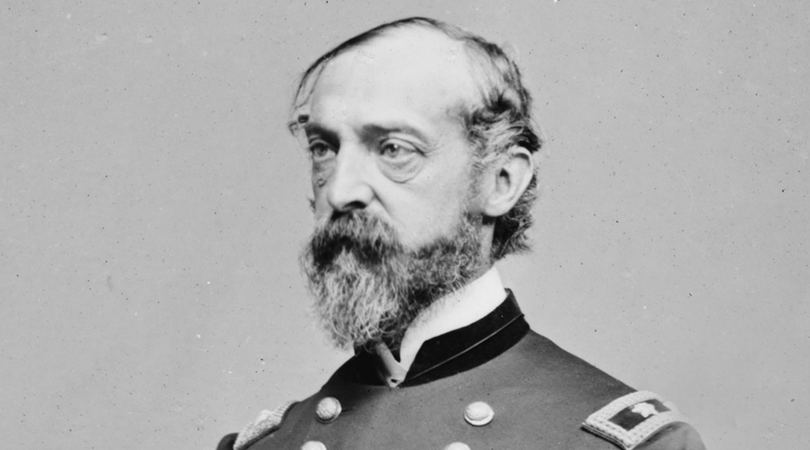
Maj. General George G. Meade - commanding general, Union Army of the Potomac
Back in early June, Robert E. Lee and the Confederate Army of Northern Virginia had begun their second invasion of the North. For the better part of the month, Lee and his army of rebels had been given a free hand in Maryland where they had been raiding the countryside for supplies. Hooker had moved north ever so cautiously, making sure to keep Washington covered from Confederate attack. All the while no one had a clear idea as to exactly where the Confederate army was. The best intelligence now put them somewhere in south-central Pennsylvania but nothing was certain at this point in time.
Hooker officially turned over command of the Army of the Potomac to Meade at around 10 AM on June 28. The outgoing commanding general departed for Baltimore while the new commanding general spent the morning tracking down the various units of his army and issuing orders to continue marching northward toward the Maryland-Pennsylvania border.
In these latter days of June, the Army of the Potomac numbered around 112,000 men of all arms. Of that number, some 77,700 were infantry spread out over seven different army corps. The commander of the First Corps, Major General John F. Reynolds, was among the first to congratulate Meade on his appointment to army command that morning. Reynolds, considered by many to be the best corps commander in the army, had been among the candidates in the running for the job Meade now possessed and, in this particular moment, Meade shared his misgivings as well as his wish that Reynolds had gotten the job. His fellow Pennsylvanian assured Meade that the army high command was fully behind their new commanding general.
The two men discussed briefly what was to be done that day. Meade had to locate the Confederate army and needed to put his various units in position to bring Lee to battle once he was located. His plan for June 28 was to utilize the roads of central and northern Maryland to fan his army out into a wide arc and feel out for the Army of Northern Virginia. On the left wing of this arc were the First, Third, and Eleventh Corps. Meade placed Reynolds in overall command of these units while Brigadier General Abner Doubleday was moved up from his division to command the First Corps in place of Reynolds.
And so marching orders went out to the various units of the Army of the Potomac. What was originally scheduled to be a day of rest for the Union army now turned into a forced march toward the Mason-Dixon line. If the Confederates were indeed in south-central Pennsylvania, George Meade’s native state, he would see to it that their stay, at the very least, would not be a welcomed one.
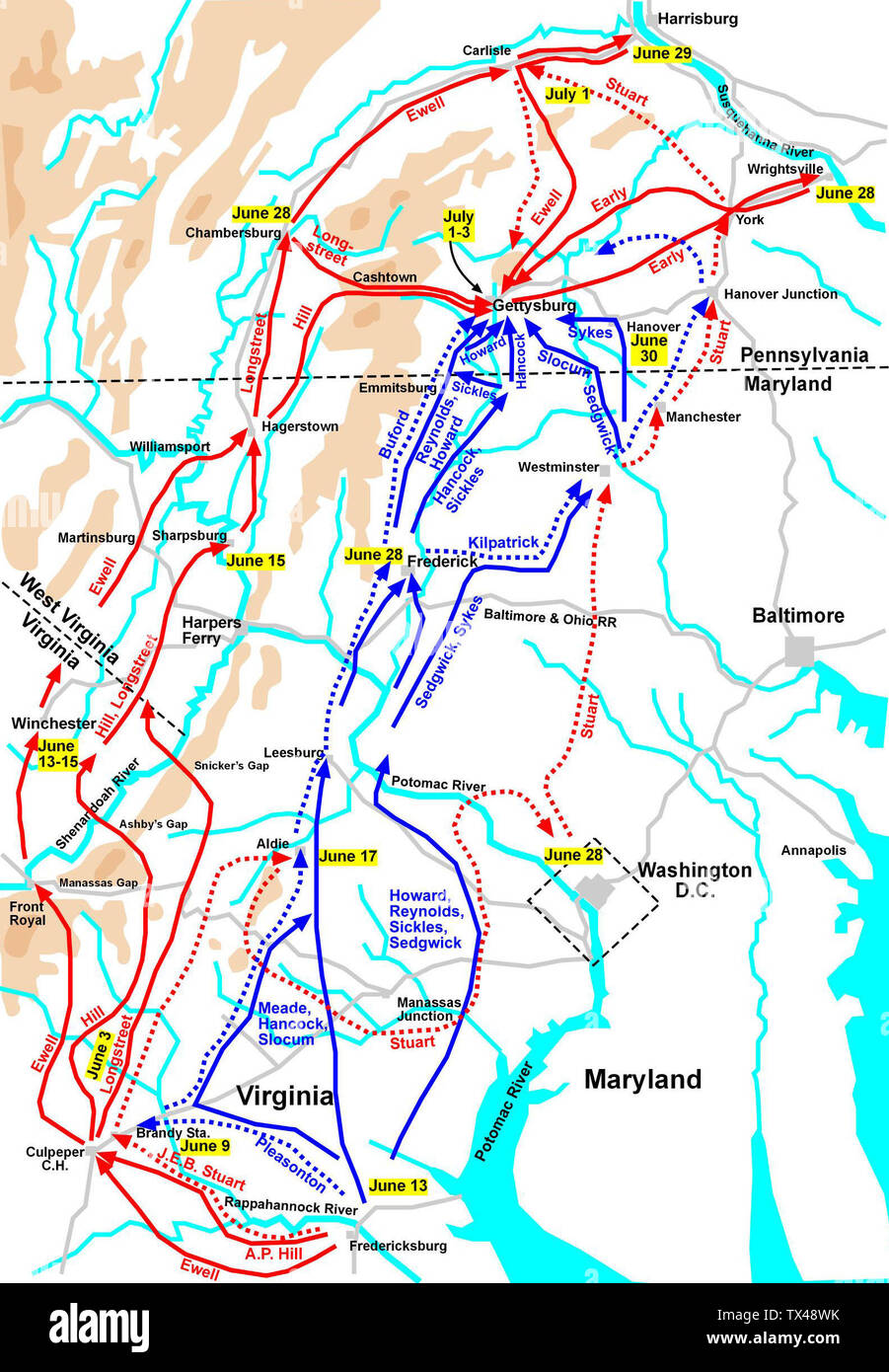
Gettysburg Campaign, June 3-July 3, 1863
In the early morning hours of June 28, 1863, Major General George G. Meade, commanding officer of the Union Army of the Potomac’s Fifth Corps, was shaken awake in his headquarters tent near Frederick, Maryland. The man who did the waking was Colonel James A. Hardie, dressed in civilian garb, sent direct from Washington, D.C. with an important set of orders. “I’m here to give you trouble,” he said to the general as Meade groaned himself awake. Thinking that he was under arrest for previous statements made against the general commanding, Meade wasted no time in getting his thoughts out into the open: “My conscience is clear!”
What Hardie told Meade next made him want to be sent away to prison under an armed escort. Major General Joseph Hooker, commanding general of the Army of the Potomac, had offered his resignation the previous evening and it had been accepted by his superiors. What Hardie carried with him were documents from the President of the United States and the General-in-Chief that ordered Meade to succeed Hooker in command of the Army of the Potomac. They were not asking him. Meade, the dutiful soldier, verbally accepted these orders and traveled with Hardie to army headquarters to inform Hooker of the change.
When Joseph Hooker had tendered his resignation just hours before, he did it never once thinking the resignation would be accepted. It was a bluff with the design to lure his superiors in Washington into giving him 10,000 men from the garrison at Harpers Ferry, Virginia – reinforcements he felt he desperately needed to beat back Robert E. Lee and the Confederate Army of Northern Virginia’s latest invasion of the North. Hooker, however, had lost the confidence of those around him – including those in Washington – after the defeat at the Battle of Chancellorsville in early May. Meade had been one of his most outspoken critics during and after the battle.
“Fighting Joe” as the press loved to label him (he personally hated the nickname) now found himself a man without a command as Hardie and Meade showed up to his headquarters with orders from Lincoln and Halleck. For the next few hours, the men conferred with one another as Hooker explained to Meade the position of the Army of the Potomac as well as intelligence reports regarding the location of the Confederate army. Meade could not help but express himself stunned over the scattered state of the army. It also seemed to Meade that Hooker had no plan with which to deal with the present situation that had gripped the nation.
Maj. General George G. Meade - commanding general, Union Army of the Potomac
Back in early June, Robert E. Lee and the Confederate Army of Northern Virginia had begun their second invasion of the North. For the better part of the month, Lee and his army of rebels had been given a free hand in Maryland where they had been raiding the countryside for supplies. Hooker had moved north ever so cautiously, making sure to keep Washington covered from Confederate attack. All the while no one had a clear idea as to exactly where the Confederate army was. The best intelligence now put them somewhere in south-central Pennsylvania but nothing was certain at this point in time.
Hooker officially turned over command of the Army of the Potomac to Meade at around 10 AM on June 28. The outgoing commanding general departed for Baltimore while the new commanding general spent the morning tracking down the various units of his army and issuing orders to continue marching northward toward the Maryland-Pennsylvania border.
In these latter days of June, the Army of the Potomac numbered around 112,000 men of all arms. Of that number, some 77,700 were infantry spread out over seven different army corps. The commander of the First Corps, Major General John F. Reynolds, was among the first to congratulate Meade on his appointment to army command that morning. Reynolds, considered by many to be the best corps commander in the army, had been among the candidates in the running for the job Meade now possessed and, in this particular moment, Meade shared his misgivings as well as his wish that Reynolds had gotten the job. His fellow Pennsylvanian assured Meade that the army high command was fully behind their new commanding general.
The two men discussed briefly what was to be done that day. Meade had to locate the Confederate army and needed to put his various units in position to bring Lee to battle once he was located. His plan for June 28 was to utilize the roads of central and northern Maryland to fan his army out into a wide arc and feel out for the Army of Northern Virginia. On the left wing of this arc were the First, Third, and Eleventh Corps. Meade placed Reynolds in overall command of these units while Brigadier General Abner Doubleday was moved up from his division to command the First Corps in place of Reynolds.
And so marching orders went out to the various units of the Army of the Potomac. What was originally scheduled to be a day of rest for the Union army now turned into a forced march toward the Mason-Dixon line. If the Confederates were indeed in south-central Pennsylvania, George Meade’s native state, he would see to it that their stay, at the very least, would not be a welcomed one.
Gettysburg Campaign, June 3-July 3, 1863
 5
5

Posted on 6/30/20 at 7:58 pm to RollTide1987
A SPY RUINS THE VACATION
Up until June 28, 1863, Robert E. Lee’s invasion of the North had gone just about as swimmingly as he could have hoped for. His men had been winning battles, gathering supplies, and feasting like they hadn’t feasted since perhaps before the war. So far his campaign’s objectives were being met with only one – the defeat of the Army of the Potomac in open battle – left unfulfilled. Lee commanded an army of some 75,000 men of all arms. Of that number about 63,500 men were infantry spread out over three separate army corps. And so while it would seem that Lee was outnumbered by 37,000 men, the differences in infantry strength between the two armies (77,700 vs. 63,500) was not too substantial.
On the morning of the 28th, Lee’s army was scattered in an arc all over south-central Pennsylvania. His most northern units, those of Lieutenant General Richard S. Ewell’s Second Corps, were closing in on Harrisburg – the capital of Pennsylvania. To capture Harrisburg would be a huge blow to Union morale and might even hurt Lincoln’s chances of winning Pennsylvania in the 1864 election. Lee controlled the army’s progress from his headquarters near Chambersburg. And it was here, just after sunset, that Lee’s plans were thrown through a loop.
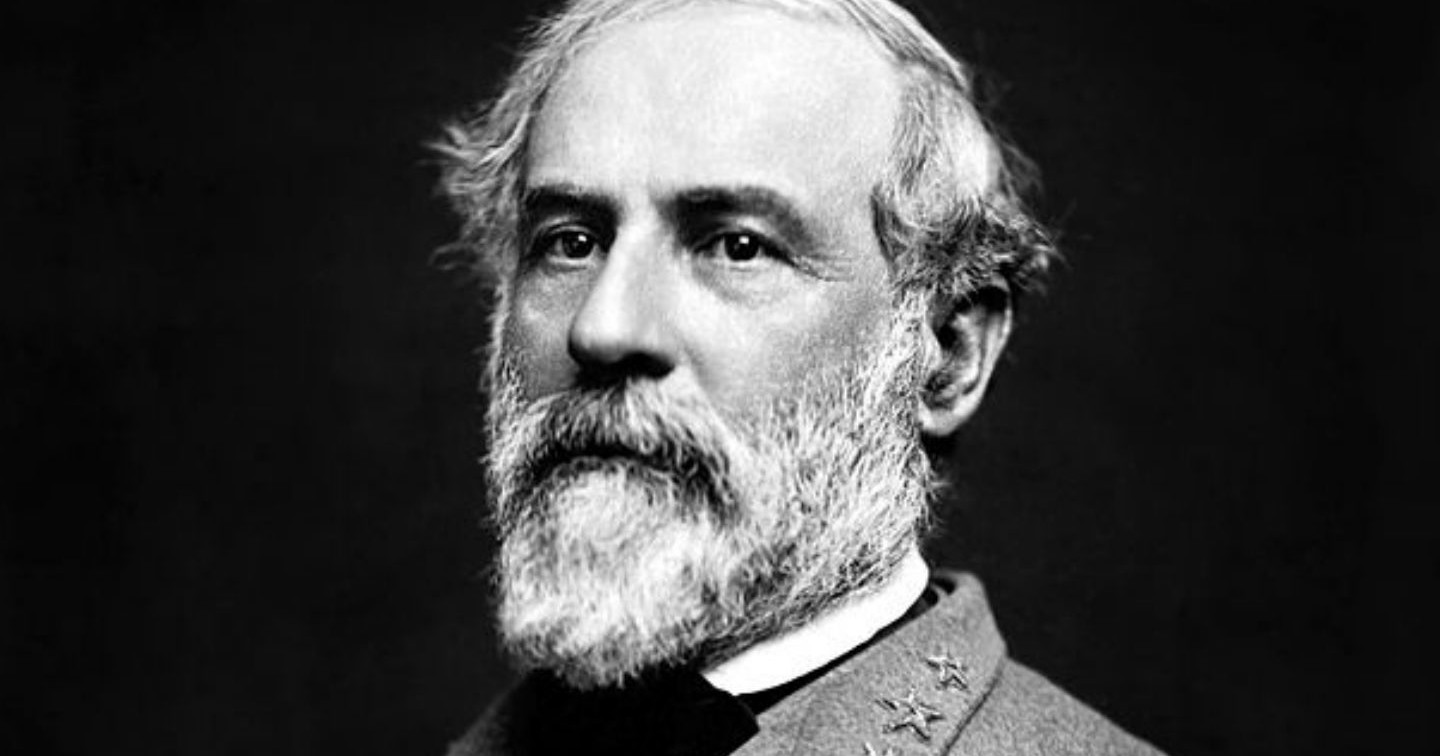
General Robert E. Lee - commanding general, Army of Northern Virginia
A spy in the employ of Lee’s second-in-command, Lieutenant General James Longstreet – commander of the First Corps of the Army of Northern Virginia – arrived in Longstreet’s camp shortly before dusk with a tale that Lee’s “Old War Horse” could not ignore. The Army of the Potomac was moving north. It was not in Virginia as had been assumed by Lee and the Confederate high command but in central Maryland. Not only that, the spy reported, but the lead elements of the Union advance appeared to be moving to the west. If that were true, it could mean that the Army of the Potomac was attempting to interdict the Army of Northern Virginia’s supply and communication lines behind the Blue Ridge mountain range.
Longstreet took the spy to Lee’s headquarters for immediate interrogation from the commanding general. At first skeptical, Lee eventually came to trust the information this man had to provide – mostly because Longstreet trusted it. The spy’s name was Harrison, a native of Mississippi, and was reportedly a Shakespearean actor before the war. Not much else is known about the man but what is known is that his report to Robert E. Lee on the evening of the 28th put an end to the easy marching his army had endured throughout the month of June.
What disconcerted Lee the most about Harrison’s information was the fact that it came from Harrison. Why hadn’t Lee received this intelligence from Major General J.E.B. Stuart, his trusted commander of cavalry? It had been well over a week since Stuart had last communicated with him, which was most unlike his dashing lieutenant. Cavalry were the eyes and ears of an army on the march and at this particular moment Lee was suddenly both blind and deaf to the Union army.
Stuart was in point of fact trying to get into contact with the Confederate army at this particular moment. Acting on what he thought were a part of his orders from Lee, Stuart had ridden completely around the Union army on a supply and communications disruption raid. Now attempting to return to the Army of Northern Virginia, Stuart’s path was marred at every turn by advancing columns of Union infantry making their way north and deeper into Maryland. Stuart’s absence for the next few days would prove critical in the battle to come.
With no clear picture of the developing situation, Lee quickly began disseminating orders to his various commanders. The vacation in Pennsylvania was over. All units were to halt their present movements and concentrate in the area around Chambersburg. If the Union army was moving northward, Lee would have to bring his army together to meet it on something like equal terms. Glancing at the map, he and his staff noticed that all roads in the region seemed to converge on one central location. That was the area in which they would begin concentrating their army.
The location in which these roads converged was a medium-sized town called Gettysburg.
THE BALL IN MOTION
Contrary to popular belief, Gettysburg was anything but a sleepy town in June 1863. With a population hovering around 2,500, it was of average size for the era and also happened to be the seat of Adams County. It was home to two higher institutions of learning (Pennsylvania College and Lutheran Theological Seminary) as well as the county’s almhouse (insane asylum). The residents had begun to feel the effects of Lee’s invasion starting in mid-June when the first refugees began to pour eastwards from the mountains beyond. They told frightening tales of marauding Rebel cavalry and the hordes of Lee’s merciless barbarians. Most of these tales were exaggerated but did enough to scare the locals.
On June 26 the dark tales suddenly became reality when the division of Major General Jubal Early marched into town demanding supplies from the city fathers. There was a quick skirmish with the local Pennsylvania militia that caused a panic in the town beforehand and brought the sounds of war to Gettysburg for the first time. Early and his men were given free reign to seize whatever supplies they wanted and were gone before the end of the day. Now on the morning of June 29, rumors began to circulate throughout the town that large bodies of troops were once again moving nearer to Gettysburg.
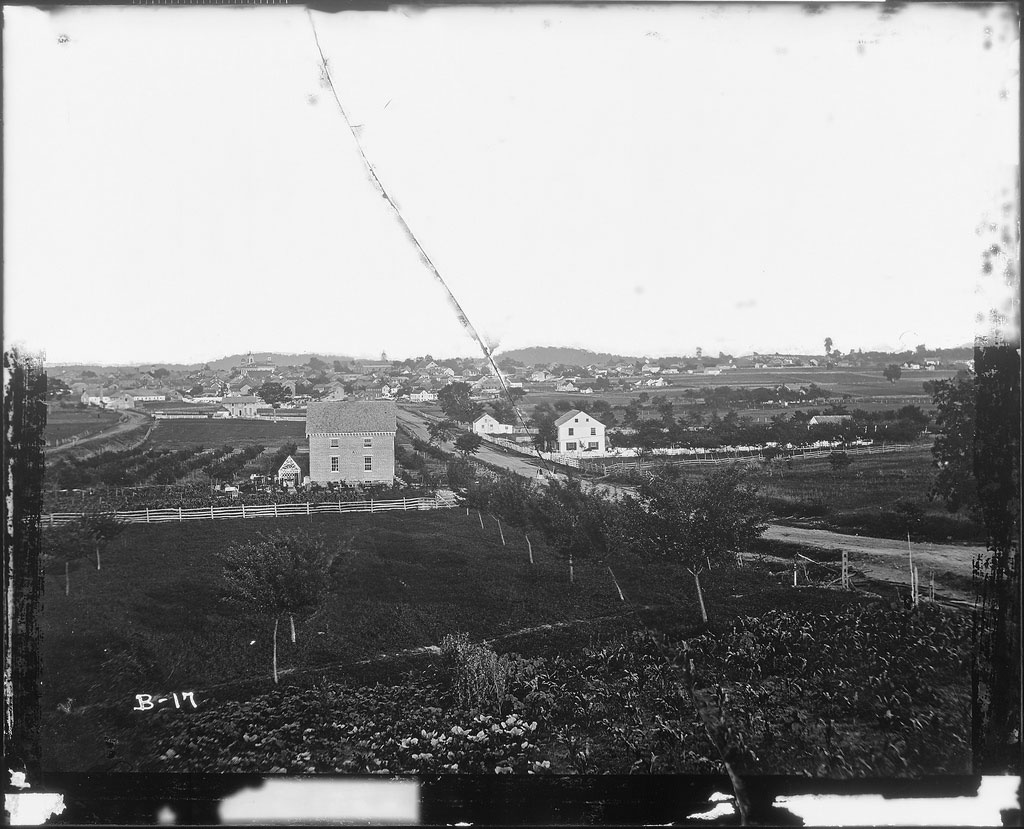
Gettysburg (looking east from Seminary Ridge) in 1863
Up until June 28, 1863, Robert E. Lee’s invasion of the North had gone just about as swimmingly as he could have hoped for. His men had been winning battles, gathering supplies, and feasting like they hadn’t feasted since perhaps before the war. So far his campaign’s objectives were being met with only one – the defeat of the Army of the Potomac in open battle – left unfulfilled. Lee commanded an army of some 75,000 men of all arms. Of that number about 63,500 men were infantry spread out over three separate army corps. And so while it would seem that Lee was outnumbered by 37,000 men, the differences in infantry strength between the two armies (77,700 vs. 63,500) was not too substantial.
On the morning of the 28th, Lee’s army was scattered in an arc all over south-central Pennsylvania. His most northern units, those of Lieutenant General Richard S. Ewell’s Second Corps, were closing in on Harrisburg – the capital of Pennsylvania. To capture Harrisburg would be a huge blow to Union morale and might even hurt Lincoln’s chances of winning Pennsylvania in the 1864 election. Lee controlled the army’s progress from his headquarters near Chambersburg. And it was here, just after sunset, that Lee’s plans were thrown through a loop.
General Robert E. Lee - commanding general, Army of Northern Virginia
A spy in the employ of Lee’s second-in-command, Lieutenant General James Longstreet – commander of the First Corps of the Army of Northern Virginia – arrived in Longstreet’s camp shortly before dusk with a tale that Lee’s “Old War Horse” could not ignore. The Army of the Potomac was moving north. It was not in Virginia as had been assumed by Lee and the Confederate high command but in central Maryland. Not only that, the spy reported, but the lead elements of the Union advance appeared to be moving to the west. If that were true, it could mean that the Army of the Potomac was attempting to interdict the Army of Northern Virginia’s supply and communication lines behind the Blue Ridge mountain range.
Longstreet took the spy to Lee’s headquarters for immediate interrogation from the commanding general. At first skeptical, Lee eventually came to trust the information this man had to provide – mostly because Longstreet trusted it. The spy’s name was Harrison, a native of Mississippi, and was reportedly a Shakespearean actor before the war. Not much else is known about the man but what is known is that his report to Robert E. Lee on the evening of the 28th put an end to the easy marching his army had endured throughout the month of June.
What disconcerted Lee the most about Harrison’s information was the fact that it came from Harrison. Why hadn’t Lee received this intelligence from Major General J.E.B. Stuart, his trusted commander of cavalry? It had been well over a week since Stuart had last communicated with him, which was most unlike his dashing lieutenant. Cavalry were the eyes and ears of an army on the march and at this particular moment Lee was suddenly both blind and deaf to the Union army.
Stuart was in point of fact trying to get into contact with the Confederate army at this particular moment. Acting on what he thought were a part of his orders from Lee, Stuart had ridden completely around the Union army on a supply and communications disruption raid. Now attempting to return to the Army of Northern Virginia, Stuart’s path was marred at every turn by advancing columns of Union infantry making their way north and deeper into Maryland. Stuart’s absence for the next few days would prove critical in the battle to come.
With no clear picture of the developing situation, Lee quickly began disseminating orders to his various commanders. The vacation in Pennsylvania was over. All units were to halt their present movements and concentrate in the area around Chambersburg. If the Union army was moving northward, Lee would have to bring his army together to meet it on something like equal terms. Glancing at the map, he and his staff noticed that all roads in the region seemed to converge on one central location. That was the area in which they would begin concentrating their army.
The location in which these roads converged was a medium-sized town called Gettysburg.
THE BALL IN MOTION
Contrary to popular belief, Gettysburg was anything but a sleepy town in June 1863. With a population hovering around 2,500, it was of average size for the era and also happened to be the seat of Adams County. It was home to two higher institutions of learning (Pennsylvania College and Lutheran Theological Seminary) as well as the county’s almhouse (insane asylum). The residents had begun to feel the effects of Lee’s invasion starting in mid-June when the first refugees began to pour eastwards from the mountains beyond. They told frightening tales of marauding Rebel cavalry and the hordes of Lee’s merciless barbarians. Most of these tales were exaggerated but did enough to scare the locals.
On June 26 the dark tales suddenly became reality when the division of Major General Jubal Early marched into town demanding supplies from the city fathers. There was a quick skirmish with the local Pennsylvania militia that caused a panic in the town beforehand and brought the sounds of war to Gettysburg for the first time. Early and his men were given free reign to seize whatever supplies they wanted and were gone before the end of the day. Now on the morning of June 29, rumors began to circulate throughout the town that large bodies of troops were once again moving nearer to Gettysburg.
Gettysburg (looking east from Seminary Ridge) in 1863
Posted on 6/30/20 at 7:58 pm to RollTide1987
June 29 was George Meade’s second full day in command of the Army of the Potomac and already he had had to make a limitless list of quick decisions to prepare his new command for the battle he knew was likely just days – perhaps even hours – away. Today he ordered his cavalry commander, Major General Alfred Pleasonton, to send out cavalry screens in advance of the army to smoke out the position of Lee’s forces. Ordered by Pleasonton to screen the left wing of the Union army’s advance was the cavalry division of Brigadier General John Buford. This was deliberate as Buford was considered by most to be the best officer in the cavalry corps, and being out in front of the left wing of the advance made it likely that Buford’s brigades would be the first to make contact with the enemy.
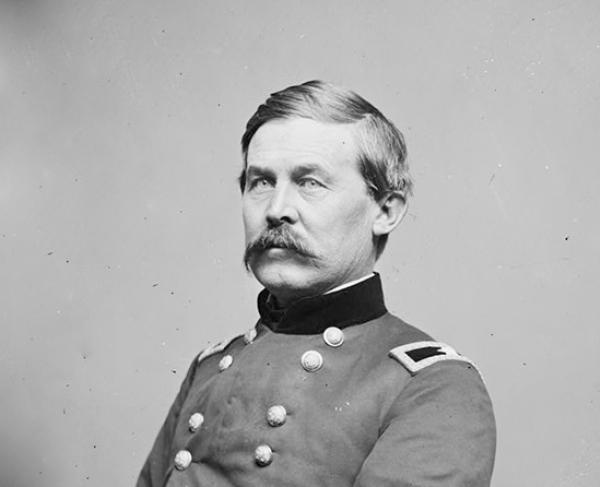
Brigadier General John Buford
Once the Confederate army was found, Meade would then have to decide how best to proceed. His object was to fight a defensive battle in the coming fight and had begun scouting northern Maryland for ground that would best allow him to achieve this goal. One site that appeared promising to him was ground near Union Mills in front of a slow-flowing stream called Pipe Creek. It was open, elevated, and provided excellent fields of fire. If Lee could be lured to the field, an army as large as the Army of the Potomac would be virtually invulnerable on the heights behind the creek. By the evening of June 29, Meade had decided that his army would sink or swim at Pipe Creek and ordered his staff to begin drafting orders to his corps commanders to prepare for a move to that position.
Lee had spent most of his day on June 29 sending out messages to his commanders to begin concentrating in the area near Cashtown and Gettysburg. Directing events from his headquarters in Chambersburg, Lee watched as Lieutenant General A.P. Hill’s Third Corps marched eastward along the Chambersburg Pike in route to Cashtown. From there they could either remain or move further east to Gettysburg depending on what circumstance dictated. Longstreet’s First Corps followed behind Hill while Ewell’s Second Corps began turning away from their advance on Harrisburg and backtracking southward. Lee also made sure it was absolutely clear that no element of his army was to make contact with the enemy until the Army of Northern Virginia was reunited and concentrated.
On June 30, the lead elements of Hill’s Corps began arriving in and around Cashtown. Eight miles beyond lay the town of Gettysburg. One of Hill’s three division commanders, Major General Henry Heth, ordered a brigade under the command of Brigadier General J. Johnston Pettigrew to advance into Gettysburg and procure supplies for the men of the Third Corps. Pettigrew took three of his five regiments with him on what was supposed to be a foraging expedition. Heth and Pettigrew could not have known about the earlier raid by Jubal Early’s men back on the 26th, otherwise no such expedition would have been ordered.
As Pettigrew’s men marched on Gettysburg from the west, the cavalry division of John Buford was crossing into Pennsylvania and approaching Gettysburg from the south. His 2,700 troopers arrived in town that afternoon and were greeted by a population in a state of panic. Buford and his officers listened patiently as the city fathers regaled them with horror stories of a Confederate occupation four days prior. A rising dust cloud off to the west cut the conversation short and Buford rode quickly out onto the grounds of the Lutheran Seminary to see what this dust cloud portended.
It was Pettigrew’s brigade arriving from Cashtown. Upon cresting McPherson’s Ridge about a mile west of town, it became rather obvious to Pettigrew that something was amiss around the Lutheran Seminary. Training his field glasses on the grounds of the seminary one half mile distant, Pettigrew could clearly see mounted Union cavalry milling about. He ordered the column to halt. Remembering the orders that had come direct from General Lee concerning avoiding contact with the enemy until the army was concentrated, Pettigrew ordered an immediate about face and started his brigade back down the Chambersburg Pike toward Cashtown.
THE DEVIL TO PAY
Buford watched the Confederate infantry column until it disappeared behind a distant ridge. It was immediately clear to him that the Confederate army couldn’t be too far away and so he began to take measures to find out exactly where it was and in what force they were in. After sending scouts out in every conceivable direction the Confederates could be approaching him, a picture began to form that told Buford the entire Confederate army would be in the vicinity of Gettysburg by tomorrow evening. A sizable force of enemy infantry was advancing from the west and the north. Buford jotted all of this information down and had it sent to Pleasonton and to Reynolds – the commander of the Union left wing.
When word reached Reynolds that evening of Buford’s report, there didn’t seem to be cause for any alarm in his camp. The First Corps was already slated to advance into Gettysburg the next day (July 1) and the Eleventh Corps was going to be advancing behind it within supporting distance. If push came to shove and the situation got particularly hairy, the Third Corps would likewise be close enough to offer assistance. Reynolds met with Major General Oliver Howard, commander of the Eleventh Corps, to explain the plan for tomorrow’s march before retiring for the evening.
There was absolutely no hint at all in the actions of Reynolds, Howard, or anyone else in the infantry that there was even the slightest possibility in their minds of a major battle erupting the next day.
Buford on the other hand had no illusions about what awaited his small division the next day. He advised his two brigade commanders – Colonel Thomas Devin and Colonel William Gamble – to be prepared for the fight of their lives come morning, with the idea of delaying the enemy long enough for help from the infantry to arrive.
Meanwhile, back at Cashtown, Pettigrew returned with his brigade and immediately sought out his division commander to report what he had seen at Gettysburg. Heth reported what Pettigrew had to say to Hill and the latter was skeptical of this information. The last information he had from Lee’s headquarters was that while the Union army was indeed moving north, it was believed they were heading in a more westerly direction in an attempt to get behind the mountains. Cavalry would only be in the area if the infantry was close behind and, based on the latest intelligence, the infantry was nowhere near this area.
It was decided that what Pettigrew had really seen was local militia and that the Third Corps, with Heth’s division in the lead, would begin moving toward Gettysburg in the morning to raid it for supplies and perhaps do a little reconnaissance of their own. The board was now set and the pieces were moving. The next morning, July 1, 1863, would bring with it the start of the bloodiest battle of the American Civil War.
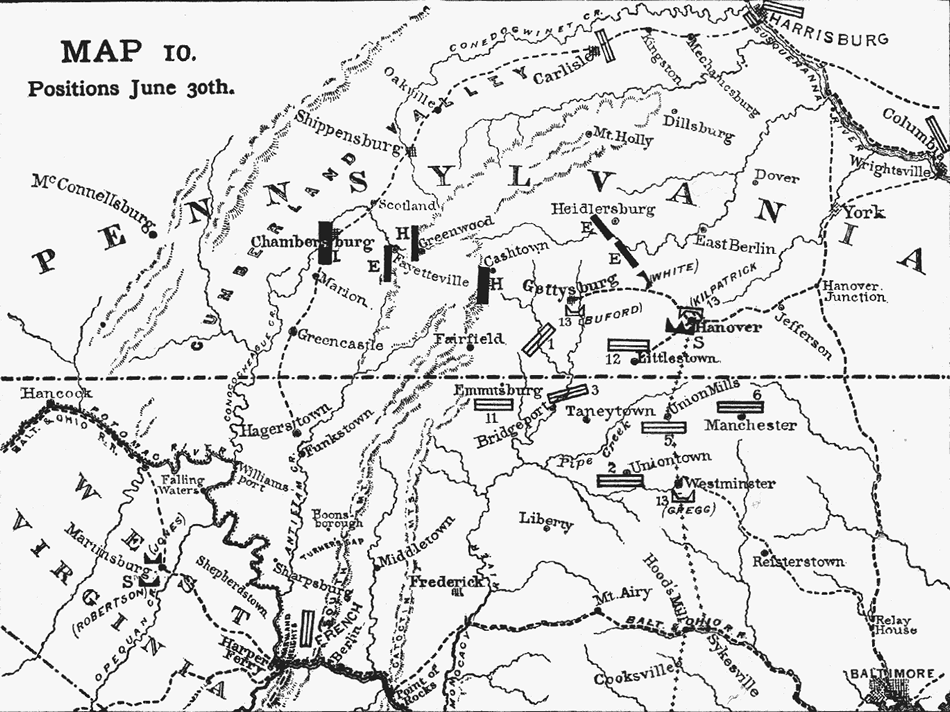
The Situation - June 30, 1863
Brigadier General John Buford
Once the Confederate army was found, Meade would then have to decide how best to proceed. His object was to fight a defensive battle in the coming fight and had begun scouting northern Maryland for ground that would best allow him to achieve this goal. One site that appeared promising to him was ground near Union Mills in front of a slow-flowing stream called Pipe Creek. It was open, elevated, and provided excellent fields of fire. If Lee could be lured to the field, an army as large as the Army of the Potomac would be virtually invulnerable on the heights behind the creek. By the evening of June 29, Meade had decided that his army would sink or swim at Pipe Creek and ordered his staff to begin drafting orders to his corps commanders to prepare for a move to that position.
Lee had spent most of his day on June 29 sending out messages to his commanders to begin concentrating in the area near Cashtown and Gettysburg. Directing events from his headquarters in Chambersburg, Lee watched as Lieutenant General A.P. Hill’s Third Corps marched eastward along the Chambersburg Pike in route to Cashtown. From there they could either remain or move further east to Gettysburg depending on what circumstance dictated. Longstreet’s First Corps followed behind Hill while Ewell’s Second Corps began turning away from their advance on Harrisburg and backtracking southward. Lee also made sure it was absolutely clear that no element of his army was to make contact with the enemy until the Army of Northern Virginia was reunited and concentrated.
On June 30, the lead elements of Hill’s Corps began arriving in and around Cashtown. Eight miles beyond lay the town of Gettysburg. One of Hill’s three division commanders, Major General Henry Heth, ordered a brigade under the command of Brigadier General J. Johnston Pettigrew to advance into Gettysburg and procure supplies for the men of the Third Corps. Pettigrew took three of his five regiments with him on what was supposed to be a foraging expedition. Heth and Pettigrew could not have known about the earlier raid by Jubal Early’s men back on the 26th, otherwise no such expedition would have been ordered.
As Pettigrew’s men marched on Gettysburg from the west, the cavalry division of John Buford was crossing into Pennsylvania and approaching Gettysburg from the south. His 2,700 troopers arrived in town that afternoon and were greeted by a population in a state of panic. Buford and his officers listened patiently as the city fathers regaled them with horror stories of a Confederate occupation four days prior. A rising dust cloud off to the west cut the conversation short and Buford rode quickly out onto the grounds of the Lutheran Seminary to see what this dust cloud portended.
It was Pettigrew’s brigade arriving from Cashtown. Upon cresting McPherson’s Ridge about a mile west of town, it became rather obvious to Pettigrew that something was amiss around the Lutheran Seminary. Training his field glasses on the grounds of the seminary one half mile distant, Pettigrew could clearly see mounted Union cavalry milling about. He ordered the column to halt. Remembering the orders that had come direct from General Lee concerning avoiding contact with the enemy until the army was concentrated, Pettigrew ordered an immediate about face and started his brigade back down the Chambersburg Pike toward Cashtown.
THE DEVIL TO PAY
Buford watched the Confederate infantry column until it disappeared behind a distant ridge. It was immediately clear to him that the Confederate army couldn’t be too far away and so he began to take measures to find out exactly where it was and in what force they were in. After sending scouts out in every conceivable direction the Confederates could be approaching him, a picture began to form that told Buford the entire Confederate army would be in the vicinity of Gettysburg by tomorrow evening. A sizable force of enemy infantry was advancing from the west and the north. Buford jotted all of this information down and had it sent to Pleasonton and to Reynolds – the commander of the Union left wing.
When word reached Reynolds that evening of Buford’s report, there didn’t seem to be cause for any alarm in his camp. The First Corps was already slated to advance into Gettysburg the next day (July 1) and the Eleventh Corps was going to be advancing behind it within supporting distance. If push came to shove and the situation got particularly hairy, the Third Corps would likewise be close enough to offer assistance. Reynolds met with Major General Oliver Howard, commander of the Eleventh Corps, to explain the plan for tomorrow’s march before retiring for the evening.
There was absolutely no hint at all in the actions of Reynolds, Howard, or anyone else in the infantry that there was even the slightest possibility in their minds of a major battle erupting the next day.
Buford on the other hand had no illusions about what awaited his small division the next day. He advised his two brigade commanders – Colonel Thomas Devin and Colonel William Gamble – to be prepared for the fight of their lives come morning, with the idea of delaying the enemy long enough for help from the infantry to arrive.
Meanwhile, back at Cashtown, Pettigrew returned with his brigade and immediately sought out his division commander to report what he had seen at Gettysburg. Heth reported what Pettigrew had to say to Hill and the latter was skeptical of this information. The last information he had from Lee’s headquarters was that while the Union army was indeed moving north, it was believed they were heading in a more westerly direction in an attempt to get behind the mountains. Cavalry would only be in the area if the infantry was close behind and, based on the latest intelligence, the infantry was nowhere near this area.
It was decided that what Pettigrew had really seen was local militia and that the Third Corps, with Heth’s division in the lead, would begin moving toward Gettysburg in the morning to raid it for supplies and perhaps do a little reconnaissance of their own. The board was now set and the pieces were moving. The next morning, July 1, 1863, would bring with it the start of the bloodiest battle of the American Civil War.
The Situation - June 30, 1863

Posted on 6/30/20 at 8:04 pm to RollTide1987
Nice post, Shaara! 
Posted on 6/30/20 at 8:15 pm to jrodLSUke
Always thought it was a shame Reynolds or Hancock didn’t get the job instead of Meade.
Both of them had far better resumes. I know Reynolds turned the job down, but Meade indicated he would’ve too had he not been ordered to take it.
Reynolds goes from turning down command of the AoP to dead on the field at Gettysburg in just a couple days.
Also enjoy looking at the map of the two armies on 6/30/1863. If the two sides had swapped positions the situation would’ve made much more sense then the inverted mess you actually see.
Both of them had far better resumes. I know Reynolds turned the job down, but Meade indicated he would’ve too had he not been ordered to take it.
Reynolds goes from turning down command of the AoP to dead on the field at Gettysburg in just a couple days.
Also enjoy looking at the map of the two armies on 6/30/1863. If the two sides had swapped positions the situation would’ve made much more sense then the inverted mess you actually see.

Posted on 6/30/20 at 8:19 pm to RollTide1987
A good and informative post. Thanks much. Don't forget that Vicksburg fell on the same day though. It wasn't until rather recently that the City of Vicksburg even celebrated the Fourth of July because of it.


Posted on 6/30/20 at 8:19 pm to RollTide1987
Many a young and good boy lost his life.
Posted on 6/30/20 at 8:19 pm to tide06
Also take note of those numbers regarding infantry engaged, 77k for the Union and 63k for the south.
When you consider the casualties by the time the flags retreat on July 3rd came out of a total of only 140k engaged it’s a testament how intense the fighting was at that crossroads in southern PA.
When you consider the casualties by the time the flags retreat on July 3rd came out of a total of only 140k engaged it’s a testament how intense the fighting was at that crossroads in southern PA.


Posted on 6/30/20 at 8:21 pm to RollTide1987
quote:
The Battle of Gettysburg
Civil War=Racist.
I will not be a part of this racist thread.
ETA: DAMMIT! I gave in to my privilege
This post was edited on 6/30/20 at 8:22 pm


Posted on 6/30/20 at 8:29 pm to IAmNERD
Good post, waiting on Pickett's charge

Nerdboy, history can't be changed
Nerdboy,
history can't be changed Posted on 6/30/20 at 9:24 pm to tide06
quote:
Always thought it was a shame Reynolds or Hancock didn’t get the job instead of Meade.
Reynolds was offered it in the aftermath of Chancellorsville but he wanted too much free reign for Washington's liking. He hated the politics of the position. And Hancock was too junior. He had just been promoted to corps command after Couch resigned from the army after Chancellorsville mainly due to disgust with how things had gone down.
Posted on 6/30/20 at 9:38 pm to RollTide1987
quote:
Reynolds was offered it in the aftermath of Chancellorsville but he wanted too much free reign for Washington's liking.
Agreed, but had he been ordered to take it as Meade was I think he would've outperformed Meade.
Some of that comes down to my perception that the corp commanders (outside of Sickles) won the battle for Meade who basically wanted to run after the first day.

Posted on 6/30/20 at 9:55 pm to RollTide1987
As a senior leader I often think of the pressure facing Meade as he arrived late in the evening of the first day and held his war council. The pressure he was under to decide.
“Is it good ground?”
Damn.
“Is it good ground?”
Damn.

 Page 1 of 1


Popular
Back to top
 Follow TigerDroppings for LSU Football News