




 2
2





- My Forums
- Tiger Rant
- LSU Recruiting
- SEC Rant
- Saints Talk
- Pelicans Talk
- More Sports Board
- Fantasy Sports
- Golf Board
- Soccer Board
- O-T Lounge
- Tech Board
- Home/Garden Board
- Outdoor Board
- Health/Fitness Board
- Movie/TV Board
- Book Board
- Music Board
- Political Talk
- Money Talk
- Fark Board
- Gaming Board
- Travel Board
- Food/Drink Board
- Ticket Exchange
- TD Help Board
Customize My Forums- View All Forums
- Show Left Links
- Topic Sort Options
- Trending Topics
- Recent Topics
- Active Topics
Started By
Message
Posted on 6/24/24 at 9:30 pm to Kafka

Posted on 6/24/24 at 9:31 pm to Kafka
Dave's short lived daytime show

Posted on 6/24/24 at 9:33 pm to Kafka

"Nice package, Superman"
Posted on 6/24/24 at 9:33 pm to Kafka

Posted on 6/24/24 at 9:34 pm to Kafka

Posted on 6/24/24 at 9:44 pm to Kafka

Posted on 6/24/24 at 10:47 pm to Kafka

Posted on 6/24/24 at 10:49 pm to Kafka

Posted on 6/25/24 at 12:33 pm to Kafka
Katherine Johnson - NASA
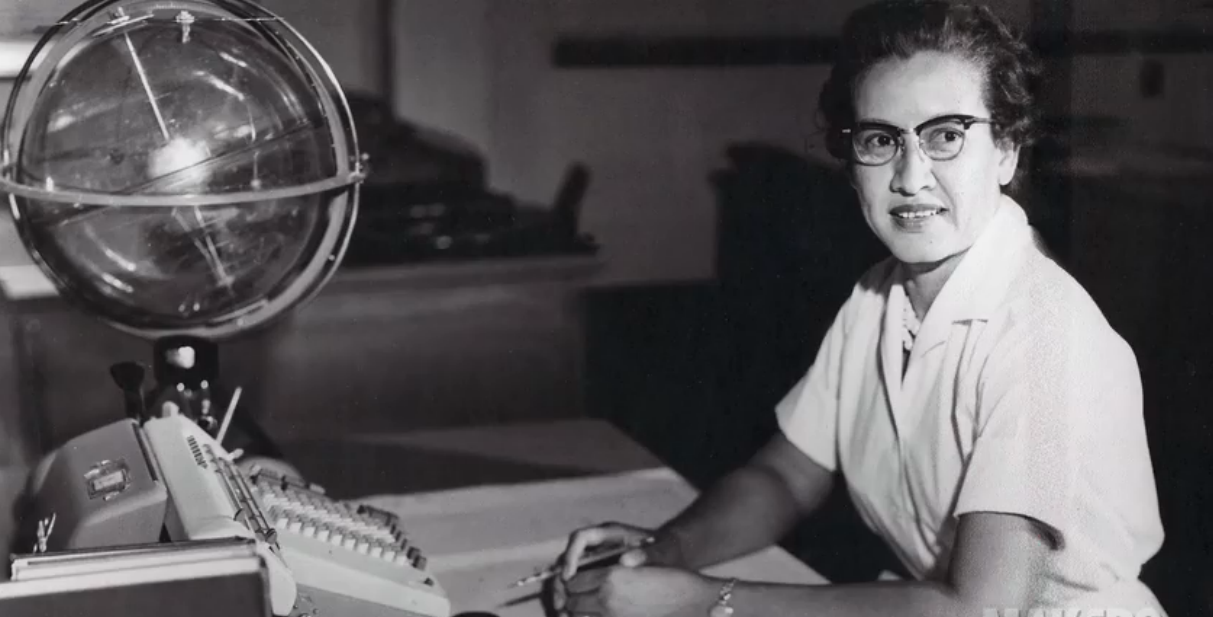
The 1957 launch of the Soviet satellite Sputnik changed history—and Johnson’s life. In 1957, she provided some of the math for the 1958 document Notes on Space Technology, a compendium of a series of 1958 lectures given by engineers in the Flight Research Division and the Pilotless Aircraft Research Division (PARD). Engineers from those groups formed the core of the Space Task Group, the NACA’s first official foray into space travel. Johnson, who had worked with many of them since coming to Langley, “came along with the program” as the NACA became NASA later that year. She did trajectory analysis for Alan Shepard’s May 1961 mission Freedom 7, America’s first human spaceflight. In 1960, she and engineer Ted Skopinski coauthored Determination of Azimuth Angle at Burnout for Placing a Satellite Over a Selected Earth Position, a report laying out the equations describing an orbital spaceflight in which the landing position of the spacecraft is specified. It was the first time a woman in the Flight Research Division had received credit as an author of a research report.
In 1962, as NASA prepared for the orbital mission of John Glenn, Johnson was called upon to do the work that she would become most known for. The complexity of the orbital flight had required the construction of a worldwide communications network, linking tracking stations around the world to IBM computers in Washington, Cape Canaveral in Florida, and Bermuda. The computers had been programmed with the orbital equations that would control the trajectory of the capsule in Glenn’s Friendship 7 mission from liftoff to splashdown, but the astronauts were wary of putting their lives in the care of the electronic calculating machines, which were prone to hiccups and blackouts. As a part of the preflight checklist, Glenn asked engineers to “get the girl”—Johnson—to run the same numbers through the same equations that had been programmed into the computer, but by hand, on her desktop mechanical calculating machine. “If she says they’re good,’” Katherine Johnson remembers the astronaut saying, “then I’m ready to go.” Glenn’s flight was a success, and marked a turning point in the competition between the United States and the Soviet Union in space.
The 1957 launch of the Soviet satellite Sputnik changed history—and Johnson’s life. In 1957, she provided some of the math for the 1958 document Notes on Space Technology, a compendium of a series of 1958 lectures given by engineers in the Flight Research Division and the Pilotless Aircraft Research Division (PARD). Engineers from those groups formed the core of the Space Task Group, the NACA’s first official foray into space travel. Johnson, who had worked with many of them since coming to Langley, “came along with the program” as the NACA became NASA later that year. She did trajectory analysis for Alan Shepard’s May 1961 mission Freedom 7, America’s first human spaceflight. In 1960, she and engineer Ted Skopinski coauthored Determination of Azimuth Angle at Burnout for Placing a Satellite Over a Selected Earth Position, a report laying out the equations describing an orbital spaceflight in which the landing position of the spacecraft is specified. It was the first time a woman in the Flight Research Division had received credit as an author of a research report.
In 1962, as NASA prepared for the orbital mission of John Glenn, Johnson was called upon to do the work that she would become most known for. The complexity of the orbital flight had required the construction of a worldwide communications network, linking tracking stations around the world to IBM computers in Washington, Cape Canaveral in Florida, and Bermuda. The computers had been programmed with the orbital equations that would control the trajectory of the capsule in Glenn’s Friendship 7 mission from liftoff to splashdown, but the astronauts were wary of putting their lives in the care of the electronic calculating machines, which were prone to hiccups and blackouts. As a part of the preflight checklist, Glenn asked engineers to “get the girl”—Johnson—to run the same numbers through the same equations that had been programmed into the computer, but by hand, on her desktop mechanical calculating machine. “If she says they’re good,’” Katherine Johnson remembers the astronaut saying, “then I’m ready to go.” Glenn’s flight was a success, and marked a turning point in the competition between the United States and the Soviet Union in space.
Posted on 6/25/24 at 1:59 pm to Kafka
quote:
Dave's short lived daytime show
Remember watching as an 8 year old at my mammaw and papaws back in the summer of 1980.
Posted on 6/26/24 at 9:19 am to Kafka
$50 in 1960 is $530 today. Yep, big bucks for a combination of crappy camera and crappy radio.
A search shows these going for ~ $350 on ebay.
The advance of tech is mind boggling.
A search shows these going for ~ $350 on ebay.
The advance of tech is mind boggling.
Posted on 6/28/24 at 6:43 pm to MidWestGuy
Posted on 6/28/24 at 6:44 pm to Kafka

Posted on 6/28/24 at 6:50 pm to Kafka

Post-WW II Ad by Goodyear for “giant dirigible airships” in The Saturday Evening Post of September 29, 1945 - it seems they thought that airships were going to become a big thing again.
Posted on 6/30/24 at 12:21 pm to Kafka

Posted on 6/30/24 at 6:53 pm to Kjnstkmn
1927 postcard

Posted on 6/30/24 at 6:54 pm to Kafka

Posted on 6/30/24 at 6:56 pm to Kafka

Posted on 6/30/24 at 6:57 pm to Kafka


 Page 827 of 1280



Popular

Back to top
 Follow TigerDroppings for LSU Football News