




- My Forums
- Tiger Rant
- LSU Recruiting
- SEC Rant
- Saints Talk
- Pelicans Talk
- More Sports Board
- Fantasy Sports
- Golf Board
- Soccer Board
- O-T Lounge
- Tech Board
- Home/Garden Board
- Outdoor Board
- Health/Fitness Board
- Movie/TV Board
- Book Board
- Music Board
- Political Talk
- Money Talk
- Fark Board
- Gaming Board
- Travel Board
- Food/Drink Board
- Ticket Exchange
- TD Help Board
Customize My Forums- View All Forums
- Show Left Links
- Topic Sort Options
- Trending Topics
- Recent Topics
- Active Topics
Started By
Message

Great Campaigns of the Civil War | Episode One - Fort Sumter
Posted on 6/15/20 at 3:33 pm

Posted on 6/15/20 at 3:33 pm
BACKGROUND
Years of internal strife centered mostly around the question of slavery came to a head in the Presidential Election of 1860. On November 7 of that year Abraham Lincoln would win the presidency, despite receiving less than 40% of the popular vote, and despite not appearing on the ballot of many southern states. The state of South Carolina had threatened to leave the Union should Lincoln get elected as they feared him to be the death knell of slavery. On December 20, 1860, South Carolina kept its promise by becoming the first state to secede from the Union.
In January and February 1861 the states of Mississippi, Florida, Alabama, Georgia, Louisiana and Texas followed South Carolina out of the Union. These seven newly seceded states would form a new government they called the Confederate States of America. Montgomery, Alabama was selected as the nation's capital and Jefferson Davis, current U.S. Senator and former Secretary of War, was elected president. This new government then began seizing federal property within its borders to include U.S. Army installations. By March 4, 1861, the day of Lincoln's inauguration, all but two of these installations were under Confederate control. One of them was a not-quite-completed masonry fort located on an artificial island in the middle of Charleston Harbor called Fort Sumter.
This fort would become the spark that ignited the powder keg known to history as the American Civil War.
OPENING MOVES
After the conclusion of the War of 1812 with the signing of the Treat of Ghent in 1814, it became apparent that many of America's vital port cities were not adequately defended from foreign attack. To offset this problem money was allocated to modernize and update these defenses. However it wasn't until 1829 that work officially began on Fort Sumter.
The fort was named after General Thomas Sumter, a hero of the Revolutionary War. To build it, more than seventy thousand tons of granite were transferred from New England to Charleston Harbor to build up a sandbar close to the harbor's mouth which the installation was designed to dominate. By 1860, however, the fort was still unfinished. On the day of Lincoln's election, the fort's garrison consisted of a handful of civilian contractors and a single soldier who kept up the on-site lighthouse.
At the time of South Carolina's secession on December 20, the U.S. Army garrison in Charleston was headquartered at Fort Moultrie, a Colonial Era fortress located on nearby Sullivan Island. This was the 1st U.S. Artillery Regiment - a command of some 85 officers and men that was headed by Major Robert Anderson. Anderson was 55-years-old and a former artillery instructor at West Point. As tensions had begun to rise in the latter half of 1860, his predecessor was relieved early from command in Charleston in the thinking that Anderson was far more competent for the developing situation.
When South Carolina went its own way Anderson knew that Fort Moultrie was far too vulnerable to house the garrison he commanded. It was built to repel attacks from the sea with no thought whatsoever put into developing adequate defenses to repel a land attack. And even before South Carolina made it official, the area around Fort Moultrie had grown to resemble a siege in the days and weeks after the election. While Anderson and his men were still allowed to shop for food and other supplies in downtown Charleston even after the state had left the Union, he knew this courtesy wouldn't last forever.
On the evening of December 26, 1860, Major Anderson secretly transferred his whole command from the vulnerable Fort Moultrie to the relative safety of Fort Sumter. When the move was discovered the next morning it incensed the citizens of Charleston as well as the government of South Carolina. The move also surprised President James Buchanan, now a lame duck, who still sat in the White House. While Buchanan expected Anderson to hold his position in Charleston, he never gave the order for Anderson to abandon Fort Moultrie. While the garrison was now better protected from being assaulted by the growing amount of militia units in Charleston, by moving to Fort Sumter the only way to re-supply the garrison was now by sea. Needless to say, the citizens of Charleston would not be letting Anderson and his men shop around town again any time soon.
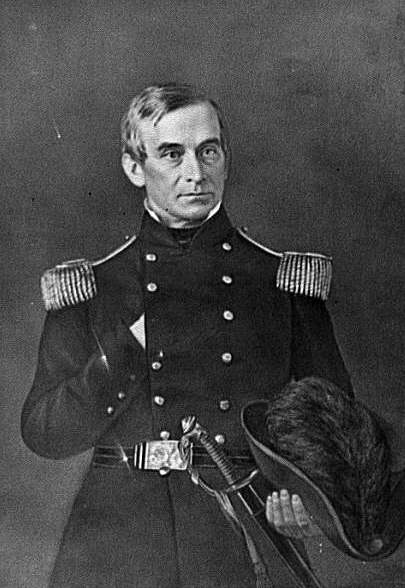
Major Robert Anderson, commander of Union forces in Charleston Harbor
As 1860 turned to 1861, President Buchanan knew he needed to do something to keep Anderson and his men provisioned. After Anderson had evacuated his command to Fort Sumter in Charleston Harbor, Governor Pickens of South Carolina had ordered the South Carolina militia to take possession of Fort Moultrie and other unoccupied installations. A ring of artillery began to slowly assemble on the shore with every single barrel aimed directly at Major Anderson and Fort Sumter. It had become a siege and sooner or later the Union garrison would have to surrender the fort for want of provisions.
To prevent this, Buchanan ordered an unarmed merchant ship called Star of the West to stock up on supplies and set sail for Charleston Harbor to provide relief for Anderson and his men. On January 9, 1861, as the Star of the West approached the mouth of Charleston Harbor, cadets from the Citadel manning guns on Morris Island opened fire. The batteries of Fort Moultrie also began opening up on the merchant sloop, forcing its captain to about face and steam quickly back in the direction from whence it came. Anderson, unaware of this relief expedition, heard the cannon fire but declined to open up on the harbor as he didn't want to be the one to start a general engagement. The Star of the West returning safely to port with no casualties but failed in its mission to re-supply Fort Sumter.

A sketch of the Star of the West
Years of internal strife centered mostly around the question of slavery came to a head in the Presidential Election of 1860. On November 7 of that year Abraham Lincoln would win the presidency, despite receiving less than 40% of the popular vote, and despite not appearing on the ballot of many southern states. The state of South Carolina had threatened to leave the Union should Lincoln get elected as they feared him to be the death knell of slavery. On December 20, 1860, South Carolina kept its promise by becoming the first state to secede from the Union.
In January and February 1861 the states of Mississippi, Florida, Alabama, Georgia, Louisiana and Texas followed South Carolina out of the Union. These seven newly seceded states would form a new government they called the Confederate States of America. Montgomery, Alabama was selected as the nation's capital and Jefferson Davis, current U.S. Senator and former Secretary of War, was elected president. This new government then began seizing federal property within its borders to include U.S. Army installations. By March 4, 1861, the day of Lincoln's inauguration, all but two of these installations were under Confederate control. One of them was a not-quite-completed masonry fort located on an artificial island in the middle of Charleston Harbor called Fort Sumter.
This fort would become the spark that ignited the powder keg known to history as the American Civil War.
OPENING MOVES
After the conclusion of the War of 1812 with the signing of the Treat of Ghent in 1814, it became apparent that many of America's vital port cities were not adequately defended from foreign attack. To offset this problem money was allocated to modernize and update these defenses. However it wasn't until 1829 that work officially began on Fort Sumter.
The fort was named after General Thomas Sumter, a hero of the Revolutionary War. To build it, more than seventy thousand tons of granite were transferred from New England to Charleston Harbor to build up a sandbar close to the harbor's mouth which the installation was designed to dominate. By 1860, however, the fort was still unfinished. On the day of Lincoln's election, the fort's garrison consisted of a handful of civilian contractors and a single soldier who kept up the on-site lighthouse.
At the time of South Carolina's secession on December 20, the U.S. Army garrison in Charleston was headquartered at Fort Moultrie, a Colonial Era fortress located on nearby Sullivan Island. This was the 1st U.S. Artillery Regiment - a command of some 85 officers and men that was headed by Major Robert Anderson. Anderson was 55-years-old and a former artillery instructor at West Point. As tensions had begun to rise in the latter half of 1860, his predecessor was relieved early from command in Charleston in the thinking that Anderson was far more competent for the developing situation.
When South Carolina went its own way Anderson knew that Fort Moultrie was far too vulnerable to house the garrison he commanded. It was built to repel attacks from the sea with no thought whatsoever put into developing adequate defenses to repel a land attack. And even before South Carolina made it official, the area around Fort Moultrie had grown to resemble a siege in the days and weeks after the election. While Anderson and his men were still allowed to shop for food and other supplies in downtown Charleston even after the state had left the Union, he knew this courtesy wouldn't last forever.
On the evening of December 26, 1860, Major Anderson secretly transferred his whole command from the vulnerable Fort Moultrie to the relative safety of Fort Sumter. When the move was discovered the next morning it incensed the citizens of Charleston as well as the government of South Carolina. The move also surprised President James Buchanan, now a lame duck, who still sat in the White House. While Buchanan expected Anderson to hold his position in Charleston, he never gave the order for Anderson to abandon Fort Moultrie. While the garrison was now better protected from being assaulted by the growing amount of militia units in Charleston, by moving to Fort Sumter the only way to re-supply the garrison was now by sea. Needless to say, the citizens of Charleston would not be letting Anderson and his men shop around town again any time soon.
Major Robert Anderson, commander of Union forces in Charleston Harbor
As 1860 turned to 1861, President Buchanan knew he needed to do something to keep Anderson and his men provisioned. After Anderson had evacuated his command to Fort Sumter in Charleston Harbor, Governor Pickens of South Carolina had ordered the South Carolina militia to take possession of Fort Moultrie and other unoccupied installations. A ring of artillery began to slowly assemble on the shore with every single barrel aimed directly at Major Anderson and Fort Sumter. It had become a siege and sooner or later the Union garrison would have to surrender the fort for want of provisions.
To prevent this, Buchanan ordered an unarmed merchant ship called Star of the West to stock up on supplies and set sail for Charleston Harbor to provide relief for Anderson and his men. On January 9, 1861, as the Star of the West approached the mouth of Charleston Harbor, cadets from the Citadel manning guns on Morris Island opened fire. The batteries of Fort Moultrie also began opening up on the merchant sloop, forcing its captain to about face and steam quickly back in the direction from whence it came. Anderson, unaware of this relief expedition, heard the cannon fire but declined to open up on the harbor as he didn't want to be the one to start a general engagement. The Star of the West returning safely to port with no casualties but failed in its mission to re-supply Fort Sumter.
A sketch of the Star of the West
 6
6

Posted on 6/15/20 at 3:33 pm to RollTide1987
BEAUREGARD TAKES COMMAND
January turned to February and the siege of Fort Sumter continued. On the eighteenth of that month, Jefferson Davis was inaugurated President of the Confederate States of America in the city of Montgomery, Alabama. His thoughts immediately turned to Fort Sumter and Charleston Harbor. Anderson and his ragtag command of regulars had been holed up in the fort for almost two whole months with no end to the siege in sight. Something had to be done to bring this matter to a conclusion and so Davis decided to bring in a military mind with the skill and know-how to force the Union garrison to surrender. The man he chose was a native of Louisiana named Pierre Gustave Toutant Beauregard.
P.G.T. Beauregard was a 42-years-old West Point graduate and veteran of the Mexican-American War. Just three days before his home state seceded, Beauregard was appointed Superintendent of West Point - a position he would never serve in as he resigned his commission shortly after Louisiana left the Union. He would be the first general officer of the Confederate army, having been promoted to the rank of brigadier general as of March 1, 1861. Arriving in Charleston two days later, Beauregard quickly took command of the situation.
Beauregard cut an impressive figure and the Charleston papers talked up his French visage, comparing him to Napoleon or one of his legendary marshals. This is the kind of attention the Creole loved. If there was to be a conflict between North and South, Beauregard saw himself as a Napoleonesque figure who could lead the southern states to victory, thus crowning himself in glory.
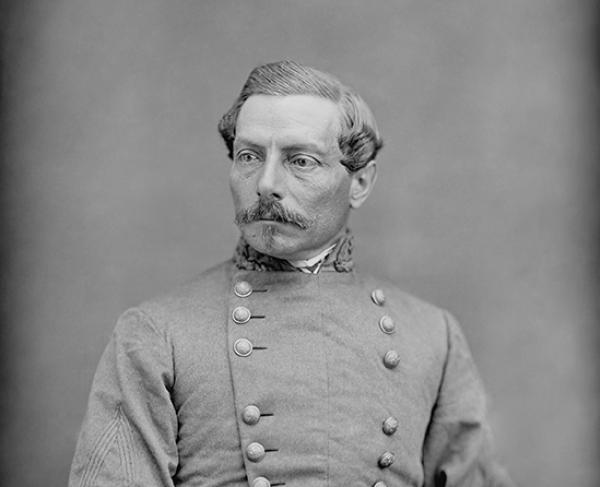
Brigadier General P.G.T. Beauregard, commander of Confederate forces in Charleston Harbor
Major Robert Anderson and Brigadier General P.G.T. Beauregard had known each other well before the Secession Crisis of 1860-61. Anderson had been one of Beauregard's instructors at West Point and the two's shared love for artillery brought the two men close together. They had been very good friends and now were opposed to one another in what was turning into a march toward general war.
Beauregard spent the entirety of March training up the South Carolina militia (the Confederate Army did not yet exist) to man the batteries that lined the shore of Charleston Harbor. He soon built up a powerful force of 6,000 men and 46 artillery pieces to oppose his friend and mentor commanding the garrison inside Fort Sumter.
THE PATH TO WAR
Abraham Lincoln was inaugurated the 16th President of the United States on March 4, 1861 and, like his counterpart Jefferson Davis, was immediately confronted with the developing situation in Charleston Harbor. The Confederacy sent a delegation to Washington offering to pay for the federal property seized and requests to enter into a peace treaty with the United States. Lincoln rejected these proposals as he refused to recognize the Confederate States of America as a legitimate nation. Lincoln also refused the Confederacy's demands to give up Fort Sumter and, as March turned to April, ordered a relief expedition to Charleston Harbor to re-supply the fort.
By early-April, supplies inside Fort Sumter were running low and Anderson knew he could only hold out another couple of weeks before he would be forced into surrendering the garrison. On April 4, he and Governor Pickens of South Carolina got word from Washington that a relief expedition was on its way to supply Fort Sumter with provisions only (no weapons or ammunition). President Davis ordered Beauregard to demand the fort's immediate surrender and, if such a demand were rejected, to "reduce the fort" before the relief expedition arrived. On April 9, a Confederate cabinet meeting endorsed Davis's order to Beauregard. War now seemed inevitable.
On April 11, Beauregard dispatched three of his aides to Fort Sumter to deliver his president's ultimatum. Anderson refused but was reported to have said: "I shall await the first shot, and if you do not batter us to pieces, we shall be starved out in a few days." The aides returned to Beauregard with this message. The Creole did not want to open up on his friend if he didn't have to and thus another round of messages were exchanged but to no avail. There could be no compromise and the Union relief effort was mere hours away. At 3:20 AM on the morning of April 12, Anderson was handed a note which read:
"Sir: by authority of Brigadier General Beauregard, commanding the Provisional Forces of the Confederate States, we have the honor to notify you that he will open fire of his batteries on Fort Sumter in one hour from this time."
THE BOMBARDMENT
Some 70 minutes later, at 4:30 AM on the morning of April 12, 1861, Lieutenant Henry S. Farley fired the first shot of the American Civil War. It was a signal shot, fired from Fort Johnson from a 10-inch mortar, informing the rest of the guns ringing Charleston Harbor the time was nigh to open up on Fort Sumter. Within seconds the pre-dawn sky was lit up by flares and lead projectiles. The sounds of battle woke up all of Charleston and hundreds of men, women, and children climbed up onto rooftops to watch the display.
Major Anderson, enduring the bombardment from the bowels of Fort Sumter, ordered his men not to return fire until daylight. The first Union shot of the war was fired at 7 AM by Captain Abner Doubleday. With 85 men at his disposal, there was no way for Anderson and his men to properly man the 60 guns that made up the fort's defenses. Not only that, but the fort was not designed with land based targets in mind. Every gun he had would fire on a flat trajectory, incapable of impacting the vast majority of the batteries firing at him. Meanwhile, the Confederate artillery were all capable of firing in high arcs right into the fort. Realizing the futile nature of his defense, Anderson ordered those guns most capable of inflicting damage on his Confederate attackers to remain unmanned due to the high likelihood of those crews sustaining casualties in what was essentially a no-win situation.
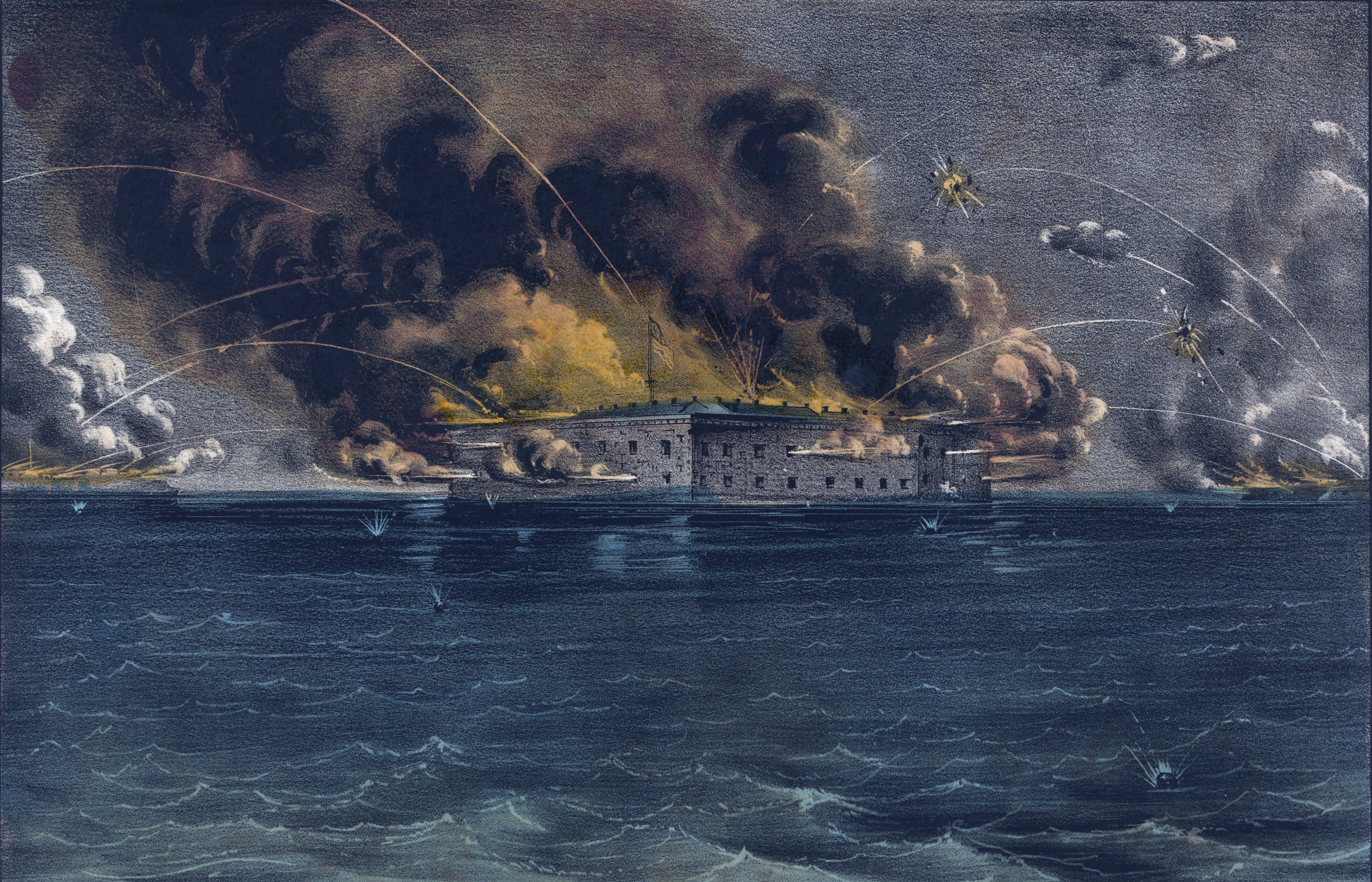
An artist's rendition of the bombardment of Fort Sumter
The relief force meant to re-supply Fort Sumter began to arrive at 6 PM that evening but rough seas and heavy Confederate fire compelled them to wait outside the harbor for better circumstances to materialize. Meanwhile...Anderson's men continued to endure the Confederate bombardment. By 7 PM a rain storm had forced both sides to cease hostilities for the remainder of the evening. The bombardment resumed at 6 AM the next morning, April 13. By noon most of the wooden buildings within the fort itself had been set aflame and the fires were moving steadily toward the fort's ammunition stores. Anderson soon ordered the doors to the stores closed and all excess ammunition thrown into the sea. The Confederates on the shore cheered their bravery and shouted nasty swear words at the Union relief fleet waiting just outside the mouth of the harbor.
January turned to February and the siege of Fort Sumter continued. On the eighteenth of that month, Jefferson Davis was inaugurated President of the Confederate States of America in the city of Montgomery, Alabama. His thoughts immediately turned to Fort Sumter and Charleston Harbor. Anderson and his ragtag command of regulars had been holed up in the fort for almost two whole months with no end to the siege in sight. Something had to be done to bring this matter to a conclusion and so Davis decided to bring in a military mind with the skill and know-how to force the Union garrison to surrender. The man he chose was a native of Louisiana named Pierre Gustave Toutant Beauregard.
P.G.T. Beauregard was a 42-years-old West Point graduate and veteran of the Mexican-American War. Just three days before his home state seceded, Beauregard was appointed Superintendent of West Point - a position he would never serve in as he resigned his commission shortly after Louisiana left the Union. He would be the first general officer of the Confederate army, having been promoted to the rank of brigadier general as of March 1, 1861. Arriving in Charleston two days later, Beauregard quickly took command of the situation.
Beauregard cut an impressive figure and the Charleston papers talked up his French visage, comparing him to Napoleon or one of his legendary marshals. This is the kind of attention the Creole loved. If there was to be a conflict between North and South, Beauregard saw himself as a Napoleonesque figure who could lead the southern states to victory, thus crowning himself in glory.
Brigadier General P.G.T. Beauregard, commander of Confederate forces in Charleston Harbor
Major Robert Anderson and Brigadier General P.G.T. Beauregard had known each other well before the Secession Crisis of 1860-61. Anderson had been one of Beauregard's instructors at West Point and the two's shared love for artillery brought the two men close together. They had been very good friends and now were opposed to one another in what was turning into a march toward general war.
Beauregard spent the entirety of March training up the South Carolina militia (the Confederate Army did not yet exist) to man the batteries that lined the shore of Charleston Harbor. He soon built up a powerful force of 6,000 men and 46 artillery pieces to oppose his friend and mentor commanding the garrison inside Fort Sumter.
THE PATH TO WAR
Abraham Lincoln was inaugurated the 16th President of the United States on March 4, 1861 and, like his counterpart Jefferson Davis, was immediately confronted with the developing situation in Charleston Harbor. The Confederacy sent a delegation to Washington offering to pay for the federal property seized and requests to enter into a peace treaty with the United States. Lincoln rejected these proposals as he refused to recognize the Confederate States of America as a legitimate nation. Lincoln also refused the Confederacy's demands to give up Fort Sumter and, as March turned to April, ordered a relief expedition to Charleston Harbor to re-supply the fort.
By early-April, supplies inside Fort Sumter were running low and Anderson knew he could only hold out another couple of weeks before he would be forced into surrendering the garrison. On April 4, he and Governor Pickens of South Carolina got word from Washington that a relief expedition was on its way to supply Fort Sumter with provisions only (no weapons or ammunition). President Davis ordered Beauregard to demand the fort's immediate surrender and, if such a demand were rejected, to "reduce the fort" before the relief expedition arrived. On April 9, a Confederate cabinet meeting endorsed Davis's order to Beauregard. War now seemed inevitable.
On April 11, Beauregard dispatched three of his aides to Fort Sumter to deliver his president's ultimatum. Anderson refused but was reported to have said: "I shall await the first shot, and if you do not batter us to pieces, we shall be starved out in a few days." The aides returned to Beauregard with this message. The Creole did not want to open up on his friend if he didn't have to and thus another round of messages were exchanged but to no avail. There could be no compromise and the Union relief effort was mere hours away. At 3:20 AM on the morning of April 12, Anderson was handed a note which read:
"Sir: by authority of Brigadier General Beauregard, commanding the Provisional Forces of the Confederate States, we have the honor to notify you that he will open fire of his batteries on Fort Sumter in one hour from this time."
THE BOMBARDMENT
Some 70 minutes later, at 4:30 AM on the morning of April 12, 1861, Lieutenant Henry S. Farley fired the first shot of the American Civil War. It was a signal shot, fired from Fort Johnson from a 10-inch mortar, informing the rest of the guns ringing Charleston Harbor the time was nigh to open up on Fort Sumter. Within seconds the pre-dawn sky was lit up by flares and lead projectiles. The sounds of battle woke up all of Charleston and hundreds of men, women, and children climbed up onto rooftops to watch the display.
Major Anderson, enduring the bombardment from the bowels of Fort Sumter, ordered his men not to return fire until daylight. The first Union shot of the war was fired at 7 AM by Captain Abner Doubleday. With 85 men at his disposal, there was no way for Anderson and his men to properly man the 60 guns that made up the fort's defenses. Not only that, but the fort was not designed with land based targets in mind. Every gun he had would fire on a flat trajectory, incapable of impacting the vast majority of the batteries firing at him. Meanwhile, the Confederate artillery were all capable of firing in high arcs right into the fort. Realizing the futile nature of his defense, Anderson ordered those guns most capable of inflicting damage on his Confederate attackers to remain unmanned due to the high likelihood of those crews sustaining casualties in what was essentially a no-win situation.
An artist's rendition of the bombardment of Fort Sumter
The relief force meant to re-supply Fort Sumter began to arrive at 6 PM that evening but rough seas and heavy Confederate fire compelled them to wait outside the harbor for better circumstances to materialize. Meanwhile...Anderson's men continued to endure the Confederate bombardment. By 7 PM a rain storm had forced both sides to cease hostilities for the remainder of the evening. The bombardment resumed at 6 AM the next morning, April 13. By noon most of the wooden buildings within the fort itself had been set aflame and the fires were moving steadily toward the fort's ammunition stores. Anderson soon ordered the doors to the stores closed and all excess ammunition thrown into the sea. The Confederates on the shore cheered their bravery and shouted nasty swear words at the Union relief fleet waiting just outside the mouth of the harbor.
Posted on 6/15/20 at 3:33 pm to RollTide1987
ANDERSON SURRENDERS
When the central flag pole was knocked down by Confederate fire around 1 PM, Confederates began to wonder if this meant surrender. A raft containing former U.S. Senator Louis Wigfall was sent to Fort Sumter to beg for Anderson's capitulation. Meeting with the Union commander, Wigfall was said to have stated: "You have defended your flag nobly, Sir. You have done all that it is possible to do, and General Beauregard wants to stop this fight. On what terms, Major Anderson, will you evacuate this fort?"
Satisfied that he had done all that he was honor-bound to do, Anderson agreed to a truce at 2 PM on April 13. He had defended the fort gallantly, taking over 3,000 rounds of Confederate ammunition without losing a single man. Fort Sumter raised the white flag as Wigfall departed for shore. Upon his return to Charleston he was hailed as a hero.
After a minor snafu which questioned Wigfall's authority to offer terms, Beauregard recognized the white flag flying over Fort Sumter and ordered his guns to cease firing. The fort was officially handed over to Confederate authorities at 2:30 PM. The Battle of Fort Sumter was officially over and it had been a bloodless affair with zero casualties on either side.
Beauregard allowed the departing Union garrison to issue a 100-gun salute to the U.S. flag. During the salute, a pile of cartridges exploded from a spark, mortally wounding Private Daniel Hough and Private Edward Galloway. These were the first men to be killed in the Civil War. Four others were wounded in the explosion. Anderson, along with his dead and wounded, were evacuated with their garrison's flag to the relief force where they were transported to the North and hailed as heroes.
Major Robert Anderson would return to Fort Sumter four years later as Major General (retired) Robert Anderson where he would re-raise the very same flag that had flown over Fort Sumter during the bombardment.

The Confederate flag flies over Fort Sumter
AFTERMATH
The Battle of Fort Sumter was the first battle of the American Civil War. After word of the bombardment reached the North, the public galvanized themselves behind President Abraham Lincoln and his call for 75,000 volunteers for 90 days to subdue the rebellion in the cotton states. In reaction to this call for volunteers, the states of Virginia, Arkansas, North Carolina, and Tennessee seceded from the Union and joined the Confederacy.
Everywhere the drums of war sounded. Hundreds of thousands of men on both sides of the conflict began to volunteer themselves for military service. Most thought the war would be relatively short and bloodless, with one battle deciding the whole thing. Soon both sides would be made to see the reality of the situation. This war would not be short or bloodless. Within the year it would become clear to North and South that the war that confronted them would be bigger and bloodier than anything they could have ever imagined...
When the central flag pole was knocked down by Confederate fire around 1 PM, Confederates began to wonder if this meant surrender. A raft containing former U.S. Senator Louis Wigfall was sent to Fort Sumter to beg for Anderson's capitulation. Meeting with the Union commander, Wigfall was said to have stated: "You have defended your flag nobly, Sir. You have done all that it is possible to do, and General Beauregard wants to stop this fight. On what terms, Major Anderson, will you evacuate this fort?"
Satisfied that he had done all that he was honor-bound to do, Anderson agreed to a truce at 2 PM on April 13. He had defended the fort gallantly, taking over 3,000 rounds of Confederate ammunition without losing a single man. Fort Sumter raised the white flag as Wigfall departed for shore. Upon his return to Charleston he was hailed as a hero.
After a minor snafu which questioned Wigfall's authority to offer terms, Beauregard recognized the white flag flying over Fort Sumter and ordered his guns to cease firing. The fort was officially handed over to Confederate authorities at 2:30 PM. The Battle of Fort Sumter was officially over and it had been a bloodless affair with zero casualties on either side.
Beauregard allowed the departing Union garrison to issue a 100-gun salute to the U.S. flag. During the salute, a pile of cartridges exploded from a spark, mortally wounding Private Daniel Hough and Private Edward Galloway. These were the first men to be killed in the Civil War. Four others were wounded in the explosion. Anderson, along with his dead and wounded, were evacuated with their garrison's flag to the relief force where they were transported to the North and hailed as heroes.
Major Robert Anderson would return to Fort Sumter four years later as Major General (retired) Robert Anderson where he would re-raise the very same flag that had flown over Fort Sumter during the bombardment.
The Confederate flag flies over Fort Sumter
AFTERMATH
The Battle of Fort Sumter was the first battle of the American Civil War. After word of the bombardment reached the North, the public galvanized themselves behind President Abraham Lincoln and his call for 75,000 volunteers for 90 days to subdue the rebellion in the cotton states. In reaction to this call for volunteers, the states of Virginia, Arkansas, North Carolina, and Tennessee seceded from the Union and joined the Confederacy.
Everywhere the drums of war sounded. Hundreds of thousands of men on both sides of the conflict began to volunteer themselves for military service. Most thought the war would be relatively short and bloodless, with one battle deciding the whole thing. Soon both sides would be made to see the reality of the situation. This war would not be short or bloodless. Within the year it would become clear to North and South that the war that confronted them would be bigger and bloodier than anything they could have ever imagined...


Posted on 6/15/20 at 3:46 pm to RollTide1987
I'm offended that you included the Confederacy in this post
Posted on 6/15/20 at 3:51 pm to RollTide1987
quote:
Confederate flag
OP is clearly a bigot. Thread canceled.

Posted on 6/15/20 at 4:28 pm to RollTide1987
quote:
slavery
quote:
Confederate
quote:
Jefferson Davis
quote:
Civil War
Thread needs trigger warning... OP offends


Posted on 6/15/20 at 4:31 pm to RollTide1987
SPOILER ALERT: The South loses


Posted on 6/15/20 at 4:31 pm to RollTide1987
Okay now do star wars campaigns.

Posted on 6/15/20 at 4:43 pm to Uptowner
quote:
SPOILER ALERT: The South loses
But the journey makes the outcome all the more fulfilling.
Posted on 6/15/20 at 5:05 pm to Uptowner
(no message)
This post was edited on 4/18/26 at 7:12 pm

Posted on 6/15/20 at 5:07 pm to Uptowner
quote:
SPOILER ALERT: The South loses
And america ultimately suffers for it today.
Posted on 6/15/20 at 5:38 pm to SEClint
Request to change title to “Great Campaigns of the War of Northern Aggression”

Posted on 6/15/20 at 5:54 pm to RollTide1987
quote:
Years of internal strife centered mostly around the question of slavery came to a head in the Presidential Election of 1860
But the OT told me they weren't fighting over slavery
Posted on 6/15/20 at 6:19 pm to RollTide1987

Posted on 6/15/20 at 8:15 pm to RollTide1987
Beauregard is a fascinating figure overall even though he faded from prominence during the war.
Some bad moves at Shiloh and other campaigns but returned to Charleston and Richmond to do fairly well.
Was offered command of the armies of Egypt and Romania. Said he'd prefer to die poor and unknown in his home country than wealthy and famous in another.
Led a unification movement during Reconstruction attempting to get black leaders and former Confederates to work together. It failed.
Supported integration and equal rights at a time when it was dangerous to do so.
After Reconstruction became commander of Louisiana militia. Supported efforts to strengthen militia with federal funds in return for federal responsibilities and uniformity of standards. Didnt pan out that time but later leaders used the same arguments to create the modern National Guard system.
Allowed black units to arm, train, and drill. This was quickly reversed after his tenure.
Held multiple patents for inventions. Was president and chief engineer of railroads, inc what would bc the St Charles streetcar line.
Oversaw the number selection for the Louisiana lottery corp. Even though the company was corrupt as hell, there has never been a credible claim that he was or evidence that he broke any laws.
Managed to be liked and respected by former Confederates as well as the New Orleans black population.
But to many today, he is just the dude who started the civil war
Some bad moves at Shiloh and other campaigns but returned to Charleston and Richmond to do fairly well.
Was offered command of the armies of Egypt and Romania. Said he'd prefer to die poor and unknown in his home country than wealthy and famous in another.
Led a unification movement during Reconstruction attempting to get black leaders and former Confederates to work together. It failed.
Supported integration and equal rights at a time when it was dangerous to do so.
After Reconstruction became commander of Louisiana militia. Supported efforts to strengthen militia with federal funds in return for federal responsibilities and uniformity of standards. Didnt pan out that time but later leaders used the same arguments to create the modern National Guard system.
Allowed black units to arm, train, and drill. This was quickly reversed after his tenure.
Held multiple patents for inventions. Was president and chief engineer of railroads, inc what would bc the St Charles streetcar line.
Oversaw the number selection for the Louisiana lottery corp. Even though the company was corrupt as hell, there has never been a credible claim that he was or evidence that he broke any laws.
Managed to be liked and respected by former Confederates as well as the New Orleans black population.
But to many today, he is just the dude who started the civil war

 Page 1 of 1


Popular
Back to top
 Follow TigerDroppings for LSU Football News