




- My Forums
- Tiger Rant
- LSU Recruiting
- SEC Rant
- Saints Talk
- Pelicans Talk
- More Sports Board
- Fantasy Sports
- Golf Board
- Soccer Board
- O-T Lounge
- Tech Board
- Home/Garden Board
- Outdoor Board
- Health/Fitness Board
- Movie/TV Board
- Book Board
- Music Board
- Political Talk
- Money Talk
- Fark Board
- Gaming Board
- Travel Board
- Food/Drink Board
- Ticket Exchange
- TD Help Board
Customize My Forums- View All Forums
- Topic Sort Options
- Trending Topics
- Recent Topics
- Active Topics
Louisiana AG Liz Murrill Files Amicus Brief in Louisiana Collegiate Sports Case
 32
32
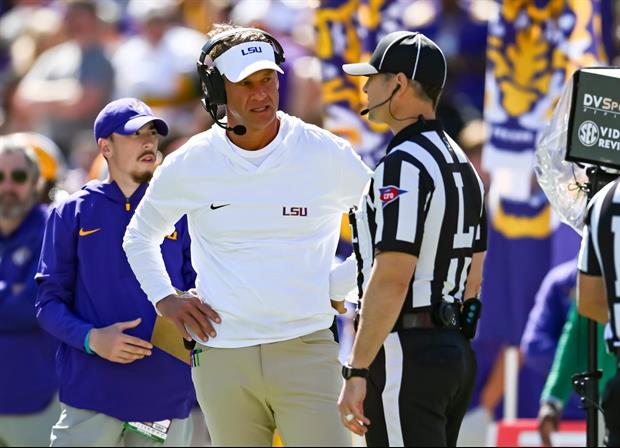
Kirby Lee-USA TODAY Sports
BATON ROUGE, La. — Louisiana Attorney General Liz Murrill has filed an amicus brief on behalf of the State of Louisiana in Jack Pyburn, et al. v. National Collegiate Athletic Association, et al.
In the filing, Attorney General Murrill describes the case as “a classic bait-and-switch” and asserts that “the State has an interest in college sports rules that are fair, consistent, and predictable—ones capable of being followed by athletes, coaches, and institutions who don’t have to choose between contempt charges or conference sanctions.”
The full brief can be seen here.
(Release via Attorney General Liz Murrill)
In the filing, Attorney General Murrill describes the case as “a classic bait-and-switch” and asserts that “the State has an interest in college sports rules that are fair, consistent, and predictable—ones capable of being followed by athletes, coaches, and institutions who don’t have to choose between contempt charges or conference sanctions.”
quote:
CONCISE STATEMENT OF THE CASE
This case is a classic bait-and-switch. The NCAA told Plaintiffs—members of the Class of 2022 who want to play college football—that they were no longer eligible for play after the typical timeline for collegiate competition had run its course. Then, shortly thereafter, the NCAA rescinded that decision and promised instead that these individuals could receive an additional year of eligibility to play the sport they love. But, around April 27, 2026, the NCAA changed course again and once more stripped Plaintiffs of their ability to return to the field. Many of those players then took the NCAA at its word and moved on from college football.
But the story didn’t end there. Following developments across the country, Plaintiffs followed the growing trend and filed their Petition in this Court, seeking relief under Louisiana law from the NCAA’s eligibility determination. On August 28, 2026, this Court entered a temporary restraining order allowing Plaintiffs to pursue the opportunity they had been denied, including by requiring that they be allowed to enter the transfer portal. The NCAA and its conferences, however, have their own rules governing the consequences for institutions that allow athletes to compete contrary to those rules. The result is a struggle that reaches past the Plaintiffs themselves: Louisiana’s public universities now face the prospect of having to comply with this Court’s order while risking serious penalties from the governing body of the sport.
The NCAA’s ever-changing rules have consequences beyond these individual athletes. They affect the universities that recruit them, the other student-athletes with whom they compete, and the coaches and administrators responsible for complying with an increasingly complicated set of rules.And those rules can determine who gets a roster spot, who receives a scholarship, and who plays in Death Valley on Saturday, and it forces Louisiana public universities and Louisiana’s student-athletes into a no-win situation.
The State of Louisiana cares deeply about that problem. Louisiana’s public universities and their student-athletes are participants in this convoluted arrangement and have struggled under the “broken” system for years now.¹ And they have operated thereunder often without access to a fair and unbiased decisionmaker. The Louisiana Constitution protects all Louisiana citizens’ access to open courts and likewise promises them that they may rely on the resulting court decisions. La. Const. art. 1, § 22. It is imperative to players and institutions across the State, then, that they can (and should) listen to court orders, and do so without fear of later punishment. If reprisal outside the court system cuts against those individuals who exercised and protected their rights within it, there is, in fact, no meaningful remedy from our courts.
Ultimately, the State has an interest in college sports rules that are fair, consistent, and predictable—ones capable of being followed by athletes, coaches, and institutions who don’t have to choose between contempt charges or conference sanctions.
The full brief can be seen here.
(Release via Attorney General Liz Murrill)
Loading Twitter/X Embed...
If tweet fails to load, click here. Popular Stories
 12
12
Latest Headlines
 Follow TigerDroppings for LSU Football News