




- My Forums
- Tiger Rant
- LSU Recruiting
- SEC Rant
- Saints Talk
- Pelicans Talk
- More Sports Board
- Fantasy Sports
- Golf Board
- Soccer Board
- O-T Lounge
- Tech Board
- Home/Garden Board
- Outdoor Board
- Health/Fitness Board
- Movie/TV Board
- Book Board
- Music Board
- Political Talk
- Money Talk
- Fark Board
- Gaming Board
- Travel Board
- Food/Drink Board
- Ticket Exchange
- TD Help Board
Customize My Forums- View All Forums
- Show Left Links
- Topic Sort Options
- Trending Topics
- Recent Topics
- Active Topics
Started By
Message
re: Healthcare vs Health
Posted on 5/25/18 at 8:10 pm to starsandstripes


Posted on 5/25/18 at 8:10 pm to starsandstripes
Reductionist science gonna reduce...
Before folks respond reflexively
A calorie deficit will result in weight loss. The issue is understanding how to do this in an sustainable, actionable manner
Example:
Let’s use Bill Gates wealth as an example
A reductionist would say that he is rich because he earns more money than he spends. They are indeed “correct”, but the statement does little to inform the overall situation with actionable recommendations
That said...
LA Times
Before folks respond reflexively
A calorie deficit will result in weight loss. The issue is understanding how to do this in an sustainable, actionable manner
Example:
Let’s use Bill Gates wealth as an example
A reductionist would say that he is rich because he earns more money than he spends. They are indeed “correct”, but the statement does little to inform the overall situation with actionable recommendations
That said...
LA Times
quote:
Counting calories won't reduce obesity. So why are we requiring restaurants to post them?
By NINA TEICHOLZ MAY 20, 2018 | 4:05 AM
quote:
Counting calories is now the law of the land. This month, a long-delayed regulation came into effect requiring all food chains with 20 or more locations to list calorie information on their menus. Nutritionists fought to include the rule in the Affordable Care Act as a means of fighting obesity. But it turns out the regulation is based on weak science.
quote:
Why should the Food and Drug Administration impose a regulation to shave 38 calories off a Chipotle order? The justification from the start, as articulated in a blog post by FDA Commissioner Scott Gottlieb, is that saving even a few dozen calories a day would add up over the course of a year. "Based on that sort of reduction," he wrote, "you could end up consuming 10,000 to 20,000 fewer calories making you three to five pounds slimmer."
Although we've long held on to the intuitive idea that slimming down is merely a matter of beating the math — create a caloric deficit of 3,600 calories and lose a pound of fat — the evidence has been stacking up against it for more than a century.
quote:
Counting calories doesn't work — and it distracts us from what does work. Based on the most up-to-date science, this means curbing carbs instead of counting calories, and getting a good night's sleep. It's a shame the government is requiring restaurants to bear the burden of a policy that is sure to fail. Nina Teicholz is a science journalist and executive director of the Nutrition Coalition, a group dedicated to evidence-based nutrition policy.
 1
1

Posted on 6/5/18 at 4:28 pm to ThinePreparedAni
LA Times
Youtube / CBS
quote:
'I have definitely hit the jackpot.' Advanced breast cancer disappears after new immunotherapy
Melissa Healy
By MELISSA HEALY
JUN 04, 2018 | 4:10 PM
quote:
In the all-hands effort to harness the powers of the immune system to fight cancer, scientists have reported a new approach that eliminated all evidence of advanced-stage breast cancer in a 49-year-old woman who had run out of treatment options.
The patient’s “complete durable cancer regression” followed a single infusion of her own immune cells, which were painstakingly chosen for their ability to recognize and fight her tumors — then expanded into an army of 82 billion identical cells.
quote:
Over the course of five months, they broke down and carried off the two large tumors growing on her chest wall, along with four tennis-ball-sized tumors lodged in her liver.
quote:
In the fast-moving world of cancer research, the new report is being hailed as a development that could open a broad new front in cancer immunotherapy.
Existing immunotherapy drugs have shown little or no effectiveness against the kinds of solid tumors that account for 90% of cancer deaths, including those of the breast, prostate and colon. This new approach could change that, experts said.
quote:
Indeed, Perkins’ response to the immunotherapy treatment is “unprecedented,” Laszlo G. Radvanyi of the Ontario Institute for Cancer Research wrote in a commentary that accompanies the study. “We are now at the cusp of a major revolution.”
The success with Perkins’ breast cancer follows reports of similar responses in patients who had advanced-stage cancers of the bile duct, colon and cervix. All are examples of common cancers that don’t typically respond to other immunotherapies.
“This approach, while in its infancy, is capable of treating a wide variety of cancer types,” said Dr. Steven A. Rosenberg, an immunotherapy pioneer at the National Cancer Institute who led the team that treated Perkins.
Youtube / CBS
quote:
Groundbreaking breast cancer treatment saves woman's life
2,522 views
CBS Evening News
Published on Jun 4, 2018
SUBSCRIBE 201K
Judy Perkins battled cancer for years before she found Dr. Steven Rosenberg, a pioneer in harnessing the immune system to fight cancer. His approach helped to save her life, even keeping her cancer free more than two years later. CBS News chief medical correspondent Dr. Jon LaPook explains.
quote:
'Bernard avait raison. Le germe n'est rien, c'est le terrain qui est tout.'
('Bernard was right. The microbe is nothing, the soil is everything.')
Louis Pasteur to Claude Bernard...
Posted on 7/4/18 at 8:42 am to ThinePreparedAni
https://peterattiamd.com
PODCAST
Tim Ferriss: depression, psychedelics, and emotional resilience (EP.01)
PODCAST
Rhonda Patrick, Ph.D.: the performance and longevity paradox of IGF-1, ketogenic diets and genetics, the health benefits of sauna, NAD+, and more (EP.02)
PODCAST
Ron Krauss, M.D.: a deep dive into heart disease (EP.03)
PODCAST
Tim Ferriss: depression, psychedelics, and emotional resilience (EP.01)
PODCAST
Rhonda Patrick, Ph.D.: the performance and longevity paradox of IGF-1, ketogenic diets and genetics, the health benefits of sauna, NAD+, and more (EP.02)
PODCAST
Ron Krauss, M.D.: a deep dive into heart disease (EP.03)

Posted on 7/4/18 at 9:28 am to ThinePreparedAni
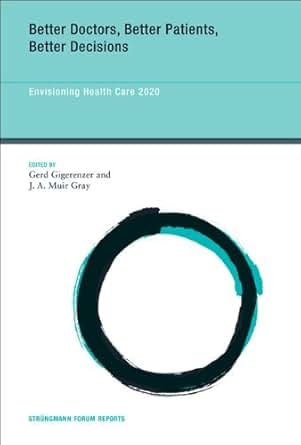
Everyone should look for a copy of this book, though I'm sure no one will. I'm not going to go into it more than that. It will fall on deaf ears.
Posted on 7/4/18 at 9:58 am to starsandstripes
quote:
Everyone should look for a copy of this book, though I'm sure no one will. I'm not going to go into it more than that. It will fall on deaf ears.

Will check it out
Posted on 9/25/18 at 8:06 am to ThinePreparedAni
https://www.nature.com/articles/d41586-018-06727-0
---
PS. This is going down in a few days:
I am in the pro-Kresser camp, but will eager to hear both sides of the debate. I think Kahn may be suprised to hear that Kresser's approach is similar to his (people who eat plants/vegetable with well sourced meats )
)
quote:
NEWS 17 SEPTEMBER 2018
UPDATE 17 SEPTEMBER 2018 CORRECTION 19 SEPTEMBER 2018
Mass resignation guts board of prestigious Cochrane Collaboration
Governing board of the evidence-based medicine group may now be dissolved entirely.
quote:
The board of the Cochrane Collaboration, a prestigious group that reviews health evidence, has been reduced from 13 to 6 members, following a controversial vote to expel a member for the first time in its 25-year existence.
On 14 September, Peter Gøtzsche, director of the Cochrane’s Nordic centre and a member of its governing board, posted a statement on the centre’s website announcing that he had been expelled as a member of the Cochrane Collaboration, after a vote by 6 of 13 of the board’s members.
quote:
Gøtzsche says that no justification was given for the expulsion but that he was accused by the board of bringing the organization into “disrepute”. The organization — which carries out systematic reviews of health-care interventions — told Nature it had received “numerous complaints” about Gøtzsche after the publication earlier this year of a critique he co-authored, entitled ‘The Cochrane HPV vaccine review was incomplete and ignored important evidence of bias’ and published in the BMJ Evidence-Based Medicine.
quote:
Gøtzsche’s statement says that there is a “growing top-down authoritarian culture and an increasingly commercial business model” taking root at Cochrane that “threaten the scientific, moral and social objectives of the organization”?. He has also been an outspoken critic of Cochrane’s relationship with the pharmaceutical industry. (Cochrane’s policies state that its reviews cannot be “funded or conducted by commercial sponsors or commercial sources with a real or potential vested interest in the findings of a specific review”.)
David Hammerstein Mintz, a board member who stepped down in protest, said some members thought that Gøtzsche’s critical views of Cochrane were “disloyal”. (Nature has approached the collaboration for comment on these points and is awaiting its response.) “It might have been a headache, but the harm done by expelling Peter is much greater than any inconvenience caused by scientific debate,” he says.
---
PS. This is going down in a few days:
quote:
RENOWNED VEGAN DOCTOR TO DEBATE PALEO DIET ON JOE ROGAN PODCAST
Cardiologist Joel Kahn, MD, anticipates debating about the paleo movement, the ketogenic diet, fasting, and the “carnivore movement” with pro-paleo author Chris Kresser and host Joe Rogan.
by NICOLE AXWORTHY
AUGUST 30, 2018
quote:
Renowned vegan cardiologist Joel Kahn, MD, will appear on the Joe Rogan Experience (JRE) podcast on September 27 for a debate with pro-paleo author Chris Kresser.
I am in the pro-Kresser camp, but will eager to hear both sides of the debate. I think Kahn may be suprised to hear that Kresser's approach is similar to his (people who eat plants/vegetable with well sourced meats
)Posted on 10/20/18 at 11:00 am to ThinePreparedAni
quote:
Bernard avait raison. Le germe n'est rien, c'est le terrain qui est tout.'
('Bernard was right. The microbe is nothing, the soil is everything.')
Louis Pasteur to Claude Bernard...
For your scrutiny
Stay healthy PT
Question “dogma” and “settled science”. See sig quote...
https://www.nytimes.com/2018/10/18/science/cancer-genetic-mutations.html
quote:
Researchers Explore a Cancer Paradox Healthy cells carry a surprising number of cancer-linked mutations, but they don’t turn into tumors. What’s holding them back?
By Carl Zimmer
Oct. 18, 2018
Cancer
quote:
The study also raised questions about efforts to detect cancer at its earliest stages, when cancer cells are still rare, Dr. Kennedy said: “Just because someone has mutations associated with cancer doesn’t mean actually they have a malignancy.”
We are not slaves to our genetics
The way you “play your sheet of music” matters immensely:
quote:
Cancer is a disease of mutations. Tumor cells are riddled with genetic mutations not found in healthy cells. Scientists estimate that it takes five to 10 key mutations for a healthy cell to become cancerous.
Some of these mutations can be caused by assaults from the environment, such as ultraviolet rays and cigarette smoke. Others arise from harmful molecules produced by the cells themselves. In recent years, researchers have begun taking a closer look at these mutations, to try to understand how they arise in healthy cells, and what causes these cells to later erupt into full-blown cancer. The research has produced some major surprises. For instance, it turns out that a large portion of the cells in healthy people carry far more mutations than expected, including some mutations thought to be the prime drivers of cancer. These mutations make a cell grow faster than others, raising the question of why full-blown cancer isn’t far more common.
“This is quite a fundamental piece of biology that we were unaware of,” said Inigo Martincorena, a geneticist at the Wellcome Sanger Institute in Cambridge, England.
The fricking hubris
“He” / geneticists have a pronoun problem, don’t believe me:
LINK
quote:
An Old Idea, Revived:
Starve Cancer to Death
In the early 20th century, the German biochemist Otto Warburg
believed that tumors could be treated by disrupting their source
of energy. His idea was dismissed for decades — until now.
BY SAM APPLEMAY 12, 2016
quote:
The story of modern cancer research begins, somewhat improbably, with the sea urchin. In the first decade of the 20th century, the German biologist Theodor Boveri discovered that if he fertilized sea-urchin eggs with two sperm rather than one, some of the cells would end up with the wrong number of chromosomes and fail to develop properly. It was the era before modern genetics, but Boveri was aware that cancer cells, like the deformed sea urchin cells, had abnormal chromosomes; whatever caused cancer, he surmised, had something to do with chromosomes.
Today Boveri is celebrated for discovering the origins of cancer, but another German scientist, Otto Warburg, was studying sea-urchin eggs around the same time as Boveri. His research, too, was hailed as a major breakthrough in our understanding of cancer. But in the following decades, Warburg’s discovery would largely disappear from the cancer narrative, his contributions considered so negligible that they were left out of textbooks altogether.
quote:
In the years following his breakthrough, Warburg became convinced that the Warburg effect occurs because cells are unable to use oxygen properly and that this damaged respiration is, in effect, the starting point of cancer. Well into the 1950s, this theory — which Warburg believed in until his death in 1970 but never proved — remained an important subject of debate within the field. And then, more quickly than anyone could have anticipated, the debate ended. In 1953, James Watson and Francis Crick pieced together the structure of the DNA molecule and set the stage for the triumph of molecular biology’s gene-centered approach to cancer. In the following decades, scientists came to regard cancer as a disease governed by mutated genes, which drive cells into a state of relentless division and proliferation. The metabolic catalysts that Warburg spent his career analyzing began to be referred to as “housekeeping enzymes” — necessary to keep a cell going but largely irrelevant to the deeper story of cancer.
They discovered the concept of DNA while in an altered state on LSD (look it up...)
quote:
But over the past decade, and the past five years in particular, something unexpected happened: Those housekeeping enzymes have again become one of the most promising areas of cancer research. Scientists now wonder if metabolism could prove to be the long-sought “Achilles’ heel” of cancer, a common weak point in a disease that manifests itself in so many different forms. There are typically many mutations in a single cancer. But there are a limited number of ways that the body can produce energy and support rapid growth. Cancer cells rely on these fuels in a way that healthy cells don’t. The hope of scientists at the forefront of the Warburg revival is that they will be able to slow — or even stop — tumors by disrupting one or more of the many chemical reactions a cell uses to proliferate, and, in the process, starve cancer cells of the nutrients they desperately need to grow.
quote:
Even James Watson, one of the fathers of molecular biology, is convinced that targeting metabolism is a more promising avenue in current cancer research than gene-centered approaches. At his office at the Cold Spring Harbor Laboratory in Long Island, Watson, 88, sat beneath one of the original sketches of the DNA molecule and told me that locating the genes that cause cancer has been “remarkably unhelpful” — the belief that sequencing your DNA is going to extend your life “a cruel illusion.” If he were going into cancer research today, Watson said, he would study biochemistry rather than molecular biology. “I never thought, until about two months ago, I’d ever have to learn the Krebs cycle,” he said, referring to the reactions, familiar to most high-school biology students, by which a cell powers itself. “Now I realize I have to.”

Don’t be domain dependent folks...
Question everything...
Posted on 10/20/18 at 11:07 am to ThinePreparedAni
Continued:
Profoundly important article for those who understand the implications:

+900%25+25%25+age+60++20%25+15%25+10%25+5%25.jpg)

Save yourself
Those who should “know better” have too much pride to course correct...
Again, for emphasis:
quote:
Craig Thompson, the president and chief executive of the Memorial Sloan Kettering Cancer Center, has been among the most outspoken proponents of this renewed focus on metabolism. In Thompson’s analogy, the Warburg effect can be thought of as a social failure: a breakdown of the nutrient-sharing agreement that single-celled organisms signed when they joined forces to become multicellular organisms. His research showed that cells need to receive instructions from other cells to eat, just as they require instructions from other cells to divide.
Thompson hypothesized that if he could identify the mutations that lead a cell to eat more glucose than it should, it would go a long way toward explaining how the Warburg effect and cancer begin. But Thompson’s search for those mutations didn’t lead to an entirely new discovery. Instead, it led him to AKT, a gene already well known to molecular biologists for its role in promoting cell division. Thompson now believes AKT plays an even more fundamental role in metabolism. The protein created by AKT is part of a chain of signaling proteins that is mutated in up to 80 percent of all cancers. Thompson says that once these proteins go into overdrive, a cell no longer worries about signals from other cells to eat; it instead stuffs itself with glucose. Thompson discovered he could induce the “full Warburg effect” simply by placing an activated AKT protein into a normal cell. When that happens, Thompson says, the cells begin to do what every single-celled organism will do in the presence of food: eat as much as it can and make as many copies of itself as possible. When Thompson presents his research to high-school students, he shows them a slide of mold spreading across a piece of bread. The slide’s heading — “Everyone’s first cancer experiment” — recalls Warburg’s observation that cancer cells will carry out fermentation at almost the same rate of wildly growing yeasts.
quote:
Given Warburg’s own story of historical neglect, it’s fitting that what may turn out to be one of the most promising cancer metabolism drugs has been sitting in plain sight for decades. That drug, metformin, is already widely prescribed to decrease the glucose in the blood of diabetics (76.9 million metformin prescriptions were filled in the United States in 2014). In the years ahead, it’s likely to be used to treat — or at least to prevent — some cancers. Because metformin can influence a number of metabolic pathways, the precise mechanism by which it achieves its anticancer effects remains a source of debate. But the results of numerous epidemiological studies have been striking. Diabetics taking metformin seem to be significantly less likely to develop cancer than diabetics who don’t — and significantly less likely to die from the disease when they do. Near the end of his life, Warburg grew obsessed with his diet. He believed that most cancer was preventable and thought that chemicals added to food and used in agriculture could cause tumors by interfering with respiration. He stopped eating bread unless it was baked in his own home. He would drink milk only if it came from a special herd of cows, and used a centrifuge at his lab to make his cream and butter. Warburg’s personal diet is unlikely to become a path to prevention. But the Warburg revival has allowed researchers to develop a hypothesis for how the diets that are linked to our obesity and diabetes epidemics — specifically, sugar-heavy diets that can result in permanently elevated levels of the hormone insulin — may also be driving cells to the Warburg effect and cancer.
quote:
During Warburg’s lifetime, insulin’s effects on metabolic pathways were even less well understood. But given his ego, it’s highly unlikely that he would have considered the possibility that anything other than damaged respiration could cause cancer. He died sure that he was right about the disease. Warburg framed a quote from Max Planck and hung it above his desk: “A new scientific truth does not triumph by convincing its opponents and making them see the light, but rather because its opponents eventually die.”
Profoundly important article for those who understand the implications:
Save yourself
Those who should “know better” have too much pride to course correct...
Again, for emphasis:
quote:
Warburg framed a quote from Max Planck and hung it above his desk: “A new scientific truth does not triumph by convincing its opponents and making them see the light, but rather because its opponents eventually die.”
This post was edited on 10/20/18 at 11:19 am

Posted on 10/20/18 at 11:11 am to ThinePreparedAni
3 things to help fix healthcare:
1) Open up markets.
2) Emphasize not being fatasses (this goes for me too).
3) Stop wasting so much money keeping people alive a few extra weeks or months.
1) Open up markets.
2) Emphasize not being fatasses (this goes for me too).
3) Stop wasting so much money keeping people alive a few extra weeks or months.


Posted on 10/20/18 at 12:46 pm to ThinePreparedAni
I've been saying this for years. You are what you eat.
It's simply inputs and outputs. You can't keep inputting shite and expecting shite not to come out the other end.
It's simply inputs and outputs. You can't keep inputting shite and expecting shite not to come out the other end.
This post was edited on 10/20/18 at 12:48 pm


Posted on 10/20/18 at 12:51 pm to gthog61
quote:
Emphasize not being fatasses
Well, you're just a fataphobe. But I did laugh at one post on another site yesterday. It was a screen shot from a dating site.
The woman was obese and had nostrils from one ear to the next. She complained that she couldn't find a job.
A shitlord replied: 'You could get a job finding truffles.'

Posted on 10/20/18 at 12:57 pm to ThinePreparedAni
quote:No one wants to read a book on here. Boil all of that down to a paragraph or two and I am sure someone will engage you; maybe even marry you.
Bumped to show I post “mainstream” stuff (just few engage me )
Posted on 10/20/18 at 1:21 pm to Jake88
quote:
Plumbing, auto mechanics, electricians, appliance repair
As someone who does all these things, you're full of shite.
Posted on 10/20/18 at 1:45 pm to nola000
quote:It's not true for healthcare either. If you go to a doctor that doesn't warn you about problems that you will face if you don't reduce carbs, smoking, alcohol consumption, increase activity level (excercise), etc., then you need to find another doctor. Compliance is on the patient. Just like changing your oil as a preventive measure with automobiles. Do it regularly and you avoid some issues. Non compliance and your motor is screwed. It's easier to change your oil though than to resist unhealthy living.
As someone who does all these things, you're full of shite.

Posted on 10/20/18 at 3:58 pm to Diamondawg
quote:
No one wants to read a book on here. Boil all of that down to a paragraph or two and I am sure someone will engage you; maybe even marry you.
Actually studies indicate more and more of us are unable to read a book or any type extended written passage. Because of the thousands of hours spent scanning bits of information on our computers and smart phones, and the brain's neuro-plasticity, we have re-programed how our brains processes information, and no longer have the focus required for reading in depth
Posted on 10/20/18 at 4:24 pm to EA6B
quote:Yeah - not familiar with the study but there is a reason this place is called a "message" board.
Actually studies indicate more and more of us are unable to read a book or any type extended written passage.
Posted on 10/28/18 at 1:45 pm to ThinePreparedAni
quote:
Researchers Explore a Cancer Paradox Healthy cells carry a surprising number of cancer-linked mutations, but they don’t turn into tumors. What’s holding them back?
Another angle for looking at genetics
The implications are rather profound (depending on how your mind works...)
https://www.theatlantic.com/amp/article/573055/
quote:
Inherited Trauma Shapes Your Health
A new study on Civil War prisoners adds to the evidence suggesting that our parents’—and even grandparents’—experiences might affect our DNA.
OLGA KHAZAN
OCT 16, 2018
quote:
Often when I complain to my therapist about how stressed out I am by a problem I’m having, she says a variation on the same thing:
“Well, like all Ashkenazi Jews, you have a lot of intergenerational trauma. You know, because of everything that’s ... happened.”
Of course you’re anxious, she seems to say; you’re Jewish! I think it’s meant to help me feel more at peace with my emotions, but I must admit I find this response deeply unsatisfying.
I am, of course, grateful that my life is easier than the lives of my relatives—Jewish and otherwise—who survived World War II. At the same time, I can’t do anything about the fact that the Holocaust happened, so I don’t want to spend time thinking about its effects on my cortisol levels. I can, however, write the perfect email to get myself out of a scrape, or find a way to stop thinking about why I didn’t get some plaudit or another.
“The Jews have nothing to do with it!” I always want to say in response, as though I’m debunking some George Soros–related conspiracy.
But a growing body of evidence suggests my therapist might be right and I’m wrong.
quote:
The most recent chapter is a new study in the Proceedings of the National Academy of Sciences this week by researchers from the National Bureau of Economic Research. They found that the sons of Union Army soldiers who endured grueling conditions as prisoners of war were more likely to die young than the sons of soldiers who were not prisoners. This is despite the fact that the sons were born after the war, so they couldn’t have experienced its horrors personally. In other words, it seemed like the stresses of war were getting passed down between generations.
quote:
Because the study authors controlled for other factors that might have influenced the sons’ longevity, like socioeconomic status and the quality of the parents’ marriages, they believe this effect on mortality is working through epigenetics, or the process by which genes are switched on and off. These epigenetic changes are inherited by later generations, setting diseases in motion.
quote:
Jirtle explains the epigenome as a type of software that runs on the computer-like cell. The epigenome can affect lots of different cells, just as a software program can be run on many different computers. He thinks this study might help explain why states in the southern United States—which had more severe food shortages during and after the Civil War—have worse health outcomes today.
quote:
Epigenetic links have also been established in animal studies. For example, mice that have been taught to fear the smell of cherries when it was paired with an electric shock had children and grandchildren that also showed signs of anxiety when exposed to the odor, even though they had never “learned” the painful association.
This clue was noted early in butterflies (Monarch butterflies to be precise)
https://isciencemag.co.uk/blog/butterflies-brains-dna-games/
quote:
First is the metamorphosis of a caterpillar to a butterfly. This transformation is incredibly mystical, wonderful and intensely interesting, both as an allegory and a problem-solving exercise. Scientists asked “If DNA explains the production of new species, what happens to genetic information before and after getting into that cocoon?” The answer was nothing. The genes of the caterpillar were identical to those of the butterfly. Creationists had a field day, proclaiming DNA useless, not contributing to an organism’s form. The geneticists were baffled – they knew genes contributed to an organism’s appearance.
quote:
Epigenetics explains the metamorphosis of caterpillar to butterfly, foetus to adult, and also shows us ways to reprogram the genetic code, pushing cells back up Waddington’s troughs. The Human Genome Project is complete but now collaborations are underway for the Human Epigenome Project – you can bet that this time you won’t be 70% similar to a banana.

This post was edited on 10/28/18 at 1:48 pm
Posted on 1/15/19 at 8:49 am to ThinePreparedAni
https://civileats.com/2018/11/28/new-archive-reveals-how-the-food-industry-mimics-big-tobacc-to-suppress-science-shape-public-opinion/?_ke=eyJrbF9lbWFpbCI6ICJrZWxseWJvdWRyZWF1eGpyQGdtYWlsLmNvbSIsICJrbF9jb21wYW55X2lkIjogIm15NzV5NiJ9
Coke is more than happy to keep building playgrounds for kid...
A kind superficial gesture, but a sinister shell game of sorts...
quote:
New Archive Reveals How the Food Industry Mimics Big Tobacco to Suppress Science, Shape Public Opinion
A new trove of industry documents made public by UCSF also reveals conflicts of interest and aggressive tactics to squelch important public health information.
BY VIRGINIA GEWIN
FOOD + POLICY, Food Policy, HEALTH, Nutrition
Posted on: November 28, 2018
quote:
The email trove also revealed how Coca-Cola was mounting a global strategy to fight soda taxes. Among the tactics, they donated $1.5 million in 2014 to a nonprofit organization called the Global Energy Balance Network to promote the notion that increased exercise is more important than what people eat or drink. In addition, the emails revealed that the industry was also tracking the research and activities of potential critics—including professor Nestle. She notified UCSF of the leaked documents, and they swiftly copied them for the collection. Weeks later, the DC Leaks website disappeared.
Schmidt says industry documents have already “changed hearts and minds,” notably helping to reveal how industry sponsors science that favors industry interests, and the subsequent exposure of some scientific conflicts of interest. For example, the University of Colorado School of Medicine returned a $1 million gift from Coca-Cola once it was revealed that the money was used to fund an advocacy group devoted to dismissing links between soda and obesity.
Kearns, Schmidt, and colleagues have published several papers calling into question sugar industry impacts on research findings and policy proposals—notably, funding reviews that cast doubt on the emerging evidence linking sugar to heart disease, backing research agendas that focused on approaches other than sugar reduction to prevent tooth decay, and, most disturbingly, squelching results that sucrose, a form of sugar, elevates an enzyme linked to bladder cancer. But the UCSF researchers’ work has only revealed the tip of the iceberg. “We need many more people looking at these documents to tell the story of what’s here,” says Kearns.
Coke is more than happy to keep building playgrounds for kid...
A kind superficial gesture, but a sinister shell game of sorts...
quote:
Food Companies Borrowing from Tobacco’s Playbook
Researchers have already uncovered disconcerting links between the tobacco and food industries. Kearns found a 1954 letter to the Tobacco Industry Research Committee from Robert Hockett, head of research at the Sugar Research Foundation, then a division of the industry trade group now known as the World Sugar Research Organization. In it, he touted the fact that he had organized research projects in medical schools, hospitals, and universities that “exonerated sugar of most of the charges that had been laid against it” and that his experience may be useful to tobacco. He was eventually hired as the tobacco industry group’s assistant science director.
Decades later, in the 1980s, Philip Morris kicked off a trend of tobacco companies acquiring food and beverage companies. A close look at food companies that were purchased by tobacco companies found a “systematic transfer of people, knowledge, information, and technology from tobacco to the sugar and beverage companies,” says Kim Hanh Nguyen, a UCSF health policy researcher who has used the archives to unpack collaborations between the two industries. A document Nguyen found in the UCSF archives explained why this was a good strategy, she said at the launch event: “People can quit smoking or drinking, but not eating.”


Posted on 1/15/19 at 8:52 am to ThinePreparedAni
I'd be curious to know how much influence these companies had on the USDA Food Pyramid.
We are a nation of fatties because of highly processed foods and sugar, not dietary fat consumption.
We are a nation of fatties because of highly processed foods and sugar, not dietary fat consumption.
Posted on 1/15/19 at 9:00 am to Centinel
quote:
We are a nation of fatties because of highly processed foods and sugar, not dietary fat consumption.
Yes, also couple that with the illusion of complexity
A back to basic, simple approach is warranted (sadly, simple does not equal easy in 2019)

This post was edited on 1/15/19 at 9:01 am

 Page 2 of 3

Popular
Back to top
 Follow TigerDroppings for LSU Football News