




- My Forums
- Tiger Rant
- LSU Recruiting
- SEC Rant
- Saints Talk
- Pelicans Talk
- More Sports Board
- Fantasy Sports
- Golf Board
- Soccer Board
- O-T Lounge
- Tech Board
- Home/Garden Board
- Outdoor Board
- Health/Fitness Board
- Movie/TV Board
- Book Board
- Music Board
- Political Talk
- Money Talk
- Fark Board
- Gaming Board
- Travel Board
- Food/Drink Board
- Ticket Exchange
- TD Help Board
Customize My Forums- View All Forums
- Show Left Links
- Topic Sort Options
- Trending Topics
- Recent Topics
- Active Topics
Started By
Message

The Battle of Gettysburg - 157th Anniversary | Day One - Morning Phase | July 1, 1863
Posted on 7/1/20 at 10:19 am

Posted on 7/1/20 at 10:19 am
A DELAYING ACTION
West of the town of Gettysburg there are several prominent geographic features that dominate the landscape – all of them ridge lines. Closest to the town was Seminary Ridge, followed about one half mile later by McPherson’s Ridge. A half mile beyond lay Herr Ridge. Finally, roughly three miles west of Gettysburg, was the geographic feature known as Knoxlyn Ridge. These ridges all ran in a north-south direction while stacked from west to east. Due to their orientation, these features would make great defensive positions for Brigadier General John Buford and the 2,700 troopers of his cavalry division.
Buford had decided to position his main line of defense along McPherson’s Ridge. Here he posted the bulk of his men as well as his battery of horse artillery under the command of Lieutenant John Calef. Seeking to delay the enemy, Buford realized that deception was the order of the day. So he ordered Calef to spread his six guns out all over the field around McPherson’s Ridge to give the impression of a larger force. He also had his cavalry vedettes as far out as Knoxlyn Ridge to give his command good warning of the approaching enemy.
Posted along Knoxlyn Ridge, some 700 yards east of Marsh Creek, was the vedette commanded by Sergeant Shafer, 8th Illinois Cavalry. At about 7:00 AM on the morning of July 1, Privates Kelley and Hale observed a column of Confederate infantry approaching from the west on the Chambersburg Pike. Their commanding officer, Lieutenant Marcellus Jones, was hastily summoned to the front. By the time Jones arrived, the column of infantry had reached the bridge over the creek. Private George Sager, mounted on his horse beside Jones, raised his carbine to fire. Lieutenant Jones held out his hand in a halting manner.
“Hold on a minute, George,” Jones said, “give me the honor of opening the ball.”
Marcellus Jones leapt down from his horse and requested Shafer’s carbine. Kneeling down on the ground, Jones rested the carbine along a fence post. Taking aim at an officer on horse back, he squeezed the trigger and fired the first shot of the Battle of Gettysburg. It was 7:30 AM.

First Shot Marker - Battle of Gettysburg (Knoxlyn Ridge)
Jones’s was just the first of a series of shots that echoed from Knoxlyn Ridge that morning. The Confederates advancing over Marsh Creek, though out of range of these shots, could hear the “pop” “pop” of distant rifle discharges. Looking through their field glasses, it soon became evident to the Confederate officers in and around the column of advancing infantry that the men doing the shooting were not militia.
Realizing they were confronted by Union cavalry of unknown strength, the column was brought to a halt and skirmishers were ordered to deploy in front of the advance to ascertain the strength and position of the Union forces. Buford had his first victory of the morning. The name of the game at the particular juncture was time and by forcing the Rebels to halt and deploy skirmishers they were giving the Union infantry time to arrive and reinforce them.
The Union cavalry would fight the oncoming infantry dismounted. And since they were armed with breach-loading carbines they could fire faster and reload from a concealed position, such as lying down in the tall grass. Every time the Confederate skirmishers would close in on their position, the Union troopers would mount their horses and fall back to another position, dismount, and repeat the process. This pattern would repeat itself all the way from Knoxlyn Ridge to Herr Ridge, a distance of about a mile.
The man in charge of the Confederate force advancing on Gettysburg, Major General Henry Heth, was becoming more and more frustrated with the Union cavalry in his front. This was his first campaign as a division commander and he was tired of seeing his nearly 7,500 men slowed up by a force he clearly outnumbered exponentially. As the head of his column summited Herr Ridge, the town of Gettysburg came into view – one mile distant. In front of his advance was wide open farmland with pockets of woodlots dotting the landscape. This was as good a place as any to deploy his division, Heth concluded.
Deciding to brush aside the Union cavalry and take the town of Gettysburg by force, Heth ordered his two lead brigades under the command of Brigadier General James Archer and Brigadier General Joseph R. Davis to deploy their men into line of battle. Davis was to deploy his brigade north of the Chambersburg Pike while Archer was to deploy his south of the pike. This ate up even more time and allowed Buford to consolidate his main line of defense along McPherson’s Ridge. By this time, the Confederate infantry was within sight and range of Calef’s horse battery. The sound of booming artillery echoed across the landscape. Heth ordered the battery of William Pegram to deploy along Herr Ridge and respond with a barrage of his own. All the while crucial time was awarded to Buford as Heth waited impatiently for Archer and Davis to form their brigades into line of battle.
From atop the cupola in the Lutheran Seminary, Buford observed the impending assault through his field glasses. His men had done everything to delay the enemy but wouldn’t be able to withstand a full on assault from Heth’s brigades sweeping down from Herr Ridge. As he watched his troopers begin to form for the final defense of McPherson’s Ridge, an aide brought to his attention movement on the road to the south. It was Major General John F. Reynolds, trailed by his staff, finally arriving on the field.
“What goes, John?!” Reynolds called up to Buford as he reined in outside the seminary.
“There’s a devil to pay!” Buford replied.
Reynolds asked Buford if he could hold to which Buford responded that he could. The First Corps was minutes away from the field with the Eleventh Corps moving up just behind. As soon as the infantry began arriving, Reynolds explained, Buford could pull out his men and move to protect the army’s flanks. It was 10:20 AM.
Battle of Gettysburg - July 1, 1863 (7:30 AM-10:30 AM)

West of the town of Gettysburg there are several prominent geographic features that dominate the landscape – all of them ridge lines. Closest to the town was Seminary Ridge, followed about one half mile later by McPherson’s Ridge. A half mile beyond lay Herr Ridge. Finally, roughly three miles west of Gettysburg, was the geographic feature known as Knoxlyn Ridge. These ridges all ran in a north-south direction while stacked from west to east. Due to their orientation, these features would make great defensive positions for Brigadier General John Buford and the 2,700 troopers of his cavalry division.
Buford had decided to position his main line of defense along McPherson’s Ridge. Here he posted the bulk of his men as well as his battery of horse artillery under the command of Lieutenant John Calef. Seeking to delay the enemy, Buford realized that deception was the order of the day. So he ordered Calef to spread his six guns out all over the field around McPherson’s Ridge to give the impression of a larger force. He also had his cavalry vedettes as far out as Knoxlyn Ridge to give his command good warning of the approaching enemy.
Posted along Knoxlyn Ridge, some 700 yards east of Marsh Creek, was the vedette commanded by Sergeant Shafer, 8th Illinois Cavalry. At about 7:00 AM on the morning of July 1, Privates Kelley and Hale observed a column of Confederate infantry approaching from the west on the Chambersburg Pike. Their commanding officer, Lieutenant Marcellus Jones, was hastily summoned to the front. By the time Jones arrived, the column of infantry had reached the bridge over the creek. Private George Sager, mounted on his horse beside Jones, raised his carbine to fire. Lieutenant Jones held out his hand in a halting manner.
“Hold on a minute, George,” Jones said, “give me the honor of opening the ball.”
Marcellus Jones leapt down from his horse and requested Shafer’s carbine. Kneeling down on the ground, Jones rested the carbine along a fence post. Taking aim at an officer on horse back, he squeezed the trigger and fired the first shot of the Battle of Gettysburg. It was 7:30 AM.
First Shot Marker - Battle of Gettysburg (Knoxlyn Ridge)
Jones’s was just the first of a series of shots that echoed from Knoxlyn Ridge that morning. The Confederates advancing over Marsh Creek, though out of range of these shots, could hear the “pop” “pop” of distant rifle discharges. Looking through their field glasses, it soon became evident to the Confederate officers in and around the column of advancing infantry that the men doing the shooting were not militia.
Realizing they were confronted by Union cavalry of unknown strength, the column was brought to a halt and skirmishers were ordered to deploy in front of the advance to ascertain the strength and position of the Union forces. Buford had his first victory of the morning. The name of the game at the particular juncture was time and by forcing the Rebels to halt and deploy skirmishers they were giving the Union infantry time to arrive and reinforce them.
The Union cavalry would fight the oncoming infantry dismounted. And since they were armed with breach-loading carbines they could fire faster and reload from a concealed position, such as lying down in the tall grass. Every time the Confederate skirmishers would close in on their position, the Union troopers would mount their horses and fall back to another position, dismount, and repeat the process. This pattern would repeat itself all the way from Knoxlyn Ridge to Herr Ridge, a distance of about a mile.
The man in charge of the Confederate force advancing on Gettysburg, Major General Henry Heth, was becoming more and more frustrated with the Union cavalry in his front. This was his first campaign as a division commander and he was tired of seeing his nearly 7,500 men slowed up by a force he clearly outnumbered exponentially. As the head of his column summited Herr Ridge, the town of Gettysburg came into view – one mile distant. In front of his advance was wide open farmland with pockets of woodlots dotting the landscape. This was as good a place as any to deploy his division, Heth concluded.
Deciding to brush aside the Union cavalry and take the town of Gettysburg by force, Heth ordered his two lead brigades under the command of Brigadier General James Archer and Brigadier General Joseph R. Davis to deploy their men into line of battle. Davis was to deploy his brigade north of the Chambersburg Pike while Archer was to deploy his south of the pike. This ate up even more time and allowed Buford to consolidate his main line of defense along McPherson’s Ridge. By this time, the Confederate infantry was within sight and range of Calef’s horse battery. The sound of booming artillery echoed across the landscape. Heth ordered the battery of William Pegram to deploy along Herr Ridge and respond with a barrage of his own. All the while crucial time was awarded to Buford as Heth waited impatiently for Archer and Davis to form their brigades into line of battle.
From atop the cupola in the Lutheran Seminary, Buford observed the impending assault through his field glasses. His men had done everything to delay the enemy but wouldn’t be able to withstand a full on assault from Heth’s brigades sweeping down from Herr Ridge. As he watched his troopers begin to form for the final defense of McPherson’s Ridge, an aide brought to his attention movement on the road to the south. It was Major General John F. Reynolds, trailed by his staff, finally arriving on the field.
“What goes, John?!” Reynolds called up to Buford as he reined in outside the seminary.
“There’s a devil to pay!” Buford replied.
Reynolds asked Buford if he could hold to which Buford responded that he could. The First Corps was minutes away from the field with the Eleventh Corps moving up just behind. As soon as the infantry began arriving, Reynolds explained, Buford could pull out his men and move to protect the army’s flanks. It was 10:20 AM.
Battle of Gettysburg - July 1, 1863 (7:30 AM-10:30 AM)
 1
1

Posted on 7/1/20 at 10:19 am to RollTide1987
THE FIGHTING ESCALATES
Several miles south of Gettysburg, marching up the Emmitsburg Road, was the First Corps of the Army of the Potomac. In the lead were the two brigades of Brigadier General James S. Wadworth’s division – Lysander Cutler’s brigade of New Yorkers and Pennsylvanians and Solomon Meredith’s famed Iron Brigade. As they marched along on this cloudy morning of July 1, the expectation was to halt for the day in Gettysburg. Absolutely no one in the column expected to be involved in a fight that morning.
As they moved closer to Gettysburg, however, the distant boom of Calef’s and Pegram’s guns reached their ears. Instinctively the pace began to quicken. Orders were shouted and the men moved off road to march across the fields that Lee would utilize in his famous assault on Cemetery Ridge just two days later. The sounds of the artillery duel grew louder as the men ascended the eastern face of Seminary Ridge.
As they reached the summit of the ridge line, Cutler’s brigade was ordered to march north across the Chambersburg Pike while Meredith’s brigade continued to march westward toward a woodlot on McPherson’s Ridge. Greeting the men of the Iron Brigade was Reynolds himself, extolling them onward toward the sound of shooting. The men cheered their beloved corps commander and pushed past him, forming into line of battle, and getting ready to receive a Confederate assault.
As the first units of the First Corps began to arrive (out of sight) on the field, Heth was ready to launch his assault on McPherson’s Ridge. Archer protested Heth’s decision to attack, correctly pointing out that they had no idea what lay just ahead as well as advising his commanding general to have either the brigade of Pettigrew or John Brockenbrough advance behind in support. Heth overruled him and ordered the advance. The time was 10:30 AM.
Union reinforcements began streaming north and south of the Chambersburg Pike. Calef’s battery was relieved by Captain James Hall’s Maine battery of artillery. Supporting Hall on the left on the McPherson Farm were Cutler’s 95th and 84th New York (“14th Brooklyn”) regiments. Off to Hall’s right, on the north side of the Pike, were the 147th New York, 56th Pennsylvania, and 76th New York. Advancing against these regiments were the 55th North Carolina, 2nd Mississippi and 42nd Mississippi of Brigadier General Joseph R. Davis’s brigade.
Things quickly went south for Cutler as the 55th North Carolina overlapped the right flank of his line, the unfortunate 76th New York. As the New Yorkers were pressured from front and flank, their line quickly collapsed. This caused a domino effect that likewise saw the collapse of the 56th Pennsylvania. Cutler sent orders for the 147th New York to fall back as they were now all alone north of the Chambersburg Pike. The order reached their commanding officer but before he could give the order to retreat a Confederate bullet struck him in the neck. Astride his horse, the animal panicked and ran away with its rider.
With no order to retreat ever given, the men of the 147th New York, isolated and exposed, quickly came under fire from Davis’s entire command. In response to this, the New Yorkers refused their right flank, forming their line into a right angle. After a few minutes of taking heavy fire, the order to retreat finally arrived and the 147th New York broke for the rear. The right flank of the Union line had now completely disintegrated. Hall’s battery, positioned just to the right of the Chambersburg Pike, began to take fire from their right flank – forcing Hall to give up his position and lose a gun in the process.
Cutler vs. Davis - 10:30 AM

Happening almost simultaneously with the action north of the Pike was the action taking place between Meredith’s and Archer’s brigades south of the Pike in and around Herbst Woods. Here Reynolds was leading from the front, encouraging the men of the 2nd Wisconsin, advancing on the right of Meredith’s line, to move forward and drive the Confederates from the woods. As the fighting here began to intensify, Reynolds allowed the men from Wisconsin to pass him and do their work. To the left of the 2nd Wisconsin were the 7th Wisconsin, 19th Indiana, and 24th Michigan. Another unit of the Iron Brigade, the 6th Wisconsin, had been left in reserve at the Lutheran Seminary.
As the Union soldiers advanced into the Herbst Woods they came face to face with the 7th, 14th, and 1st Tennessee as well as the 13th Alabama of James Archer’s brigade. The 5th Alabama Battalion, advancing on Archer’s left, skirmished with the 95th New York and 14th Brooklyn of Cutler’s brigade on the McPherson Farm. The fighting was reaching a fever pitch in Herbst Woods. From behind the lines of the 2nd Wisconsin, Reynolds shouted from atop his horse: “Forward! For God’s sake forward!”
One of Reynolds’s staff officers watched his general turn to the rear as if looking for reinforcements. Seconds later, Reynolds fell from his horse and lay motionless on the ground. Men quickly closed in on the general to check to see if he was okay, but it was too late for Reynolds. A bullet - most likely a stray round and not the work of a sharpshooter - had struck the general in the back of his neck, just below the base of the skull, killing him instantly. Reynolds would be the highest ranking officer from either army to be killed in the Battle of Gettysburg. Command of the field passed to Brigadier General Abner Doubleday for the time being.
Major General John F. Reynolds - First Corps, Army of the Potomac
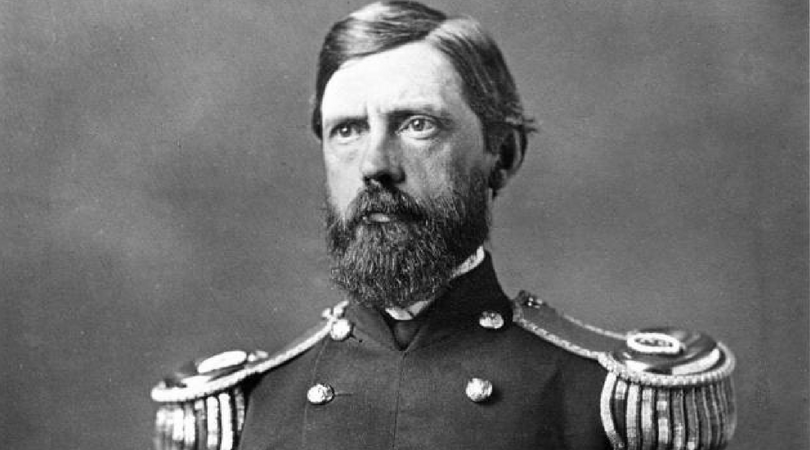
Even as shocked men stood over the lifeless body of Reynolds, the fighting for Herbst Woods continued just yards in front of them. The men of Archer’s and Meredith’s brigades were involved in a sharp, close-quarter fight that was felling dozens of men by the minute. Things abruptly came to an end, however, when the 24th Michigan overlapped the right flank of Archer’s line – a position held by the unfortunate 13th Alabama. As Archer’s right collapsed (almost at exactly the same time as Cutler’s left was collapsing north of the Chambersburg Pike) the Herbst Woods became a whirlwind of death amidst savage hand-to-hand combat.
Archer’s brigade, under pressure from what was arguably the best unit in the entire Army of the Potomac, collapsed. In the chaos of the retreat, Archer himself was captured by men of the 19th Indiana. Being led to the rear under guard, Archer passed by Abner Doubleday. The two men had been good friends before the war. Doubleday cordially greeted his old comrade, exclaiming warmly: “Good morning, Archer! How are you? I am glad to see you!”
Archer retorted rather simply: “Well, I am not glad to see you, by a damn sight!” He was the first Confederate general officer to be taken prisoner since Robert E. Lee had taken command of the Army of Northern Virginia the previous summer.
Archer vs. Meredith - 10:30 AM

Several miles south of Gettysburg, marching up the Emmitsburg Road, was the First Corps of the Army of the Potomac. In the lead were the two brigades of Brigadier General James S. Wadworth’s division – Lysander Cutler’s brigade of New Yorkers and Pennsylvanians and Solomon Meredith’s famed Iron Brigade. As they marched along on this cloudy morning of July 1, the expectation was to halt for the day in Gettysburg. Absolutely no one in the column expected to be involved in a fight that morning.
As they moved closer to Gettysburg, however, the distant boom of Calef’s and Pegram’s guns reached their ears. Instinctively the pace began to quicken. Orders were shouted and the men moved off road to march across the fields that Lee would utilize in his famous assault on Cemetery Ridge just two days later. The sounds of the artillery duel grew louder as the men ascended the eastern face of Seminary Ridge.
As they reached the summit of the ridge line, Cutler’s brigade was ordered to march north across the Chambersburg Pike while Meredith’s brigade continued to march westward toward a woodlot on McPherson’s Ridge. Greeting the men of the Iron Brigade was Reynolds himself, extolling them onward toward the sound of shooting. The men cheered their beloved corps commander and pushed past him, forming into line of battle, and getting ready to receive a Confederate assault.
As the first units of the First Corps began to arrive (out of sight) on the field, Heth was ready to launch his assault on McPherson’s Ridge. Archer protested Heth’s decision to attack, correctly pointing out that they had no idea what lay just ahead as well as advising his commanding general to have either the brigade of Pettigrew or John Brockenbrough advance behind in support. Heth overruled him and ordered the advance. The time was 10:30 AM.
Union reinforcements began streaming north and south of the Chambersburg Pike. Calef’s battery was relieved by Captain James Hall’s Maine battery of artillery. Supporting Hall on the left on the McPherson Farm were Cutler’s 95th and 84th New York (“14th Brooklyn”) regiments. Off to Hall’s right, on the north side of the Pike, were the 147th New York, 56th Pennsylvania, and 76th New York. Advancing against these regiments were the 55th North Carolina, 2nd Mississippi and 42nd Mississippi of Brigadier General Joseph R. Davis’s brigade.
Things quickly went south for Cutler as the 55th North Carolina overlapped the right flank of his line, the unfortunate 76th New York. As the New Yorkers were pressured from front and flank, their line quickly collapsed. This caused a domino effect that likewise saw the collapse of the 56th Pennsylvania. Cutler sent orders for the 147th New York to fall back as they were now all alone north of the Chambersburg Pike. The order reached their commanding officer but before he could give the order to retreat a Confederate bullet struck him in the neck. Astride his horse, the animal panicked and ran away with its rider.
With no order to retreat ever given, the men of the 147th New York, isolated and exposed, quickly came under fire from Davis’s entire command. In response to this, the New Yorkers refused their right flank, forming their line into a right angle. After a few minutes of taking heavy fire, the order to retreat finally arrived and the 147th New York broke for the rear. The right flank of the Union line had now completely disintegrated. Hall’s battery, positioned just to the right of the Chambersburg Pike, began to take fire from their right flank – forcing Hall to give up his position and lose a gun in the process.
Cutler vs. Davis - 10:30 AM
Happening almost simultaneously with the action north of the Pike was the action taking place between Meredith’s and Archer’s brigades south of the Pike in and around Herbst Woods. Here Reynolds was leading from the front, encouraging the men of the 2nd Wisconsin, advancing on the right of Meredith’s line, to move forward and drive the Confederates from the woods. As the fighting here began to intensify, Reynolds allowed the men from Wisconsin to pass him and do their work. To the left of the 2nd Wisconsin were the 7th Wisconsin, 19th Indiana, and 24th Michigan. Another unit of the Iron Brigade, the 6th Wisconsin, had been left in reserve at the Lutheran Seminary.
As the Union soldiers advanced into the Herbst Woods they came face to face with the 7th, 14th, and 1st Tennessee as well as the 13th Alabama of James Archer’s brigade. The 5th Alabama Battalion, advancing on Archer’s left, skirmished with the 95th New York and 14th Brooklyn of Cutler’s brigade on the McPherson Farm. The fighting was reaching a fever pitch in Herbst Woods. From behind the lines of the 2nd Wisconsin, Reynolds shouted from atop his horse: “Forward! For God’s sake forward!”
One of Reynolds’s staff officers watched his general turn to the rear as if looking for reinforcements. Seconds later, Reynolds fell from his horse and lay motionless on the ground. Men quickly closed in on the general to check to see if he was okay, but it was too late for Reynolds. A bullet - most likely a stray round and not the work of a sharpshooter - had struck the general in the back of his neck, just below the base of the skull, killing him instantly. Reynolds would be the highest ranking officer from either army to be killed in the Battle of Gettysburg. Command of the field passed to Brigadier General Abner Doubleday for the time being.
Major General John F. Reynolds - First Corps, Army of the Potomac
Even as shocked men stood over the lifeless body of Reynolds, the fighting for Herbst Woods continued just yards in front of them. The men of Archer’s and Meredith’s brigades were involved in a sharp, close-quarter fight that was felling dozens of men by the minute. Things abruptly came to an end, however, when the 24th Michigan overlapped the right flank of Archer’s line – a position held by the unfortunate 13th Alabama. As Archer’s right collapsed (almost at exactly the same time as Cutler’s left was collapsing north of the Chambersburg Pike) the Herbst Woods became a whirlwind of death amidst savage hand-to-hand combat.
Archer’s brigade, under pressure from what was arguably the best unit in the entire Army of the Potomac, collapsed. In the chaos of the retreat, Archer himself was captured by men of the 19th Indiana. Being led to the rear under guard, Archer passed by Abner Doubleday. The two men had been good friends before the war. Doubleday cordially greeted his old comrade, exclaiming warmly: “Good morning, Archer! How are you? I am glad to see you!”
Archer retorted rather simply: “Well, I am not glad to see you, by a damn sight!” He was the first Confederate general officer to be taken prisoner since Robert E. Lee had taken command of the Army of Northern Virginia the previous summer.
Archer vs. Meredith - 10:30 AM
Posted on 7/1/20 at 10:19 am to RollTide1987
While the crisis in the Herbst Woods had ebbed for the Federals, things were still looking bleak north of the Chambersburg Pike. Cutler’s men had been routed and Davis’s brigade had the very real opportunity of turning Meredith’s line. The 95th New York and 14th Brooklyn wheeled right to meet the oncoming threat from the north. Doubleday called the 6th Wisconsin out of reserve at the Lutheran Seminary to aide the two New York regiments in beating back Davis.
Davis’s brigade by this point, however, was very disorganized and the volume of fire being leveled at them by the three regiments advancing from the south was making it quite hot for them. Panicking, the Confederates jumped into an unfinished railroad cut that looked on the surface to be a good trench for cover and concealment. The walls of the cut, however, were 15 feet in some places – making it impossible to use as a trench.
Sensing an opportunity, the 95th New York, 14th Brooklyn, and 6th Wisconsin charged the railroad cut, receiving heavy fire and taking sizable losses along the way. Many of Davis’s men realized their mistake in using the cut and broke for the rear while they could still escape. Those who stayed behind were subjected to a merciless volume of fire and brutal hand-to-hand combat. Colonel Rufus Dawes, commanding officer of the 6th Wisconsin, took initiative to end the slaughter.
“Where is the colonel of this regiment?!” He called to the rebel soldiers.
Major John Blair of the 2nd Mississippi responded: “Who are you?!”
Dawes: “I command this regiment, sir. Surrender or I will fire!”
Dawes illustrated in his memoirs what happened next:
The Railroad Cut - 11:00 AM

WHAT HAD JUST HAPPENED?
Major General Henry Heth watched despondently from Herr Ridge as his attack collapsed in on itself. He had most definitely screwed up, disobey the orders of Robert E. Lee himself, calling for the army to avoid an engagement until it was concentrated. After the failure of his morning assault, Heth called a halt to all further advances against Gettysburg for the present moment. Heth sent word back to Hill who was still at Cashtown about what had transpired west of Gettysburg and requested further instructions.
Meanwhile, on the Union side of things, Doubleday began consolidating and strengthening the First Corps’ position along McPherson’s Ridge. Major General Oliver O. Howard, commanding officer of the Eleventh Corps, had by this time reached the field and thus had taken overall command of Union forces west of Gettysburg. Howard sent word to Meade back at Taneytown, Maryland about what had just transpired and also declared it his intention to remain at Gettysburg to fight it out. This had also been Reynolds’s intention and, just before his death, had sent a courier to Meade telling him just that.
The fighting west of Gettysburg had been of little note between the hours of 7:30 and 10:30 that morning. Buford’s division suffered some 137 casualties all told keeping the Confederates delayed long enough for the Union infantry to arrive. When they finally did arrive, the fighting escalated dramatically. From 10:30 to 11:00, something close to 2,000 combined casualties had been inflicted by both armies.
For the next 90 minutes or so, both sides licked their wounds, brought up reinforcements, and stared at one another from across the way. The Battle of Gettysburg had been enjoined but it had not yet escalated into a major battle. Events were currently transpiring to change that, however. Soon, Confederate Lieutenant General Richard S. Ewell would arrive on the field from the north and with him would be the entire Second Corps of the Army of Northern Virginia….
Davis’s brigade by this point, however, was very disorganized and the volume of fire being leveled at them by the three regiments advancing from the south was making it quite hot for them. Panicking, the Confederates jumped into an unfinished railroad cut that looked on the surface to be a good trench for cover and concealment. The walls of the cut, however, were 15 feet in some places – making it impossible to use as a trench.
Sensing an opportunity, the 95th New York, 14th Brooklyn, and 6th Wisconsin charged the railroad cut, receiving heavy fire and taking sizable losses along the way. Many of Davis’s men realized their mistake in using the cut and broke for the rear while they could still escape. Those who stayed behind were subjected to a merciless volume of fire and brutal hand-to-hand combat. Colonel Rufus Dawes, commanding officer of the 6th Wisconsin, took initiative to end the slaughter.
“Where is the colonel of this regiment?!” He called to the rebel soldiers.
Major John Blair of the 2nd Mississippi responded: “Who are you?!”
Dawes: “I command this regiment, sir. Surrender or I will fire!”
Dawes illustrated in his memoirs what happened next:
quote:
“The officer replied not a word, but promptly handed me his sword, and his men, who still held them, threw down their muskets. The coolness, self possession, and discipline which held back our men from pouring a general volley saved a hundred lives of the enemy, and as my mind goes back to the fearful excitement of the moment, I marvel at it.”
The Railroad Cut - 11:00 AM
WHAT HAD JUST HAPPENED?
Major General Henry Heth watched despondently from Herr Ridge as his attack collapsed in on itself. He had most definitely screwed up, disobey the orders of Robert E. Lee himself, calling for the army to avoid an engagement until it was concentrated. After the failure of his morning assault, Heth called a halt to all further advances against Gettysburg for the present moment. Heth sent word back to Hill who was still at Cashtown about what had transpired west of Gettysburg and requested further instructions.
Meanwhile, on the Union side of things, Doubleday began consolidating and strengthening the First Corps’ position along McPherson’s Ridge. Major General Oliver O. Howard, commanding officer of the Eleventh Corps, had by this time reached the field and thus had taken overall command of Union forces west of Gettysburg. Howard sent word to Meade back at Taneytown, Maryland about what had just transpired and also declared it his intention to remain at Gettysburg to fight it out. This had also been Reynolds’s intention and, just before his death, had sent a courier to Meade telling him just that.
The fighting west of Gettysburg had been of little note between the hours of 7:30 and 10:30 that morning. Buford’s division suffered some 137 casualties all told keeping the Confederates delayed long enough for the Union infantry to arrive. When they finally did arrive, the fighting escalated dramatically. From 10:30 to 11:00, something close to 2,000 combined casualties had been inflicted by both armies.
For the next 90 minutes or so, both sides licked their wounds, brought up reinforcements, and stared at one another from across the way. The Battle of Gettysburg had been enjoined but it had not yet escalated into a major battle. Events were currently transpiring to change that, however. Soon, Confederate Lieutenant General Richard S. Ewell would arrive on the field from the north and with him would be the entire Second Corps of the Army of Northern Virginia….
Posted on 7/1/20 at 10:35 am to RollTide1987
quote:
Major General Oliver Howard
What’s a guy gotta do to get fired as a Corp commander in the AoP?
It’s incredible he survived with his job after Chancellorsville.
quote:
General Harry Heth
Speaking of which, it’s interesting that Lee didn’t send him off to some backwater post after what he pulled during this engagement.
The whole fight doesn’t happen if he follows orders and Lee could’ve chosen somewhere with better ground. Gettysburg have Meade all the advantages a general could hope for as far as terrain.
Posted on 7/1/20 at 10:47 am to tide06
quote:
Speaking of which, it’s interesting that Lee didn’t send him off to some backwater post after what he pulled during this engagement.
Martin Sheen was very angry about it in Gettysburg
ETA: OP, great work. Between this thread and the wikipedia rabbit hole that will follow, I may be able to avoid working at all this morning.
This post was edited on 7/1/20 at 10:49 am

 Page 1 of 1


Popular
Back to top
 Follow TigerDroppings for LSU Football News