


- My Forums
- Tiger Rant
- LSU Recruiting
- SEC Rant
- Saints Talk
- Pelicans Talk
- More Sports Board
- Coaching Changes
- Fantasy Sports
- Golf Board
- Soccer Board
- O-T Lounge
- Tech Board
- Home/Garden Board
- Outdoor Board
- Health/Fitness Board
- Movie/TV Board
- Book Board
- Music Board
- Political Talk
- Money Talk
- Fark Board
- Gaming Board
- Travel Board
- Food/Drink Board
- Ticket Exchange
- TD Help Board
Customize My Forums- View All Forums
- Show Left Links
- Topic Sort Options
- Trending Topics
- Recent Topics
- Active Topics
Started By
Message


 0
0

Posted on 3/18/21 at 12:52 pm to dewster
I can already see the traffic starting to back up...
quote:
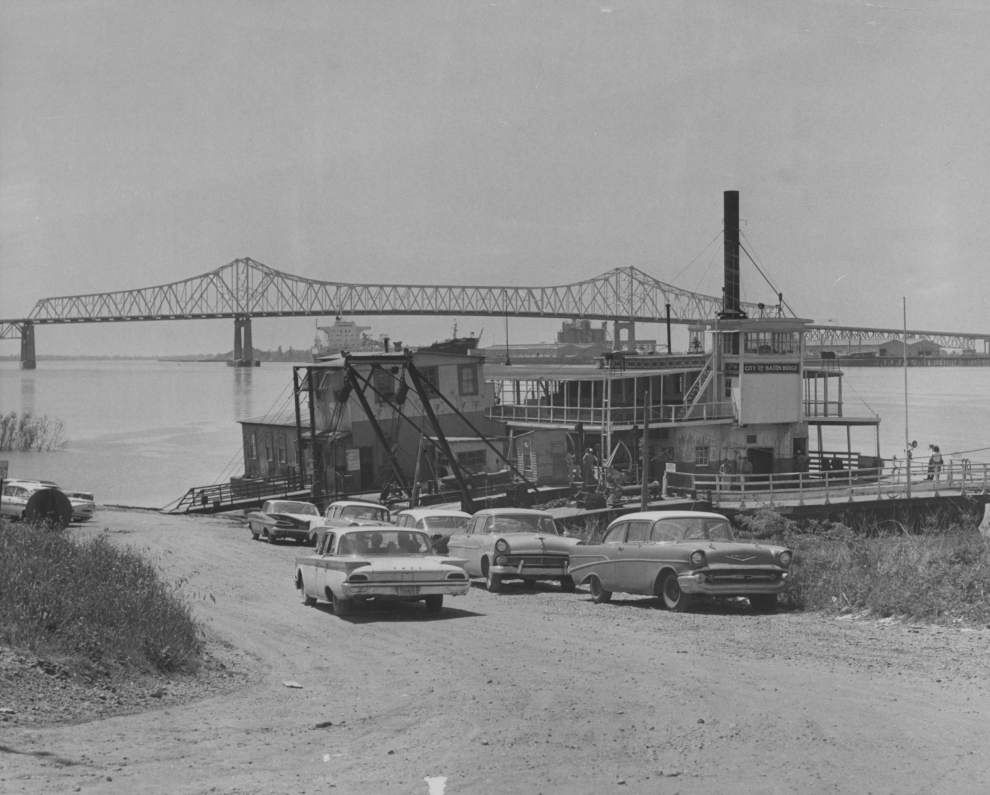
Baton Rouge-Port Allen Ferry (last run) with newly built I-10 bridge in the background- 1968


Posted on 3/18/21 at 3:23 pm to Hangover Haven

Posted on 3/18/21 at 6:46 pm to kywildcatfanone
In honor of Ford moving manufacturing to Mexico.


Posted on 3/18/21 at 10:21 pm to kywildcatfanone
1974

Posted on 3/18/21 at 10:28 pm to Kafka
1960.
Corvair is the car Ralph Nader got taken off the road as unsafe

Corvair is the car Ralph Nader got taken off the road as unsafe
quote:
Consumer protection activist Ralph Nader addressed the handling issues of the first-generation (1960–1963) Corvair in his 1965 book, Unsafe at Any Speed. GM had over 100 lawsuits pending in connection with crashes involving the Corvair, which subsequently became the initial material for Nader's investigations.[27] The book highlighted crashes related to the Corvair's suspension and identified the Chevrolet suspension engineer who had fought management's decision to omit—for cost reasons—the front anti-sway bar installed on later models. Nader said during subsequent Congressional hearings, the Corvair is "the leading candidate for the un-safest-car title".[28] Subsequently, Corvair sales fell from 220,000 in 1965 to 109,880 in 1966. By 1968, production fell to 14,800.[28] Public response to the book played a role in the National Traffic and Motor Vehicle Safety Act in 1966.
A 1972 safety commission report conducted by Texas A&M University concluded that the 1960–1963 Corvair possessed no greater potential for loss of control than its contemporary competitors in extreme situations.[25] The U.S. Department of Transportation (DOT) issued a press release in 1972 describing the findings of NHTSA testing from the previous year. NHTSA had conducted a series of comparative tests in 1971 studying the handling of the 1963 Corvair and four contemporary cars—a Ford Falcon, Plymouth Valiant, Volkswagen Beetle, and Renault Dauphine—along with a second-generation Corvair (with its completely redesigned, independent rear suspension). The 143-page report reviewed NHTSA's extreme-condition handling tests, national crash-involvement data for the cars in the test as well as General Motors' internal documentation regarding the Corvair's handling.[29] NHTSA went on to contract an independent advisory panel of engineers to review the tests. This review panel concluded that "the 1960–63 Corvair compares favorably with contemporary vehicles used in the tests [...] the handling and stability performance of the 1960–63 Corvair does not result in an abnormal potential for loss of control or rollover, and it is at least as good as the performance of some contemporary vehicles both foreign and domestic."
quote:
Journalist David E. Davis, in a 2009 article in Automobile Magazine, noted that despite Nader's claim that swing-axle rear suspension were dangerous, Porsche, Mercedes-Benz, Tatra, and Volkswagen all used similar swing-axle concepts during that era.[31] (The handling of other rear-engine swing-axle cars, particularly the Volkswagen Type I and II,[32] has been criticized as well.) Some contend that Nader's lack of an automotive engineering degree or a driver's license at the time he wrote Unsafe at Any Speed disqualifies him as a critic of automotive safety.[33] In response to Nader's book, Mechanix Illustrated reviewer Tom McCahill tried to get a 1963 Corvair to flip, at one point sliding sideways into a street curb, but could not turn over the vehicle
Posted on 3/18/21 at 10:51 pm to Kafka
Laredo Filter Blend Rolling Kit. (1972)
A rolling kit. For rolling cigarettes. Tobacco cigarettes.

A rolling kit. For rolling cigarettes. Tobacco cigarettes.
Posted on 3/18/21 at 11:01 pm to Kafka
1970s
Short Bruthas Wear Flagg Bros

Short Bruthas Wear Flagg Bros


Posted on 3/18/21 at 11:49 pm to Kafka
Jay Leno just did a review on this car and briefly spoke about Nader.


Posted on 3/19/21 at 12:17 am to Kafka
quote:Now there was a man
Tom McCahill

/stories/2018/08/138911.jpg)

Posted on 3/19/21 at 4:35 pm to FearlessFreep
Sixties chick

Posted on 3/19/21 at 5:12 pm to Kafka

Posted on 3/19/21 at 5:27 pm to Kafka
Slaves -- er, I mean enslaved peoples -- Reunion
Cosmopolitan Baptist Church, Washington D.C., circa 1916.
Lewis Martin, age 100; Martha Elizabeth Banks, age 104; Amy Ware, age 103; Rev. Simon P. Drew, born free (as free as the wind blows)
I'm willing to talk reparations for them, if they're still around

Cosmopolitan Baptist Church, Washington D.C., circa 1916.
Lewis Martin, age 100; Martha Elizabeth Banks, age 104; Amy Ware, age 103; Rev. Simon P. Drew, born free (as free as the wind blows)
I'm willing to talk reparations for them, if they're still around
Posted on 3/19/21 at 5:39 pm to Kafka
Pinball, 1969

Posted on 3/19/21 at 5:55 pm to Kafka

Posted on 3/19/21 at 6:17 pm to Kafka


Posted on 3/19/21 at 7:38 pm to FearlessFreep
Roadhouse, Raceland, Louisiana, September 1938

Crab boil, Raceland, Louisiana, September 1938.jpg

Coaling Louisisana, circa 1910-1915

Cane fields in Louisiana, circa 1880-1897

Convent near Hester, Louisiana, October 1890

Farm boys, Louisiana, October 1938

Inflating bicycle tire, Abbeville, Louisiana, September 1938

Natchitoches, Louisiana, June 1940

Natchitoches, Louisiana, June 1940

Natchitoches, Louisiana, June 1940

Natchitoches, Louisiana, June 1940

Crab boil, Raceland, Louisiana, September 1938.jpg
Coaling Louisisana, circa 1910-1915
Cane fields in Louisiana, circa 1880-1897
Convent near Hester, Louisiana, October 1890
Farm boys, Louisiana, October 1938
Inflating bicycle tire, Abbeville, Louisiana, September 1938
Natchitoches, Louisiana, June 1940
Natchitoches, Louisiana, June 1940
Natchitoches, Louisiana, June 1940
Natchitoches, Louisiana, June 1940
Posted on 3/19/21 at 7:43 pm to Captain Lafitte
ON the Chilkat Trail, the pass before entering Canada. Men had to move a ton of goods (Canadian Law) over the pass from Dyea. It would take dozens of trips of 30 plus miles and 3000' of elevation to reach the Canadian side, and you were still hundreds of miles from the Klondike Gold fields.
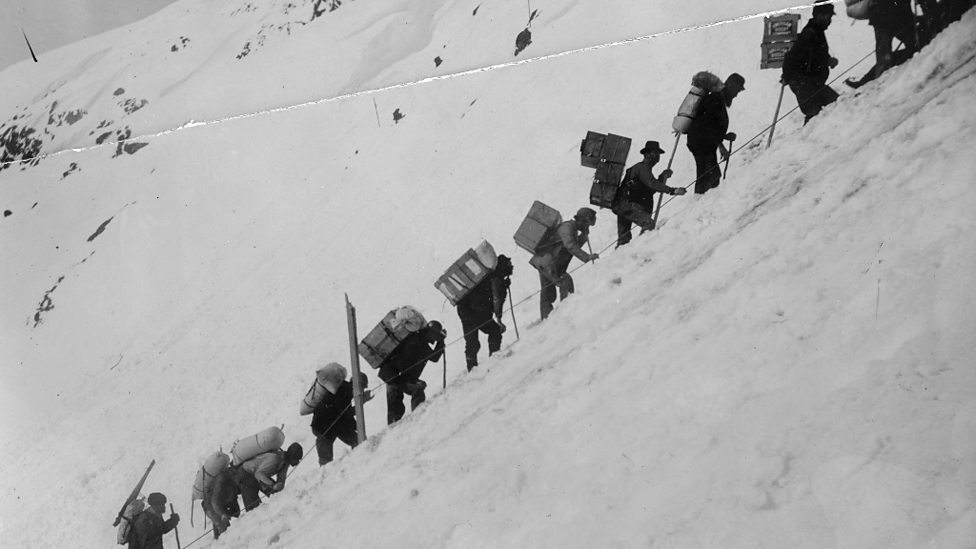

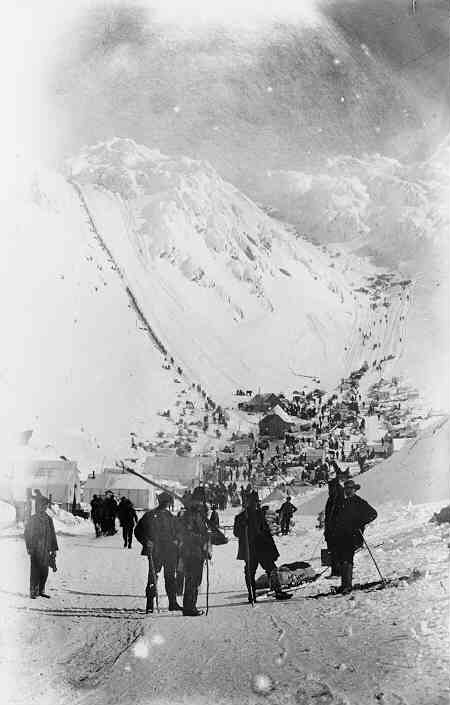

Up the pass, store your goods, slide down and make another 60 mile roundrip with your goods. Winter was easier than summer as the ground was more stable.
Those with money could hire native packers to help.
Up the pass, store your goods, slide down and make another 60 mile roundrip with your goods. Winter was easier than summer as the ground was more stable.
Those with money could hire native packers to help.
This post was edited on 3/19/21 at 7:49 pm
Posted on 3/19/21 at 10:02 pm to RogerTheShrubber
The personal bus of Ray Conklin, president of the New York Motorbus Company. Note the cook at extreme right. (1915)

Posted on 3/19/21 at 10:21 pm to RogerTheShrubber
Meticulously recreated in the Northern California mountains by Chaplin in 1925:


 Page 48 of 1160

Popular
Back to top
 Follow TigerDroppings for LSU Football News