




- My Forums
- Tiger Rant
- LSU Recruiting
- SEC Rant
- Saints Talk
- Pelicans Talk
- More Sports Board
- Fantasy Sports
- Golf Board
- Soccer Board
- O-T Lounge
- Tech Board
- Home/Garden Board
- Outdoor Board
- Health/Fitness Board
- Movie/TV Board
- Book Board
- Music Board
- Political Talk
- Money Talk
- Fark Board
- Gaming Board
- Travel Board
- Food/Drink Board
- Ticket Exchange
- TD Help Board
Customize My Forums- View All Forums
- Show Left Links
- Topic Sort Options
- Trending Topics
- Recent Topics
- Active Topics
Started By
Message

OTD in 1775 Paul Revere began his midnight ride
Posted on 4/18/18 at 12:15 pm

Posted on 4/18/18 at 12:15 pm
LINK
Henry Wadsworth Longfellow: The Midnight Ride of Paul Revere
Never underestimate a people trying to get out from under the oppression of tyranny.

quote:
Between 9 and 10 p.m. on the night of April 18, 1775, Joseph Warren told Revere and William Dawes that the king's troops were about to embark in boats from Boston bound for Cambridge and the road to Lexington and Concord. Warren's intelligence suggested that the most likely objectives of the regulars' movements later that night would be the capture of Adams and Hancock. They did not worry about the possibility of regulars marching to Concord, since the supplies at Concord were safe, but they did think their leaders in Lexington were unaware of the potential danger that night. Revere and Dawes were sent out to warn them and to alert colonial militias in nearby towns.[40][41]
quote:
Riding through present-day Somerville, Medford, and Arlington, Revere warned patriots along his route, many of whom set out on horseback to deliver warnings of their own. By the end of the night there were probably as many as 40 riders throughout Middlesex County carrying the news of the army's advance. Revere did not shout the phrase later attributed to him ("The British are coming!"): his mission depended on secrecy, the countryside was filled with British army patrols, and most of the Massachusetts colonists (who were predominantly English in ethnic origin)[44] still considered themselves British.[45][46] Revere's warning, according to eyewitness accounts of the ride and Revere's own descriptions, was "The Regulars are coming out."[47] Revere arrived in Lexington around midnight, with Dawes arriving about a half-hour later. They met with Samuel Adams and John Hancock, who were spending the night with Hancock's relatives (in what is now called the Hancock–Clarke House), and they spent a great deal of time discussing plans of action upon receiving the news. They believed that the forces leaving the city were too large for the sole task of arresting two men and that Concord was the main target.[48] The Lexington men dispatched riders to the surrounding towns, and Revere and Dawes continued along the road to Concord accompanied by Samuel Prescott, a doctor who happened to be in Lexington "returning from a lady friend's house at the awkward hour of 1 a.m."[41][49]
quote:
The ride of the three men triggered a flexible system of "alarm and muster" that had been carefully developed months before, in reaction to the colonists' impotent response to the Powder Alarm of September 1774. This system was an improved version of an old network of widespread notification and fast deployment of local militia forces in times of emergency. The colonists had periodically used this system all the way back to the early years of Indian wars in the colony, before it fell into disuse in the French and Indian War. In addition to other express riders delivering messages, bells, drums, alarm guns, bonfires, and a trumpet were used for rapid communication from town to town, notifying the rebels in dozens of eastern Massachusetts villages that they should muster their militias because the regulars in numbers greater than 500 were leaving Boston with possible hostile intentions. This system was so effective that people in towns 25 miles (40 km) from Boston were aware of the army's movements while they were still unloading boats in Cambridge.[54] Unlike in the Powder Alarm, the alarm raised by the three riders successfully allowed the militia to confront the British troops in Concord, and then harry them all the way back to Boston.[55]
Henry Wadsworth Longfellow: The Midnight Ride of Paul Revere
Never underestimate a people trying to get out from under the oppression of tyranny.
 11
11


Posted on 4/18/18 at 12:17 pm to TigerFanInSouthland
And that's when he met the Raiders.
Rest is history.
Rest is history.
Posted on 4/18/18 at 12:25 pm to TigerFanInSouthland
quote:
Samuel Prescott, a doctor who happened to be in Lexington "returning from a lady friend's house at the awkward hour of 1 a.m.
Dosen't matter - had sex.

Posted on 4/18/18 at 12:27 pm to TigerFanInSouthland
This wouldn’t happen now, a millennial would have been too busy looking at girls in the quad.

Posted on 4/18/18 at 12:30 pm to TigerFanInSouthland
Still no mention of Sybil Ludington.

Posted on 4/18/18 at 12:44 pm to TigerFanInSouthland
The good old days
Posted on 4/18/18 at 12:52 pm to TigerFanInSouthland
he did it like this
he did it like that
he did it with the whiffle ball bat soooo
he did it like that
he did it with the whiffle ball bat soooo
Posted on 4/18/18 at 1:20 pm to TigerFanInSouthland
quote:
William Dawes is the usually forgotten shoe maker who rode with P.R. on the night of April 18, 1775 to warn Samuel Adams and John Hancock that the British were coming to arrest them. Dawes took the longer land route to Lexington arriving to destination half an hour later.
So why was Revere immortalized as a hero? Revere was a more visible character. Through his silversmith business, Masonic lodge membership and participation in the group of mechanics, he created more personal connections. He was also called to write a testimony of what happened the night of April 18, 1775 that was published by the Massachusetts Historical Society and later used by historians.
Dawes was also politically active before the revolution, but he did not go beyond the call of duty the night of the ride. Meanwhile Revere returned to Lexington to get documents forgotten by Hancock and alerted the population that the red coats where coming.
“The Midnight Ride of William Dawes” was written by Helen F. Moore as a poetic complaint and published in 1896 in the Century Magazine. This poem represents a parody to Longfellow’s Midnight Ride
The Midnight Ride of William Dawes
I am a wandering, bitter shade,
Never of me was a hero made;
Poets have never sung my praise,
Nobody crowned my brow with bays;
And if you ask me the fatal cause,
I answer only, "My name was Dawes"
'Tis all very well for the children to hear
Of the midnight ride of Paul Revere;
But why should my name be quite forgot,
Who rode as boldly and well, God wot?
Why should I ask? The reason is clear --
My name was Dawes and his Revere.
When the lights from the old North Church flashed out,
Paul Revere was waiting about,
But I was already on my way.
The shadows of night fell cold and gray
As I rode, with never a break or a pause;
But what was the use, when my name was Dawes!
History rings with his silvery name;
Closed to me are the portals of fame.
Had he been Dawes and I Revere,
No one had heard of him, I fear.
No one has heard of me because
He was Revere and I was Dawes.


Posted on 4/18/18 at 1:27 pm to Jim Rockford
yea PR only roade for a few hours before he was arrested right? the other guy roade the couple days and finished the job.
Posted on 4/18/18 at 2:22 pm to TigerFanInSouthland
quote:
Never underestimate a people trying to get out from under the oppression of tyranny.
Still lucky that they won. The majority of the population were fence-riders waiting to see who got the upper hand. When Washington was starving in Valley Forge that winter with what was left of his rag-rag band, the British were being provided with a surfeit of food and supplies by local farmers who believed the British were going to win. It truly is amazing that Washington pulled it off. If not for the ultra-lucky fog the morning after he secretly crossed from Brooklyn into Manhattan, it might have ended right then and there.
Posted on 4/18/18 at 2:30 pm to TigerFanInSouthland
Rumor has it that Paul Revere first began his ride after being told of the pending British invasion while at a pub very near his house. The pub was known as a revolutionary bar, and many meetings of the Sons of Liberty were held in the basement. That pub was called the Green Dragon, and it is still in existence today.
If you go there are muskets used in the Revolution hanging from the wall, as well as steins from the period. Pretty neat to grab a pint where so many famous revolutionaries did.
If you go there are muskets used in the Revolution hanging from the wall, as well as steins from the period. Pretty neat to grab a pint where so many famous revolutionaries did.
Posted on 4/18/18 at 2:34 pm to AbitaFan08
Surprised there wasn’t a horseback riding while intoxicated checkpoint that night.
Posted on 4/18/18 at 2:50 pm to TigerFanInSouthland
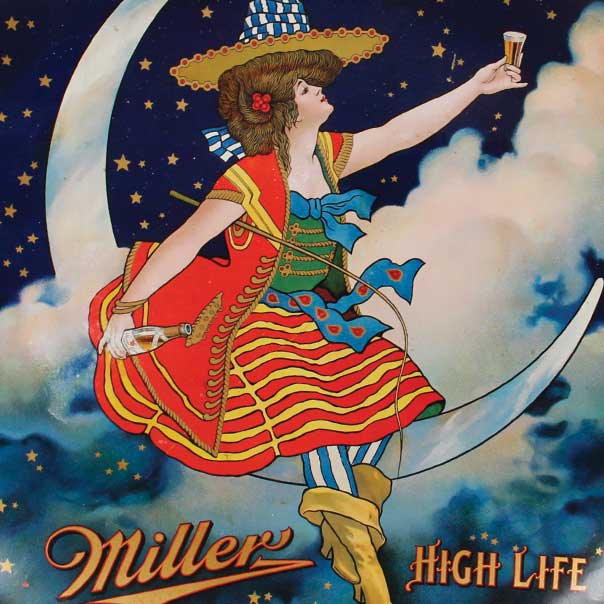
Drunks, rabble rousers, womanizers. Meet your patriot leaders and founding fathers.

Posted on 4/18/18 at 3:02 pm to TigerFanInSouthland
Israel Bissell, The Forgotten man. Revere rode about 20 miles. Bissell rode for several days covering around 350ish miles.
Posted on 4/18/18 at 3:23 pm to Simpkjo
frick I’m proud of my country.
This post was edited on 4/18/18 at 3:30 pm

Posted on 4/18/18 at 3:49 pm to btnetigers
quote:
Samuel Prescott, a doctor who happened to be in Lexington "returning from a lady friend's house at the awkward hour of 1 a.m.
The British weren't the only ones cumming.
Posted on 4/18/18 at 4:04 pm to CarRamrod
quote:
PR only roade for a few hours before he was arrested right? the other guy roade
Roade? What is this, some attempt at Middle English?

 Page 1 of 1


Popular
Back to top
 Follow TigerDroppings for LSU Football News