




- My Forums
- Tiger Rant
- LSU Recruiting
- SEC Rant
- Saints Talk
- Pelicans Talk
- More Sports Board
- Fantasy Sports
- Golf Board
- Soccer Board
- O-T Lounge
- Tech Board
- Home/Garden Board
- Outdoor Board
- Health/Fitness Board
- Movie/TV Board
- Book Board
- Music Board
- Political Talk
- Money Talk
- Fark Board
- Gaming Board
- Travel Board
- Food/Drink Board
- Ticket Exchange
- TD Help Board
Customize My Forums- View All Forums
- Show Left Links
- Topic Sort Options
- Trending Topics
- Recent Topics
- Active Topics
Started By
Message

Great Campaigns of the Civil War | Episode Two - Western Virginia (Part I)
Posted on 6/16/20 at 9:55 am

Posted on 6/16/20 at 9:55 am
INTRODUCTION
On April 17, 1861, just four days after the fall of Fort Sumter and three days after Abraham Lincoln’s call for 75,000 volunteers to subdue the Confederacy, Virginia seceded from the Union. With it went a number of the U.S. Army’s most decorated and competent officers such as Mexican-American War hero Robert E. Lee. Virginia would be an important member of the Confederacy as her wealth and industrial output outdid the rest of the South combined. Upon its official admittance into the Confederate States of America in early May, it was announced that the Confederate capital would move from its present location in Montgomery, Alabama to the more desirable city of Richmond – just 108 miles from the U.S. capital of Washington, D.C.
While Virginia seemed a match made in heaven for the Confederacy, all was not right in paradise. A substantial portion of the state, particularly the northwestern corner, was firmly against secession. What’s more they made it known how dissatisfied they were with the present situation. This made western Virginia prime real estate for the first major land campaign of the Civil War. If the Union could somehow wrangle that portion of the state from the Confederacy, they would immediately threaten the vital Shenandoah Valley as well as the eastern part of soon-to-be-Confederate Tennessee. They would close potential invasion routes into northern states such as Ohio while also winning unfettered access to the all important Baltimore & Ohio railroad line.

The Western Virginia Campaign of 1861
What was more, with western Virginia in Union hands, a back door into the newly minted Confederate capital of Richmond could potentially be opened, thus shutting the book on the southern Confederacy before the ink had dried. By the end of the campaign, much of the countryside in this part of the state would be lost to Virginia forever, as the people in this area formed their own pro-Union government and, two years later, transformed it into a new state they decided to call West Virginia.
A HERO RISES
As Virginia began to assert itself for war, machinations behind the scenes began to move quickly to organize a defense in western Virginia. Three separate commands were hastily thrown together under the leadership of Brigadier General John B. Floyd, Brigadier General Henry Wise, and Colonel George Porterfield. The decision to create three separate armies instead of one unified command would prove to be fatal for the Confederates during this campaign.
Commanding against these three would be a unified force under the leadership of the newly minted Major General George B. McClellan. Handsome, young, and charismatic, McClellan was set to put on a show for the northern populace begging for a victory in the aftermath of Fort Sumter. A graduate of West Point and veteran of the Mexican-American War, McClellan had distinguished himself in the interwar period as an official observer during the Crimean War. After writing a stellar report on what he witnessed while in Europe, McClellan left the service and became a railroad executive. After the Battle of Fort Sumter, he immediately offered his services to a willing Republic who immediately bestowed upon him the rank of major general. He was 34 years old.
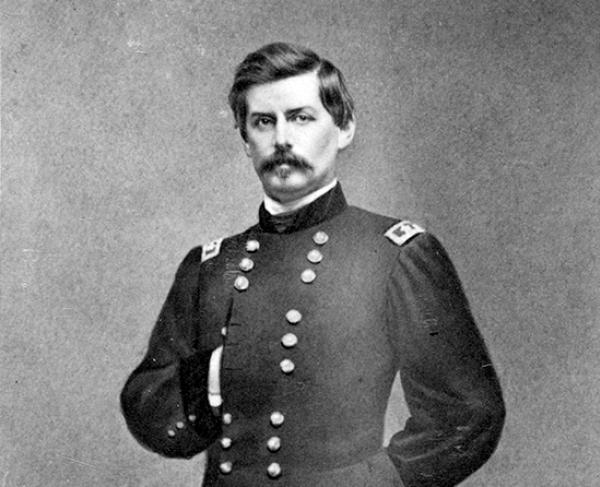
Major General George B. McClellan, commanding, Department of the Ohio
After being given command of the Department of the Ohio on May 3, McClellan used his newfound authority to invade western Virginia later that month. The impetus for such a move was made possible by intelligence reports that stated Confederates were burning bridges along the Baltimore & Ohio. The invasion began on May 26 with a mind to protect the remaining bridges along the railroad line. Confronting McClellan were the 800 poorly trained troops under the command of Colonel Porterfield. They were all that he could muster to face McClellan’s approximately 3,000 soldiers. Realizing he was vastly outnumbered, Porterfield retreated in the face of the advancing Union host to a town called Phillipi.
THE BATTLE OF PHILIPPI
While McClellan was in overall command of the invasion of western Virginia, tactical command for the moment was being handled in the field by Brigadier General Thomas Morris. On the evening of June 1, 1861, he and Colonel Benjamin F. Kelley of the 1st West Virginia infantry regiment devised a two-prong attack against the Confederate forces under Porterfield at Philippi. Kelley would take 1,600 men and make the Confederates think that they were moving on the town of Harpers Ferry by taking a train off to the east. They would disembark the train at nearby Thornton and march on back roads to come at Philippi from the rear. Meanwhile, 1,400 men under the command of Colonel Ebenezer Dumont would come directly at Philippi from the north. If the plan was successful, the two columns would execute a double envelopment against the Confederate army at Philippi.
The two columns set off on June 2 for Philippi, executing a difficult overnight march in a steady rain storm. Both columns reached Philippi before dawn on June 3, 1861. However, Kelley’s column had taken the wrong road and were, in tandem with Dumont, coming at Philippi from the north. There would be no double envelopment but there was no time to turn back now. The green Confederate troops hadn’t even put up a picket screen to alert the main body of oncoming enemy soldiers and thus the way was wide open for a successful attack against an outmanned force.
The attack began with a quick artillery barrage that alerted the sleeping Confederates to danger close. The few Confederates who were armed and ready to go got off relatively few shots before they broke and ran in a panic to the south. Had Kelley’s column not taken the wrong road, these Confederates would have been forced to surrender. As such, they were allowed to run away to fight another day. Nevertheless, the Union army marched triumphantly into Philippi and the first land battle of the American Civil War had ended in a Union victory. There were only 30 combined casualties.
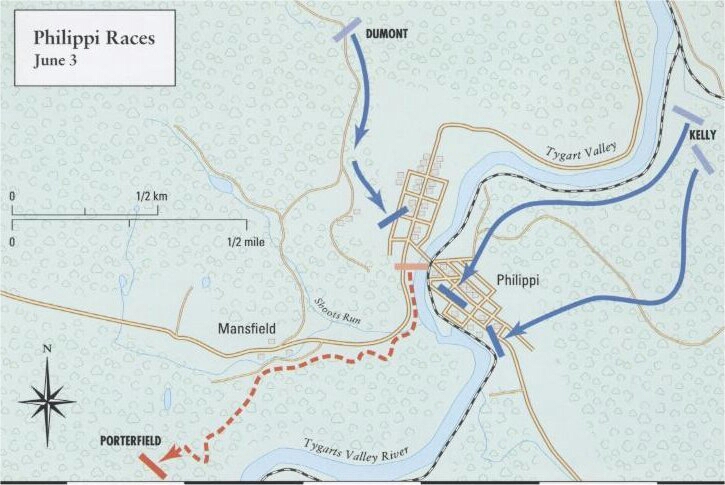
The Battle of Philippi - June 3, 1861
Minor though the battle was, it was indeed a victory and the northern press, hungry for war stories, ate it up. Due to how quickly and decisively the Confederate line broke, reporters dubbed the battle the “Philippi Races.” The light casualty figures and overwhelming nature of the victory fed into the notions that this conflict would be both bloodless and glorious. Following the battle, there was a shake up in the Confederate high command as Porterfield was sacked and replaced by Brigadier General Robert S. Garnett.
On April 17, 1861, just four days after the fall of Fort Sumter and three days after Abraham Lincoln’s call for 75,000 volunteers to subdue the Confederacy, Virginia seceded from the Union. With it went a number of the U.S. Army’s most decorated and competent officers such as Mexican-American War hero Robert E. Lee. Virginia would be an important member of the Confederacy as her wealth and industrial output outdid the rest of the South combined. Upon its official admittance into the Confederate States of America in early May, it was announced that the Confederate capital would move from its present location in Montgomery, Alabama to the more desirable city of Richmond – just 108 miles from the U.S. capital of Washington, D.C.
While Virginia seemed a match made in heaven for the Confederacy, all was not right in paradise. A substantial portion of the state, particularly the northwestern corner, was firmly against secession. What’s more they made it known how dissatisfied they were with the present situation. This made western Virginia prime real estate for the first major land campaign of the Civil War. If the Union could somehow wrangle that portion of the state from the Confederacy, they would immediately threaten the vital Shenandoah Valley as well as the eastern part of soon-to-be-Confederate Tennessee. They would close potential invasion routes into northern states such as Ohio while also winning unfettered access to the all important Baltimore & Ohio railroad line.
The Western Virginia Campaign of 1861
What was more, with western Virginia in Union hands, a back door into the newly minted Confederate capital of Richmond could potentially be opened, thus shutting the book on the southern Confederacy before the ink had dried. By the end of the campaign, much of the countryside in this part of the state would be lost to Virginia forever, as the people in this area formed their own pro-Union government and, two years later, transformed it into a new state they decided to call West Virginia.
A HERO RISES
As Virginia began to assert itself for war, machinations behind the scenes began to move quickly to organize a defense in western Virginia. Three separate commands were hastily thrown together under the leadership of Brigadier General John B. Floyd, Brigadier General Henry Wise, and Colonel George Porterfield. The decision to create three separate armies instead of one unified command would prove to be fatal for the Confederates during this campaign.
Commanding against these three would be a unified force under the leadership of the newly minted Major General George B. McClellan. Handsome, young, and charismatic, McClellan was set to put on a show for the northern populace begging for a victory in the aftermath of Fort Sumter. A graduate of West Point and veteran of the Mexican-American War, McClellan had distinguished himself in the interwar period as an official observer during the Crimean War. After writing a stellar report on what he witnessed while in Europe, McClellan left the service and became a railroad executive. After the Battle of Fort Sumter, he immediately offered his services to a willing Republic who immediately bestowed upon him the rank of major general. He was 34 years old.
Major General George B. McClellan, commanding, Department of the Ohio
After being given command of the Department of the Ohio on May 3, McClellan used his newfound authority to invade western Virginia later that month. The impetus for such a move was made possible by intelligence reports that stated Confederates were burning bridges along the Baltimore & Ohio. The invasion began on May 26 with a mind to protect the remaining bridges along the railroad line. Confronting McClellan were the 800 poorly trained troops under the command of Colonel Porterfield. They were all that he could muster to face McClellan’s approximately 3,000 soldiers. Realizing he was vastly outnumbered, Porterfield retreated in the face of the advancing Union host to a town called Phillipi.
THE BATTLE OF PHILIPPI
While McClellan was in overall command of the invasion of western Virginia, tactical command for the moment was being handled in the field by Brigadier General Thomas Morris. On the evening of June 1, 1861, he and Colonel Benjamin F. Kelley of the 1st West Virginia infantry regiment devised a two-prong attack against the Confederate forces under Porterfield at Philippi. Kelley would take 1,600 men and make the Confederates think that they were moving on the town of Harpers Ferry by taking a train off to the east. They would disembark the train at nearby Thornton and march on back roads to come at Philippi from the rear. Meanwhile, 1,400 men under the command of Colonel Ebenezer Dumont would come directly at Philippi from the north. If the plan was successful, the two columns would execute a double envelopment against the Confederate army at Philippi.
The two columns set off on June 2 for Philippi, executing a difficult overnight march in a steady rain storm. Both columns reached Philippi before dawn on June 3, 1861. However, Kelley’s column had taken the wrong road and were, in tandem with Dumont, coming at Philippi from the north. There would be no double envelopment but there was no time to turn back now. The green Confederate troops hadn’t even put up a picket screen to alert the main body of oncoming enemy soldiers and thus the way was wide open for a successful attack against an outmanned force.
The attack began with a quick artillery barrage that alerted the sleeping Confederates to danger close. The few Confederates who were armed and ready to go got off relatively few shots before they broke and ran in a panic to the south. Had Kelley’s column not taken the wrong road, these Confederates would have been forced to surrender. As such, they were allowed to run away to fight another day. Nevertheless, the Union army marched triumphantly into Philippi and the first land battle of the American Civil War had ended in a Union victory. There were only 30 combined casualties.
The Battle of Philippi - June 3, 1861
Minor though the battle was, it was indeed a victory and the northern press, hungry for war stories, ate it up. Due to how quickly and decisively the Confederate line broke, reporters dubbed the battle the “Philippi Races.” The light casualty figures and overwhelming nature of the victory fed into the notions that this conflict would be both bloodless and glorious. Following the battle, there was a shake up in the Confederate high command as Porterfield was sacked and replaced by Brigadier General Robert S. Garnett.
 1
1

Posted on 6/16/20 at 9:55 am to RollTide1987
THE BATTLE OF RICH MOUNTAIN
After taking command of Confederate forces in western Virginia, Garnett moved his command further south and occupied a position atop two prominent rises – Laurel Hill and Rich Mountain. These positions guarded key mountain passes which, if held, would prevent the Union army from advancing any further into western Virginia. In the interlude between the Battle of Philippi, Garnett had received reinforcements and now commanded a force of some 1,300 officers and men. He was still outnumbered by McClellan but with the high ground in his grasp, it was now possible to make an adequate show of it.
McClellan, with his subordinate Brigadier General William S. Rosecrans, had been encamped with his army at nearby Clarksburg for the better part of June. Recognizing the strength of Garnett’s position McClellan didn’t want to rush into battle without being perfectly ready – a staple of his generalship that would become all too annoying to his superiors. The plan was to divide the Union army in two to assault Rich Mountain and Laurel Hill simultaneously. Rosecrans and his force would depart with McClellan from Clarksburg to assault the Confederate left flank on Rich Mountain. These forces were commanded by Lt. Colonel John Pegram and represented the weak point in Garnett’s defensive line. Meanwhile, the victors of Philippi under Thomas Morris would confront Garnett directly at Laurel Hill.
The Union army set out for the Confederate position on June 27. They cautiously made there way through the mountainous terrain, not reaching the vicinity of their objective until July 9. The attack was set to begin two days later on the 11th. On that day, Rosecrans was able to slip a brigade behind Pegram’s position on Rich Mountain and launched an attack from the rear. After a sharp two-hour engagement, the Confederate position atop Rich Mountain was split in two. Half of the Confederate defenders were able to escape while the other half, including Pegram, were forced to surrender to Rosecrans and his men.

Battle of Rich Mountain - July 11, 1861
Upon hearing that Rich Mountain had fallen, Garnett realized his position on Laurel Hill was no untenable. He ordered a retreat before the Union force under Morris could launch an attack against him. With the victory at Rich Mountain, McClellan had blown the war in western Virginia wide open. Some 6,300 men were engaged in the battle of which 346 were casualties – the vast majority of them captured Confederates.
Sensing total victory was within his grasp, McClellan ordered a pursuit of the retreating Garnett.
THE BATTLE OF CORRICK’S FORD
McClellan wasted absolutely no time at all following up his victory at Rich Mountain. He ordered Brigadier General Thomas Morris to take his Indiana brigade and pursue Garnett deeper into the western Virginia wilderness in an attempt to cut off his command. Garnett and his 4,500 men spent all of July 12 on the march toward the town of Beverly. However, he received false intelligence that put McClellan’s forces in the town. As a result, Garnett made a fatal error by backtracking toward Cheat Mountain and the Cheat River.
It was around noon on July 13, 1861, that Morris caught up with Garnett and the decisive battle of the campaign began. It was a running fight from the beginning as the retreating Confederates did everything in their power to escape their superior foe. Garnett personally took command of the rear guard action in an attempt to maintain good order and discipline in the retreat. The action began at Corrick’s Ford before Garnett ordered his skirmishers to withdraw a mile or two to the south where they would make a stand at another ford to buy the rest of his men time to get away.
It was at this unnamed ford, a couple of miles from where the battle began, that a Union volley let loose on Garnett and his men. A bullet struck the Confederate general and he was killed instantly. His surviving men, now without their commanding officer, retreated in disarray. Garnett would be the first general officer killed in the Civil War.
The Confederates lost 20 killed and wounded in the Battle of Corrick’s Ford as well as a further 600 lost from the rolls as prisoners of war or men who went missing after the battle. Federal casualties are not precisely known but are estimated to be between 10 and 53 killed, wounded, or missing.
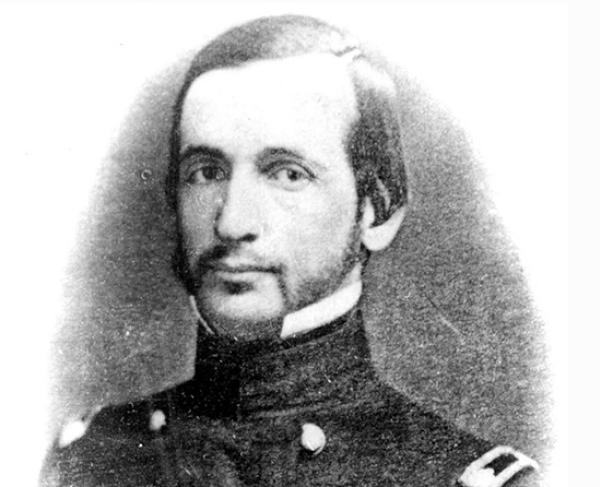
Brigadier General R.S. Garnett - the first general officer to be killed in the Civil War
AFTERMATH
The opening stanza of the western Virginia campaign was over. George McClellan, though rarely commanding on the battlefield, was given the lion’s share of the credit for the events which had taken place over the course of June and July 1861. The press hailed him as a hero and labeled him the “Young Napoleon.” Thanks to his efforts and the efforts of the men under his command, western Virginia had been permanently seized by the Union army.
These battles (which were more aptly titled skirmishes than major engagements) were the impetus for the actions that were about to take place in northern Virginia. Two large armies, the largest ever seen on the American continent up to that time, were circling the wagons and preparing to fight what many believed was the first and last major battle of the conflict between North and South. “On to Richmond!” was the battle cry of the Union army as it set forth from Washington, D.C. on July 16, 1861.
Five days later it would meet a force of near equal size on the banks of a creek called Bull Run….
After taking command of Confederate forces in western Virginia, Garnett moved his command further south and occupied a position atop two prominent rises – Laurel Hill and Rich Mountain. These positions guarded key mountain passes which, if held, would prevent the Union army from advancing any further into western Virginia. In the interlude between the Battle of Philippi, Garnett had received reinforcements and now commanded a force of some 1,300 officers and men. He was still outnumbered by McClellan but with the high ground in his grasp, it was now possible to make an adequate show of it.
McClellan, with his subordinate Brigadier General William S. Rosecrans, had been encamped with his army at nearby Clarksburg for the better part of June. Recognizing the strength of Garnett’s position McClellan didn’t want to rush into battle without being perfectly ready – a staple of his generalship that would become all too annoying to his superiors. The plan was to divide the Union army in two to assault Rich Mountain and Laurel Hill simultaneously. Rosecrans and his force would depart with McClellan from Clarksburg to assault the Confederate left flank on Rich Mountain. These forces were commanded by Lt. Colonel John Pegram and represented the weak point in Garnett’s defensive line. Meanwhile, the victors of Philippi under Thomas Morris would confront Garnett directly at Laurel Hill.
The Union army set out for the Confederate position on June 27. They cautiously made there way through the mountainous terrain, not reaching the vicinity of their objective until July 9. The attack was set to begin two days later on the 11th. On that day, Rosecrans was able to slip a brigade behind Pegram’s position on Rich Mountain and launched an attack from the rear. After a sharp two-hour engagement, the Confederate position atop Rich Mountain was split in two. Half of the Confederate defenders were able to escape while the other half, including Pegram, were forced to surrender to Rosecrans and his men.
Battle of Rich Mountain - July 11, 1861
Upon hearing that Rich Mountain had fallen, Garnett realized his position on Laurel Hill was no untenable. He ordered a retreat before the Union force under Morris could launch an attack against him. With the victory at Rich Mountain, McClellan had blown the war in western Virginia wide open. Some 6,300 men were engaged in the battle of which 346 were casualties – the vast majority of them captured Confederates.
Sensing total victory was within his grasp, McClellan ordered a pursuit of the retreating Garnett.
THE BATTLE OF CORRICK’S FORD
McClellan wasted absolutely no time at all following up his victory at Rich Mountain. He ordered Brigadier General Thomas Morris to take his Indiana brigade and pursue Garnett deeper into the western Virginia wilderness in an attempt to cut off his command. Garnett and his 4,500 men spent all of July 12 on the march toward the town of Beverly. However, he received false intelligence that put McClellan’s forces in the town. As a result, Garnett made a fatal error by backtracking toward Cheat Mountain and the Cheat River.
It was around noon on July 13, 1861, that Morris caught up with Garnett and the decisive battle of the campaign began. It was a running fight from the beginning as the retreating Confederates did everything in their power to escape their superior foe. Garnett personally took command of the rear guard action in an attempt to maintain good order and discipline in the retreat. The action began at Corrick’s Ford before Garnett ordered his skirmishers to withdraw a mile or two to the south where they would make a stand at another ford to buy the rest of his men time to get away.
It was at this unnamed ford, a couple of miles from where the battle began, that a Union volley let loose on Garnett and his men. A bullet struck the Confederate general and he was killed instantly. His surviving men, now without their commanding officer, retreated in disarray. Garnett would be the first general officer killed in the Civil War.
The Confederates lost 20 killed and wounded in the Battle of Corrick’s Ford as well as a further 600 lost from the rolls as prisoners of war or men who went missing after the battle. Federal casualties are not precisely known but are estimated to be between 10 and 53 killed, wounded, or missing.
Brigadier General R.S. Garnett - the first general officer to be killed in the Civil War
AFTERMATH
The opening stanza of the western Virginia campaign was over. George McClellan, though rarely commanding on the battlefield, was given the lion’s share of the credit for the events which had taken place over the course of June and July 1861. The press hailed him as a hero and labeled him the “Young Napoleon.” Thanks to his efforts and the efforts of the men under his command, western Virginia had been permanently seized by the Union army.
These battles (which were more aptly titled skirmishes than major engagements) were the impetus for the actions that were about to take place in northern Virginia. Two large armies, the largest ever seen on the American continent up to that time, were circling the wagons and preparing to fight what many believed was the first and last major battle of the conflict between North and South. “On to Richmond!” was the battle cry of the Union army as it set forth from Washington, D.C. on July 16, 1861.
Five days later it would meet a force of near equal size on the banks of a creek called Bull Run….
Posted on 6/16/20 at 9:57 am to RollTide1987
War of Northern Aggression*
Posted on 6/16/20 at 10:16 am to Hoyt
Such a strange campaign.
McCllellan showing how effective a field commander he was when not paralyzed by bad intel.
I think the war ends on the peninsula if he had fired the Pinkertons who were telling him that Joe Johnston had an army of 200k.
McCllellan showing how effective a field commander he was when not paralyzed by bad intel.
I think the war ends on the peninsula if he had fired the Pinkertons who were telling him that Joe Johnston had an army of 200k.
Posted on 6/16/20 at 10:38 am to tide06
quote:
I think the war ends on the peninsula if he had fired the Pinkertons who were telling him that Joe Johnston had an army of 200k.
I disagree. McClellan was pretty much convinced from the word "go" that the Confederates outnumbered his own army. The Pinkerton Agency just told him what he wanted to hear. Even with their overestimation of Confederate forces, McClellan still believed the Pinkertons were low-balling the figures.
Posted on 6/16/20 at 12:57 pm to Hoyt
quote:
War of Northern Aggression*
I believe its official title is The War of the Rebellion.

 Page 1 of 1


Popular
Back to top
 Follow TigerDroppings for LSU Football News