




- My Forums
- Tiger Rant
- LSU Recruiting
- SEC Rant
- Saints Talk
- Pelicans Talk
- More Sports Board
- Fantasy Sports
- Golf Board
- Soccer Board
- O-T Lounge
- Tech Board
- Home/Garden Board
- Outdoor Board
- Health/Fitness Board
- Movie/TV Board
- Book Board
- Music Board
- Political Talk
- Money Talk
- Fark Board
- Gaming Board
- Travel Board
- Food/Drink Board
- Ticket Exchange
- TD Help Board
Customize My Forums- View All Forums
- Show Left Links
- Topic Sort Options
- Trending Topics
- Recent Topics
- Active Topics
Started By
Message
I love to watch youtube videos of L.A. studio musicians from the 60's and 70's
Posted on 2/21/21 at 11:16 pm


Posted on 2/21/21 at 11:16 pm
This is Louie Shelton, one of the guitarists from the famous Wrecking Crew. These guys were the first-call session players from Los Angeles back in the day. They played on literally hundreds of top 40 hits. The other guitarists were Tommy Tedesco, and Glen Campbell (before he became famous)
This is a short video of Shelton playing the licks he played on the Jackson 5 record "I Want You Back". So effortless
Louie Shelton youtube
This is a short video of Shelton playing the licks he played on the Jackson 5 record "I Want You Back". So effortless
Louie Shelton youtube
This post was edited on 2/21/21 at 11:38 pm
 10
10


Posted on 2/21/21 at 11:29 pm to L.A.
quote:Here he talks about the Monkees' "Last Train To Clarksville"
Louis Shelton
Per Bobby Hart (writer-producer), he asked LS to come up w/an opening for "Clarksville". After a moment's pondering LS said "How about this?" and improvised the now-famous opening riff on the spot. Even Hart's jaw dropped at that.

Posted on 2/21/21 at 11:35 pm to Kafka
Damn

Posted on 2/22/21 at 12:30 am to L.A.
Bassist Carol Kaye offers lessons by Skype
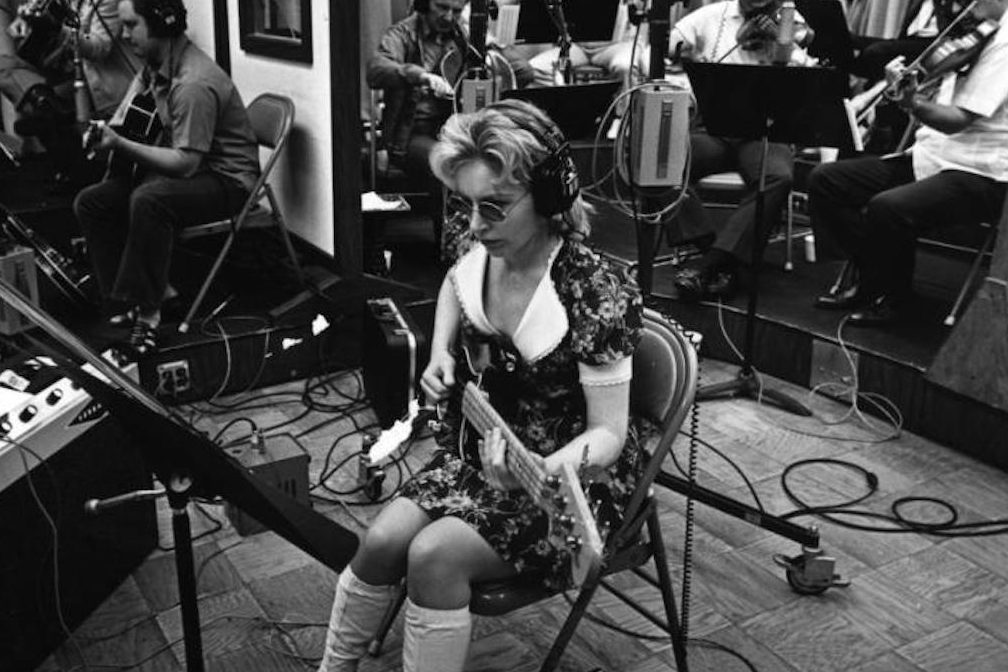
quote:
No Punk or Heavy Metal players, and no Gift Lessons. Bass or guitar (Standards & Jazz) Lessons only to experienced musicians, no beginners. Must have my Jazz Bass CD & Guide or Jazz Guitar CD & Guide.
Posted on 2/22/21 at 12:49 am to Kafka
Posted on 2/22/21 at 1:03 am to Kafka
quote:I mean, is this actually legal?
No Punk or Heavy Metal players


Posted on 2/22/21 at 7:52 am to Kafka
quote:
No Punk or Heavy Metal players,
Dee Dee and Lemmy are dead so no problem there.
Also, I thought Nesmith was more talented than he may be!


Posted on 2/22/21 at 9:14 am to L.A.

Posted on 2/22/21 at 10:45 am to L.A.
If someone would be so kind to learn me on the following:
How did session players get paid for their efforts & work back in the 60s/70s & is there any difference to the 80s/90s/00s/10s/20s?
Meaning, were/are they on a contract + salary to show up on demand or on a basic set schedule? Paid by session & "hope" to get called in session after session?
If they created/executed any changes in studio on a song that was then the final cut/release of that song, did they earn writing credits & thus get paid according to that writing credit as well?
Did they have to teach the members of the touring bands how to play the music they recorded? Or did someone else basically create the subsequent sheet music for the touring band members to learn from?
Were they allowed to play in their own bands & play the songs they performed in recordings?
How did session players get paid for their efforts & work back in the 60s/70s & is there any difference to the 80s/90s/00s/10s/20s?
Meaning, were/are they on a contract + salary to show up on demand or on a basic set schedule? Paid by session & "hope" to get called in session after session?
If they created/executed any changes in studio on a song that was then the final cut/release of that song, did they earn writing credits & thus get paid according to that writing credit as well?
Did they have to teach the members of the touring bands how to play the music they recorded? Or did someone else basically create the subsequent sheet music for the touring band members to learn from?
Were they allowed to play in their own bands & play the songs they performed in recordings?
Posted on 2/22/21 at 12:32 pm to FearlessFreep
quote:
Here’s a link to the 2015 documentary on them
Thank you. I was looking for that last night


Posted on 2/22/21 at 12:36 pm to Tigear
quote:I believe they got paid by the session. And the ones who worked a lot made a LOT of money. Carol Kaye, the lady mentioned and pictured in this thread, said she went from making $15 a night playing jazz in clubs to making more money than the president of the United States when she started working steadily as a session musician in L.A.
How did session players get paid for their efforts & work back in the 60s/70s & is there any difference to the 80s/90s/00s/10s/20s?
Meaning, were/are they on a contract + salary to show up on demand or on a basic set schedule? Paid by session & "hope" to get called in session after session?
If they created/executed any changes in studio on a song that was then the final cut/release of that song, did they earn writing credits & thus get paid according to that writing credit as well?
Did they have to teach the members of the touring bands how to play the music they recorded? Or did someone else basically create the subsequent sheet music for the touring band members to learn from?
Were they allowed to play in their own bands & play the songs they performed in recordings?

Posted on 2/22/21 at 3:54 pm to L.A.
The thought of a studio in the 70s and 80s is intimidating as hell to me.
You actually had to have talent, or it was going to cost you.
You actually had to have talent, or it was going to cost you.
Posted on 2/22/21 at 8:02 pm to Tigear
quote:I don't really have detailed answers for you but I might be able to help w/a general idea of how things worked.
If someone would be so kind to learn me on the following:
quote:They were paid by whoever was paying for the session: record label, independent producer, or whoever.
How did session players get paid for their efforts & work back in the 60s/70s & is there any difference to the 80s/90s/00s/10s/20s?
Meaning, were/are they on a contract + salary to show up on demand or on a basic set schedule? Paid by session & "hope" to get called in session after session?
I honestly don't know about the contract situation. I can't recall ever hearing contracts mentioned re the Wrecking Crew.
The typical L.A. session man would call in to his answering service (no cell phones) every hour or two to see if he'd been offered a gig. Sessions were (are?) usually done in three hour increments, one in the morning and one in the afternoon.
quote:This almost never happened. As I mentioned above, Louis Shelton improvised the opening riff for "Last Train To Clarksville" in the studio, but got no songwriting credit.
If they created/executed any changes in studio on a song that was then the final cut/release of that song, did they earn writing credits & thus get paid according to that writing credit as well?
Songwriting credits are the gravy train of the music business, and aren't given away lightly. Mick Jagger would kill his mother before sharing a writing credit. Bill Wyman is known to have contributed to writing several well-known Stones songs, but never got to share in the money.
Phil Spector took this to the Nth degree: he did not like "wasting" solid Brill building compositions on B sides, so instead he would simply release studio jams as flips and give them titles named after various Crew players. But he never, ever gave them songwriting credit.
quote:This I don't know. Presumably whoever controlled the band name -- usually either the label A&R (artists and repertoire) man or the band's manager would be in charge of things like this.
Did they have to teach the members of the touring bands how to play the music they recorded? Or did someone else basically create the subsequent sheet music for the touring band members to learn from?
quote:The Funk Brothers, Motown's house band, played in Detroit jazz clubs during their off hours.
Were they allowed to play in their own bands & play the songs they performed in recordings?
Bear in mind relatively few session players were rock fans. They were usually jazz musicians who'd gone into session work for the money.
Somewhat relevant to all this, Jimmy Page was one of the top session guitarists in England c. '64-5. Supposedly, he turned down the chance to replace Eric Clapton in The Yardbirds b/c it would have meant a pay cut.
Then shortly afterward, he joined the band as a bassist. Did something change on the session scene? Were the Beatles, Stones, etc playing their own parts affecting the session work market? I'm not a Zep fan so I've never read much bio stuff on Page, but that's a question that intrigues me.

Posted on 2/22/21 at 8:56 pm to Tigear
quote:
Did they have to teach the members of the touring bands how to play the music they recorded?
"Teach" how? Most popular musicians play by ear, particularly guitarists and drummers. Some read music, but whoever arranges the music will sort it out with them during the pre-tour rehearsals.
quote:
If they created/executed any changes in studio on a song that was then the final cut/release of that song, did they earn writing credits & thus get paid according to that writing credit as well?
Songwriting has very explicit rules as to how much is required to get a credit. Obviously the "principal" songwriter(s) is the one(s) who comes up with the basic melody. Lyrics is another piece of that.
But, in the studio, it is rare to be making a material change to the song. Arrangement changes? Sure. Because the composer and producer might not be good enough musicians to anticipate either challenges or opportunities the music itself may present. The musicians actually executing the piece have a say so to a degree (depending on the situation). But, changing a song's key, arrangement changes, tempo, doubling, applying effects, etc., are all considered part of the technical process of producing/recording/performing music, NOT composition.
So, very few of these, in many cases genius/master level, musicians contributed changes to the songs they performed that would generate songwriting credits or royalties.


Posted on 2/23/21 at 8:25 am to L.A.
I was listening to Tom Petty's Burried Treasure show a few weeks ago and they were airing an old interview Tom did with Peter Tork of The Monkees and you could tell Tom really didn't appreciate a lot of the information Tork was discussing about the Wrecking Crew. Tom is obviously a huge fan of Roger Mcguinn and the Byrd's, so he kind of cut Tork short when he mentioned that the Birds were known as really bad musicians and constantly had to use the Wrecking Crew to cover for Crosby, Hillman and Michael Clark. Tom ended up changing the subject really quickly.
Btw, Peter Tork wasn't a bad musician.
Btw, Peter Tork wasn't a bad musician.
This post was edited on 2/23/21 at 8:27 am
Posted on 2/23/21 at 11:46 am to hogcard1964
quote:I'd love to hear that interview if you ever find a link for it
I was listening to Tom Petty's Burried Treasure show a few weeks ago and they were airing an old interview Tom did with Peter Tork of The Monkees and you could tell Tom really didn't appreciate a lot of the information Tork was discussing about the Wrecking Crew. Tom is obviously a huge fan of Roger Mcguinn and the Byrd's, so he kind of cut Tork short when he mentioned that the Birds were known as really bad musicians and constantly had to use the Wrecking Crew to cover for Crosby, Hillman and Michael Clark. Tom ended up changing the subject really quickly.
Posted on 2/23/21 at 2:08 pm to L.A.
Damn, and all these years I thought it was that musical genius Tito Jackson.
I'm crushed.
I'm crushed.
Posted on 2/23/21 at 3:07 pm to L.A.
Hired Gun (2016) A documentary film about session and touring musicians that are hired by well established and famous bands and artists like Metallica, KISS, and Billy Joel.
Thought this was cool. Really goes into detail about Billy Joel's band.
Thought this was cool. Really goes into detail about Billy Joel's band.
Posted on 2/23/21 at 3:30 pm to Cdonaldson27
I saw that. It was really good.
I knew a pretty famous former session drummer by the name of Eddie Zyne. He knew Liberty Devito (Billy Joel's old drummer) pretty well and he was told some horror stories about how Joel treated his old friends.
I knew a pretty famous former session drummer by the name of Eddie Zyne. He knew Liberty Devito (Billy Joel's old drummer) pretty well and he was told some horror stories about how Joel treated his old friends.

 Page 1 of 2

Popular
Back to top
 Follow TigerDroppings for LSU Football News