




 1
1




- My Forums
- Tiger Rant
- LSU Recruiting
- SEC Rant
- Saints Talk
- Pelicans Talk
- More Sports Board
- Fantasy Sports
- Golf Board
- Soccer Board
- O-T Lounge
- Tech Board
- Home/Garden Board
- Outdoor Board
- Health/Fitness Board
- Movie/TV Board
- Book Board
- Music Board
- Political Talk
- Money Talk
- Fark Board
- Gaming Board
- Travel Board
- Food/Drink Board
- Ticket Exchange
- TD Help Board
Customize My Forums- View All Forums
- Show Left Links
- Topic Sort Options
- Trending Topics
- Recent Topics
- Active Topics
Started By
Message
re: Endless Sleep - The Obituary Thread
Posted on 5/23/26 at 2:59 pm to DeltaTigerDelta
Posted on 5/23/26 at 2:59 pm to DeltaTigerDelta
Richard Parry (December 22, 1942 – May 22, 2026) was an English saxophonist. During his career, he appeared as a session musician on various albums, most notably with Pink Floyd on the songs "Money", "Us and Them", "Shine On You Crazy Diamond" and "Wearing the Inside Out". He also played on the Bloodstone album Riddle of the Sphinx.
My dear friend Dick Parry died this morning,” Gilmour wrote on Instagram. “Since I was seventeen, I have played in bands with Dick on saxophone, including Pink Floyd. His feel and tone make his saxophone playing unmistakable, a signature of enormous beauty that is known to millions and is such a big part of songs such as Shine On You Crazy Diamond, Wish You Were Here, Us and Them and Money.
Parry started his career as a saxophonist in The Soul Committee, a band based in Cambridge that was active in the mid-1960s. He was a lifelong friend of Pink Floyd guitarist David Gilmour.
Gilmour asked him to play on Pink Floyd studio albums, including The Dark Side of the Moon (1973), Wish You Were Here (1975), and The Division Bell (1994), as well as in every Pink Floyd live performance between 1973 and 1977, and the 1994 world tour.
Parry also played additional keyboards during Shine On You Crazy Diamond Parts I, VI and IX on Pink Floyd's 1977 In the Flesh Tour. He also toured as part of the Who's brass section on their 1979–1980 tours.
Parry appeared at the Pink Floyd reunion at Live 8, where he played his saxophone part on "Money". In 2009, he toured Europe and South Africa with the Violent Femmes.
My dear friend Dick Parry died this morning,” Gilmour wrote on Instagram. “Since I was seventeen, I have played in bands with Dick on saxophone, including Pink Floyd. His feel and tone make his saxophone playing unmistakable, a signature of enormous beauty that is known to millions and is such a big part of songs such as Shine On You Crazy Diamond, Wish You Were Here, Us and Them and Money.
Parry started his career as a saxophonist in The Soul Committee, a band based in Cambridge that was active in the mid-1960s. He was a lifelong friend of Pink Floyd guitarist David Gilmour.
Gilmour asked him to play on Pink Floyd studio albums, including The Dark Side of the Moon (1973), Wish You Were Here (1975), and The Division Bell (1994), as well as in every Pink Floyd live performance between 1973 and 1977, and the 1994 world tour.
Parry also played additional keyboards during Shine On You Crazy Diamond Parts I, VI and IX on Pink Floyd's 1977 In the Flesh Tour. He also toured as part of the Who's brass section on their 1979–1980 tours.
Parry appeared at the Pink Floyd reunion at Live 8, where he played his saxophone part on "Money". In 2009, he toured Europe and South Africa with the Violent Femmes.
Posted on 5/23/26 at 3:09 pm to bleeng
R.I.P. He played on a lot of great stuff, but his sax on "Money" was just total badass.
Posted on 5/25/26 at 11:20 pm to auggie
Walter Theodore "Sonny" Rollins (September 7, 1930 – May 25, 2026) one of the greatest jazz saxophonists of all time, has died aged 95. No cause of death was given but the statement said “the Saxophone Colossus” died at his home in Woodstock, New York, on Monday afternoon. The statement quoted Rollins reflecting on death: “I think when the creative person ends, he continues in the next existence. I’m a person who believes this life isn’t the be-all and end-all of everything. A spiritual person doesn’t feel like that.”
With a catalog of more than 60 albums released from the late-1940s onwards, including collaborations with Miles Davis, Thelonious Monk, John Coltrane and others.
In a seven-decade career, Rollins recorded more than sixty albums as a leader. His 1956 album Saxophone Colossus was selected for preservation by the National Recording Registry of the Library of Congress in 2016. A number of his compositions, including "St. Thomas", "Oleo", "Doxy", and "Airegin", have become jazz standards. Rollins was often called "the greatest living improviser". Rollins was the last survivor of the 57 jazz musicians depicted in the 1958 photograph A Great Day in Harlem.
Wiik page for more details
With a catalog of more than 60 albums released from the late-1940s onwards, including collaborations with Miles Davis, Thelonious Monk, John Coltrane and others.
In a seven-decade career, Rollins recorded more than sixty albums as a leader. His 1956 album Saxophone Colossus was selected for preservation by the National Recording Registry of the Library of Congress in 2016. A number of his compositions, including "St. Thomas", "Oleo", "Doxy", and "Airegin", have become jazz standards. Rollins was often called "the greatest living improviser". Rollins was the last survivor of the 57 jazz musicians depicted in the 1958 photograph A Great Day in Harlem.
Wiik page for more details
This post was edited on 5/26/26 at 12:30 pm
Posted on 6/2/26 at 9:50 pm to bleeng
Robert Peapo "Peabo" Bryson (April 13, 1951 – June 2, 2026) the veteran R&B singer best known as the singer behind the Disney film hits “Beauty and the Beast” and “Whole New World,” has died, according to a statement from his family. No cause of death was cited, although the family said he had a stroke on Sunday.
Best known for his smooth voice and duet hit ballads, Bryson, 75, scored hits with the above two songs — duets with Celine Dion and Regina Belle, respectively from hit Disney films — as well as “Tonight, I Celebrate My Love,” “You’re Looking Like Love to Me” and “As Long as There’s Christmas.”
Yet his association with those films belies his long career as an R&B singer. A native of South Carolina, Bryson came up in the 1970s as a member of the group Moses Dillard and the Tex-Town Display. He was signed to the Atlanta indie label Bang Records as a solo artist and released his first album in 1976, and upscaled to Capitol the following year. A long string of R&B hits ensued, including 1977’s “Feel the Fire” and “Reaching for the Sky” and “I’m So into You” and “Crosswinds” the following year. In 1984 he scored his first Top 10 pop hit, “If Ever You’re in My Arms Again,” and followed with “Show and Tell” and “Can You Stop the Rain.”
In 1985, he appeared on the soap opera “One Life to Live,” adding vocals its theme song; that version was subsequently adapted as the show’s main theme and ran on every episode for the next seven years.
Best known for his smooth voice and duet hit ballads, Bryson, 75, scored hits with the above two songs — duets with Celine Dion and Regina Belle, respectively from hit Disney films — as well as “Tonight, I Celebrate My Love,” “You’re Looking Like Love to Me” and “As Long as There’s Christmas.”
Yet his association with those films belies his long career as an R&B singer. A native of South Carolina, Bryson came up in the 1970s as a member of the group Moses Dillard and the Tex-Town Display. He was signed to the Atlanta indie label Bang Records as a solo artist and released his first album in 1976, and upscaled to Capitol the following year. A long string of R&B hits ensued, including 1977’s “Feel the Fire” and “Reaching for the Sky” and “I’m So into You” and “Crosswinds” the following year. In 1984 he scored his first Top 10 pop hit, “If Ever You’re in My Arms Again,” and followed with “Show and Tell” and “Can You Stop the Rain.”
In 1985, he appeared on the soap opera “One Life to Live,” adding vocals its theme song; that version was subsequently adapted as the show’s main theme and ran on every episode for the next seven years.
This post was edited on 6/4/26 at 12:03 pm
Posted on 6/8/26 at 1:19 pm to bleeng
Steelpan player Robert Greenidge, probably best known for his long time membership in Jimmy Buffett's Coral Reefer Band, died June 7, 2026 due to complications from a stroke.
Born into a musical family on Trinidad, Greenidge began playing the pans at age 8 and was touring internationally in his teens. Besides his association with Buffett, Greenidge contributed to albums by Carly Simon, Ringo Starr, Robert Palmer, John Lennon & Yoko Ono, JJ Cale, and Earth, Wind & Fire. He performed on Grover Washington Jr.'s Grammy Award winning song Just the Two of Us.
Born into a musical family on Trinidad, Greenidge began playing the pans at age 8 and was touring internationally in his teens. Besides his association with Buffett, Greenidge contributed to albums by Carly Simon, Ringo Starr, Robert Palmer, John Lennon & Yoko Ono, JJ Cale, and Earth, Wind & Fire. He performed on Grover Washington Jr.'s Grammy Award winning song Just the Two of Us.
Posted on 6/11/26 at 4:47 pm to PJinAtl
RIP, Brian Wilson. 
Posted on 6/14/26 at 12:46 pm to Perfect Circle
Dexter Gilman Wansel (August 22, 1950 – May 31, 2026) was an American R&B and jazz fusion singer, arranger, musician, composer, conductor, synthesist and A&R director.
Dexter Wansel was born in Philadelphia on August 22, 1950. He began as an errand boy backstage at the Uptown Theater in Philadelphia[2] from 1959 through 1963 for his step-uncle Georgie Woods. There he met many great artists who encouraged him to pursue music. During high school, he and his friend, Stanley Clarke, performed in bands together.
In 1970, after being honourably discharged from the United States Army, Wansel quietly joined the ranks of synthesists like Wendy Carlos and Dick Hyman, when he began programming the EMS VCS 3 'Putney' and the ARP 2600 for sessions at Sigma Sound Studios both credited and uncredited. From the early to mid 1970s, Wansel also played keyboards for groups such as Instant Funk, Yellow Sunshine, and MFSB. After signing with Philadelphia International Records, as in-house songwriter/producer/arranger, he established a songwriting relationship with the lyricist Cynthia Biggs.
He also collaborated with other writers such as Bunny Sigler, T. Life, Vinnie Barrett and Kenneth Gamble.[2] Wansel produced, wrote, arranged, played keyboards and synthesized hits for artists at Philadelphia International Records as well as numerous other labels. In 1977, he produced the Grammy-winning album Unmistakably Lou by Lou Rawls.
Dexter Wansel was born in Philadelphia on August 22, 1950. He began as an errand boy backstage at the Uptown Theater in Philadelphia[2] from 1959 through 1963 for his step-uncle Georgie Woods. There he met many great artists who encouraged him to pursue music. During high school, he and his friend, Stanley Clarke, performed in bands together.
In 1970, after being honourably discharged from the United States Army, Wansel quietly joined the ranks of synthesists like Wendy Carlos and Dick Hyman, when he began programming the EMS VCS 3 'Putney' and the ARP 2600 for sessions at Sigma Sound Studios both credited and uncredited. From the early to mid 1970s, Wansel also played keyboards for groups such as Instant Funk, Yellow Sunshine, and MFSB. After signing with Philadelphia International Records, as in-house songwriter/producer/arranger, he established a songwriting relationship with the lyricist Cynthia Biggs.
He also collaborated with other writers such as Bunny Sigler, T. Life, Vinnie Barrett and Kenneth Gamble.[2] Wansel produced, wrote, arranged, played keyboards and synthesized hits for artists at Philadelphia International Records as well as numerous other labels. In 1977, he produced the Grammy-winning album Unmistakably Lou by Lou Rawls.
Posted on 6/14/26 at 4:38 pm to bleeng
David John Greenslade (born January 18, 1943 - June 14, 2026) was an English composer and keyboard player. He played with Colosseum from their formation in 1968 until their farewell concert in 2015, and also from 1973 in his own band, Greenslade, and others including If and Chris Farlowe's Thunderbirds.
Greenslade was recruited by Clive Burrows to join Geno Washington & the Ram Jam Band in August 1968. Four months later, he left the Ram Jam Band to form Colosseum. Greenslade was a constant member of the band until 2015. He joined the band If for a year in 1972, touring with them in Italy, but left before an American tour to form his own band, Greenslade in 1970
The Greenslade band lasted for four years, producing four studio albums and disbanding in 1976. After the band, he focused on his own solo albums. Among his solo works are Cactus Choir (1976), The Pentateuch of the Cosmogony (1979; with art by Patrick Woodroffe) and From the Discworld (1994). Greenslade's television work includes music for the BBC series Gangsters (1975–1978), Bird of Prey (1982–1984) and A Very Peculiar Practice (1986), the theme to which was sung by Elkie Brooks.
Greenslade has mentioned the following pianists as influences: Bill Evans, Duke Ellington, Count Basie, the Modern Jazz Quartet, Dave Brubeck and Joe Zawinul.
“I live within the concept of time. We all live within it, within its restrictions. It’s an important thing: it’s the only thing we’ve all got while we’re still alive. So we have to make the most of it,” Dave Greenslade.
Greenslade was recruited by Clive Burrows to join Geno Washington & the Ram Jam Band in August 1968. Four months later, he left the Ram Jam Band to form Colosseum. Greenslade was a constant member of the band until 2015. He joined the band If for a year in 1972, touring with them in Italy, but left before an American tour to form his own band, Greenslade in 1970
The Greenslade band lasted for four years, producing four studio albums and disbanding in 1976. After the band, he focused on his own solo albums. Among his solo works are Cactus Choir (1976), The Pentateuch of the Cosmogony (1979; with art by Patrick Woodroffe) and From the Discworld (1994). Greenslade's television work includes music for the BBC series Gangsters (1975–1978), Bird of Prey (1982–1984) and A Very Peculiar Practice (1986), the theme to which was sung by Elkie Brooks.
Greenslade has mentioned the following pianists as influences: Bill Evans, Duke Ellington, Count Basie, the Modern Jazz Quartet, Dave Brubeck and Joe Zawinul.
“I live within the concept of time. We all live within it, within its restrictions. It’s an important thing: it’s the only thing we’ve all got while we’re still alive. So we have to make the most of it,” Dave Greenslade.
Posted on 6/17/26 at 10:21 am to bleeng
Walter Parazaider (March 14, 1945 – June 17, 2026) was an American woodwind musician who was a founding member of the rock band Chicago. He was best known for being one-third of Chicago's brass/woodwind section alongside Lee Loughnane and James Pankow.
Parazaider was a multi-instrumentalist. He played a wide variety of wind instruments, including saxophone, flute, and clarinet. He also occasionally played guitar.
Inspired by the Beatles hit "Got to Get You Into My Life", Parazaider became enamored of the idea of creating a rock 'n' roll band with horns. Early practice sessions at Parazaider's house included guitarist Terry Kath and drummer Danny Seraphine, who were both friends during his teenage years. Another friend who became involved was future Chicago producer James William Guercio.[citation needed]
The band, originally called The Big Thing, eventually became Chicago with the addition of Lee Loughnane on trumpet, James Pankow on trombone, Robert Lamm on keyboards, and Peter Cetera on bass. Parazaider's primary musical role in the band has consisted of playing woodwinds on James Pankow's horn arrangements. Never a prolific writer, Parazaider's compositional contributions ("It Better End Soon: 2nd Movement", "Free Country", "Aire", "Devil's Sweet", "Window Dreamin'") have been few relative to the other members.
Parazaider performs the highly recognizable flute solo in the Chicago hit "Colour My World", which became a popular 'slow dance' song at high school proms during the 1970s. The band's 1973 hit "Just You 'n' Me" also features a Parazaider solo, on soprano sax.
Parazaider was a multi-instrumentalist. He played a wide variety of wind instruments, including saxophone, flute, and clarinet. He also occasionally played guitar.
Inspired by the Beatles hit "Got to Get You Into My Life", Parazaider became enamored of the idea of creating a rock 'n' roll band with horns. Early practice sessions at Parazaider's house included guitarist Terry Kath and drummer Danny Seraphine, who were both friends during his teenage years. Another friend who became involved was future Chicago producer James William Guercio.[citation needed]
The band, originally called The Big Thing, eventually became Chicago with the addition of Lee Loughnane on trumpet, James Pankow on trombone, Robert Lamm on keyboards, and Peter Cetera on bass. Parazaider's primary musical role in the band has consisted of playing woodwinds on James Pankow's horn arrangements. Never a prolific writer, Parazaider's compositional contributions ("It Better End Soon: 2nd Movement", "Free Country", "Aire", "Devil's Sweet", "Window Dreamin'") have been few relative to the other members.
Parazaider performs the highly recognizable flute solo in the Chicago hit "Colour My World", which became a popular 'slow dance' song at high school proms during the 1970s. The band's 1973 hit "Just You 'n' Me" also features a Parazaider solo, on soprano sax.
Posted on 6/17/26 at 10:47 am to bleeng
Sad to hear of this one. I saw Chicago a few times back in the day.
Walter's downfall was being infatuated with hating Peter Cetera. It consumed him.
Walter's downfall was being infatuated with hating Peter Cetera. It consumed him.
Posted on 6/22/26 at 11:41 am to hogcard1964
Clive Davis
RIP
RIP
Posted on 6/25/26 at 12:16 pm to hogcard1964
David Clayton Thomas - the voice of Blood, Sweat and Tears. Dead at 84.
RIP
RIP
Posted on 6/26/26 at 10:52 am to hogcard1964
David Clayton-Thomas (born David Henry Thomsett, (September 13, 1941 – June 24, 2026) Blood, Sweat & Tears singer has died. He was 84.
The voice behind hits including “You Make Me So Very Happy” and “Spinning Wheel” is said to have died peacefully at St. Michael’s Hospital in Toronto on Wednesday. A spokesman didn’t give a cause of death.
One of his two Grammy Awards was for the band’s self-titled record, which topped the Beatles “Abbey Road,” Johnny’s Cash’s live album from San Quentin, the 5th Dimension’s “Age of Aquarius” and Crosby, Stills & Nash’s debut to win album of the year in 1970.
Clayton-Thomas was a petty hoodlum in Canada before he found his calling as a musician. Despite leading a nine-piece band complete with a horn section, Clayton-Thomas said in 2023 that he considered himself a blues player.
“Give me three chords and I’ve got a song,” he told bestclassicbands.com.
Clayton-Thomas was onstage with Blood, Sweat & Tears in 1969 when they were one of the bigger acts at Woodstock. The band performed nine songs including the aforementioned hits. They also providing music for the 1970 Barbra Streisand movie “The Owl and the Pussycat.”
Clayton-Thomas left the group in 1972. He recorded more than a dozen solo albums and toured on his own.
He was inducted into the Canadian Music Hall of Fame in 1996.
That organization’s website describes him as “a homeless street kid” who ran away from an abusive home as a teenager and learned to play guitar in jail when a fellow inmate left his instrument behind.
Clayton-Thomas headed to New York City in 1966, where he got noticed by Blood, Sweat & Tears drummer Bobby Colomby and joined the band.
He discovered he needed surgery to fix a defective heart valve in 2010 while performing in Toronto. That scare is credited with inspiring him to make positive lifestyle changes.
“Through the years, he lost none of the attributes that made him one of the greatest vocalists of his generation,” the Canadian Hall of Fame notes. “That unmistakable voice is soaring and sunny, but a dark, sombre shade of blue.”
The voice behind hits including “You Make Me So Very Happy” and “Spinning Wheel” is said to have died peacefully at St. Michael’s Hospital in Toronto on Wednesday. A spokesman didn’t give a cause of death.
One of his two Grammy Awards was for the band’s self-titled record, which topped the Beatles “Abbey Road,” Johnny’s Cash’s live album from San Quentin, the 5th Dimension’s “Age of Aquarius” and Crosby, Stills & Nash’s debut to win album of the year in 1970.
Clayton-Thomas was a petty hoodlum in Canada before he found his calling as a musician. Despite leading a nine-piece band complete with a horn section, Clayton-Thomas said in 2023 that he considered himself a blues player.
“Give me three chords and I’ve got a song,” he told bestclassicbands.com.
Clayton-Thomas was onstage with Blood, Sweat & Tears in 1969 when they were one of the bigger acts at Woodstock. The band performed nine songs including the aforementioned hits. They also providing music for the 1970 Barbra Streisand movie “The Owl and the Pussycat.”
Clayton-Thomas left the group in 1972. He recorded more than a dozen solo albums and toured on his own.
He was inducted into the Canadian Music Hall of Fame in 1996.
That organization’s website describes him as “a homeless street kid” who ran away from an abusive home as a teenager and learned to play guitar in jail when a fellow inmate left his instrument behind.
Clayton-Thomas headed to New York City in 1966, where he got noticed by Blood, Sweat & Tears drummer Bobby Colomby and joined the band.
He discovered he needed surgery to fix a defective heart valve in 2010 while performing in Toronto. That scare is credited with inspiring him to make positive lifestyle changes.
“Through the years, he lost none of the attributes that made him one of the greatest vocalists of his generation,” the Canadian Hall of Fame notes. “That unmistakable voice is soaring and sunny, but a dark, sombre shade of blue.”
Posted on 7/2/26 at 10:31 am to bleeng
Victor Edward Willis (July 1, 1951 – June 30, 2026) was an American singer-songwriter, who co-founded the disco group Village People. He performed as their lead singer and was co-songwriter for all of their most successful singles. In the group, Willis performed costumed as a policeman or naval officer. The son of a Baptist preacher, Willis developed his singing skills in his father's church. With training in acting and dance, Willis went to New York and joined the prestigious Negro Ensemble Company. He appeared in many musicals and plays, including the original Broadway production of The Wiz in 1976, and subsequently, the Australian production.
Willis wrote and recorded several albums in the mid-1970s for independent labels and eventually was introduced to French disco producer Jacques Morali. Morali, who dubbed him the "young man with the big voice", approached Willis and said, "I had a dream that you sang lead vocals on my album and it went very, very big".[
Willis wrote and recorded several albums in the mid-1970s for independent labels and eventually was introduced to French disco producer Jacques Morali. Morali, who dubbed him the "young man with the big voice", approached Willis and said, "I had a dream that you sang lead vocals on my album and it went very, very big".[
Posted on 7/15/26 at 8:57 am to bleeng
RIP Dave Kendall.. Creator and host of 120 minutes..
This show was a godsend for a teenage me...
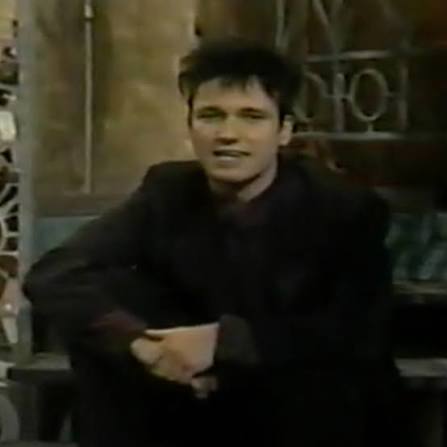
This show was a godsend for a teenage me...
Posted on 7/18/26 at 5:36 pm to TFTC
Freddy “Boom Boom” Cannon Dies: ‘Palisades Park’ & ‘Tallahassee Lassie’ Rock & Roller Was 89
By Greg Evans
July 18, 2026 12:58pm
Freddy “Boom Boom” Cannon, the early rock & roller who scored big, joyful radio hits with, among others, 1959’s “Tallahassee Lassie” and 1962’s “Palisades Park,” died yesterday, July 17, at a California hospice facility following a brief battle with cancer. He was 89.
His death was announced by Tom Cuddy, a longtime friend and iHeart Radio producer. Cuddy noted that Cannon’s children Conny Weber and Billy Cannon were with him in the days before his passing.
Cannon, who earned the nickname “Boom Boom” from the percussive power of his songs as well as the double entendre of his last name, took a spot in the post-Elvis/pre-Beatles rock & roll landscape through a string of hits and, perhaps more significantly, repeated appearances on Dick Clark’s American Bandstand musical variety series.
While Clark’s program introduced Cannon to TV audiences – at first when the show was produced locally in Philadelphia and later when it went national – the singer-guitarist would also appear on such music programs of the era as Shindig, Hullabaloo, Where the Action Is and, later, The Midnight Special.
“Freddy didn’t do ballads,” Cuddy said. “Dick Clark once told me that every time he hosted an oldies concert, he asked Freddy to open it, because he knew Freddy would get the audience on their feet with up-tempo rock and roll.”
In addition to “Tallahassee Lassie” (cowritten with The Four Seasons’ Bob Crewe) and “Palisades Park,” the latter remembered for its prominent use of circus calliope sounds as a recurring motif, Cannon’s other hits included “Way Down Yonder In New Orleans,” “Too Much Monkey Business,” “Action” (used as the theme song for Clark’s Where The Action Is series), “Transistor Sister” and “Abigail Beecher.”
Born Frederick Anthony Picariello Jr. on December 4, 1936, in Lynn, Massachusetts, Cannon lived in the state until his late teens, enjoying some musical success in the Boston area before he and his wife Jeanette moved to Philadelphia at the encouragement of TV host Clark, who had become aware of Cannon’s music through “Tallahassee Lassie.” Clark suggested Cannon re-edit and overdub the recording with the stronger bass drums that would become Cannon’s trademark sound and nickname inspiration.
Cannon is thought to hold the record for appearing on American Bandstand over the years, with estimates putting the number of his visits to over 100.
His visibility and chart success – he scored three Top 10 songs and 29 Top 100 – led to a fan base that would include such future superstars as Mick Jagger and Led Zeppelin’s Robert Plant, who once told Cannon during a backstage visit that he and his Zeppelin bandmates loved “Tallahassee Lassie” so much they recorded a blues version of it (if true, the recording has never surfaced).
Jagger has said in interviews that “Tallahassee Lassie” inspired the Stones’ hit “Brown Sugar,” noting, “The groove is similar to Freddy’s song.” (The Stones recorded their own cover of “Tallahassee Lassie” in 1978, with the song surfacing as a bonus track on the band’s 2011 re-issue of Some Girls.)
Another fan was a young Stephen King, who mentioned Cannon in at least four of his books, most notably in the time-travel novel 11/22/63, in which “Palisades Park” features prominently.
Over a career that spanned 70 years, Cannon, a longtime resident of Oxnard, California, performed on bills with some of the top musical performers the early rock & roll era, including Chuck Berry, Fats Domino, Little Richard, Chubby Checker, Jerry Lee Lewis, Bo Diddley, Connie Francis and Brenda Lee.
Cannon was working on music at his home in Oxnard right up to his death, Cuddy notes. He currently has a Top 20 song in the United Kingdom on the Heritage Charts with a number he recorded this year called “All She Wants To Do Is Dance.” The song is also in regular rotation on the Sirius XM 1960s channel.
Cannon’s songs have appeared in such films as George Clooney’s Confessions of a Dangerous Mind and 2011’s X-Men: First Class. The MeTV horror host Svengoolie has featured Cannon’s music and recently paid tribute to the singer with an airing of 1965’s Village of the Giants, which includes an acting performance by Cannon.
According to Cuddy, Cannon was scheduled to do what would have been his final interview on July 11 with longtime friend and NYC DJ Cousin Brucie Morrow, but was forced to cancel when he was hospitalized the day prior.
Cannon published his autobiography Where the Action Is (with Mark Bego) in 2011.
In addition to his children Conny and Billy, Cannon is survived by sister Mary Lou, son-in-law Jim, daughter-in-law Beth, five grandchildren and seven great grandchildren. He was pre-deceased by his son John, who died this past April 13, and wife Jeanette, who died in 2024.
Daughter Weber said in a statement, “We would like to thank everyone for their love and support throughout our dad’s life. He will be remembered as a rock and roll icon. His music will live forever in our hearts.”

By Greg Evans
July 18, 2026 12:58pm
Freddy “Boom Boom” Cannon, the early rock & roller who scored big, joyful radio hits with, among others, 1959’s “Tallahassee Lassie” and 1962’s “Palisades Park,” died yesterday, July 17, at a California hospice facility following a brief battle with cancer. He was 89.
His death was announced by Tom Cuddy, a longtime friend and iHeart Radio producer. Cuddy noted that Cannon’s children Conny Weber and Billy Cannon were with him in the days before his passing.
Cannon, who earned the nickname “Boom Boom” from the percussive power of his songs as well as the double entendre of his last name, took a spot in the post-Elvis/pre-Beatles rock & roll landscape through a string of hits and, perhaps more significantly, repeated appearances on Dick Clark’s American Bandstand musical variety series.
While Clark’s program introduced Cannon to TV audiences – at first when the show was produced locally in Philadelphia and later when it went national – the singer-guitarist would also appear on such music programs of the era as Shindig, Hullabaloo, Where the Action Is and, later, The Midnight Special.
“Freddy didn’t do ballads,” Cuddy said. “Dick Clark once told me that every time he hosted an oldies concert, he asked Freddy to open it, because he knew Freddy would get the audience on their feet with up-tempo rock and roll.”
In addition to “Tallahassee Lassie” (cowritten with The Four Seasons’ Bob Crewe) and “Palisades Park,” the latter remembered for its prominent use of circus calliope sounds as a recurring motif, Cannon’s other hits included “Way Down Yonder In New Orleans,” “Too Much Monkey Business,” “Action” (used as the theme song for Clark’s Where The Action Is series), “Transistor Sister” and “Abigail Beecher.”
Born Frederick Anthony Picariello Jr. on December 4, 1936, in Lynn, Massachusetts, Cannon lived in the state until his late teens, enjoying some musical success in the Boston area before he and his wife Jeanette moved to Philadelphia at the encouragement of TV host Clark, who had become aware of Cannon’s music through “Tallahassee Lassie.” Clark suggested Cannon re-edit and overdub the recording with the stronger bass drums that would become Cannon’s trademark sound and nickname inspiration.
Cannon is thought to hold the record for appearing on American Bandstand over the years, with estimates putting the number of his visits to over 100.
His visibility and chart success – he scored three Top 10 songs and 29 Top 100 – led to a fan base that would include such future superstars as Mick Jagger and Led Zeppelin’s Robert Plant, who once told Cannon during a backstage visit that he and his Zeppelin bandmates loved “Tallahassee Lassie” so much they recorded a blues version of it (if true, the recording has never surfaced).
Jagger has said in interviews that “Tallahassee Lassie” inspired the Stones’ hit “Brown Sugar,” noting, “The groove is similar to Freddy’s song.” (The Stones recorded their own cover of “Tallahassee Lassie” in 1978, with the song surfacing as a bonus track on the band’s 2011 re-issue of Some Girls.)
Another fan was a young Stephen King, who mentioned Cannon in at least four of his books, most notably in the time-travel novel 11/22/63, in which “Palisades Park” features prominently.
Over a career that spanned 70 years, Cannon, a longtime resident of Oxnard, California, performed on bills with some of the top musical performers the early rock & roll era, including Chuck Berry, Fats Domino, Little Richard, Chubby Checker, Jerry Lee Lewis, Bo Diddley, Connie Francis and Brenda Lee.
Cannon was working on music at his home in Oxnard right up to his death, Cuddy notes. He currently has a Top 20 song in the United Kingdom on the Heritage Charts with a number he recorded this year called “All She Wants To Do Is Dance.” The song is also in regular rotation on the Sirius XM 1960s channel.
Cannon’s songs have appeared in such films as George Clooney’s Confessions of a Dangerous Mind and 2011’s X-Men: First Class. The MeTV horror host Svengoolie has featured Cannon’s music and recently paid tribute to the singer with an airing of 1965’s Village of the Giants, which includes an acting performance by Cannon.
According to Cuddy, Cannon was scheduled to do what would have been his final interview on July 11 with longtime friend and NYC DJ Cousin Brucie Morrow, but was forced to cancel when he was hospitalized the day prior.
Cannon published his autobiography Where the Action Is (with Mark Bego) in 2011.
In addition to his children Conny and Billy, Cannon is survived by sister Mary Lou, son-in-law Jim, daughter-in-law Beth, five grandchildren and seven great grandchildren. He was pre-deceased by his son John, who died this past April 13, and wife Jeanette, who died in 2024.
Daughter Weber said in a statement, “We would like to thank everyone for their love and support throughout our dad’s life. He will be remembered as a rock and roll icon. His music will live forever in our hearts.”
Posted on 7/18/26 at 5:46 pm to Mizz-SEC
quote:this is not the real Billy Cannon, but neither is it the counterfeit Billy Cannon
Cannon’s children Conny Weber and Billy Cannon were with him
Posted on 7/18/26 at 5:57 pm to Mizz-SEC
quote:
Jagger has said in interviews that “Tallahassee Lassie” inspired the Stones’ hit “Brown Sugar,” noting, “The groove is similar to Freddy’s song.” (The Stones recorded their own cover of “Tallahassee Lassie” in 1978, with the song surfacing as a bonus track on the band’s 2011 re-issue of Some Girls.)
It's a great cover by The Stones. The Stones understandably couldn't find room for it on Some Girls since there's really not a weak track on the album. But they should have put it on Emotional Rescue.
Posted on 7/19/26 at 12:59 am to Kafka
Posted on 7/29/26 at 9:48 am to Pisco
Ray Gomez:
Born in Morocco in 1953 and relocated to Spain when he was twelve, Ray’s first tryst with success was with POP-TOPS whose take on the perennial “Mamy Blue” became a massive hit in 1971, but two years later Gomez found himself in the UK thanks to an invitation extended by fellow guitarist, George Harrison, and soon after a jam with Carmine Appice resulted in the youngster’s move to the US.
A supergroup with the drummer didn’t happen, though, and neither did Ray’s stint with John Lennon, yet once there, it didn’t take him long to get acquainted with Stanley Clarke – and the star was born. Ray’s work on “School Days” and a few more of the bassist’s records over the following decade is exemplary, as is what Gomez did on Lenny White’s “Big City” and several Narada Michael Walden’s platters.
Later, he shone on albums by Cat Stevens and Chaka Khan, Jeremy Spencer and Roy Buchanan, Jack Bruce and Aretha Franklin, Alphonso Johnson and Joachim Kühn.
Born in Morocco in 1953 and relocated to Spain when he was twelve, Ray’s first tryst with success was with POP-TOPS whose take on the perennial “Mamy Blue” became a massive hit in 1971, but two years later Gomez found himself in the UK thanks to an invitation extended by fellow guitarist, George Harrison, and soon after a jam with Carmine Appice resulted in the youngster’s move to the US.
A supergroup with the drummer didn’t happen, though, and neither did Ray’s stint with John Lennon, yet once there, it didn’t take him long to get acquainted with Stanley Clarke – and the star was born. Ray’s work on “School Days” and a few more of the bassist’s records over the following decade is exemplary, as is what Gomez did on Lenny White’s “Big City” and several Narada Michael Walden’s platters.
Later, he shone on albums by Cat Stevens and Chaka Khan, Jeremy Spencer and Roy Buchanan, Jack Bruce and Aretha Franklin, Alphonso Johnson and Joachim Kühn.

 Page 35 of 36


Popular
Back to top
 Follow TigerDroppings for LSU Football News