- My Forums
- Tiger Rant
- LSU Recruiting
- SEC Rant
- Saints Talk
- Pelicans Talk
- More Sports Board
- Fantasy Sports
- Golf Board
- Soccer Board
- O-T Lounge
- Tech Board
- Home/Garden Board
- Outdoor Board
- Health/Fitness Board
- Movie/TV Board
- Book Board
- Music Board
- Political Talk
- Money Talk
- Fark Board
- Gaming Board
- Travel Board
- Food/Drink Board
- Ticket Exchange
- TD Help Board
Customize My Forums- View All Forums
- Topic Sort Options
- Trending Topics
- Recent Topics
- Active Topics

| Favorite team: | Alabama  |
| Location: | |
| Biography: | |
| Interests: | |
| Occupation: | |
| Number of Posts: | 6010 |
| Registered on: | 9/2/2014 |
| Online Status: | Not Online |
Recent Posts
Message

 0
0
it seems Zelenskyy appointed the right guy ...
2 Months Under Drapaty: Ukraine’s Army Is Winning
In brief: Drapaty is reshaping Ukraine’s military around drone-heavy warfare, decentralized command, and younger combat leaders. His tenure has seen local counteroffensives regain ground while pursuing a 30-year plan to modernize the AFU.
Kyiv Post
2 Months Under Drapaty: Ukraine’s Army Is Winning
In brief: Drapaty is reshaping Ukraine’s military around drone-heavy warfare, decentralized command, and younger combat leaders. His tenure has seen local counteroffensives regain ground while pursuing a 30-year plan to modernize the AFU.
Kyiv Post
re: Latest Updates: Russia-Ukraine Conflict.
Posted by cypher on 10/7/26 at 7:32 am to Coeur du Tigre
Death toll from Russian missile strike on Pryluky rises to 14: bodies of three children recovered from under rubble – video
Alona Mazurenko — 7 October, 13:44
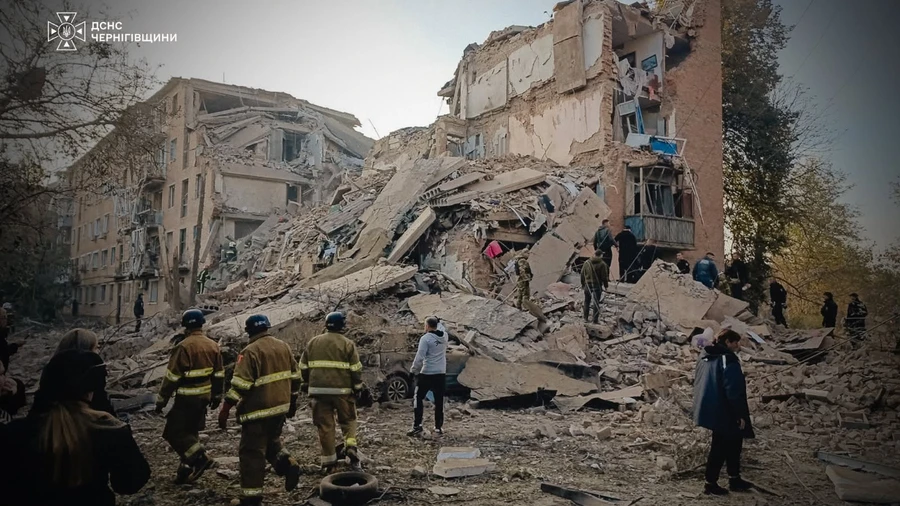
The death toll from a Russian missile strike on Pryluky in Chernihiv Oblast has risen to 14, and 50 people have been injured. Rescue workers are still clearing the rubble of an apartment block struck by the Russians.
Source: Chernihiv Oblast Police; Ukrainian public broadcaster Suspilne; Ukraine's State Emergency Service
Quote from the State Emergency Service: "Fourteen people, including four children, are now known to have been killed in the Russian attack on Pryluky, Chernihiv Oblast."
Details: Fifty people have been injured, including seven children. Fifteen people have also been rescued, including one child. Psychologists from the State Emergency Service have provided support to 36 people.
Ukrainska Pravda
Alona Mazurenko — 7 October, 13:44
The death toll from a Russian missile strike on Pryluky in Chernihiv Oblast has risen to 14, and 50 people have been injured. Rescue workers are still clearing the rubble of an apartment block struck by the Russians.
Source: Chernihiv Oblast Police; Ukrainian public broadcaster Suspilne; Ukraine's State Emergency Service
Quote from the State Emergency Service: "Fourteen people, including four children, are now known to have been killed in the Russian attack on Pryluky, Chernihiv Oblast."
Details: Fifty people have been injured, including seven children. Fifteen people have also been rescued, including one child. Psychologists from the State Emergency Service have provided support to 36 people.
Ukrainska Pravda
UPDATE: Not seeing this confirmed in other outlets.
Loading Twitter/X Embed...
If tweet fails to load, click here.Ukraine will step up strikes on Russian refineries in response to Moscow's aerial terror, Zelenskyy says
KATERYNA TYSHCHENKO — 3 October, 19:44
President Volodymyr Zelenskyy has said Ukraine will increase its strikes on Russian oil refineries in response to Moscow's new campaign of airstrikes aimed at forcing people to flee Kyiv and other cities.
Source: Zelenskyy in an interview with Reuters
Details: Zelenskyy said Ukraine will react to Moscow's change of tactics, but it will not respond in kind by indiscriminately striking civilian infrastructure.
Quote from Zelenskyy: "We have to respond in any way [we can]. With their attacks on our energy, we have to respond on their energy. First of all, oil refiners: what gives money to them for this war. But we will not respond, of course, just like them, on any civilian objects."
Details: Zelenskyy also noted that Ukrainian intelligence has obtained documents indicating that Russian leader Vladimir Putin has issued a "new doctrine" of military attacks on a much broader range of civilian targets ahead of this winter.
Quote: "We saw documents and we know that they allow them to attack infrastructure ... logistics ... roads, schools, hospitals, to pressure people to leave the capital, leave different cities. This is the goal of the operation."
Details: According to Zelenskyy, the reason for the policy shift was Putin's desire to appear strong at a time when his troops are losing ground in Donbas and suffering heavy casualties.
Ukrainska Pravda
KATERYNA TYSHCHENKO — 3 October, 19:44
President Volodymyr Zelenskyy has said Ukraine will increase its strikes on Russian oil refineries in response to Moscow's new campaign of airstrikes aimed at forcing people to flee Kyiv and other cities.
Source: Zelenskyy in an interview with Reuters
Details: Zelenskyy said Ukraine will react to Moscow's change of tactics, but it will not respond in kind by indiscriminately striking civilian infrastructure.
Quote from Zelenskyy: "We have to respond in any way [we can]. With their attacks on our energy, we have to respond on their energy. First of all, oil refiners: what gives money to them for this war. But we will not respond, of course, just like them, on any civilian objects."
Details: Zelenskyy also noted that Ukrainian intelligence has obtained documents indicating that Russian leader Vladimir Putin has issued a "new doctrine" of military attacks on a much broader range of civilian targets ahead of this winter.
Quote: "We saw documents and we know that they allow them to attack infrastructure ... logistics ... roads, schools, hospitals, to pressure people to leave the capital, leave different cities. This is the goal of the operation."
Details: According to Zelenskyy, the reason for the policy shift was Putin's desire to appear strong at a time when his troops are losing ground in Donbas and suffering heavy casualties.
Ukrainska Pravda
This is a crucial hub for supplying oil to Russian oil refineries, the Druzhba system, as well as toward Ust-Luga and southern Russia.
Loading Twitter/X Embed...
If tweet fails to load, click here.re: Latest Updates: Russia-Ukraine Conflict.
Posted by cypher on 10/1/26 at 4:28 pm to Coeur du Tigre
Putin calls proposals for mutual halt to strikes on ships and oil refineries absurd
Iryna Balachuk — 1 October, 21:00
Russian leader Vladimir Putin has called a proposal not to strike Ukrainian ships if Ukraine refrains from striking Russian oil refineries "absurd".
Source: Russian state-owned news agency TASS; RT na russkom, citing remarks by the Kremlin leader at a meeting of the Valdai Discussion Club
Quote from Putin: "We are being told: how about they stop striking your [Russian] oil refineries, and you stop striking their [Ukrainian] ships – let them transport civilian cargo, agricultural products. But what about our other civilian cargo, like oil and petroleum products? They say they will stop the strikes, so there will be more diesel, which is so badly needed in, say, the United States. But we will have more of it – we already have enough diesel. It won't reach global markets because there are sanctions in place. And in response we are supposed to stop striking targets that are important to them. Well, it just looks absurd."
Details: As usual, Putin claimed that Ukraine started attacking first.
Quote: "The Kyiv authorities started striking our tankers and other ships. They started in early July and they announced it publicly, they were not shy about it. In the first 10 days alone they knocked out 40 of our ships. And overall they have damaged over 100. We started to respond. Now we're getting appeals from all sides: 'Let's stop.' Well, they started it. Take this grenade from a Soviet soldier, you fascist. Now they don't like it."
Details: Asked again whether he would be willing to agree to a proposal for a mutual cessation of strikes, the Russian leader's answer was brief: "No."
Ukrainska Pravda
Iryna Balachuk — 1 October, 21:00
Russian leader Vladimir Putin has called a proposal not to strike Ukrainian ships if Ukraine refrains from striking Russian oil refineries "absurd".
Source: Russian state-owned news agency TASS; RT na russkom, citing remarks by the Kremlin leader at a meeting of the Valdai Discussion Club
Quote from Putin: "We are being told: how about they stop striking your [Russian] oil refineries, and you stop striking their [Ukrainian] ships – let them transport civilian cargo, agricultural products. But what about our other civilian cargo, like oil and petroleum products? They say they will stop the strikes, so there will be more diesel, which is so badly needed in, say, the United States. But we will have more of it – we already have enough diesel. It won't reach global markets because there are sanctions in place. And in response we are supposed to stop striking targets that are important to them. Well, it just looks absurd."
Details: As usual, Putin claimed that Ukraine started attacking first.
Quote: "The Kyiv authorities started striking our tankers and other ships. They started in early July and they announced it publicly, they were not shy about it. In the first 10 days alone they knocked out 40 of our ships. And overall they have damaged over 100. We started to respond. Now we're getting appeals from all sides: 'Let's stop.' Well, they started it. Take this grenade from a Soviet soldier, you fascist. Now they don't like it."
Details: Asked again whether he would be willing to agree to a proposal for a mutual cessation of strikes, the Russian leader's answer was brief: "No."
Ukrainska Pravda
Russia uses jet-powered drone with warhead designed to destroy power lines for first time
Andrii Konyk — 30 September, 18:18
The Russians have used a special warhead designed to destroy high-voltage electricity pylons on a jet-powered strike drone for the first time.
Source: Serhii "Flash" Beskrestnov, adviser to the President of Ukraine and an expert in radio technology
Details: According to Flash, the Russians used the cumulative-cutting special payload warhead (KRSN) for the first time on 30 September.
Quote from "Flash": "This warhead has been created specifically for the destruction of high-voltage pylons and iron bridge structures. The KRSN consists of a 40kg main warhead and four destruction modules."
Details: The use of the KRSN warhead on a jet-powered drone may indicate that the Russians plan to step up attacks on high-voltage power lines.
Previously: Ukrainska Pravda reported that Russia is increasing its use of jet-powered UAVs for attacks on Ukraine. In July, Russia used five times more jet-powered drones against Ukraine than in June.
Russian industry has also begun to master the production of Chinese jet engines after facing problems with supplies from China. This is evidenced by an analysis of drone wreckage conducted by a specialised institution to which Ukrainska Pravda gained access.
The latest batches of Russian Geran-4 and Geran-5 strike drones are equipped with Chinese Telefly TF-TJ2000A jet engines, which were assembled at the Alabuga drone production site.
Ukrainska Pravda
Andrii Konyk — 30 September, 18:18
The Russians have used a special warhead designed to destroy high-voltage electricity pylons on a jet-powered strike drone for the first time.
Source: Serhii "Flash" Beskrestnov, adviser to the President of Ukraine and an expert in radio technology
Details: According to Flash, the Russians used the cumulative-cutting special payload warhead (KRSN) for the first time on 30 September.
Quote from "Flash": "This warhead has been created specifically for the destruction of high-voltage pylons and iron bridge structures. The KRSN consists of a 40kg main warhead and four destruction modules."
Details: The use of the KRSN warhead on a jet-powered drone may indicate that the Russians plan to step up attacks on high-voltage power lines.
Previously: Ukrainska Pravda reported that Russia is increasing its use of jet-powered UAVs for attacks on Ukraine. In July, Russia used five times more jet-powered drones against Ukraine than in June.
Russian industry has also begun to master the production of Chinese jet engines after facing problems with supplies from China. This is evidenced by an analysis of drone wreckage conducted by a specialised institution to which Ukrainska Pravda gained access.
The latest batches of Russian Geran-4 and Geran-5 strike drones are equipped with Chinese Telefly TF-TJ2000A jet engines, which were assembled at the Alabuga drone production site.
Ukrainska Pravda
re: Latest Updates: Russia-Ukraine Conflict.
Posted by cypher on 9/30/26 at 10:05 am to Coeur du Tigre
"The 66th Separate Mechanized Brigade, together with other units of the Third Army Corps, has already returned more than 125 square kilometers of our territory to Ukrainian control as part of Operation Vivaldi."
Loading Twitter/X Embed...
If tweet fails to load, click here.Testifying Tuesday before the Senate Judiciary Committee, Smith said he stands by his decision to bring charges and would do so again based on the same facts, “regardless of whether that president was a Republican or a Democrat.”
Loading Twitter/X Embed...
If tweet fails to load, click here.ANALYSIS: Ukrainian Intel Exposes Russia Helping Iran Target US Forces
Sept. 29, 2026, 7:09 am
Ukrainian President Volodymyr Zelensky has announced that Kyiv’s intelligence services will begin sharing evidence of what he described as a highly coordinated military reconnaissance loop between Russia and Iran.
According to the intelligence, Moscow has utilized its network of spy satellites to monitor Gulf states and critical US military assets in the Middle East. These orbital passes directly correlate with the timing of Iranian drone and missile strikes.
Zelensky offered a striking example. In a 48-hour window between July 19 and 20 alone, four air bases fell squarely within the lens of active Russian satellite surveillance – two in Bahrain, one in Jordan and one in Kuwait.
The intelligence described by Kyiv points to a potentially sophisticated reconnaissance cycle: pre-attack satellite collection, tactical tracking imagery that could assist operational planning, and post-strike battle damage assessment.
Kyiv Post
Sept. 29, 2026, 7:09 am
Ukrainian President Volodymyr Zelensky has announced that Kyiv’s intelligence services will begin sharing evidence of what he described as a highly coordinated military reconnaissance loop between Russia and Iran.
According to the intelligence, Moscow has utilized its network of spy satellites to monitor Gulf states and critical US military assets in the Middle East. These orbital passes directly correlate with the timing of Iranian drone and missile strikes.
Zelensky offered a striking example. In a 48-hour window between July 19 and 20 alone, four air bases fell squarely within the lens of active Russian satellite surveillance – two in Bahrain, one in Jordan and one in Kuwait.
The intelligence described by Kyiv points to a potentially sophisticated reconnaissance cycle: pre-attack satellite collection, tactical tracking imagery that could assist operational planning, and post-strike battle damage assessment.
Kyiv Post
Zelensky: Overall drone interception rate amounts to 70%, for jet-powered drones currently only 57%
28.09.2026 22:51
President Volodymyr Zelensky said that Ukrainian forces are already using interceptors against jet-powered drones, but the interception rate is currently only 57%.
The head of state said this in his evening address, according to Ukrinform.
"The overall drone shoot-down rate as of today is 70% – this includes both regular and jet-powered shaheds. But for jet-powered shaheds, unfortunately, the rate is much lower than it needs to be – 57% for now. New interceptors are being actively tested," Zelensky said.
According to him, some combat units are already using them, but certain details still need to be refined to achieve sufficient effectiveness and scale.
"We are pushing the developers to move faster. Every week, there must be more concrete results in terms of shoot-downs along the interception lines," the President said.
As Ukrinform reported, Volodymyr Zelensky previously said that two Ukrainian companies had successfully conducted combat tests of interceptors, during which a Russian high-speed Shahed drone was destroyed.
Ukrinform
28.09.2026 22:51
President Volodymyr Zelensky said that Ukrainian forces are already using interceptors against jet-powered drones, but the interception rate is currently only 57%.
The head of state said this in his evening address, according to Ukrinform.
"The overall drone shoot-down rate as of today is 70% – this includes both regular and jet-powered shaheds. But for jet-powered shaheds, unfortunately, the rate is much lower than it needs to be – 57% for now. New interceptors are being actively tested," Zelensky said.
According to him, some combat units are already using them, but certain details still need to be refined to achieve sufficient effectiveness and scale.
"We are pushing the developers to move faster. Every week, there must be more concrete results in terms of shoot-downs along the interception lines," the President said.
As Ukrinform reported, Volodymyr Zelensky previously said that two Ukrainian companies had successfully conducted combat tests of interceptors, during which a Russian high-speed Shahed drone was destroyed.
Ukrinform
Popular

 29
29