




- My Forums
- Tiger Rant
- LSU Recruiting
- SEC Rant
- Saints Talk
- Pelicans Talk
- More Sports Board
- Fantasy Sports
- Golf Board
- Soccer Board
- O-T Lounge
- Tech Board
- Home/Garden Board
- Outdoor Board
- Health/Fitness Board
- Movie/TV Board
- Book Board
- Music Board
- Political Talk
- Money Talk
- Fark Board
- Gaming Board
- Travel Board
- Food/Drink Board
- Ticket Exchange
- TD Help Board
Customize My Forums- View All Forums
- Show Left Links
- Topic Sort Options
- Trending Topics
- Recent Topics
- Active Topics
Started By
Message
re: Photography cameras
Posted on 4/10/26 at 8:46 pm to wickowick

Posted on 4/10/26 at 8:46 pm to wickowick
quote:
I have replaced my Nikon 750 with a mirrorless
Really is a great camera.
Bought this for my daughter when she was 15 and decided she wanted to be a professional photographer.
We never invested money in primes and went with 1.8 for the value.
It's still here as a back up to the backup camera.
Shifted to sony a7iv so we could buy the tamron 35-150 f2-2.8 and sony 90mm macro.
That's now backup to the a7v and sigma 85mm 1.4 art and viltrox 35mm 1.2.
To the op,whatever you decide go the manufacturer website and look for any refurbished deals .
The camera sell groups on Facebook are generally safe.ive bought 3 lens and a camera on there pretty cheap
This post was edited on 4/10/26 at 8:52 pm
 0
0


Posted on 4/10/26 at 9:13 pm to CobraCommander83
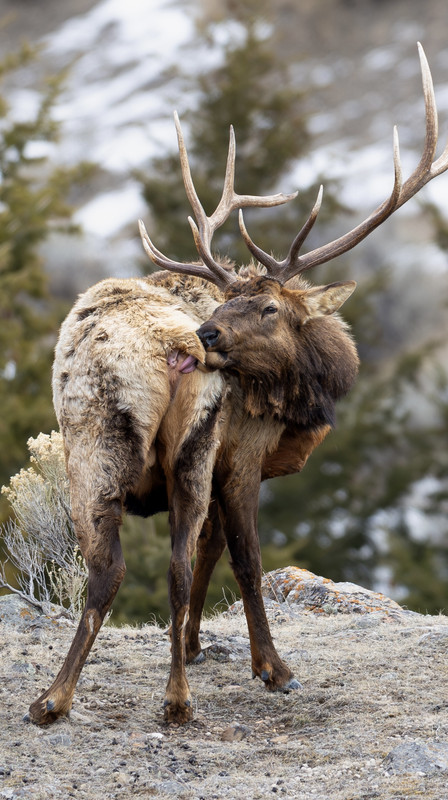
Lot of good advice in this thread. Especially about buying used equipment to get more camera for less money. You definitely need to have good glass so you don’t miss shots like this when they present themselves. 

Posted on 4/10/26 at 9:23 pm to CobraCommander83
Buy a used D850 and 2-3 basic lenses.
Get a 50mm, a 35mm prime, and a 20 or 24mm for landscape. Primes are preferred, but you could also get a 24-70 2.8 and rock and roll for anything from street, news, portrait and landscape.
Buy used nikon glass from Japan.
DSLR stuff is way cheaper than mirrorless and the batteries last ALL DAY. Those cameras are also still incredible for images. If you're hiking up a mountain, you don't want to have to pack 5 batteries.
Hell, you can even get old manual focus Nikkor primes that blow modern lenses out of the water for color and contrast. Those are dirt cheap. Phenomenal lenses like $200-$400.
Expect to pay $600-$1000 for a great used 24-70 2.8. Get a nikon, preferably a 2.8 24-70g. Don't buy off brand lenses, especially used. They don't hold up as well longterm.
Start slow. I'd probably start with a 24-70 and a D850. That could be $2K, though.
If you want real cheap, get a D810 and a 24-70 2.8. Could probably sneak under you $1K budget that way.
Learn your canera. Learn it iso it's instinct to adjust the settings and learn light. It's all about light and composition. That's it.
Go out and have fun.
Get a 50mm, a 35mm prime, and a 20 or 24mm for landscape. Primes are preferred, but you could also get a 24-70 2.8 and rock and roll for anything from street, news, portrait and landscape.
Buy used nikon glass from Japan.
DSLR stuff is way cheaper than mirrorless and the batteries last ALL DAY. Those cameras are also still incredible for images. If you're hiking up a mountain, you don't want to have to pack 5 batteries.
Hell, you can even get old manual focus Nikkor primes that blow modern lenses out of the water for color and contrast. Those are dirt cheap. Phenomenal lenses like $200-$400.
Expect to pay $600-$1000 for a great used 24-70 2.8. Get a nikon, preferably a 2.8 24-70g. Don't buy off brand lenses, especially used. They don't hold up as well longterm.
Start slow. I'd probably start with a 24-70 and a D850. That could be $2K, though.
If you want real cheap, get a D810 and a 24-70 2.8. Could probably sneak under you $1K budget that way.
Learn your canera. Learn it iso it's instinct to adjust the settings and learn light. It's all about light and composition. That's it.
Go out and have fun.
This post was edited on 4/10/26 at 9:26 pm

Posted on 4/13/26 at 7:58 am to Jack Ruby
quote:
Get a 50mm, a 35mm prime, and a 20 or 24mm for landscape.
Terrible advice.
The bread-and-butter lens for most serious landscape photographers is a 16–35mm f/2.8. If you look at real-world usage, that focal range does most of the heavy lifting. I’ve shot tens of thousands of landscape images, and I’d confidently say 65–75% of them were taken on a 16–35. After that, a 24–70mm and then a 70–200mm round out my landscape the kit. (I would argue that outside of pure landscape work a good 24-70mm F/2.8 would be the first lens to acquire, but that's not the discussion we're having...)
The reason is simple: landscape photography is rarely shot under controlled conditions. You can’t always move your feet to make a prime work. You’re dealing with cliffs, water, dense brush whatever the terrain gives you. Composition often comes down to small adjustments in framing, and zoom lenses give you that flexibility instantly. With a prime, you’re either stuck compromising the shot or physically unable to get what you truly want.
There’s also this persistent idea that primes are “better” because they’re sharper. That may be when shooting wide open, but falls apart when shooting landscapes. Landscapes are almost never shot wide open. You’re typically at f/8 to f/11 to maximize depth of field and keep the entire scene in focus and to minimize refraction.
And here’s the key point: most lenses wheather they are zooms or primes are at their optical best in that f/8 to f/11 range. So the sharpness advantage people associate with primes is mostly negated under actual shooting conditions. At those apertures, a good modern zoom is going to be minimally distinguishable in sharpness for all practical purposes. In landscape photography, flexibility wins far more often than theoretical sharpness advantages.
Mark Denney: What Landscape Photography LENS Should YOU BUY?
This post was edited on 4/13/26 at 8:11 am

 Page 3 of 3


Popular
Back to top
 Follow TigerDroppings for LSU Football News