




 1
1



- My Forums
- Tiger Rant
- LSU Recruiting
- SEC Rant
- Saints Talk
- Pelicans Talk
- More Sports Board
- Fantasy Sports
- Golf Board
- Soccer Board
- O-T Lounge
- Tech Board
- Home/Garden Board
- Outdoor Board
- Health/Fitness Board
- Movie/TV Board
- Book Board
- Music Board
- Political Talk
- Money Talk
- Fark Board
- Gaming Board
- Travel Board
- Food/Drink Board
- Ticket Exchange
- TD Help Board
Customize My Forums- View All Forums
- Show Left Links
- Topic Sort Options
- Trending Topics
- Recent Topics
- Active Topics
Started By
Message
re: The Great American Songbook
Posted on 1/11/26 at 5:17 pm to Kafka
Posted on 1/11/26 at 5:17 pm to Kafka
It was a very good year
The Turtles - folk rock version
Reverend Horton Heat - alt.psychobilly version
quote:From the Andy Williams TV show. Some amusing in-song banter, although Chad (or is it Jeremy?) should have tuned his guitar before the damn show started.
Ervin Drake composed the song in 1961 at the suggestion of record producer Artie Mogull, who told Drake that Bob Shane of The Kingston Trio needed a solo to include in the group's upcoming album Goin' Places. Drake wrote the song in less than a day, although he had been considering employing the metaphor of life as a vintage wine in a lyric for several years prior
The Turtles - folk rock version
Reverend Horton Heat - alt.psychobilly version
Posted on 1/30/26 at 8:02 pm to Kafka
Posted on 2/5/26 at 6:16 pm to Kafka
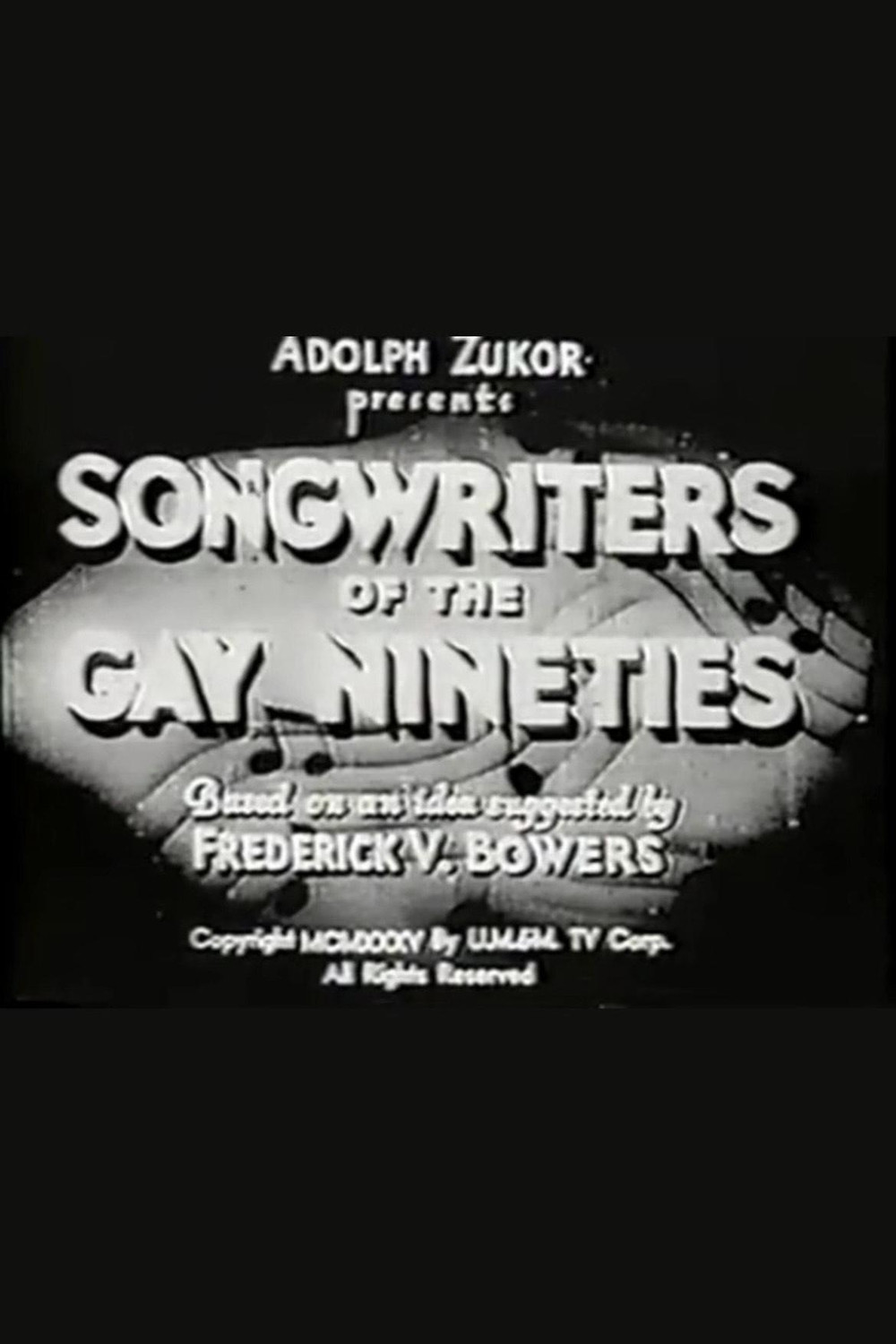
quote:
A film made c. 1934 showcasing many songwriters of the 1890s, including William McKenna, Harry Armstrong ("Sweet Adeline"), and eighty-six year old Theodore Metz (who wrote "A Hot Time in the Old Town Tonight"). For a special treat, we get to see Maude Lambert sing "When Irish Eyes Are Smiling."
It's interesting seeing the nostalgia of a long ago generation, when now both the young and the old are equally ancient
Posted on 3/23/26 at 8:59 pm to Kafka

Posted on 3/23/26 at 9:20 pm to Kafka
SIAP: but didn't see this
Posted on 3/23/26 at 9:25 pm to awestruck
quote:well... it's not a song
SIAP: but didn't see this
but...

Posted on 4/14/26 at 8:12 pm to Kafka
For some reason, about 20 yrs ago George Lucas' company produced a bunch of mini-documentaries on various historical subjects.
This one is a pithy basic intro to Tin Pan Alley.
Wiki:
This one is a pithy basic intro to Tin Pan Alley.
Wiki:
quote:
Tin Pan Alley was a collection of music publishers and songwriters in New York City that dominated the popular music of the United States in the late 19th and early 20th centuries. Originally, it referred to a specific location on West 28th Street, between Fifth and Sixth Avenues in the Flower District of Manhattan, as commemorated by a plaque on 28th Street between Broadway and Sixth. Several buildings on Tin Pan Alley are protected as New York City designated landmarks, and the section of 28th Street from Fifth to Sixth Avenue is also officially co-named Tin Pan Alley.
The start of Tin Pan Alley is usually dated to about 1885, when a number of music publishers set up shop in the same district of Manhattan. The end of Tin Pan Alley is less clear cut. Some date it to the start of the Great Depression in the 1930s when the phonograph, radio, and motion pictures supplanted sheet music as the driving force of American popular music, while others consider Tin Pan Alley to have continued into the 1950s when earlier styles of music were upstaged by the rise of rock and roll, which was centered on the Brill Building. Brill Building songwriter Neil Sedaka described his employer as being a natural outgrowth of Tin Pan Alley, in that the older songwriters were still employed in Tin Pan Alley firms while younger songwriters such as Sedaka found work at the Brill Building
Posted on 4/27/26 at 9:49 pm to Kafka
The Emperor and the kingdom he conquered

Posted on 4/28/26 at 8:12 pm to Kafka
In contemplation of his bittersweet triumphs

Posted on 7/11/26 at 4:20 pm to Kafka
"Zing! Went the Strings of My Heart" is a 1935 popular song written by James F. Hanley.
The most notable recordings were made by Judy Garland, who recorded it numerous times, including in the 1938 film Listen, Darling and for Decca Records in 1939. It later became a standard number in her concerts and TV shows when she performed it as an up-tempo arrangement by Nelson Riddle from her 1958 Capitol album
The Coasters released a rock and roll version on April 30, 1958 as the flip side of their No. 1 hit "Yakety Yak". This version would inspire the British band The Move to record the song in the late '60s.
In 1972, a recording by the Trammps reached No. 17 on the Billboard, Best Selling Soul Singles chart and No. 64 on the Hot 100. It reached No. 29 in the UK in 1974
The most notable recordings were made by Judy Garland, who recorded it numerous times, including in the 1938 film Listen, Darling and for Decca Records in 1939. It later became a standard number in her concerts and TV shows when she performed it as an up-tempo arrangement by Nelson Riddle from her 1958 Capitol album
The Coasters released a rock and roll version on April 30, 1958 as the flip side of their No. 1 hit "Yakety Yak". This version would inspire the British band The Move to record the song in the late '60s.
In 1972, a recording by the Trammps reached No. 17 on the Billboard, Best Selling Soul Singles chart and No. 64 on the Hot 100. It reached No. 29 in the UK in 1974
Posted on 7/20/26 at 7:43 pm to Kafka


Posted on 7/20/26 at 8:03 pm to Kafka
Posted on 9/23/26 at 6:13 pm to Kafka

Posted on 9/23/26 at 6:19 pm to Kafka
Dean Martin - "Everybody Loves Somebody"
on The Hollywood Palace (1964).
I believe this is the same episode where Dino infamously introduced the Rolling Stones ("I been rolled when I was stoned...")
Note how he jokes around and kids the song. Around the same time he also did it on a Bob Hope special (posted earlier in the thread) where he was deadly serious and stood statue still. I guess Bob had no sense of humor.
on The Hollywood Palace (1964).
I believe this is the same episode where Dino infamously introduced the Rolling Stones ("I been rolled when I was stoned...")
Note how he jokes around and kids the song. Around the same time he also did it on a Bob Hope special (posted earlier in the thread) where he was deadly serious and stood statue still. I guess Bob had no sense of humor.
Posted on 9/23/26 at 8:04 pm to Kafka
Yep, that's the same show.
Stones did "I Just Want To Make Love To You" and "Not Fade Away".
...really fast
Stones did "I Just Want To Make Love To You" and "Not Fade Away".
...really fast

 Page 4 of 4


Popular
Back to top
 Follow TigerDroppings for LSU Football News