




 2
2


- My Forums
- Tiger Rant
- LSU Recruiting
- SEC Rant
- Saints Talk
- Pelicans Talk
- More Sports Board
- Fantasy Sports
- Golf Board
- Soccer Board
- O-T Lounge
- Tech Board
- Home/Garden Board
- Outdoor Board
- Health/Fitness Board
- Movie/TV Board
- Book Board
- Music Board
- Political Talk
- Money Talk
- Fark Board
- Gaming Board
- Travel Board
- Food/Drink Board
- Ticket Exchange
- TD Help Board
Customize My Forums- View All Forums
- Show Left Links
- Topic Sort Options
- Trending Topics
- Recent Topics
- Active Topics
Started By
Message
Anyone in Sivers Semiconductors? (SIVEF)
Posted on 6/30/26 at 12:20 pm
Posted on 6/30/26 at 12:20 pm
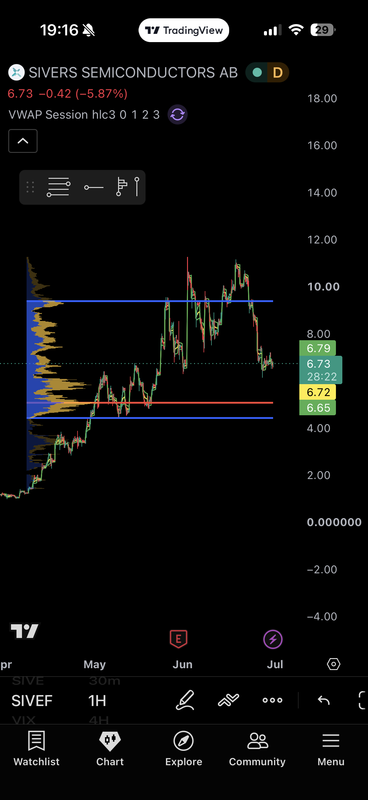
Eyeing this one as it had a massive run up between 2-3 months ago and has pulled back ~25% since ATH.
In the process of doing due diligence, but I’ve seen plenty of well-informed investors discussing it. Figured I’d start a thread to see if anyone holds/has eyes on this company.
I’m in for 300 shares for now at an average cost of $6.63/share as a starter position.
This post was edited on 6/30/26 at 12:40 pm
Posted on 6/30/26 at 12:27 pm to iPad
Posted on 6/30/26 at 12:34 pm to iPad
I. THE FUNDAMENTAL TECHNOLOGY
Semiconductors are the foundation of every modern electronic system. Sivers Semiconductors specializes in two particularly important segments:
1. Millimeter Wave (mmWave) Radio Frequency chips
2. Silicon Photonics optical networking technology
Rather than producing CPUs or GPUs, Sivers builds the components that transmit enormous amounts of data between devices.
As artificial intelligence, satellite communications, 5G, 6G, defense electronics, and cloud computing expand, the demand for ultra-fast, low-latency connectivity continues to accelerate.
——————————————————
II. THE MECHANICAL PROCESS: HOW SIVERS TECHNOLOGY WORKS
The company’s two business segments solve different problems.
A. WIRELESS (MMWAVE)
1. DATA IS GENERATED
Information originates from a computer, radar system, base station, satellite, or autonomous platform.
2. RF CONVERSION
Sivers’ RFIC (Radio Frequency Integrated Circuit) converts digital signals into extremely high-frequency millimeter-wave signals.
3. BEAMFORMING
Instead of broadcasting radio waves in every direction, beamforming focuses energy into narrow directional beams.
Benefits include:
* Longer range
* Faster speeds
* Lower interference
* Higher capacity
4. RECEPTION
The receiving antenna converts the radio signal back into digital information.
This process occurs billions of times every second.
——————————————————
B. PHOTONICS
Instead of electrical signals traveling through copper wires…
…Sivers converts electrical signals into pulses of laser light.
Those photons travel through optical fiber at nearly the speed of light before being converted back into electrical signals.
This dramatically increases:
* bandwidth
* efficiency
* power consumption
* latency
This technology is becoming essential inside AI datacenters.
——————————————————
III. WHY THIS MATTERS FOR AI
Modern AI is increasingly limited by movement of data rather than compute itself.
For example:
Training a frontier AI model may involve tens of thousands of GPUs.
Those GPUs spend much of their time exchanging information with one another.
If networking becomes the bottleneck…
…GPU utilization falls dramatically.
Silicon photonics solves this problem.
Instead of relying solely on electrical interconnects,
future AI systems increasingly move data optically.
That is one of the largest secular trends occurring in semiconductor infrastructure.
——————————————————
IV. CORE COMPONENTS OF SIVERS PRODUCTS
1. RF TRANSCEIVERS
These chips generate and receive mmWave radio signals.
Applications include:
* 5G
* 6G
* Fixed Wireless Access
* Satellites
* Defense
——————————————————
2. BEAMFORMING ICs
Multiple antennas are synchronized to steer radio energy electronically.
Advantages include:
* increased range
* reduced interference
* higher reliability
* lower power consumption
——————————————————
3. SILICON PHOTONICS
Integrated optical chips convert electrical information into light.
Instead of bulky optical modules assembled from many components,
silicon photonics integrates much of the optical functionality directly onto semiconductor wafers.
——————————————————
4. LASER INTEGRATION
Optical systems require precise lasers.
Sivers develops technologies that integrate lasers with silicon photonics to produce compact, high-speed optical engines.
——————————————————
V. PRIMARY APPLICATIONS IN 2026
1. AI DATACENTERS
The explosive growth of generative AI is driving unprecedented demand for optical networking.
Every new GPU cluster requires:
* optical transceivers
* high-speed switches
* photonic interconnects
This is among the fastest-growing semiconductor markets.
——————————————————
2. DEFENSE
Modern military systems rely heavily on mmWave communications.
Applications include:
* radar
* electronic warfare
* secure communications
* unmanned systems
* battlefield networking
Western governments continue increasing defense spending, creating a favorable long-term demand environment.
——————————————————
3. SATELLITE COMMUNICATIONS
Low Earth Orbit (LEO) satellite constellations require:
* phased-array antennas
* beam steering
* high-frequency RF chips
These technologies enable broadband internet from space.
——————————————————
4. FIXED WIRELESS ACCESS (FWA)
Instead of laying fiber to every home,
telecom operators increasingly use millimeter-wave radios to deliver gigabit internet wirelessly.
This lowers infrastructure costs while expanding broadband coverage.
——————————————————
5. FUTURE 6G NETWORKS
Although still in development,
6G research is expected to rely heavily on:
* mmWave
* sub-THz frequencies
* advanced beamforming
* integrated photonics
Sivers is already participating in technologies expected to underpin these future standards.
——————————————————
VI. THE CORE TECHNOLOGY STACK
Unlike companies that manufacture entire networking systems,
Sivers focuses on enabling technologies.
Its portfolio includes:
1. RF Integrated Circuits
2. Beamforming Chips
3. Silicon Photonics
4. Optical Engines
5. High-Speed Wireless Modules
These products are typically sold to OEMs, telecom equipment manufacturers, defense contractors, and cloud infrastructure providers.
Semiconductors are the foundation of every modern electronic system. Sivers Semiconductors specializes in two particularly important segments:
1. Millimeter Wave (mmWave) Radio Frequency chips
2. Silicon Photonics optical networking technology
Rather than producing CPUs or GPUs, Sivers builds the components that transmit enormous amounts of data between devices.
As artificial intelligence, satellite communications, 5G, 6G, defense electronics, and cloud computing expand, the demand for ultra-fast, low-latency connectivity continues to accelerate.
——————————————————
II. THE MECHANICAL PROCESS: HOW SIVERS TECHNOLOGY WORKS
The company’s two business segments solve different problems.
A. WIRELESS (MMWAVE)
1. DATA IS GENERATED
Information originates from a computer, radar system, base station, satellite, or autonomous platform.
2. RF CONVERSION
Sivers’ RFIC (Radio Frequency Integrated Circuit) converts digital signals into extremely high-frequency millimeter-wave signals.
3. BEAMFORMING
Instead of broadcasting radio waves in every direction, beamforming focuses energy into narrow directional beams.
Benefits include:
* Longer range
* Faster speeds
* Lower interference
* Higher capacity
4. RECEPTION
The receiving antenna converts the radio signal back into digital information.
This process occurs billions of times every second.
——————————————————
B. PHOTONICS
Instead of electrical signals traveling through copper wires…
…Sivers converts electrical signals into pulses of laser light.
Those photons travel through optical fiber at nearly the speed of light before being converted back into electrical signals.
This dramatically increases:
* bandwidth
* efficiency
* power consumption
* latency
This technology is becoming essential inside AI datacenters.
——————————————————
III. WHY THIS MATTERS FOR AI
Modern AI is increasingly limited by movement of data rather than compute itself.
For example:
Training a frontier AI model may involve tens of thousands of GPUs.
Those GPUs spend much of their time exchanging information with one another.
If networking becomes the bottleneck…
…GPU utilization falls dramatically.
Silicon photonics solves this problem.
Instead of relying solely on electrical interconnects,
future AI systems increasingly move data optically.
That is one of the largest secular trends occurring in semiconductor infrastructure.
——————————————————
IV. CORE COMPONENTS OF SIVERS PRODUCTS
1. RF TRANSCEIVERS
These chips generate and receive mmWave radio signals.
Applications include:
* 5G
* 6G
* Fixed Wireless Access
* Satellites
* Defense
——————————————————
2. BEAMFORMING ICs
Multiple antennas are synchronized to steer radio energy electronically.
Advantages include:
* increased range
* reduced interference
* higher reliability
* lower power consumption
——————————————————
3. SILICON PHOTONICS
Integrated optical chips convert electrical information into light.
Instead of bulky optical modules assembled from many components,
silicon photonics integrates much of the optical functionality directly onto semiconductor wafers.
——————————————————
4. LASER INTEGRATION
Optical systems require precise lasers.
Sivers develops technologies that integrate lasers with silicon photonics to produce compact, high-speed optical engines.
——————————————————
V. PRIMARY APPLICATIONS IN 2026
1. AI DATACENTERS
The explosive growth of generative AI is driving unprecedented demand for optical networking.
Every new GPU cluster requires:
* optical transceivers
* high-speed switches
* photonic interconnects
This is among the fastest-growing semiconductor markets.
——————————————————
2. DEFENSE
Modern military systems rely heavily on mmWave communications.
Applications include:
* radar
* electronic warfare
* secure communications
* unmanned systems
* battlefield networking
Western governments continue increasing defense spending, creating a favorable long-term demand environment.
——————————————————
3. SATELLITE COMMUNICATIONS
Low Earth Orbit (LEO) satellite constellations require:
* phased-array antennas
* beam steering
* high-frequency RF chips
These technologies enable broadband internet from space.
——————————————————
4. FIXED WIRELESS ACCESS (FWA)
Instead of laying fiber to every home,
telecom operators increasingly use millimeter-wave radios to deliver gigabit internet wirelessly.
This lowers infrastructure costs while expanding broadband coverage.
——————————————————
5. FUTURE 6G NETWORKS
Although still in development,
6G research is expected to rely heavily on:
* mmWave
* sub-THz frequencies
* advanced beamforming
* integrated photonics
Sivers is already participating in technologies expected to underpin these future standards.
——————————————————
VI. THE CORE TECHNOLOGY STACK
Unlike companies that manufacture entire networking systems,
Sivers focuses on enabling technologies.
Its portfolio includes:
1. RF Integrated Circuits
2. Beamforming Chips
3. Silicon Photonics
4. Optical Engines
5. High-Speed Wireless Modules
These products are typically sold to OEMs, telecom equipment manufacturers, defense contractors, and cloud infrastructure providers.
This post was edited on 6/30/26 at 12:38 pm

 Page 1 of 1




Popular

Back to top
 Follow TigerDroppings for LSU Football News