- My Forums
- Tiger Rant
- LSU Recruiting
- SEC Rant
- Saints Talk
- Pelicans Talk
- More Sports Board
- Fantasy Sports
- Golf Board
- Soccer Board
- O-T Lounge
- Tech Board
- Home/Garden Board
- Outdoor Board
- Health/Fitness Board
- Movie/TV Board
- Book Board
- Music Board
- Political Talk
- Money Talk
- Fark Board
- Gaming Board
- Travel Board
- Food/Drink Board
- Ticket Exchange
- TD Help Board
Customize My Forums- View All Forums
- Topic Sort Options
- Trending Topics
- Recent Topics
- Active Topics

TigerDoc
| Favorite team: | LSU  |
| Location: | Texas |
| Biography: | |
| Interests: | |
| Occupation: | |
| Number of Posts: | 12056 |
| Registered on: | 4/25/2004 |
| Online Status: | Not Online |
Recent Posts
Message
re: US State Department is aware of the possible death due to pneumonic plague in Russia
Posted by TigerDoc on 10/4/26 at 10:15 pm to _Hurricane_
Is there something reported about this strain being modified or resistant, or are you raising that as a possibility? Those would give us different reasons to worry.

 0
0
re: Leak of the Plague at Biolab in Russia
Posted by TigerDoc on 10/3/26 at 8:57 am to prplhze2000
Whether this proves anything about the Ukraine labs (it doesn't btw) is less interesting than whether we'd use the same rules for figuring out what it means (and this thread is showing that so far we wouldn't).
If this turns out to have been a lab accident, we should want to know what they were doing with their pathogen (& why they were doing it), what their safety procedures were, whether they screwed them up, and whether the government is being straight about it, etc. Those are reasonable questions if the lab is Russian, Chinese, Ukrainian or ours.
Things get squirrelly when "they have a biolab handling dangerous pathogens" starts doing the work of proving what kind of research it was, why they were doing it, or what some govt intended.
If this turns out to have been a lab accident, we should want to know what they were doing with their pathogen (& why they were doing it), what their safety procedures were, whether they screwed them up, and whether the government is being straight about it, etc. Those are reasonable questions if the lab is Russian, Chinese, Ukrainian or ours.
Things get squirrelly when "they have a biolab handling dangerous pathogens" starts doing the work of proving what kind of research it was, why they were doing it, or what some govt intended.

"Biodefense" supplies a possible rationale, not a blanket justification. How legit or bogus it would be will probably depend on some classified materials that we probably won't get soon, but who knows. Whether there was a credible threat and whether this was worth the risks is what I'd want to establish. :dunno:
An injection can infect them but it doesn’t necessarily test the same thing (a vaccine that protects against injected virus might or might not protect vs. exposure through the lungs.)
If the study details were released you could see the protocol and alleged safety reasoning. You’d want to know what required aerosol exposure rather than injection and did the findings actually show a vaccine-related problem? and what Fauci’s justification was for wanting them classified, etc.
That sort of thing could in theory help somebody judge the experiment plan and how it was handled (that exposure route alone doesn’t establish that vaccine testing was a cover for weapons development).
If the study details were released you could see the protocol and alleged safety reasoning. You’d want to know what required aerosol exposure rather than injection and did the findings actually show a vaccine-related problem? and what Fauci’s justification was for wanting them classified, etc.
That sort of thing could in theory help somebody judge the experiment plan and how it was handled (that exposure route alone doesn’t establish that vaccine testing was a cover for weapons development).
Yes, there’s already some published research from 2008:
LINK
quote:
Vesicular stomatitis virus-based vaccines protect nonhuman primates against aerosol challenge with Ebola and Marburg viruses
Thomas W Geisbert et al. Vaccine. 2008.
Considerable progress has been made over the last decade in developing candidate preventive vaccines that can protect nonhuman primates against Ebola and Marburg viruses. A vaccine based on recombinant vesicular stomatitis virus (VSV) seems to be particularly robust as it can also confer protection when administered as a postexposure treatment. While filoviruses are not thought to be transmitted by aerosol in nature the inhalation route is among the most likely portals of entry in the setting of a bioterrorist event. At present, all candidate filoviral vaccines have been evaluated against parenteral challenges but none have been tested against an aerosol exposure. Here, we evaluated our recombinant VSV-based Zaire ebolavirus (ZEBOV) and Marburg virus (MARV) vaccines against aerosol challenge in cynomolgus macaques. All monkeys vaccinated with a VSV vector expressing the glycoprotein of ZEBOV were completely protected against an aerosol exposure of ZEBOV. Likewise, all monkeys vaccinated with a VSV vector expressing the glycoprotein of MARV were completely protected against an aerosol exposure of MARV. All control animals challenged by the aerosol route with either ZEBOV or MARV succumbed. Interestingly, disease in control animals appeared to progress slower than previously seen in macaques exposed to comparable doses by intramuscular injection.
LINK
re: Fauci Wanted to Aerosolize Ebola
Posted by TigerDoc on 10/1/26 at 9:42 am to N.O. via West-Cal
Yeah, that quote seems to complicate the story. There’s also a distinction between exposing a research animal to aerosolized ebola to test vaccines and changing ebola so infected people spread it through air. The records support the former. I haven’t seen evidence of the latter. There are still fair questions about funding and oversight and Fauci wanting the results classified.Those are different questions, though.
re: Jack Smith Live Testimony to Senate Judiciary Committee
Posted by TigerDoc on 9/30/26 at 9:47 pm to redneck hippie
quote:
Not as hilarious as Rudy’s hair dye running down his face at The Four Seasons but close.
It seems the passage of time is compressing these two glorious moments into one:
November 7, 2020, Washington (indoors):
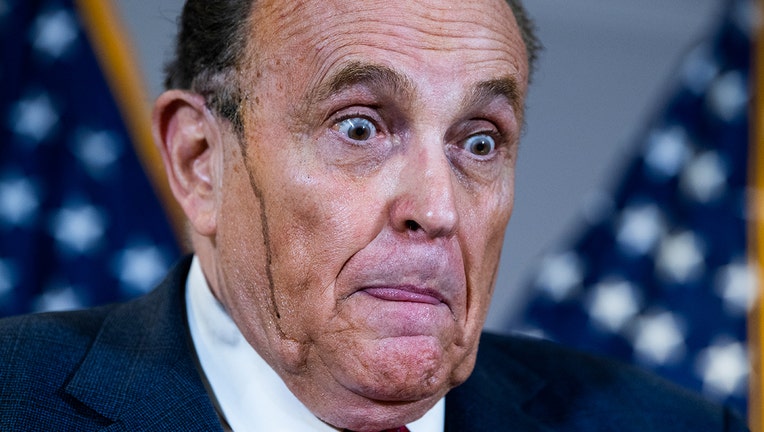
November 19, 2020, Baltimore (outdoors):
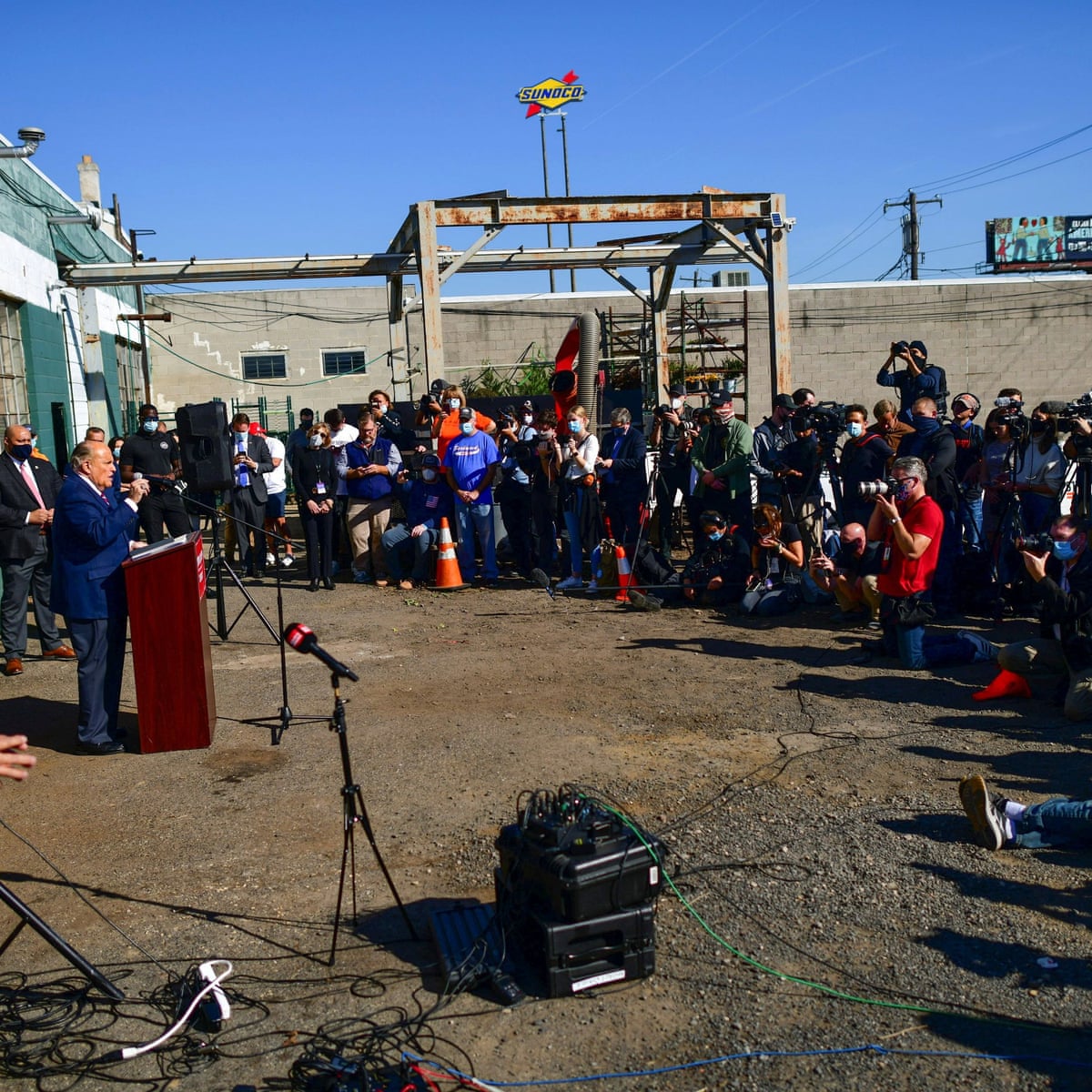
And b/c for lagniappe, here he is getting Boratted (also released fall 2020, creating a trifecta of glory for Rudes in just one short season):

Give IvoryBill credit for updating. Some are doubling down, unfortunately.
re: Jack Smith Live Testimony to Senate Judiciary Committee
Posted by TigerDoc on 9/29/26 at 12:55 pm to boosiebadazz
It's like a Veep scene. He quotes the NKVD chief to Smith and then has to snipe about rehabbing the witness. :lol:
Not a strong performance.
Trust the plan.
re: Breaking the fake news narrative
Posted by TigerDoc on 9/28/26 at 9:56 pm to RohanGonzales
Just scroll the account post history, baw.
scintillating content. :lol:
re: DHS is ready for the caravan
Posted by TigerDoc on 9/27/26 at 9:11 pm to texas tortilla
I think if people looked at the base rates it would look less manufactured as a caravan and would be better explained via media coverage in the context of election-year immigration politics.
re: What is your personal definition of "globalism" ?
Posted by TigerDoc on 9/27/26 at 10:12 am to Bunk Moreland
If they can define American control as freeing them, they can make that work.

re: What is your personal definition of "globalism" ?
Posted by TigerDoc on 9/27/26 at 9:54 am to Bunk Moreland
I think they don't see old-school colonialism as globalism. If you can successfully run a resource-extracting puppet government that you pretty nakedly control, then it represents the people (more or less).
re: This is why Tucker is so valuable: Interview of Covid Doctor to Reveal Evil of Tyranny
Posted by TigerDoc on 9/26/26 at 8:24 pm to IvoryBillMatt
quote:
What was your experience regarding physicians being able to treat Covid according to their judgment?
I was working in large medical similar to hers which had fewer constraints early then more over time and there was always a lot of constraints on isolation, but a lot less on treatment. In the early days, the intensivists had a lot of room for improvisation (they were extrapolating from SARS-1 and flu treatment, and swapping ideas from far-flung colleagues, etc.), but there wasn’t yet much evidence, much less established protocols. Eventually, though, our system developed protocols based on what was coming out at the time.
That isn’t unique to Covid in the systems I’ve worked in because hospital practice almost always constrains what an individual physician can do, but Covid made that process unusually visible and under the media microscope and it happened pretty rapidly and intensely.
Where I’d probably separate from your interpretation comes in the next part. “Physicians practicing within increasingly tight institutional constraints” is super-recognizable from my own experience. “Viable treatments were suppressed in order to make the vaccines the only option” though is a much bigger claim re: why those constraints developed and my own experience wouldn’t get me there.
re: This is why Tucker is so valuable: Interview of Covid Doctor to Reveal Evil of Tyranny
Posted by TigerDoc on 9/26/26 at 5:25 pm to IvoryBillMatt
What do you find compelling in Bowden?
re: This is why Tucker is so valuable: Interview of Covid Doctor to Reveal Evil of Tyranny
Posted by TigerDoc on 9/26/26 at 5:22 pm to IvoryBillMatt
Tucker is good in that format. I agree. I guess I’m trying to distinguish giving Bowden a platform from giving her a persuasive platform outside the people already inclined to hear her out. I wouldn’t write off everybody who’s soured on Tucker as lacking intellectual curiosity, though. That’s kind of the interesting part of this thread to me. Lots of the posters ITT are actually pretty sympathetic to the Covid critique yet still don’t trust him.
re: This is why Tucker is so valuable: Interview of Covid Doctor to Reveal Evil of Tyranny
Posted by TigerDoc on 9/26/26 at 5:16 pm to Keltic Tiger
Yeah, no arguments from me there. He's rounded the credibility bend, but I think this should be relevant to people like Bowden who want to be taken seriously. Tucker's got obvious reach, but lots of people will tune you out or you'll be tainted by him.
re: This is why Tucker is so valuable: Interview of Covid Doctor to Reveal Evil of Tyranny
Posted by TigerDoc on 9/26/26 at 3:54 pm to IvoryBillMatt
quote:
my point was that Tucker is really valuable as an interviewer. I can't think of anyone with such a large platform who has such excellent interviews. I don't really care what he says as a pundit.
I think AlwysATgr’s point is about Tucker’s low credibility going beyond just punditry. Tucker might give Bowden more reach, but at this point he may also make some people less likely to give her a fair hearing. This thread is kind of demonstrating both at once.
Popular
 27
27